
Texas ODL for Unpaid Tickets: Why SR-22 Is Required Anyway
Free to compare
Why Texas Requires SR-22 for Occupational Driver Licenses After Unpaid Ticket Suspensions
Texas mandates SR-22 financial responsibility filing for every Occupational Driver License (ODL) holder, regardless of what triggered the suspension. You can clear unpaid tickets, receive court approval for an ODL, and still face mandatory SR-22 filing before DPS issues the physical license.
This requirement appears in Texas Transportation Code §521.246 and applies universally to all ODL holders. The state does not differentiate between suspension causes when enforcing SR-22 filing for occupational licenses. Your suspension originated from unpaid tickets, not a DWI or uninsured-driving violation, but the SR-22 requirement attaches to the ODL itself, not to the underlying suspension trigger.
Most rideshare drivers miss this because platforms like Uber and Lyft already require elevated liability coverage. You assume the higher limits you carry for rideshare work satisfy Texas requirements. They don't. The SR-22 is a state-mandated certificate your carrier files with DPS proving you carry at least the minimum liability coverage ($30,000 bodily injury per person, $60,000 per accident, $25,000 property damage). Your existing rideshare policy may already meet or exceed these limits, but without the SR-22 certificate filed by your carrier, DPS will not process your ODL application.
How Rideshare Insurance Interacts With SR-22 Filing Requirements in Texas
Rideshare platforms require commercial liability endorsements or separate commercial policies. These policies typically provide $1 million in liability coverage while you're actively transporting passengers. Between trips (app on, no passenger), coverage drops to state minimums unless your personal policy includes rideshare coverage.
The SR-22 filing cost is separate from your premium. Carriers charge $25–$50 to file the SR-22 certificate with DPS initially, then renew it annually for the duration your ODL remains active. Your existing rideshare carrier may not offer SR-22 filing. Progressive, State Farm, GEICO, and Allstate commonly provide SR-22 filing for Texas drivers, but not all carriers do. If your current rideshare carrier cannot file SR-22, you face three options: switch to a carrier that files SR-22 and provides rideshare coverage, maintain dual policies (one personal policy with SR-22, one rideshare endorsement), or exit rideshare work temporarily until full reinstatement.
Dual-policy structures create coordination problems. Your personal SR-22 policy must remain active continuously. If you cancel the personal policy assuming rideshare coverage alone suffices, your carrier notifies DPS of the lapse within 10 days under the TexasSure electronic monitoring system. DPS then revokes your ODL, and you restart the entire court petition process. Most rideshare drivers operating under an ODL maintain a single carrier that provides both SR-22 filing and rideshare coverage to eliminate this failure mode.
ODL Route and Time Restrictions That Conflict With Rideshare Platform Requirements
Texas courts issue ODL orders specifying essential-need routes and permitted driving hours. For unpaid-ticket suspensions, courts typically approve work-related driving. The court order must enumerate specific routes: home address to workplace, workplace to home, or geographic boundaries within which you operate for work purposes.
Rideshare driving does not fit the route-restriction model most courts apply. Your workplace is not a fixed location. Passengers request rides throughout the city, creating hundreds of potential routes daily. Courts in Harris, Dallas, Bexar, and Travis counties have denied ODL petitions for rideshare drivers specifically because the nature of the work makes route enumeration unworkable.
Some petitioners succeed by framing rideshare work as zone-based rather than route-based. The petition describes a geographic service area (for example, within the city limits of Houston, or within Harris County boundaries) rather than point-to-point routes. Courts may approve this framing, but approval varies by county and judge. No statewide precedent mandates that courts accept zone-based ODL orders for rideshare work.
Time restrictions create a second conflict. Texas law caps ODL driving at 12 hours per 24-hour period. The court specifies permitted hours in the order. Most rideshare drivers work split shifts or variable hours based on demand surges. If your court order permits driving from 6 a.m. to 6 p.m., you cannot accept rides during evening or late-night high-demand periods without violating your ODL terms. Violating time or route restrictions triggers immediate ODL revocation and extends your full-license suspension period.
Why Most Rideshare Drivers Should Wait for Full Reinstatement Instead of Pursuing an ODL
The ODL petition process costs $125 in base reinstatement fees plus county-specific court filing fees that range from $150 to $350. You pay these fees before knowing whether the court will approve your petition. Courts deny ODL petitions for rideshare drivers frequently because route restrictions cannot accommodate the variable nature of app-based passenger transport.
Full reinstatement after unpaid-ticket suspensions does not require SR-22 filing. Once you clear all outstanding tickets, pay reinstatement fees to DPS, and satisfy any court-ordered payment plans, your full license is restored without the ongoing SR-22 cost. The SR-22 requirement only attaches if you pursue an ODL during the suspension period.
For rideshare drivers whose income depends on accepting rides across a wide service area and during variable hours, the ODL's route and time restrictions reduce earning capacity below what most drivers can sustain. You regain limited driving privileges but lose the flexibility that makes rideshare work economically viable. Waiting 90 to 180 days for full reinstatement (typical timeline after clearing tickets and submitting payment to DPS) restores unrestricted driving without SR-22 cost or route limitations.
The calculation shifts if your suspension extends beyond six months due to multiple unpaid tickets or court-ordered payment plans. In those cases, the ODL may preserve some income during the extended suspension period, even with reduced hours and geographic constraints. Verify your full reinstatement eligibility timeline with DPS before deciding whether to petition for an ODL.

Line Up Coverage Before Your License Comes Back
Get Back on the Road
What Documentation Texas Courts Require for ODL Petitions Based on Rideshare Employment
Texas courts require proof of essential need when evaluating ODL petitions. Employment documentation must show that driving is necessary to maintain your job. For rideshare work, acceptable documentation includes: platform earnings statements covering the prior three to six months, a letter from the platform confirming your active driver status, proof of vehicle registration and insurance meeting platform requirements, and tax records showing rideshare income as your primary or substantial source of support.
Courts also require an SR-22 certificate at the time of petition. You cannot submit the petition and obtain SR-22 later. Your carrier must file the SR-22 with DPS, DPS must process it, and you must present proof of active SR-22 filing to the court as part of your petition packet. This creates a timing problem: you need the SR-22 before the court approves your ODL, but most carriers require an active license or pending ODL petition before issuing SR-22. Coordinate with your carrier before filing the petition to confirm they will file SR-22 for a suspended driver with a pending ODL application.
If ignition interlock is required by court order or statute (typically only for alcohol-related suspensions, not unpaid-ticket suspensions), you must provide installation documentation from an approved Texas IID provider before the court will approve the ODL. For unpaid-ticket suspensions, ignition interlock is rarely required unless your suspension includes separate DWI-related penalties.
Most rideshare drivers petitioning for ODLs in Texas use a county-specific ODL petition template available from the district or county clerk's office. Filing without an attorney is common for unpaid-ticket suspensions. Courts in larger counties (Harris, Dallas, Bexar, Travis, Tarrant) process ODL petitions weekly; smaller counties may schedule hearings monthly. Processing time from petition filing to court hearing ranges from 15 to 45 days depending on county court dockets.
How Long SR-22 Filing Must Remain Active After Obtaining an ODL in Texas
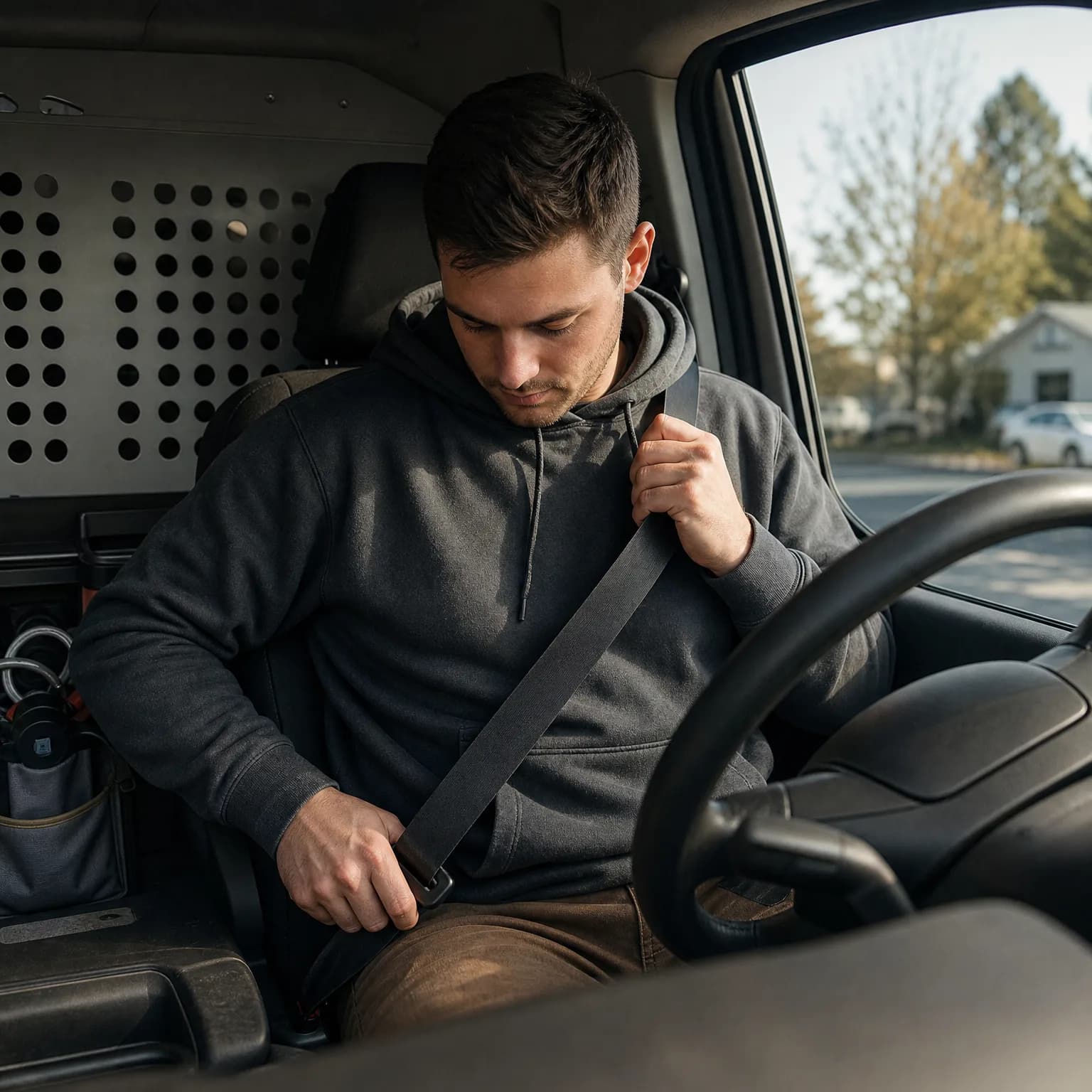
SR-22 filing must remain active for the entire period your ODL is in effect. If you hold an ODL for 12 months before full reinstatement, you maintain SR-22 for 12 months. Any lapse in SR-22 during this period triggers automatic ODL revocation by DPS.
After full license reinstatement, unpaid-ticket suspensions do not carry a continuing SR-22 requirement. The SR-22 obligation ends when your ODL converts to a full unrestricted license. This differs from DWI suspensions, which require SR-22 filing for two years after reinstatement under Texas Transportation Code §601.153.
Carriers report SR-22 lapses to DPS electronically through the TexasSure system. If you cancel your policy, switch carriers without coordinating SR-22 transfer, or allow your policy to lapse for non-payment, your carrier notifies DPS within 10 days. DPS revokes your ODL immediately and does not provide a grace period or advance warning. You receive a revocation notice in the mail after the fact.
To avoid lapse-related revocation, contact your new carrier before canceling your existing policy. Confirm the new carrier has filed SR-22 with DPS and that DPS shows active SR-22 status in their system before you cancel the old policy. Most carriers process SR-22 filings within 24 to 48 hours, but DPS database updates can lag by several business days. A coordination gap of even two days creates revocation risk.
Finding a Carrier That Provides Both SR-22 Filing and Rideshare Coverage in Texas
Not all carriers offer both SR-22 filing and rideshare endorsements. Progressive and State Farm provide both in Texas, but policy availability varies by county and underwriting criteria. GEICO offers SR-22 but does not provide rideshare coverage in most Texas markets, requiring you to maintain separate policies if you choose GEICO for SR-22.
Non-standard carriers specializing in high-risk drivers (Bristol West, Acceptance Insurance, Freeway Insurance) typically offer SR-22 filing but do not provide rideshare endorsements. Standard carriers offering rideshare coverage (Allstate, Farmers, USAA for eligible members) may decline to provide SR-22 for suspended drivers or charge significantly higher premiums once SR-22 is added.
Expect monthly premiums of $140–$190 for liability-only coverage with SR-22 filing in Texas. Adding rideshare coverage increases premiums by $30–$60 per month depending on your county and driving history. Total cost for SR-22 plus rideshare coverage typically falls between $170 and $250 per month for drivers with suspended licenses due to unpaid tickets.
Request quotes from multiple carriers before committing. Premiums for the same coverage with SR-22 filing can vary by $50–$80 per month between carriers in the same county. Use a licensed agent or comparison tool that includes non-standard carriers in the quote results. Standard direct-to-consumer platforms (Geico.com, Progressive.com) may decline to quote or automatically exclude SR-22 filings for suspended drivers.
Frequently Asked Questions
Can I drive for Uber or Lyft with a Texas Occupational Driver License?
Technically yes, but most courts deny ODL petitions for rideshare work because route restrictions cannot accommodate variable passenger destinations across a city. Even if approved, your court order must specify a geographic service area or permitted hours, and violating those terms revokes your ODL immediately. Most rideshare drivers wait for full reinstatement rather than risk ODL violations.
Does my rideshare insurance policy already include SR-22 filing in Texas?
No. SR-22 is a separate certificate your carrier must file with DPS. Your rideshare coverage may exceed Texas minimum liability limits, but without the SR-22 certificate on file with DPS, your ODL application will be denied. Confirm your carrier offers SR-22 filing before petitioning for an ODL.
How much does SR-22 cost for an Occupational Driver License in Texas?
Carriers charge $25–$50 to file the initial SR-22 certificate, then renew it annually. Monthly premiums for liability coverage with SR-22 range from $140–$190. If you add rideshare coverage, expect total monthly costs of $170–$250 depending on your county and driving history.
What happens if I let my SR-22 lapse while holding an ODL in Texas?
DPS revokes your Occupational Driver License immediately. Your carrier reports the lapse to DPS electronically within 10 days through the TexasSure system. You receive no grace period or advance warning. To regain driving privileges, you must refile SR-22, restart the court petition process, and pay reinstatement fees again.
Do I still need SR-22 after my Texas license is fully reinstated following unpaid ticket suspension?
No. SR-22 is required only while you hold an Occupational Driver License. Once your full unrestricted license is reinstated after clearing unpaid tickets and paying reinstatement fees, the SR-22 obligation ends. This differs from DWI suspensions, which require SR-22 for two years post-reinstatement.
Can I switch insurance carriers while maintaining an ODL without losing my SR-22 status?
Yes, but you must coordinate the switch carefully. Contact your new carrier, confirm they have filed SR-22 with DPS, and verify DPS shows active SR-22 status before canceling your old policy. Any gap between filings triggers ODL revocation. Most drivers overlap coverage by a few days to avoid coordination failures.
Will GEICO or Progressive provide both SR-22 and rideshare coverage in Texas?
Progressive offers both SR-22 filing and rideshare endorsements in Texas, though availability varies by county. GEICO provides SR-22 but does not offer rideshare coverage in most Texas markets, requiring you to maintain separate policies. State Farm also provides both in select counties.
Related Articles
Texas Rideshare ODL: SR-22 Timing After Lapse Suspension
5/3/2026
Unpaid Ticket Suspension TX: Real Costs for Students
5/3/2026

Oklahoma Rideshare SR-22 After Unpaid Tickets Suspension
5/3/2026
Texas Child Support Suspension: ODL & SR-22 Rules
5/3/2026

FL Rideshare SR-22 After Unpaid Ticket Suspension
5/3/2026

TN Unpaid Ticket Suspension: SR-22 for Rideshare Drivers
5/3/2026