
Tennessee SR-22 Filing Timeline After Unpaid Ticket Suspension
Free to compare
Why Tennessee unpaid ticket suspensions don't trigger SR-22 filing requirements
Tennessee suspends licenses for unpaid traffic tickets under administrative authority, not financial responsibility violations. The Tennessee Department of Safety and Homeland Security processes these suspensions separately from uninsured motorist cases, and reinstatement requires paying outstanding fines plus a $65 base reinstatement fee — not SR-22 filing.
SR-22 certificates prove future financial responsibility after violations that demonstrate inability or unwillingness to maintain minimum liability coverage. Unpaid tickets show failure to resolve court obligations, not failure to carry insurance. Tennessee's financial responsibility law under TCA § 55-12-101 et seq. governs when SR-22 is required, and administrative suspensions for unpaid fines fall outside that statutory framework.
Rideshare drivers confuse this because Uber and Lyft both require personal auto policies that meet state minimums, and Tennessee requires maintaining liability coverage while actively driving. But the unpaid ticket suspension itself doesn't create an SR-22 obligation. The gap appears when drivers let personal coverage lapse during suspension, assuming they don't need it because they can't drive.
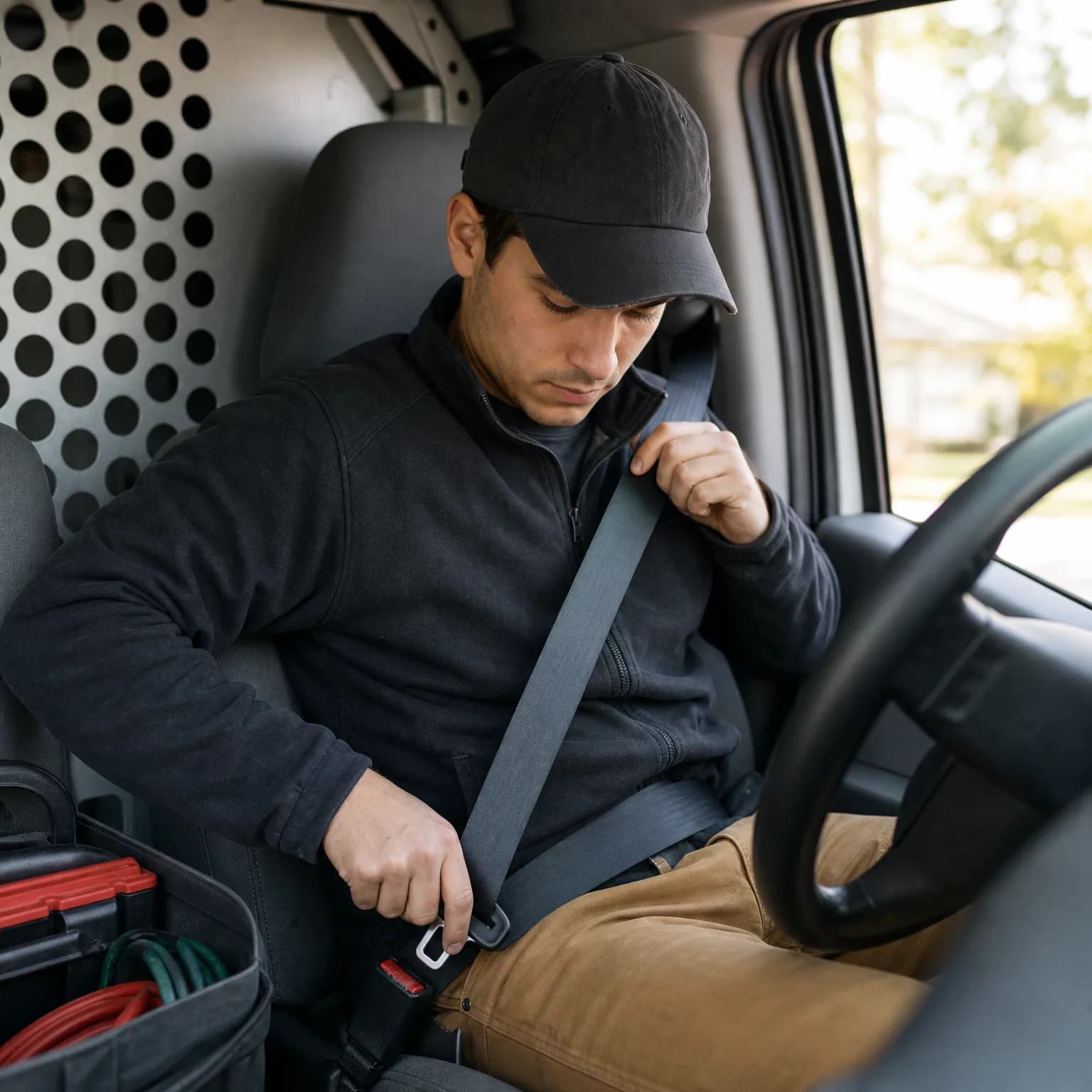
The rideshare coverage gap that creates SR-22 exposure after reinstatement
Tennessee uses the Tennessee Insurance Verification System to detect policy cancellations and lapses electronically. When your personal auto policy lapses, your insurer reports the cancellation to TIVS. The Tennessee Department of Revenue receives that notice and sends a registration suspension warning.
Most rideshare drivers cancel personal coverage during suspension because they can't drive and want to avoid premiums. That lapse gets flagged in TIVS. When you reinstate your license and attempt to register your vehicle, the Department of Revenue sees the lapse period and treats it as uninsured operation — which does trigger SR-22 requirements under TCA § 55-12-139.
The state doesn't automatically distinguish between "I was suspended and not driving" and "I was driving without insurance." Both create the same TIVS record: a gap between policy cancellation and the current reinstatement attempt. Courts and administrative hearing officers evaluate lapse cases individually, but the default assumption is that any lapse during a period you held a driver's license (even a suspended one) constitutes uninsured exposure.


How TNC insurance interacts with Tennessee's personal policy requirement
Uber and Lyft provide liability coverage while you're logged into the app, but Tennessee law requires rideshare drivers to maintain personal auto policies that meet state minimums even when not working. TNC policies are excess coverage, not replacements for personal liability.
When you're suspended for unpaid tickets and can't drive at all, the personal policy requirement doesn't disappear. Tennessee statute doesn't create an exception for suspended drivers who own registered vehicles. If your vehicle remains registered in Tennessee during the suspension period, you're expected to maintain coverage or surrender the registration.
Most drivers miss this because they focus on the license suspension, not the registration-insurance link. You can't legally drive, so you assume you don't need insurance. But TIVS monitors registered vehicles, not licensed drivers. The gap between canceling your personal policy and reinstating your license creates a lapse record that follows you into reinstatement proceedings.
Documentation strategies that prevent lapse-gap SR-22 requirements at reinstatement
The cleanest path is maintaining continuous personal auto coverage throughout the suspension period, even at state minimum liability limits. Tennessee's minimum requirement is 25/50/15 — $25,000 bodily injury per person, $50,000 per accident, $15,000 property damage. A liability-only policy on a suspended license costs significantly less than full coverage because you're not driving.
If you already canceled coverage and created a lapse, document the suspension period before reinstatement. Obtain a certified copy of your suspension order from the court that issued the unpaid ticket judgment. Obtain a dated receipt showing when you paid the outstanding fines and court costs. File these with your reinstatement application to establish that the lapse period corresponds exactly to the suspension period during which you were legally prohibited from driving.
Some Tennessee county clerks and DMV hearing officers accept this documentation and waive SR-22 requirements. Others don't, particularly when the lapse extended beyond the suspension end date or when the vehicle remained registered. If the hearing officer determines the lapse constitutes uninsured operation, you'll receive an SR-22 requirement regardless of the original suspension cause. At that point, the unpaid ticket suspension and the insurance lapse become two separate violations with two separate reinstatement requirements.

Line Up Coverage Before Your License Comes Back
Get Back on the Road
Restricted license eligibility and SR-22 timing for rideshare income preservation
Tennessee offers restricted licenses through court petition under TCA § 55-50-502. Courts grant these for employment, medical appointments, court-ordered treatment programs, and other essential purposes. Rideshare driving qualifies as employment-related if you can demonstrate income dependency and no viable alternative transportation for passengers.
The petition requires proof of hardship, typically an employer affidavit or income documentation showing rideshare earnings as your primary income source. You'll need an SR-22 certificate of financial responsibility to accompany the petition — even though the unpaid ticket suspension itself doesn't require SR-22, the restricted license application does. Courts treat restricted licenses as conditional driving privileges that demand higher financial responsibility proof than standard reinstatement.
Ignition interlock device installation is required for restricted licenses in Tennessee. This applies to DUI-triggered suspensions primarily, but courts have discretion to impose IID on other restricted license grants, particularly when the petitioner's driving record shows multiple violations. Rideshare drivers face additional complications because Uber and Lyft vehicle requirements prohibit visible IID installations in passenger-facing vehicles. Check your platform's IID policy before petitioning for a restricted license — you may be unable to use the restricted license for rideshare work even if the court grants it.
The restricted license route makes sense for drivers whose unpaid ticket suspension will last months and who need immediate income restoration. For short suspensions (30-60 days), paying the fines and waiting for full reinstatement costs less than the petition filing fee, SR-22 filing, and IID installation combined.

Non-owner SR-22 policies for rideshare drivers without registered vehicles
If you don't own a vehicle or surrendered your registration during suspension, a non-owner SR-22 policy satisfies Tennessee's financial responsibility requirement without insuring a specific car. Non-owner policies provide liability coverage when you drive vehicles you don't own — rental cars, borrowed vehicles, or in some cases, vehicles provided through rideshare platforms.
Non-owner policies don't cover vehicles you own, lease, or have regular access to. If you live with a family member who owns a car and you're listed on their policy, you're not eligible for non-owner coverage. If you own a vehicle but it's unregistered and stored, you may qualify, but insurers evaluate this case-by-case.
For rideshare drivers, non-owner SR-22 works only if you plan to rent vehicles or use a vehicle-rental program offered by Uber or Lyft. Most Tennessee rideshare drivers own or lease their vehicles, making non-owner policies irrelevant. But if your suspension led to vehicle repossession or sale, and you're rebuilding toward rideshare work, a non-owner SR-22 keeps your license active and your insurance history continuous while you save for another vehicle.
What to do when your reinstatement notice lists SR-22 despite no insurance-related violation
Tennessee's reinstatement notices sometimes include SR-22 requirements even when the original suspension cause was administrative. This happens when TIVS records show a coverage lapse overlapping your suspension period, when your driving record includes prior uninsured violations within three years, or when a clerk misclassifies your suspension type during processing.
Request a reinstatement hearing through the Tennessee Department of Safety and Homeland Security within 20 days of receiving the notice. Bring certified copies of your suspension order, proof of continuous coverage or documented lapse-period explanation, and payment receipts for all outstanding fines and fees. The hearing officer reviews your file and determines whether SR-22 is genuinely required or was added in error.
If the officer upholds the SR-22 requirement, you have two options: comply and file SR-22 for the period specified (typically three years in Tennessee), or appeal through Tennessee's administrative review process. Appeals require legal representation in most cases and take months to resolve. For most rideshare drivers, filing SR-22 and restoring driving privileges immediately costs less than prolonged appeal processes that keep you off the road.
Once SR-22 is filed, maintain it continuously for the full required period. Tennessee treats SR-22 lapses as new violations that trigger immediate license re-suspension. Your carrier must notify the state within 10 days of any policy cancellation or lapse, and the Department of Safety suspends your license automatically. Rideshare income depends on continuous platform eligibility, which depends on a valid license — an SR-22 lapse ends both.
Frequently Asked Questions
Do I need SR-22 to reinstate my Tennessee license after unpaid ticket suspension?
Unpaid ticket suspensions in Tennessee don't require SR-22 filing unless your insurance lapsed during the suspension period. Pay your outstanding fines and the $65 reinstatement fee to restore your license. If the state detected a coverage gap during suspension, they may add SR-22 requirements at reinstatement.
Can I drive for Uber in Tennessee with a restricted license?
Tennessee restricted licenses allow court-approved driving for employment purposes, which can include rideshare work. You'll need SR-22 filing and ignition interlock device installation to obtain the restricted license. Check your rideshare platform's policy on IID-equipped vehicles before petitioning — many platforms prohibit visible interlock devices.
What happens if my personal auto insurance lapses while I'm suspended in Tennessee?
Tennessee's electronic insurance verification system flags the lapse and reports it to the Department of Revenue. When you apply for reinstatement, the state may treat the lapse as uninsured operation and require SR-22 filing for three years. Maintain continuous coverage during suspension or document the lapse period with your suspension order to avoid this.
How long does Tennessee require SR-22 filing after a coverage lapse?
Tennessee typically requires three years of continuous SR-22 filing after insurance-related violations. The period begins when you file SR-22 and reinstate your license, not when the original violation occurred. Any lapse in SR-22 coverage during those three years triggers immediate re-suspension.
Does TNC insurance from Uber or Lyft count as personal coverage in Tennessee?
No. Tennessee law requires rideshare drivers to maintain personal auto policies that meet state minimums even when not working. TNC coverage from Uber and Lyft is excess coverage that applies only while you're logged into the app. Relying solely on TNC coverage creates a coverage gap the state treats as uninsured operation.
Can I get a non-owner SR-22 policy if I sold my car during suspension?
Yes, if you don't own, lease, or have regular access to a vehicle. Non-owner SR-22 policies provide liability coverage when driving vehicles you don't own. For rideshare drivers, this works only if you plan to rent vehicles or use a platform vehicle-rental program — most rideshare drivers own their vehicles and need standard SR-22 policies instead.
What documentation proves I wasn't driving during my Tennessee suspension period?
Obtain a certified copy of your suspension order showing the exact suspension dates. Obtain dated receipts proving when you paid fines and court costs to end the suspension. File these with your reinstatement application to show the insurance lapse corresponds to the suspension period. Some hearing officers accept this and waive SR-22; others don't.
Related Articles
TN Ticket Suspension: SR-22 Timing for Single Parents
5/3/2026

TN Rideshare Unpaid Ticket Suspension: Real Cost Stack
5/3/2026

TN Child Support Suspension: SR-22 & Rideshare Insurance
5/3/2026

TN CDL Unpaid Ticket Reinstatement: SR-22 Rules
5/3/2026

TN Child Support Suspension Cost for Rideshare Drivers
5/3/2026

TN Rideshare SR-22 After Lapse Suspension Guide
5/3/2026