
PA Unpaid Tickets Suspension: Real Cost Stack for Single Parents
Free to compare
Why Pennsylvania's unpaid tickets suspension hits single-parent budgets harder than DUI reinstatements
Pennsylvania suspends your license for unpaid traffic tickets under 75 Pa.C.S. § 1532, but unlike DUI suspensions that follow a predictable court-to-DMV timeline, unpaid tickets suspensions stack fees across three separate agencies with no coordination. Most single parents budget for the visible $86.50 PennDOT reinstatement fee, then discover court clearance costs $150–$350 depending on ticket count, plus a $25 processing fee per court location if tickets span multiple magisterial districts.
The coordination gap creates the real budget problem. Pennsylvania courts don't automatically notify PennDOT when you pay your tickets—you must request a clearance certificate from each court, submit it to PennDOT's Bureau of Driver Licensing, and wait 5–10 business days for PennDOT to process the clearance before you can pay the $86.50 reinstatement fee. Single parents working hourly jobs can't afford two weeks without a license, so they rush to reinstate before court clearances post, which triggers an automatic rejection and forces them to restart the timeline.
SR-22 filing is not required for unpaid tickets suspensions in Pennsylvania. This is an administrative suspension, not a violation-based suspension. You need valid liability insurance to reinstate, but PennDOT does not mandate continuous SR-22 certification for this trigger. Carriers know this, but many still push SR-22 enrollment because it locks you into high-risk pricing for three years. If a carrier tells you SR-22 is required for unpaid tickets reinstatement, they are either confused about Pennsylvania law or deliberately upselling.
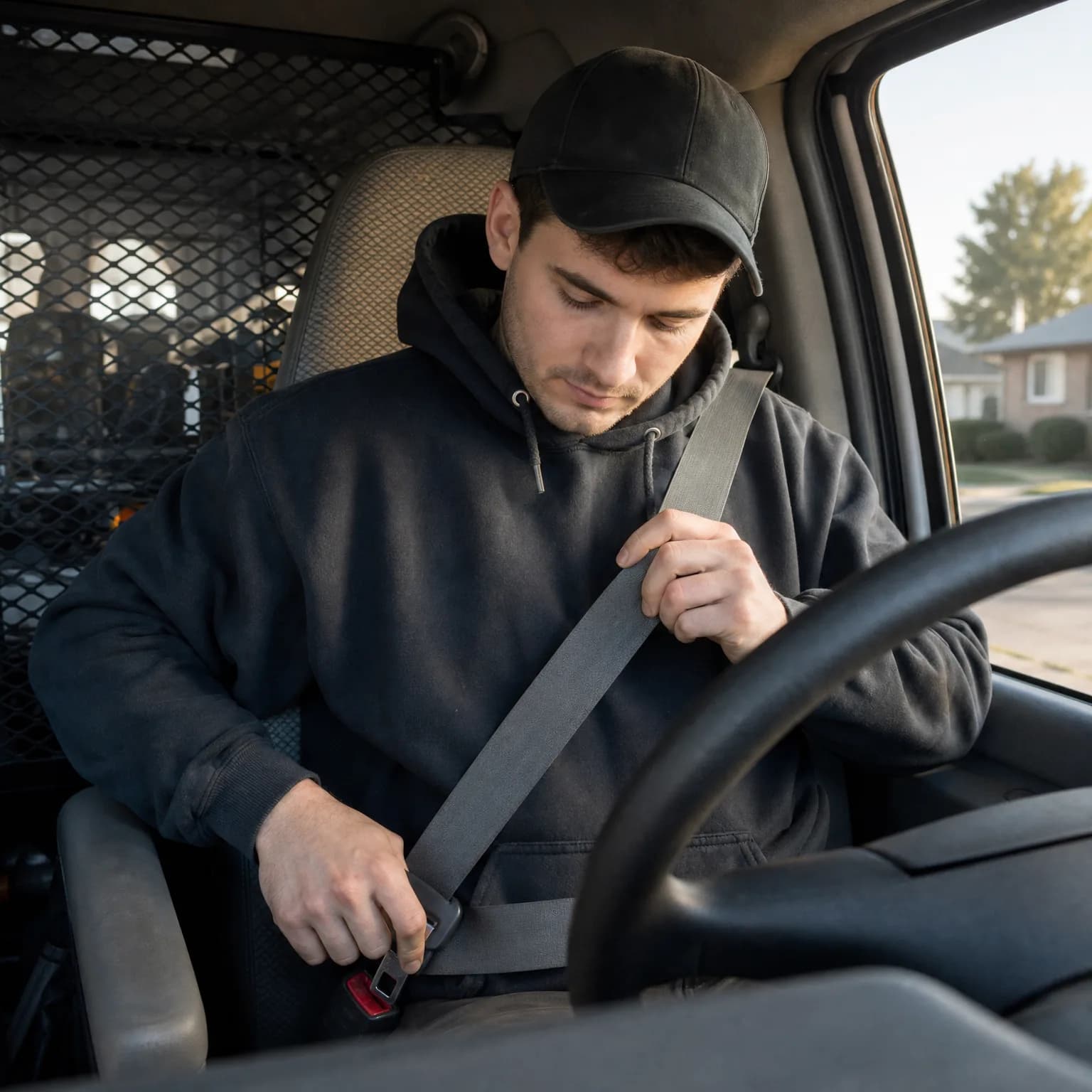
The three-agency fee cascade: court clearance, PennDOT reinstatement, and carrier markup
Pennsylvania's unpaid tickets suspension requires coordinating payments across three separate entities, each with its own fee schedule and processing timeline. Court clearance comes first: each magisterial district court charges $150–$350 to clear unpaid tickets, plus a $25 processing fee to generate the official clearance certificate. If your tickets span two magisterial districts—common for single parents commuting between childcare, work, and home—you pay $25 twice because each court issues its own certificate.
PennDOT's $86.50 reinstatement fee is the most visible cost, but it's the smallest. The fee breaks down as $25 for processing plus $61.50 for the restoration fee itself. PennDOT accepts payment only after all court clearances have been submitted and posted to your driver record, which creates a 5–10 business day gap most single parents don't anticipate. You cannot pay early. You cannot expedite processing. If you submit reinstatement payment before clearances post, PennDOT returns your check and you lose another week.
Carrier markup is where the sticker shock lands. Pennsylvania requires proof of valid liability insurance to reinstate after any suspension, and carriers classify formerly suspended drivers as high-risk for 36 months after reinstatement regardless of whether SR-22 was required. Monthly premiums jump from $85–$120 for a clean-record driver to $140–$220 for a formerly suspended driver in Pennsylvania. Over 36 months, the carrier markup alone adds $1,980–$3,600 to your total cost of reinstatement—far more than the court and PennDOT fees combined.


What single parents miss: staggered payment windows and the coordination gap
The reinstatement timeline doesn't flow linearly. Pennsylvania requires you to clear court debt first, submit proof to PennDOT second, wait for processing third, and secure insurance fourth—but the insurance step must happen before you pay PennDOT's reinstatement fee because PennDOT requires proof of coverage at the time of reinstatement application. Most single parents pay court fees, assume they can drive once receipts are issued, and discover weeks later that their license is still suspended because they skipped the PennDOT submission step.
The coordination gap creates a secondary cost: lost work hours. If you work hourly and your employer requires a valid license for the commute or the job itself, every day of delay costs wages. Pennsylvania's 5–10 business day court clearance processing window means most single parents lose at least two weeks of license validity between paying court fees and completing reinstatement. If you earn $15/hour and work 30 hours weekly, two weeks without driving equals $450 in lost income—more than PennDOT's reinstatement fee.
Carriers won't bind coverage until you provide proof of reinstatement eligibility, but PennDOT won't process reinstatement until you provide proof of coverage. The circular dependency forces most single parents to secure a non-owner liability policy as a placeholder even if they own a vehicle, because non-owner policies bind immediately without vehicle inspection requirements. Once reinstated, you switch to a standard owner policy. This doubles your first-month insurance cost—you pay for non-owner coverage to satisfy PennDOT, then pay again for owner coverage once your license is valid.

Line Up Coverage Before Your License Comes Back
Get Back on the RoadCarrier markup breakdown: why formerly suspended drivers pay $140–$220/month for 36 months
Pennsylvania carriers use suspension history as an underwriting factor for 36 months after reinstatement, regardless of the suspension cause. Unpaid tickets suspensions trigger the same high-risk classification as DUI suspensions for pricing purposes, even though unpaid tickets carry no SR-22 requirement. The distinction matters for legal compliance but not for premium calculation.
Monthly liability premiums for a 35-year-old single parent with one dependent in Philadelphia average $85–$120 with a clean record. After reinstatement from an unpaid tickets suspension, the same driver pays $140–$220 monthly for minimum state limits. The $55–$100 monthly markup persists for three years, which totals $1,980–$3,600 in excess premiums. Carriers justify the markup by pointing to internal actuarial data showing formerly suspended drivers file claims at higher rates than clean-record drivers, but Pennsylvania law does not require carriers to distinguish between violation-based and administrative suspensions for pricing.
Some carriers offer reinstatement-specific discount programs that reduce the markup after 12 months of continuous coverage without claims. These programs are not advertised—you must ask your agent or broker explicitly whether your carrier participates. The discount typically reduces monthly premiums by $15–$30 after year one, which recovers $360–$720 over the remaining 24-month high-risk window. Most single parents never ask, so they pay full markup for the entire 36 months.

How to sequence payments to minimize delay and avoid double-billing
Start by requesting clearance certificates from every magisterial district court where you have unpaid tickets. Pennsylvania courts do not automatically share clearance data with PennDOT, so you must obtain paper certificates and submit them yourself. Each court charges $25 for the certificate on top of the ticket balance. If your tickets span two counties, expect to pay $50 in processing fees before PennDOT sees any clearance.
Once you receive all clearance certificates, submit them to PennDOT's Bureau of Driver Licensing by mail or in person at a Driver License Center. Do not pay the $86.50 reinstatement fee at this stage—PennDOT will not accept payment until clearances post to your record, which takes 5–10 business days. Call PennDOT's Customer Service Center at 717-412-5300 after one week to confirm clearances have posted. Only after verbal confirmation should you submit reinstatement payment.
Secure a liability insurance quote before submitting reinstatement payment. Pennsylvania requires proof of coverage at the time of reinstatement, so bind a policy the same day you pay PennDOT's fee. If you do not currently own a vehicle, bind a non-owner liability policy—it satisfies PennDOT's proof-of-insurance requirement and costs $40–$70 monthly in Pennsylvania, compared to $140–$220 for owner coverage. Once reinstated, you can switch to an owner policy if you acquire a vehicle. This sequencing avoids the double-payment trap where you pay for coverage PennDOT rejects because clearances haven't posted yet.

Where single parents can find lower-cost liability coverage post-reinstatement
Pennsylvania's high-risk market includes carriers that specialize in formerly suspended drivers and offer monthly premiums 20–30% below standard-market rates. These carriers—Dairyland, Bristol West, Acceptance, and National General—underwrite reinstatement cases daily and price unpaid tickets suspensions separately from DUI suspensions, which lowers your monthly cost compared to general-market carriers that apply uniform high-risk surcharges.
Non-owner liability policies cost significantly less than owner policies for formerly suspended drivers. If you do not currently own a vehicle or share a household vehicle with another licensed driver, a non-owner policy satisfies Pennsylvania's reinstatement requirement at $40–$70 monthly compared to $140–$220 for owner coverage. Non-owner policies provide liability protection when you drive borrowed or rental vehicles, which covers most single parents' actual driving patterns during the first 6–12 months post-reinstatement.
Pennsylvania law does not require continuous SR-22 filing for unpaid tickets suspensions, so if a carrier quotes you SR-22 pricing, ask explicitly whether SR-22 is legally required for your reinstatement or whether the carrier requires it as an internal underwriting condition. If the latter, switch carriers. Paying for SR-22 filing when Pennsylvania law does not mandate it adds $25–$50 monthly to your premium for three years—$900–$1,800 in unnecessary costs.
Frequently Asked Questions
Do I need SR-22 insurance to reinstate my Pennsylvania license after an unpaid tickets suspension?
No. Pennsylvania does not require SR-22 filing for unpaid tickets suspensions. You must carry valid liability insurance to reinstate, but continuous SR-22 certification is not mandated for administrative suspensions. If a carrier insists on SR-22 for unpaid tickets reinstatement, they are applying an internal underwriting rule, not a Pennsylvania legal requirement.
How long does it take PennDOT to process court clearance certificates after I submit them?
PennDOT takes 5–10 business days to post court clearances to your driver record after submission. You cannot pay the reinstatement fee until clearances appear in PennDOT's system. Call 717-412-5300 after one week to confirm clearances have posted before submitting payment.
Can I get my Pennsylvania license reinstated if I can't afford to pay all my court fees at once?
Some Pennsylvania magisterial district courts offer payment plans for ticket balances exceeding $500, but the court will not issue a clearance certificate until the full balance is paid. Contact the court clerk where your tickets were issued to ask whether installment arrangements are available. PennDOT will not process reinstatement until all courts issue clearances.
Why do insurance companies charge high-risk rates for unpaid tickets suspensions when SR-22 isn't required?
Pennsylvania carriers classify all formerly suspended drivers as high-risk for underwriting purposes, regardless of suspension cause or SR-22 requirement. Actuarial data shows formerly suspended drivers file claims at higher rates than clean-record drivers, so carriers apply premium surcharges for 36 months post-reinstatement even when the suspension was administrative.
What happens if I pay PennDOT's reinstatement fee before my court clearances post to my record?
PennDOT will reject your payment and return your check or money order. You will lose 7–10 additional days while the rejection processes and you resubmit payment after clearances post. Always call PennDOT to confirm clearances have posted before submitting the $86.50 reinstatement fee.
How much does non-owner insurance cost in Pennsylvania after a license suspension?
$40–$70 monthly for state minimum liability limits. Non-owner policies satisfy PennDOT's proof-of-insurance requirement for reinstatement and cost significantly less than owner policies for formerly suspended drivers. You can switch to an owner policy later if you acquire a vehicle.
Can I drive legally in Pennsylvania while waiting for PennDOT to process my court clearances?
No. Your license remains suspended until PennDOT posts all court clearances and you pay the $86.50 reinstatement fee. Driving on a suspended license is a summary offense in Pennsylvania punishable by additional fines and extended suspension. Wait for written confirmation from PennDOT before driving.
Related Articles

PA Unpaid Tickets: SR-22 Timing for Single Parents
5/3/2026
PA Unpaid Tickets Reinstatement: Court & DMV Timing
5/3/2026

PA Unpaid Ticket Suspension Costs for College Students
5/3/2026

PA Child Support Suspension Reinstatement Costs
5/3/2026
PA CDL Unpaid Tickets: Real Reinstatement Costs
5/3/2026
PA Unpaid Tickets: SR-22 Timing for College Students
5/3/2026