
PA Unpaid Tickets + SR-22: Timing for College Students
Free to compare
Does Pennsylvania Require SR-22 Filing for Unpaid Ticket Suspensions?
No. Pennsylvania does not require SR-22 filing for suspensions triggered by unpaid traffic tickets or failure to respond to citations. SR-22 is a financial responsibility certification required only for specific violation types: DUI convictions, uninsured motorist violations under 75 Pa.C.S. § 1786, and certain reckless driving convictions. Administrative suspensions for unpaid fines fall outside this category.
Most college students suspended for unpaid tickets purchase SR-22 policies because aggregators and insurance quote tools default to SR-22 messaging for anyone reporting a suspended license. This creates two problems: you pay 40-80% higher premiums for coverage you don't legally need, and you still don't satisfy the actual reinstatement requirement, which is simply proof of current liability insurance at minimum state limits when you apply for reinstatement.
The confusion stems from PennDOT's online Driver License Restoration Requirements system, which lists "proof of financial responsibility" as a prerequisite. For unpaid-ticket suspensions, this means a current insurance card showing at least Pennsylvania's minimum liability coverage (15/30/5). It does not mean SR-22. Verify your specific suspension reason in your PennDOT restoration requirements lookup before purchasing any coverage.

What Reinstatement Actually Requires After Unpaid Ticket Suspension
Pennsylvania reinstatement for unpaid-ticket suspension follows a three-step sequence: pay all outstanding fines and court costs, obtain proof of current liability insurance, and submit a $50 restoration fee to PennDOT. The sequence matters because PennDOT will not accept your restoration fee until court records show all fines paid in full and posted to the Commonwealth's court database.
The court-to-PennDOT posting delay creates the biggest timing problem for college students trying to reinstate quickly. You pay your fines at the county courthouse or online through PAePay, but the payment does not immediately appear in PennDOT's system. County courts report clearances to PennDOT's Bureau of Driver Licensing electronically, but processing time varies by county: Allegheny County typically posts within 3-5 business days, Philadelphia County can take 7-10 business days, and smaller counties may require 10-14 days. If you submit your restoration application before the court clearance posts, PennDOT will reject it and you'll restart the timeline.
Proof of insurance must be current on the date you submit your reinstatement application. If you let your policy lapse between paying your fines and submitting reinstatement paperwork, you create a new administrative suspension trigger under 75 Pa.C.S. § 1786, which does require SR-22 filing and adds a separate 3-month suspension period. Most college students reinstate in summer or winter break, then return to campus without a vehicle and cancel coverage to save money. Canceling before reinstatement is processed compounds your suspension.


Why College Students Cannot Use the Occupational Limited License for Unpaid Ticket Suspensions
Pennsylvania's Occupational Limited License program under 75 Pa.C.S. § 1553 does not apply to suspensions triggered by unpaid traffic tickets or failure to respond to citations. OLL eligibility is restricted to DUI convictions and certain criminal offense suspensions where the court retains discretion to grant limited driving privileges. Administrative suspensions imposed by PennDOT for unpaid fines are not court-imposed and carry no hardship license remedy.
This creates a compliance gap most college students don't discover until they contact an attorney or file a petition: DUI offenders can petition for an OLL after serving a mandatory hard suspension period, but drivers suspended for unpaid $150 speeding tickets have no restricted driving option at all. The only path forward is full reinstatement, which requires clearing every outstanding fine and restoring your license through PennDOT.
The misconception stems from aggregators and legal-info sites that discuss "Pennsylvania hardship licenses" generically without differentiating between OLL (court-issued, DUI-specific) and the Ignition Interlock Limited License or IILL (PennDOT-issued, also DUI-specific under 75 Pa.C.S. § 3805). Neither program covers administrative suspensions. If your suspension letter from PennDOT lists "failure to respond to citation" or "unpaid fines" as the cause, you are ineligible for any form of restricted driving privilege until you complete full reinstatement.
How to Document Coverage Gaps Without Triggering New Suspension
If you already let your insurance lapse after your unpaid-ticket suspension began, you face a choice: obtain coverage now and wait out the lapse-suspension period, or surrender your vehicle registration to PennDOT and avoid the lapse penalty entirely. Pennsylvania allows registrants who genuinely have no vehicle to surrender plates and avoid the financial responsibility requirement under 75 Pa.C.S. § 1786. This is the correct path for college students who sold their vehicle, left it with family out of state, or parked it indefinitely.
Surrendering registration requires physically returning your license plate to any PennDOT Driver License Center or mailing it to PennDOT Bureau of Motor Vehicles, P.O. Box 68597, Harrisburg, PA 17106. You must include a written statement identifying the vehicle by VIN and confirming you no longer operate it. PennDOT will issue a plate surrender receipt, which you keep as documentation. Once plates are surrendered, the financial responsibility requirement is lifted and no lapse suspension will be imposed.
If you need to drive the vehicle again later, you apply for new registration and provide proof of insurance at that time. Most college students choose this path because it avoids stacking a second 3-month lapse suspension on top of the unpaid-ticket suspension they are already serving. The alternative is purchasing liability coverage immediately, maintaining it without interruption until reinstatement is complete, and accepting that any cancellation notice your carrier files with PennDOT will trigger automatic re-suspension.

Line Up Coverage Before Your License Comes Back
Get Back on the Road
What Insurance Coverage Actually Costs During Suspension in Pennsylvania
Liability-only coverage for a suspended college-age driver in Pennsylvania typically costs $140–$190/month, approximately double the rate a clean-record driver in the same age bracket would pay. The suspended-license surcharge varies by carrier: some apply a flat 80-100% increase, others decline to quote entirely and route you to non-standard carriers like Bristol West or The General, which specialize in high-risk placements.
Non-owner SR-22 policies cost $50–$90/month for the liability coverage itself, plus a $25–$50 SR-22 filing fee. Because you do not need SR-22 for an unpaid-ticket suspension, purchasing a non-owner SR-22 policy wastes the filing fee and signals high-risk status to your carrier unnecessarily. The correct product is a standard non-owner liability policy without SR-22, which costs $45–$75/month and satisfies PennDOT's proof-of-insurance requirement without the SR-22 premium surcharge.
Carriers process suspended-license applications differently: Progressive and Dairyland will quote non-owner policies for suspended drivers online, State Farm and Nationwide require an agent appointment, and GEICO often declines suspended-license applicants entirely in Pennsylvania. If your current carrier cancels your policy after your suspension, you enter the non-standard market, where multi-policy and good-student discounts disappear. Estimates based on available industry data; individual rates vary by driving history, county, and coverage selections.
Timeline from Ticket Payment to Reinstatement Processing
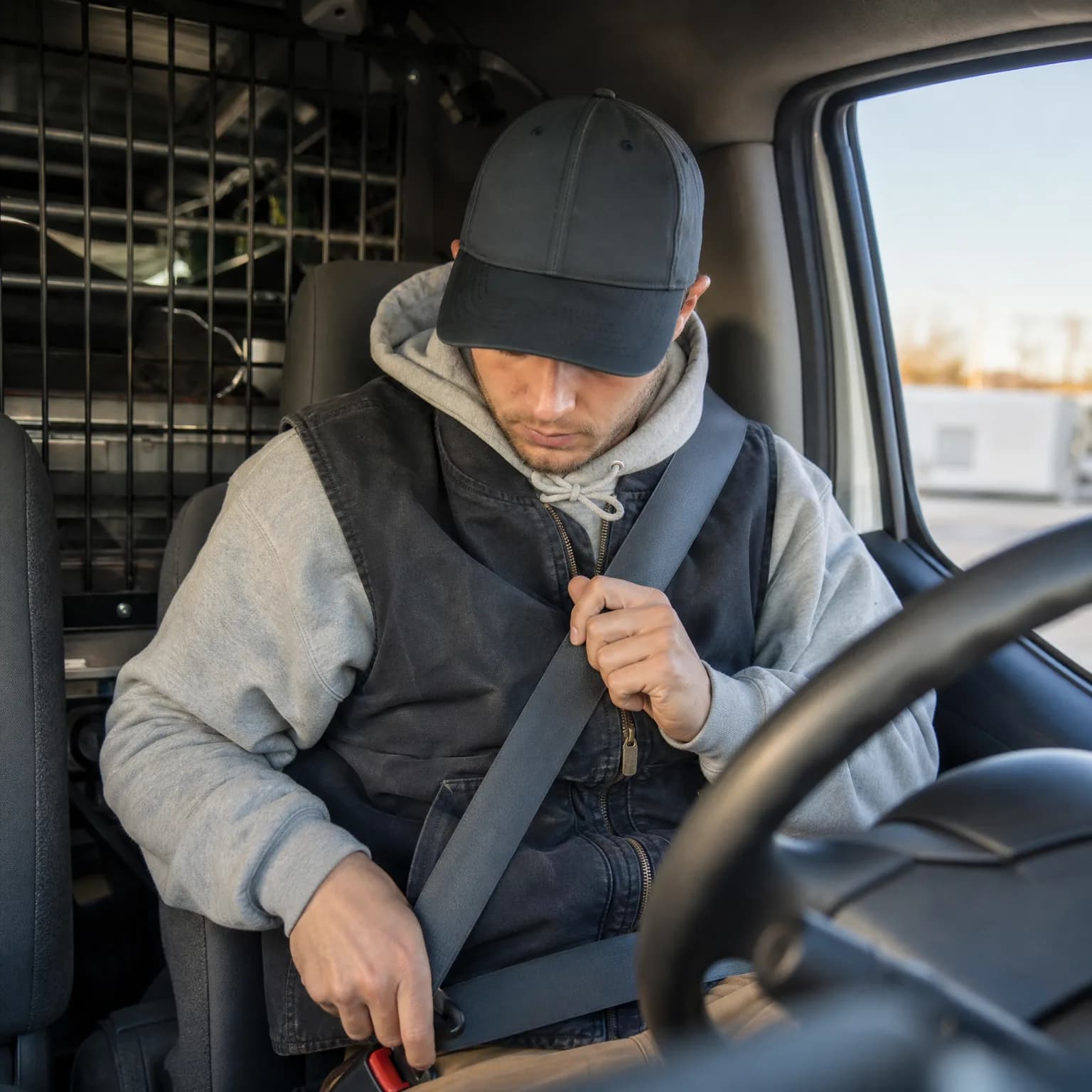
The full reinstatement timeline spans 14–21 days in most Pennsylvania counties: 3–10 days for court clearance to post to PennDOT's system, 1–2 days to obtain current proof of insurance, and 3–7 days for PennDOT to process your restoration application. PennDOT offers online reinstatement through dmv.pa.gov for most suspension types, which reduces processing time to 3–5 business days compared to 7–10 days for mailed applications.
You can check whether your court clearance has posted by logging into PennDOT's Driver License Restoration Requirements tool and reviewing your eligibility status. If the system still shows "outstanding court costs" after you have already paid, the court payment has not yet posted and submitting your reinstatement application will result in rejection. Most college students applying during peak periods (late August, early January) experience longer processing times because PennDOT's restoration unit is backlogged with semester-start applications.
Once PennDOT approves your reinstatement and processes your $50 restoration fee, your license is restored immediately in the system but your physical license card may take 7–14 days to arrive by mail. Pennsylvania allows you to drive with a paper interim license receipt if you need to drive before your card arrives, but only after the restoration is fully processed and approved. Driving on a suspended license while your application is pending remains a criminal offense under 75 Pa.C.S. § 1543 and carries a mandatory additional suspension.
What Happens If You Get Another Ticket Before Reinstatement
Receiving a new traffic citation while your license is already suspended for unpaid tickets does not automatically extend your suspension period, but it does create two new problems: the new ticket generates its own set of fines and court costs that must be paid before reinstatement, and if you were driving on a suspended license when cited, you now face a criminal charge under 75 Pa.C.S. § 1543 with a mandatory 60-day license suspension upon conviction.
Most college students in this situation assume the new ticket simply adds to their existing fine balance and can be paid together. This is incorrect. Each citation is a separate court case with its own payment deadline and failure-to-respond consequences. If you ignore the new ticket, the court issues a bench warrant and PennDOT imposes an indefinite suspension that will not lift until you appear in court and resolve the warrant. The indefinite suspension runs concurrently with your unpaid-ticket suspension but does not end when you pay the original fines.
If the new citation was for driving while suspended, the conviction triggers a separate mandatory suspension that runs consecutively after your current suspension ends. Pennsylvania stacks suspensions rather than running them concurrently for distinct offenses. This means a college student originally suspended 90 days for $400 in unpaid tickets who then drives on that suspended license and gets cited now faces 90 days for the original suspension plus 60 days for the driving-while-suspended conviction, totaling 150 days before eligibility for any reinstatement.
Frequently Asked Questions
Can I reinstate my Pennsylvania license online if it was suspended for unpaid tickets?
Yes, if all fines are paid and posted to PennDOT's system. Log into dmv.pa.gov, navigate to Driver License Restoration Requirements, verify your eligibility shows no outstanding court costs, upload proof of current insurance, and pay the $50 restoration fee. Processing takes 3–5 business days for online applications.
What happens if I pay my tickets but PennDOT still shows my license suspended?
Your payment has not yet posted from the county court to PennDOT's system. County courts report clearances electronically but processing takes 3–14 days depending on the county. Check your restoration eligibility status daily at dmv.pa.gov; once it updates to show zero outstanding fines, you can submit your reinstatement application.
Do I need a lawyer to reinstate my license after unpaid ticket suspension in Pennsylvania?
No. Unpaid-ticket reinstatement is an administrative process requiring no court appearance or legal representation. You pay fines directly to the court, obtain proof of insurance, and submit your restoration fee to PennDOT online or by mail. Attorneys cannot expedite the court-to-PennDOT posting delay.
Can I drive in Pennsylvania with an out-of-state license while my PA license is suspended for unpaid tickets?
No. Pennsylvania suspension applies to your driving privilege in Pennsylvania, not just your physical license card. Driving in Pennsylvania on an out-of-state license while your PA privilege is suspended is a violation of 75 Pa.C.S. § 1543 and carries criminal penalties plus an additional mandatory suspension.
How long does SR-22 filing last in Pennsylvania after reinstating from unpaid ticket suspension?
SR-22 is not required for unpaid-ticket suspensions in Pennsylvania. If you purchased SR-22 coverage unnecessarily, you can cancel the SR-22 filing immediately after reinstatement without penalty. SR-22 is required only for DUI convictions and uninsured motorist violations, where it must be maintained for 3 years from the reinstatement date.
What is the cheapest way to get proof of insurance for Pennsylvania license reinstatement if I don't own a car?
Purchase a non-owner liability policy without SR-22 filing. This costs $45–$75/month in Pennsylvania and provides the proof-of-insurance documentation PennDOT requires. Progressive and Dairyland quote non-owner policies online; State Farm and Nationwide require an agent appointment.
Can I get a payment plan for Pennsylvania license reinstatement fees if I can't pay $50 upfront?
PennDOT does not offer payment plans for the $50 restoration fee, which must be paid in full when you submit your reinstatement application. County courts may offer payment plans for outstanding fines and court costs; contact the court that issued your citations to request a payment arrangement before your fines go to collections.
Related Articles

PA Unpaid Tickets: SR-22 Timing for Single Parents
5/3/2026

PA Unpaid Ticket Suspension Costs for College Students
5/3/2026
PA Child Support Suspension: SR-22 After Reinstatement
5/3/2026

PA Lapse Suspension SR-22 Timing for College Students
5/3/2026

PA Unpaid Tickets Suspension Cost Stack for Parents
5/3/2026
PA Child Support Suspension: Reinstatement Costs
5/3/2026