
Texas Child Support License Suspension: Court, DPS, and CDL Timing
Free to compare
Why Your Court Clearance Doesn't Automatically Reinstate Your CDL
Texas operates a three-agency suspension system for child support arrears: the family court issues the suspension order, the Office of the Attorney General Child Support Division enforces compliance, and the Texas Department of Public Safety (DPS) administers the license hold. When you satisfy arrears or establish a payment plan, the family court issues a clearance notice—but that notice goes to the Attorney General's office first, not directly to DPS.
DPS will not lift your CDL suspension until the Attorney General's office submits verification of compliance to the Driver License Division. This creates a 30-45 day gap between your court clearance date and DPS processing. Most commercial drivers assume the court clearance triggers automatic reinstatement and schedule CDL road tests or accept job offers before DPS actually removes the hold.
The federal disqualification layer compounds this timing problem. If your CDL was disqualified under Federal Motor Carrier Safety Regulations (not just suspended at the state level), you face separate FMCSA clearance requirements that run parallel to—not simultaneously with—the state DPS process. Texas DPS cannot restore your CDL until both the state child support hold and any federal disqualification are independently cleared.
The Court Clearance Document You Must Submit to DPS Yourself
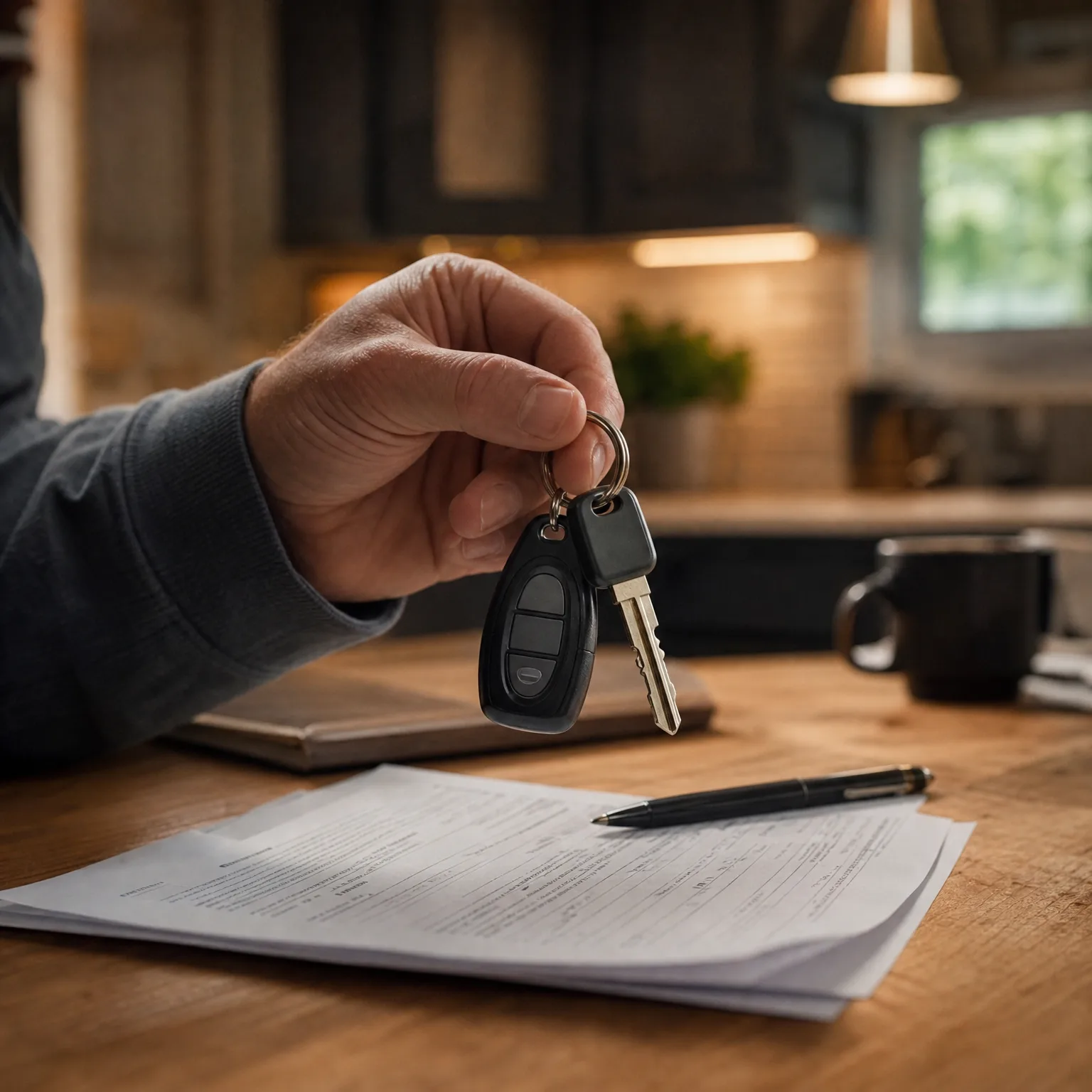
Family courts in Texas issue a Notice of Compliance or Order to Release License Hold when child support arrears are satisfied or a payment plan is approved. This document carries a cause number matching your child support case and states explicitly that the court directs the Attorney General's office to release the license hold.
You must obtain a certified copy of this order from the family court clerk—typically $1-$2 per page plus certification fee—and submit it to DPS along with your reinstatement application. DPS will not process reinstatement based on verbal confirmation, payment receipts, or unofficial court paperwork. The order must show the court's seal and the judge's signature.
If you are reinstating a CDL specifically, DPS requires the court order plus proof that the Attorney General's Child Support Division has updated its system to reflect compliance. Call the Attorney General's Child Support Interactive system at 1-800-252-8014 and request written confirmation that your case shows "compliant" status. DPS cross-references this before processing CDL reinstatements because federal regulations require verified resolution of all state holds.


Why CDL Holders Face Longer Reinstatement Timelines Than Class C Drivers
Texas child support suspensions affect Class C (personal) and Class A/B (commercial) licenses identically at the state level—DPS suspends both under the same statutory authority. The difference appears when you reinstate. Class C drivers submit the court clearance order, pay the $125 reinstatement fee, and receive their license within 5-7 business days if no other holds exist.
CDL holders must satisfy additional federal compliance checks. DPS verifies your Commercial Driver License Information System (CDLIS) record shows no disqualifications, confirms your medical certificate is current, and cross-checks the National Driver Register for out-of-state violations. This verification process adds 14-21 days to the timeline after DPS receives your court clearance order.
If your CDL was federally disqualified (not just state-suspended) due to child support non-compliance under 49 CFR Part 384, you must also request clearance from FMCSA through your state's CDL division. Texas does not have authority to lift federal disqualifications—only to petition FMCSA for removal once state compliance is verified. This dual-track process explains why some commercial drivers wait 60-90 days from court clearance to full CDL restoration while their Class C counterparts reinstate in under two weeks.
Occupational Driver License Restrictions Don't Apply to CDL Holders
Texas Occupational Driver Licenses (ODLs) allow drivers with suspended personal licenses to drive for work, school, or essential household duties during the suspension period. ODLs require a court petition, SR-22 financial responsibility filing, and court-approved route and time restrictions.
CDL holders cannot use an ODL to operate commercial vehicles. The ODL is issued as a Class C license with hardship restrictions—it does not carry the federal endorsements or medical certification required for commercial driving. If you hold a CDL and obtain an ODL during a child support suspension, you can drive your personal vehicle for work commutes, but you cannot legally operate a commercial motor vehicle until your full CDL is reinstated.
This creates a strategic timing problem for professional drivers. Obtaining an ODL costs $300-$700 in court and filing fees but provides no path to commercial driving. Most CDL holders are better served by clearing the child support hold as quickly as possible and reinstating the full CDL rather than spending resources on a restricted license that doesn't restore earning capacity. The exception: if your employer will hold your position while you resolve arrears, an ODL allows you to maintain a personal driver's license and avoid a complete driving prohibition.

Line Up Coverage Before Your License Comes Back
Get Back on the Road
What Commercial Drivers Miss About the Attorney General's Child Support Division
The Texas Office of the Attorney General Child Support Division maintains a centralized enforcement database that DPS queries before processing any CDL reinstatement. Even when you have a court clearance order in hand, DPS will not lift the hold if the Attorney General's system still flags your case as non-compliant.
This system lag is the most common reason CDL reinstatements fail on first submission. The family court issues the clearance order, the Attorney General's local office receives notice, but the centralized database update takes 10-15 business days. If you submit your reinstatement application to DPS during that window, DPS sees a mismatch between the court order and the Attorney General's database—and denies the application pending verification.
Call the Child Support Interactive line at 1-800-252-8014 before submitting your reinstatement application. Verify your case status shows "compliant" or "payment plan active and current." If the system still shows "non-compliant," wait. Submitting too early does not hold your place in line—it triggers a denial that adds another 7-10 days to the timeline when you reapply.
If you established a payment plan rather than paying arrears in full, the Attorney General's office monitors ongoing compliance. Miss one payment after reinstatement and the system automatically reissues the suspension hold to DPS. Most commercial drivers don't realize the license hold can be reimposed without a new court hearing if your payment plan lapses.

The Three-Step Reinstatement Sequence DPS Requires
Texas DPS processes CDL reinstatements after child support holds in three stages, each with independent timing. Step one: verify the Attorney General's Child Support Division database shows compliance. This happens when DPS receives your reinstatement application and queries the centralized system. If the query returns "non-compliant," the application is denied immediately—no further review occurs until you resubmit with updated documentation.
Step two: verify the family court clearance order matches the Attorney General's case file. DPS cross-references the cause number, court jurisdiction, and clearance language. Mismatches—wrong cause number, unsigned order, order that says "recommend release" instead of "direct release"—trigger a documentation deficiency notice and add 14 days to processing. DPS does not accept corrections by phone or email; you must mail or submit in person a corrected certified court order.
Step three: verify CDLIS and federal disqualification status. DPS queries your national driving record, confirms your medical certificate is current, and checks for out-of-state violations or federal holds. If your CDL medical card expired during the suspension, you must complete a new DOT medical exam and submit the updated certificate before DPS will process reinstatement. This step alone adds 10-14 days because DPS waits for CDLIS database synchronization across all states where you previously held commercial driving privileges.
The $125 reinstatement fee is due at step one submission. If your application is denied at step two or step three, the fee is not refunded—you pay again when reapplying. Budget $125-$250 for reinstatement depending on whether documentation issues require multiple submissions.
Does Child Support Suspension Require SR-22 Filing for CDL Reinstatement?
No. Texas does not require SR-22 financial responsibility filing for child support arrears suspensions. SR-22 is mandatory only for alcohol-related suspensions, uninsured driving violations, and certain serious traffic offenses under Texas Transportation Code Chapter 601.
If you obtained an Occupational Driver License during the suspension, SR-22 is required for the ODL itself—but that requirement does not carry forward to CDL reinstatement. Once you clear the child support hold and apply for full CDL restoration, no SR-22 filing is needed unless a separate alcohol or insurance violation is also present on your record.
Commercial drivers must maintain liability insurance that meets federal minimum coverage requirements under 49 CFR Part 387—but this is standard commercial auto insurance, not SR-22. Your motor carrier's insurance satisfies this requirement. If you operate as an owner-operator, verify your policy meets FMCSA minimums: $750,000 for non-hazmat general freight, $1 million for most other commodities, $5 million for certain hazardous materials. These requirements are unrelated to SR-22 and apply to all CDL holders regardless of suspension history.
Frequently Asked Questions
How long does Texas DPS take to process CDL reinstatement after child support clearance?
Texas DPS takes 14-21 business days to process CDL reinstatement after receiving your court clearance order and verifying Attorney General compliance. Add another 30-45 days if the Attorney General's Child Support Division has not yet updated its database to reflect your court clearance. Total timeline from court clearance to CDL in hand: 45-65 days in most cases.
Can I drive commercially with a Texas Occupational Driver License during child support suspension?
No. Texas Occupational Driver Licenses are issued as Class C hardship licenses and do not carry federal CDL endorsements or medical certification. You can drive your personal vehicle for work commutes under ODL restrictions, but you cannot legally operate a commercial motor vehicle until your full CDL is reinstated.
What happens if I miss a child support payment after my CDL is reinstated in Texas?
The Texas Attorney General's Child Support Division automatically reissues the license suspension hold to DPS if you miss a payment under an active payment plan. DPS can suspend your CDL again without a new court hearing. Most commercial drivers don't receive advance warning—the suspension appears when their employer runs a license verification check.
Does Texas require SR-22 insurance to reinstate a CDL after child support suspension?
No. Texas does not require SR-22 filing for child support arrears suspensions. SR-22 is mandatory only for DWI, uninsured driving, and certain serious traffic violations. Commercial drivers must maintain standard commercial auto liability insurance that meets FMCSA minimums, but this is separate from SR-22 and applies to all CDL holders regardless of suspension history.
Why does DPS deny my CDL reinstatement when I have a signed court clearance order?
DPS cross-references your court clearance order against the Attorney General's Child Support Division centralized database. If the database still shows your case as non-compliant—common when the court clearance is recent and the database hasn't updated yet—DPS denies the application. Wait 10-15 business days after receiving your court order, then call 1-800-252-8014 to verify your case shows compliant status before submitting to DPS.
Can I get my Texas CDL reinstated if I still owe child support arrears?
Yes, if you establish a court-approved payment plan and make all required payments on time. The family court issues a clearance order directing the Attorney General to release the license hold once the payment plan is active. DPS will reinstate your CDL, but the license hold can be reimposed immediately if you miss a payment.
What documents does Texas DPS require to reinstate a CDL after child support suspension?
DPS requires a certified copy of the family court's Notice of Compliance or Order to Release License Hold, proof that the Attorney General's Child Support Division database shows compliant status, current DOT medical certificate, and $125 reinstatement fee. If your CDL was federally disqualified, you also need FMCSA clearance verification before DPS will process reinstatement.
Related Articles

TX CDL Reinstatement: Court Clearance & DPS Timing
5/3/2026

Texas CDL Child Support Reinstatement Costs Breakdown
5/3/2026

TX Child Support Suspension: Court vs DMV Clearance
5/3/2026
Texas CDL Failure-to-Appear: Court & DPS Timing
5/3/2026
Texas Child Support Suspension: Court vs DMV Timing
5/3/2026
TX CDL Child Support Suspension: SR-22 & Reinstatement
5/3/2026