
Texas CDL Holders: Court Clearance Isn't Enough for Reinstatement
Free to compare
Why Your CDL Reinstatement Stalls After Paying Court Fines
You paid your tickets, received court clearance documentation, and assumed DPS would lift your suspension within days. That assumption costs most Texas CDL holders two to four weeks of unnecessary downtime. Texas operates a dual-track clearance system: the court processes your payment and closes its file, but DPS maintains a separate suspension record that remains active until you physically submit proof of court compliance to a driver license office or mail it to the Reinstatement Unit in Austin.
The court does not automatically notify DPS when you satisfy a failure-to-appear or unpaid-fine suspension. This is not a processing delay. This is by design. DPS requires affirmative proof from you — a certified court clearance letter or stamped payment receipt showing case disposition — before releasing the hold. Most CDL holders discover this gap only after calling DPS to ask why their driving record still shows suspended status three weeks after paying off their tickets.
Commercial drivers face a higher penalty for this procedural gap than personal-vehicle drivers. Every day your CDL remains suspended, you cannot legally operate a commercial vehicle, even if your employer is willing to keep you on payroll. Unlike an Occupational Driver License, which Texas offers for personal-vehicle suspensions, no restricted commercial driving privilege exists. You are either fully reinstated or fully grounded.
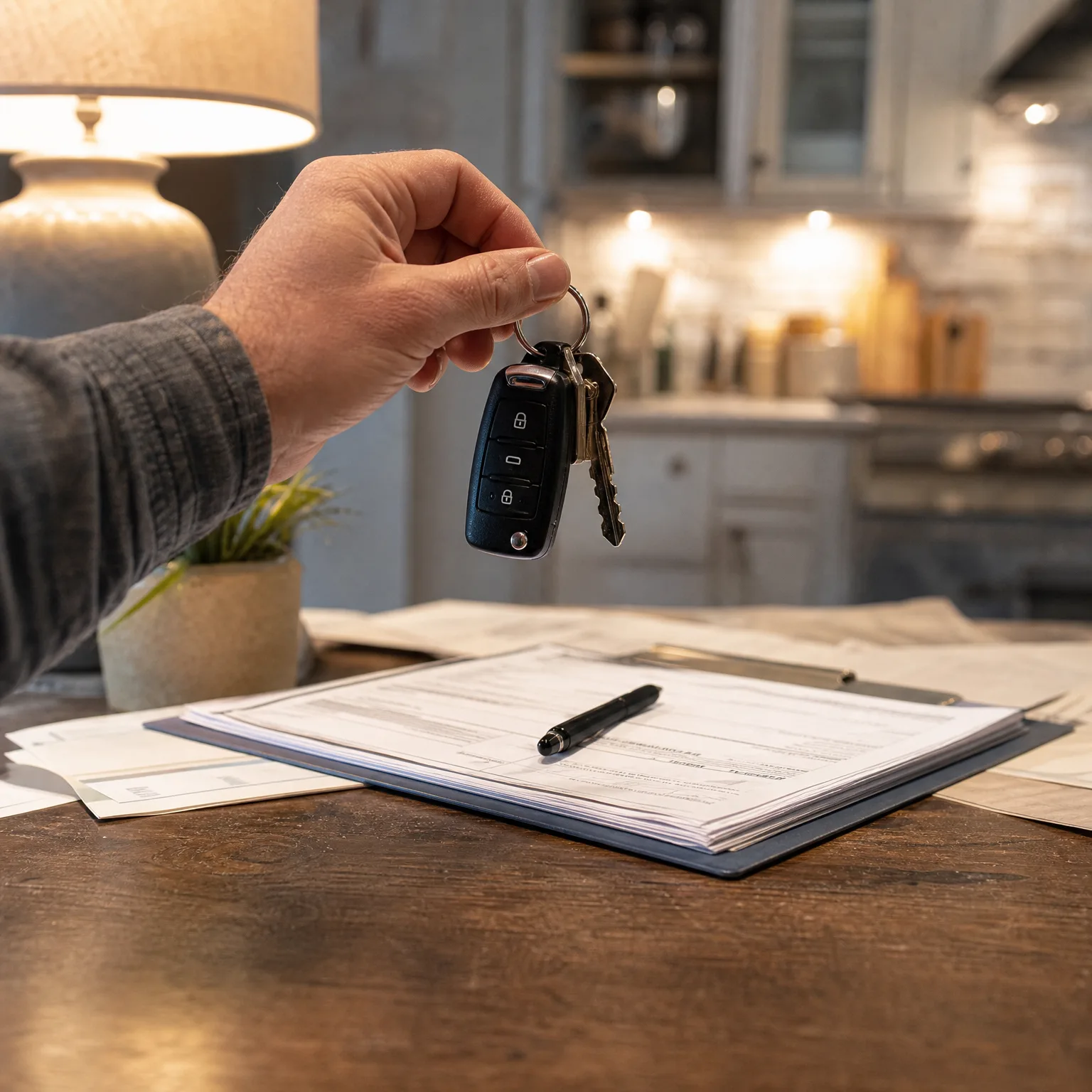
The Three-Step DPS Verification Process Texas Actually Requires
First, obtain a certified clearance letter from the court that issued your tickets. This is not the same document as your payment receipt. The clearance letter must state that all fines, fees, and court costs are paid in full and that no outstanding warrants or compliance obligations remain. Most Texas county courts charge $1 to $5 for certified copies. Request this document in person at the clerk's office or by mail — phone requests do not generate the certified documentation DPS requires.
Second, submit the certified clearance letter to DPS along with the $125 reinstatement fee. You can do this in person at any driver license office or by mail to the DPS Reinstatement Unit at PO Box 4087, Austin, TX 78773-0001. In-person submission typically processes within 3 to 5 business days. Mail submission adds 10 to 15 business days for processing after DPS receives your documents. Include a copy of your current driver license and a cover letter stating your full name, date of birth, driver license number, and the specific suspension you are clearing.
Third, verify clearance before operating a commercial vehicle. Call the DPS Reinstatement Unit at 512-424-2600 to confirm your driving record shows eligible status. Do not rely on the court's timeline estimate or assume clearance occurred because you submitted documents. If DPS cannot confirm clearance when you call, your CDL is still legally suspended. Operating a commercial vehicle on a suspended CDL triggers federal disqualification rules under 49 CFR 383.51, which can add months to your downtime and disqualify you from operating certain vehicle classes permanently.


Why CDL Holders Cannot Use Occupational Driver Licenses
Texas offers Occupational Driver Licenses for drivers facing personal-vehicle suspensions. These court-ordered restricted licenses allow driving to work, school, or for essential household duties during a suspension period. CDL holders frequently ask whether an ODL can substitute for their suspended commercial license. It cannot.
An ODL is a personal-vehicle driving privilege only. Federal regulations governing commercial motor vehicle operation — specifically 49 CFR Part 383 — prohibit states from issuing restricted commercial driving privileges. If your CDL is suspended, no state-level hardship license can restore your ability to operate vehicles requiring a CDL. Texas courts have no authority to override federal disqualification rules. This means CDL holders facing unpaid-ticket suspensions must complete full reinstatement before returning to commercial driving, even if the underlying violation occurred in a personal vehicle and had nothing to do with their job.
An ODL can, however, allow you to drive a personal vehicle to your non-driving job, to court-ordered programs, or for family care during the period your CDL is suspended. If you need to maintain personal mobility while waiting for DPS to process your commercial reinstatement, petition your county or district court for an ODL using the process outlined in Texas Transportation Code §521.241. The court will require proof of essential need, an SR-22 certificate of financial responsibility, and a filing fee that varies by county. The ODL does not shorten your CDL suspension period, but it can prevent total loss of mobility during the reinstatement process.

Line Up Coverage Before Your License Comes Back
Get Back on the RoadTimeline Gaps That Extend Your Suspension Unnecessarily
Most Texas CDL holders assume the reinstatement clock starts when they pay their tickets. It does not. The clock starts when DPS receives and processes your certified court clearance documentation. If you pay your tickets on Monday but do not submit clearance proof to DPS until the following week, you have added seven days to your suspension for no procedural reason.
Mail processing creates a second avoidable delay. DPS processes mailed reinstatement documents in the order received, and current processing times range from 10 to 21 business days after the envelope arrives in Austin. In-person submission at a driver license office bypasses this queue. Most offices process reinstatement documentation within 3 to 5 business days, and some can verify clearance the same day if staffing permits. If you are in the Dallas-Fort Worth, Houston, San Antonio, or Austin metro areas, in-person submission saves two to three weeks compared to mailing.
A third delay occurs when drivers submit incomplete documentation. DPS will not process reinstatement if your court clearance letter is missing case numbers, if it does not explicitly state all fines and fees are paid, or if you fail to include the $125 reinstatement fee. Incomplete submissions are returned by mail, adding another two to four weeks to your timeline. Before mailing or bringing documents to a driver license office, call the court clerk to confirm your clearance letter includes every data point DPS requires: your full legal name, date of birth, driver license number, case numbers for all cleared violations, total amount paid, date of payment, and a statement that no outstanding obligations remain.

What Happens If You Drive Commercially Before DPS Confirms Clearance
Operating a commercial vehicle while your CDL is suspended — even if you have paid your tickets and believe reinstatement is imminent — triggers federal disqualification rules that extend far beyond the original suspension. Under 49 CFR 383.51, driving a commercial motor vehicle during a suspension period constitutes a serious traffic violation. A first offense results in a minimum 60-day CDL disqualification. A second offense within three years results in a 120-day disqualification. A third offense results in a one-year disqualification.
These federal disqualification periods are mandatory and cannot be reduced by state courts or DPS. They stack on top of your underlying suspension, meaning you must serve the original suspension period plus the disqualification period before you can legally operate a commercial vehicle again. If your employer terminates you for unavailability during this extended downtime, no hardship license or occupational privilege can restore your earning capacity.
Texas employers who allow drivers to operate commercial vehicles on suspended CDLs face their own federal penalties. The Federal Motor Carrier Safety Administration can fine carriers up to $16,000 per violation under 49 CFR 383.37 for knowingly allowing disqualified drivers to operate. Most carriers verify driver license status before every dispatch using CDLIS, the Commercial Driver's License Information System. If your record shows suspended when they query CDLIS, you will not be dispatched, regardless of what your court paperwork says. CDLIS updates only after DPS processes your reinstatement and submits the clearance to the national database, which adds another 24 to 72 hours after DPS clears your state record.

Insurance Requirements for CDL Reinstatement in Texas
Unpaid-ticket suspensions in Texas do not trigger SR-22 filing requirements. You are not required to maintain SR-22 insurance during the suspension period or after reinstatement for this trigger. This distinguishes unpaid-ticket suspensions from DWI, uninsured-driving, and certain liability-judgment suspensions, which do require SR-22 filing.
You are, however, required to maintain liability insurance on any vehicle you own during the suspension period. Texas operates the TexasSure continuous insurance verification system, which monitors all registered vehicles in real time. If your insurance lapses while your CDL is suspended, TxDMV will suspend your vehicle registration and DPS may add a separate insurance-lapse suspension to your record. This second suspension does require SR-22 filing and will extend your total downtime significantly.
If you do not currently own a vehicle, you are not required to carry insurance during the suspension period for an unpaid-ticket trigger. Non-owner liability policies are available and can provide proof of financial responsibility if you need to drive a vehicle you do not own during your suspension, but Texas law does not mandate coverage for drivers without registered vehicles facing unpaid-fine suspensions.
Frequently Asked Questions
How long does it take DPS to process CDL reinstatement after I submit court clearance?
In-person submission at a Texas driver license office typically processes within 3 to 5 business days. Mailed submissions to the Austin Reinstatement Unit take 10 to 21 business days after DPS receives your documents. Processing times do not include mail transit time or delays caused by incomplete documentation.
Can I get an occupational license to keep driving trucks while my CDL is suspended?
No. Federal regulations prohibit states from issuing restricted commercial driving privileges. An Occupational Driver License in Texas allows personal-vehicle driving only — you cannot operate vehicles requiring a CDL under any restricted license. Full reinstatement is the only path to resume commercial driving.
Does paying my tickets automatically lift my CDL suspension in Texas?
No. Texas courts do not automatically notify DPS when you clear unpaid tickets. You must obtain a certified court clearance letter and submit it to DPS along with the $125 reinstatement fee. Your suspension remains active until DPS processes your clearance documentation.
Do I need SR-22 insurance to reinstate my CDL after unpaid tickets in Texas?
No. Unpaid-ticket suspensions do not require SR-22 filing in Texas. If you own a vehicle, you must maintain liability insurance to avoid a separate insurance-lapse suspension, but SR-22 is not required for this trigger.
What happens if I drive a commercial vehicle before DPS confirms my reinstatement?
Operating a commercial vehicle on a suspended CDL triggers federal disqualification rules under 49 CFR 383.51. A first offense results in a mandatory 60-day disqualification that stacks on top of your original suspension. Employers face federal fines up to $16,000 for knowingly allowing disqualified drivers to operate.
How do I verify my CDL is actually reinstated before I start driving again?
Call the DPS Reinstatement Unit at 512-424-2600 and provide your driver license number. DPS will confirm whether your record shows eligible status. Do not rely on court timelines or assume clearance occurred — verify directly with DPS before operating any commercial vehicle.
Related Articles

Texas CDL Failure-to-Appear: Court & DPS Timing
5/3/2026

TX Child Support CDL Suspension: Court & DPS Timing
5/3/2026

OK CDL Reinstatement: Court vs DPS Verification Timing
5/3/2026
TX CDL Insurance Lapse: Court-DMV Timing Gap
5/3/2026

TX Unpaid Tickets: Court Clearance to DMV Timing
5/3/2026

Oklahoma CDL Reinstatement: Court & DPS Timing After Lapse
5/3/2026