
Texas Child Support Arrears Suspension: Real Reinstatement Costs
Free to compare
Why Court Clearance Doesn't Automatically Reinstate Your Texas License
You paid the child support arrears or established a payment plan the court accepted. Texas family court issued a compliance notice. Your license is still suspended because Texas DPS operates a separate reinstatement process that does not automatically sync with family court records.
The Attorney General's office notifies DPS when you've met child support obligations, but DPS won't process reinstatement until you submit an application, pay reinstatement fees, and provide proof of compliance yourself. Most single parents assume court clearance is the final step—it's actually the first.
This coordination gap extends suspensions by 30-45 days on average. You need to manually confirm that both the court's compliance notice AND your reinstatement application have posted to DPS records before your driving privileges restore.

The Three-Entity Cost Stack Most Single Parents Don't Budget For
Reinstatement after child support arrears suspension in Texas involves fees to three separate entities: family court compliance costs, DPS reinstatement fees, and carrier SR-22 filing fees if required. None of these agencies consolidates billing.
Family court compliance typically requires proof of payment plan enrollment or lump-sum arrears clearance. Court administrative fees vary by county but generally run $50-$150. You receive a clearance letter—keep the original and three copies.
DPS charges a $100 reinstatement fee for administrative suspensions, plus $125 if you need to reapply for a Texas driver's license that expired during suspension. These fees are non-negotiable and must be paid before DPS processes your reinstatement application. Payment does not guarantee same-day reinstatement—processing takes 7-10 business days after DPS receives both payment and Attorney General clearance confirmation.
If your suspension also involves a lapsed insurance violation or if you choose to maintain coverage during suspension, carriers assess SR-22 filing fees separately. This is where the cost stack gets unpredictable.


Do You Actually Need SR-22 for Child Support Arrears Suspension in Texas?
Child support arrears suspension in Texas does not automatically require SR-22 filing. SR-22 is a liability insurance certification filed with DPS to prove continuous coverage—it's legally required only for specific violations like DUI, reckless driving, uninsured driving, or excessive points accumulation.
If your suspension is purely administrative—triggered solely by unpaid child support—you do not need SR-22 to reinstate. You need proof of current liability insurance if you own a vehicle, but the standard insurance ID card satisfies DPS requirements.
However, if your child support suspension overlaps with a separate violation that does require SR-22, you'll need to maintain SR-22 filing for the entire reinstatement period. Check your DPS suspension notice carefully. If the notice lists multiple suspension reasons, contact DPS directly to confirm whether SR-22 is required before purchasing a high-risk policy you don't legally need.
What Carriers Actually Charge for SR-22 Filing When You Do Need It
Carriers impose two separate costs when SR-22 is required: a one-time filing fee and a premium surcharge that lasts the duration of your SR-22 period.
The filing fee ranges from $15 to $50 depending on carrier. This is a one-time administrative charge to submit the SR-22 certificate electronically to Texas DPS. Some carriers waive the fee if you're already insured with them; most non-standard carriers do not.
The premium surcharge is the larger cost. Carriers classify SR-22 filers as high-risk, which increases your six-month premium by 30-80% compared to standard liability rates. For a minimum-liability policy in Texas—30/60/25 coverage—you're looking at $85-$140/month with SR-22, compared to $55-$85/month for a clean-record driver with identical coverage.
If you don't own a vehicle, ask about non-owner SR-22 policies. These provide liability coverage when you drive borrowed or rental vehicles and satisfy DPS SR-22 requirements without insuring a specific car. Non-owner SR-22 policies in Texas typically run $40-$70/month, significantly cheaper than standard SR-22 auto policies.

Line Up Coverage Before Your License Comes Back
Get Back on the Road
How to Avoid the 30-Day Coordination Gap Between Court and DPS
Texas family courts and DPS do not share real-time data. After you satisfy child support obligations, the Attorney General's Child Support Division submits a compliance notice to DPS—but this process is not instant, and DPS will not act on your reinstatement application until the notice appears in their system.
Submit your reinstatement application to DPS within 5 business days of receiving court clearance. Include a certified copy of your compliance letter from the Attorney General or family court. Pay the reinstatement fee online through the Texas DPS website or in person at a driver license office—online payments post faster.
Call DPS Driver Eligibility at 512-424-2600 seven business days after submitting your application to confirm that both your payment and the Attorney General's compliance notice have posted. If the compliance notice hasn't arrived, DPS cannot process your reinstatement even if you've paid. You'll need to contact the Attorney General's office directly to request expedited submission.
Most single parents lose weeks here because they assume payment alone triggers reinstatement. It doesn't. You're coordinating two bureaucracies that do not talk to each other automatically.
What Happens If You Start Driving Before DPS Confirms Reinstatement
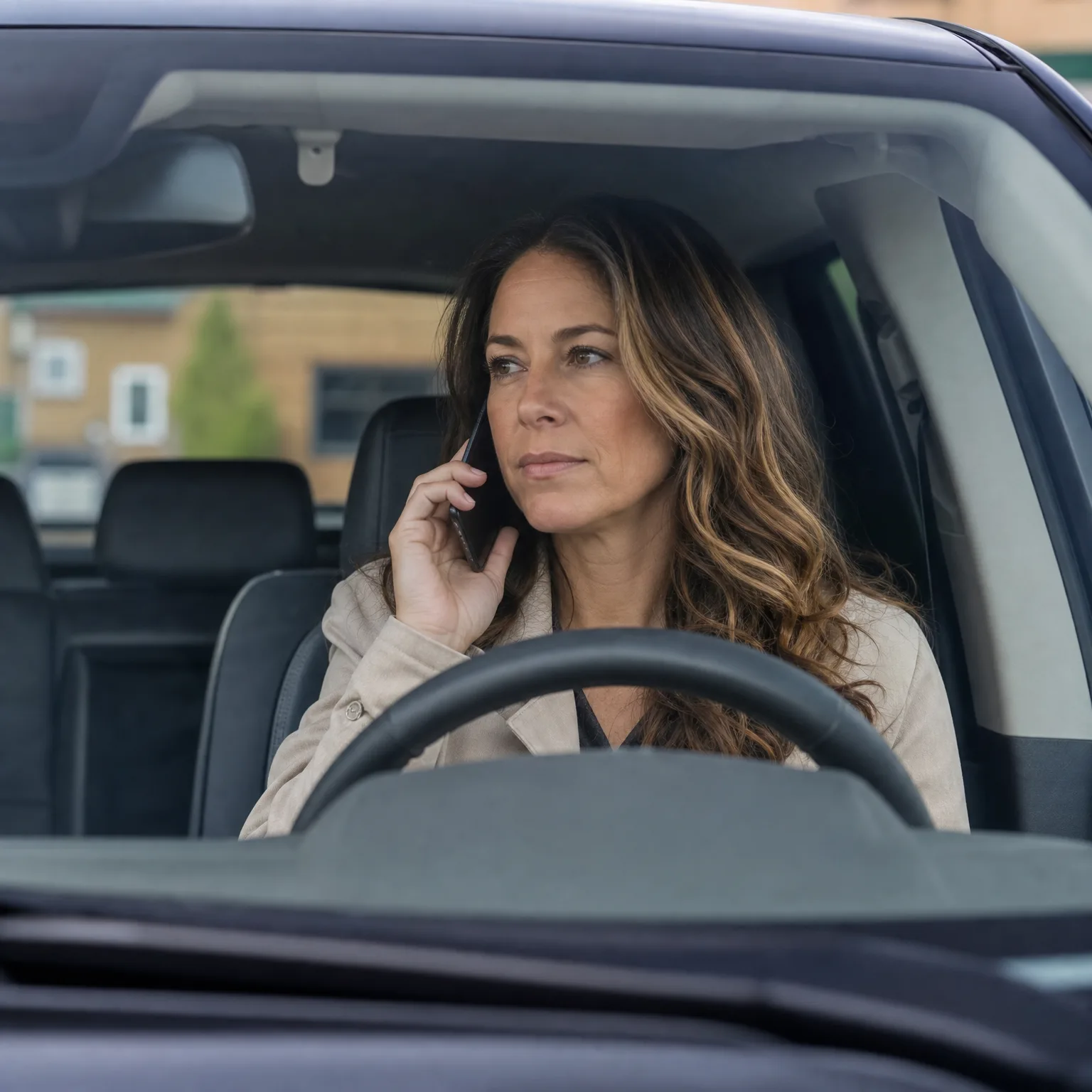
Driving on a suspended license in Texas—even after you've paid reinstatement fees and received court clearance—is a Class C misdemeanor for a first offense, carrying fines up to $500. If you're stopped during the processing window before DPS has officially reinstated your license, the fact that you submitted paperwork is not a defense.
Officers verify license status through DPS real-time systems during traffic stops. Until your reinstatement posts to that system, you are legally suspended. Even a one-day gap between payment and system update exposes you to additional charges.
Wait for written confirmation from DPS or verify reinstatement status online at texas.gov/driving-record before driving. Processing takes 7-10 business days after DPS receives both payment and compliance confirmation. If you need to drive for work during this window, public transit or rideshare is the only legally safe option.
Where to Find Coverage That Meets Texas Filing Requirements
If your suspension does require SR-22, you need a carrier licensed to file electronically with Texas DPS. Not all insurers offer SR-22 policies, and many standard carriers will not quote high-risk drivers.
Non-standard carriers like Bristol West, The General, and National General specialize in SR-22 filings and can often provide same-day coverage with electronic filing to DPS within 24 hours. Rates vary significantly by county, age, and violation history—compare quotes from at least three carriers.
If you don't own a vehicle, specify that you need a non-owner SR-22 policy when requesting quotes. This is a distinct product type and significantly cheaper than standard SR-22 auto insurance. Expect monthly premiums of $40-$70 for non-owner SR-22 in most Texas metro areas.
Once you have coverage, confirm with your carrier that the SR-22 certificate has been filed with DPS before submitting your reinstatement application. DPS will reject your application if the SR-22 isn't already on file in their system.
Frequently Asked Questions
How long does it take to reinstate a Texas license after child support arrears suspension?
Reinstatement takes 7-10 business days after Texas DPS receives both your reinstatement fee payment and the Attorney General's compliance notice confirming you've satisfied child support obligations. The coordination gap between family court clearance and DPS processing is the most common delay—most single parents wait 30-45 days total from court clearance to full reinstatement.
Can I get a hardship license in Texas while my license is suspended for child support arrears?
No. Texas does not issue occupational driver licenses for administrative suspensions triggered by child support arrears. Hardship licenses are available only for specific violation-based suspensions like DUI or excessive points. Your only path to legal driving is full reinstatement after satisfying child support obligations and paying DPS fees.
Do I need SR-22 insurance to reinstate my license after child support suspension in Texas?
Not if child support arrears is the only reason for your suspension. SR-22 is required only for specific violations like DUI, reckless driving, or uninsured driving. If your suspension notice lists multiple reasons—for example, child support arrears plus a lapsed insurance violation—you may need SR-22. Check your DPS suspension notice or call Driver Eligibility at 512-424-2600 to confirm.
What if I can't afford the full child support arrears amount Texas requires for reinstatement?
Texas family courts typically accept payment plans that demonstrate good-faith compliance even if you cannot pay the full arrears balance immediately. Once you establish an approved payment plan and make the required initial payments, the court issues a compliance notice to DPS. You don't need to clear the entire arrears balance before reinstatement—you need proof of an active, court-approved plan.
How much does SR-22 insurance cost in Texas if I do need it for reinstatement?
SR-22 insurance in Texas costs $85-$140/month for minimum liability coverage if you own a vehicle, or $40-$70/month for a non-owner SR-22 policy if you don't. Carriers also charge a one-time filing fee of $15-$50. Rates vary by county, age, and driving history—non-standard carriers like Bristol West and The General typically offer the most competitive pricing for high-risk drivers.
Can I check if my Texas license reinstatement has processed before driving?
Yes. Verify your license status online at texas.gov/driving-record or call DPS Driver Eligibility at 512-424-2600. Do not drive until you receive written confirmation or online verification that your reinstatement has posted to DPS systems. Driving during the processing window—even after paying fees—is still driving on a suspended license and carries criminal penalties.
Related Articles

TX Child Support Suspension: SR-22 Timing & Clearance
5/3/2026

Texas CDL Child Support Reinstatement Costs Breakdown
5/3/2026

TX Child Support Suspension: Court vs DMV Clearance
5/3/2026

License Suspended for Child Support in Houston: Reinstatement Steps
4/29/2026

TX Reinstatement Costs for Single Parents: Full Stack
5/3/2026

Texas Child Support Suspension Costs for Students
5/3/2026