
Kansas Rideshare Suspension Reinstatement: The Real Cost Stack
Free to compare
What Kansas charges you to reinstate after an insurance lapse suspension
Kansas DMV charges a $100 reinstatement fee for insurance lapse suspensions, payable at any DMV office or online through the state's iKan portal. This fee is separate from the SR-22 filing fee your carrier charges. You pay the state $100 to remove the suspension flag, then you pay your insurer $25-$50 to file SR-22 proof with the state.
The reinstatement fee applies whether you lapsed coverage for 10 days or 10 months. Kansas does not prorate this charge. If you were suspended for failure to maintain continuous liability coverage under K.S.A. 40-3104, the $100 fee is mandatory before your license can be reinstated.
Most Wichita and Overland Park drivers pay the reinstatement fee first, assuming that clears the suspension. It does not. Kansas requires active SR-22 filing on record before DMV will process your reinstatement—so you must secure a policy, wait for your carrier to electronically file SR-22 with the state, then pay the $100 fee. Filing in the wrong order adds 5-10 days to your timeline because DMV rejects incomplete reinstatement requests without refunding the fee.
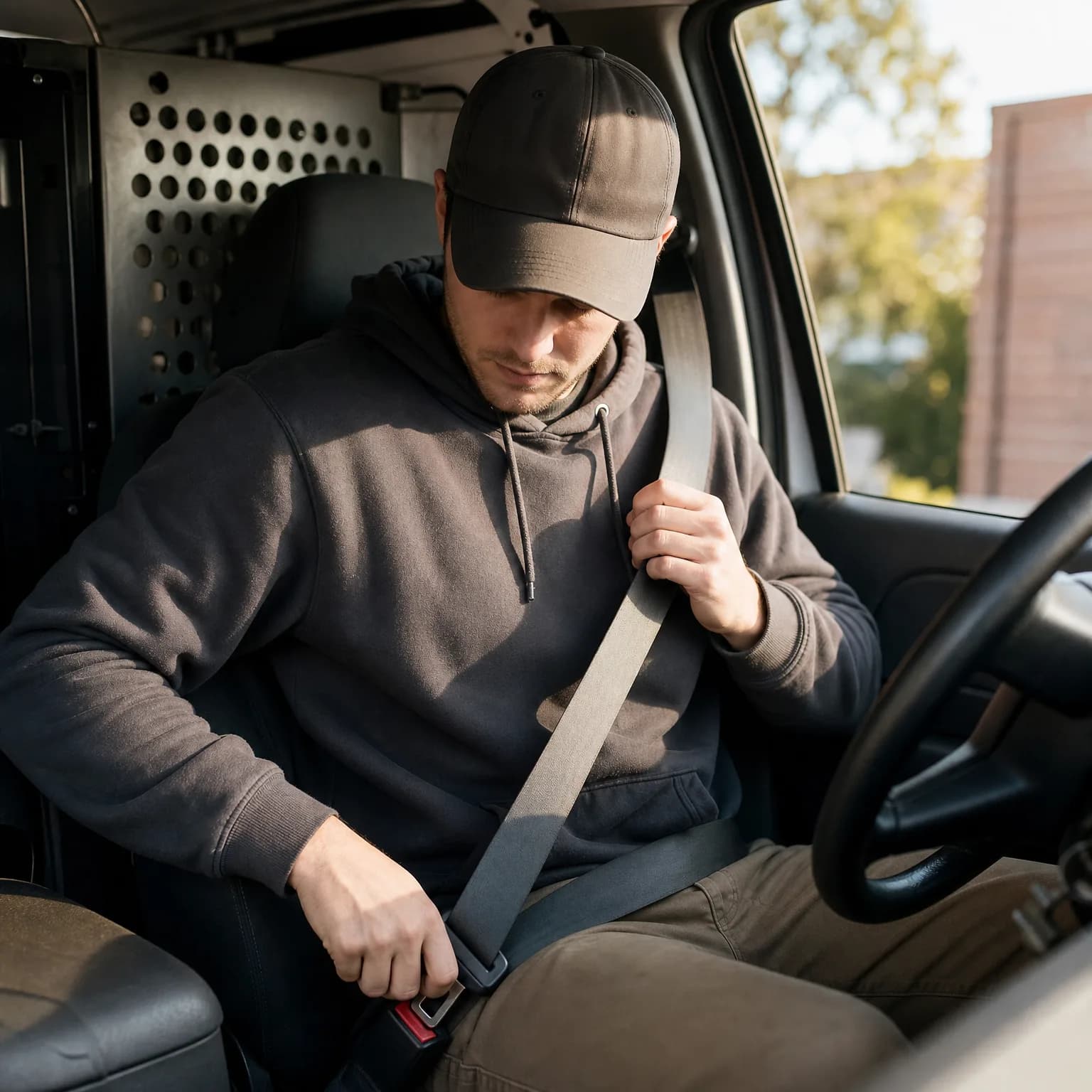
How SR-22 filing fees and carrier markup combine in Kansas
Kansas requires SR-22 filing for two years following an insurance lapse suspension. Your carrier charges a one-time SR-22 filing fee—typically $25-$50—to submit the certificate to Kansas DMV. This is an administrative charge, not part of your premium.
The hidden cost is the SR-22 carrier markup. Insurers classify SR-22 filers as high-risk drivers, which triggers underwriting surcharges that range from 15% to 25% above your base premium. If your base liability policy costs $80/month, the SR-22 surcharge adds $12-$20/month, which compounds to $288-$480 over the two-year filing period. Aggregators quote the base rate because that is what their API returns—they do not surface the SR-22 multiplier until you reach the carrier's checkout page.
Rideshare drivers face additional layering. Uber and Lyft require higher liability limits than Kansas state minimums—most platforms mandate 50/100/25 or higher while you are online. If you maintain personal SR-22 coverage at Kansas minimums (25/50/25) and rely on the platform's contingent coverage, your policy may satisfy DMV but create a gap that disqualifies you from driving. Upgrading to 50/100/25 increases your base premium by 20-30%, and the SR-22 surcharge applies to that higher base, not the state minimum.
Carriers do not itemize the SR-22 surcharge on your declarations page. You see one monthly premium that reflects both your lapse history and the SR-22 filing requirement. The only way to isolate the SR-22 cost is to request quotes with and without SR-22 from the same carrier for the same coverage limits—a process most drivers skip because they assume the first quote they receive is the only option available.

Why rideshare reactivation adds a third cost layer most drivers miss
Uber and Lyft both run background checks that include license status verification. Once your Kansas suspension is cleared and SR-22 is active, you must upload your updated insurance documents to the platform's driver portal. Most platforms charge no reactivation fee for this step—but they require proof of coverage that meets their minimum limits, not just Kansas state minimums.
The cost layer emerges when your SR-22 policy does not meet platform requirements. Kansas allows you to reinstate with 25/50/25 liability coverage. Uber requires 50/100/25 in most markets. If your SR-22 policy satisfies DMV but not the platform, you must upgrade your coverage mid-policy term, which triggers a prorated premium adjustment and sometimes a second underwriting review.
Some carriers refuse to adjust SR-22 policies mid-term. If your insurer does not allow endorsements after the policy is issued, you must cancel and rewrite the policy at higher limits—which means paying a second SR-22 filing fee and restarting your two-year SR-22 clock in some cases. Kansas law does not require continuous SR-22 filing if your license is already reinstated, but voluntarily canceling an SR-22 policy before the two-year mark can trigger a DMV review and potential re-suspension if the state interprets the cancellation as proof of non-coverage.
Wichita drivers who assume their $80/month SR-22 policy covers rideshare reactivation often discover the platform rejects their documents 7-10 days after submission. Upgrading to compliant limits at that point costs an additional $30-$50/month, which pushes their total monthly cost to $110-$130—not the $80 they budgeted based on the initial SR-22 quote.

Line Up Coverage Before Your License Comes Back
Get Back on the RoadWhat the full cost stack looks like for Kansas rideshare drivers
Add the one-time reinstatement fee ($100), the SR-22 filing fee ($25-$50), and the first month's premium with SR-22 surcharge and rideshare-compliant limits ($110-$150). Your upfront cost to reinstate and reactivate ranges from $235 to $300. This does not include the ongoing monthly premium for months 2-24 of your SR-22 filing period.
Over the full two-year SR-22 filing period, the total cost breaks down as follows. Reinstatement fee: $100 (one-time). SR-22 filing fee: $25-$50 (one-time). Monthly premium for 24 months at rideshare-compliant limits with SR-22 surcharge: $2,640-$3,600 ($110-$150/month × 24). Total: $2,765-$3,750.
Most aggregators quote $1,920-$2,400 for two years of SR-22 coverage because they calculate state minimums without the rideshare upgrade and without fully loading the SR-22 surcharge into the monthly rate. The $400-$600 gap between aggregator estimates and actual out-of-pocket cost is the information gap this article addresses.
Kansas does not require you to maintain SR-22 filing for rideshare driving specifically—the two-year requirement applies to your license reinstatement, not your employment. Once the SR-22 period expires, you can switch to a standard policy without the high-risk surcharge, but you must maintain continuous coverage or risk triggering a new suspension cycle.

How to reduce the SR-22 cost without sacrificing rideshare eligibility
Request quotes from carriers that specialize in SR-22 filings and rideshare coverage simultaneously. Standard insurers often decline to write policies that combine both risk factors, which forces you into the non-standard market where premiums are 40-60% higher. Carriers like Progressive, The General, and Bristol West write SR-22 policies with rideshare endorsements in Kansas—but not all agents quote both components together unless you ask explicitly.
Pay your six-month premium in full if you can afford the upfront cost. Most SR-22 carriers charge 10-15% more for monthly payment plans because they classify high-risk drivers as higher cancellation risk. A $660 six-month policy paid monthly costs $75-$100 more over the same period due to installment fees that carriers do not always disclose at the quote stage.
Do not let your SR-22 policy lapse during the two-year filing period. Kansas DMV receives electronic notification within 24 hours when an SR-22 policy cancels or lapses. The state suspends your license again immediately, and you must pay a second $100 reinstatement fee plus a new SR-22 filing fee to clear the suspension. The two-year SR-22 clock does not pause—it restarts from the date of your second reinstatement, which can extend your high-risk premium period to three or four years if you lapse coverage multiple times.
If you no longer drive for rideshare platforms but still need SR-22 coverage to satisfy Kansas DMV, downgrade to state minimum liability limits (25/50/25) and drop the rideshare endorsement. This reduces your monthly premium by $30-$50 without affecting your SR-22 compliance. Uber and Lyft require updated insurance documents only when you are actively driving—if you deactivate your driver account, you are not required to maintain rideshare-level coverage.
Frequently Asked Questions
Does Kansas require SR-22 filing for all insurance lapse suspensions?
Yes. Kansas requires SR-22 filing for any suspension triggered by failure to maintain continuous liability coverage under K.S.A. 40-3104. The SR-22 filing period is two years from your reinstatement date, and the state monitors your coverage electronically throughout that period.
Can I reinstate my Kansas license before my SR-22 policy starts?
No. Kansas DMV will not process your reinstatement until your carrier has filed SR-22 proof electronically with the state. You must purchase an SR-22 policy, wait for the carrier to submit the filing (typically 1-3 business days), then pay your reinstatement fee and submit your reinstatement application.
Will my rideshare platform accept Kansas minimum liability coverage?
Most platforms require higher limits than Kansas state minimums. Uber and Lyft typically mandate 50/100/25 liability coverage or higher, while Kansas allows reinstatement with 25/50/25. Verify your platform's insurance requirements before purchasing your SR-22 policy to avoid upgrading mid-term.
How much does SR-22 insurance cost for rideshare drivers in Kansas?
Expect $110-$150/month for SR-22 coverage with rideshare-compliant liability limits (50/100/25 or higher). This includes the SR-22 surcharge and rideshare endorsement. Over the two-year filing period, total cost ranges from $2,640 to $3,600, plus a one-time $100 reinstatement fee and $25-$50 SR-22 filing fee.
What happens if my SR-22 policy lapses during the two-year filing period in Kansas?
Kansas DMV suspends your license again within 24 hours of receiving electronic notification from your carrier. You must pay a new $100 reinstatement fee, purchase a new SR-22 policy, and restart the two-year SR-22 filing clock from your second reinstatement date.
Can I switch carriers during my SR-22 filing period without restarting the clock?
Yes, but you must maintain continuous SR-22 coverage with no gap between policies. Your new carrier files SR-22 with Kansas DMV electronically, and your old carrier notifies the state of cancellation. Any lapse longer than 24 hours triggers a new suspension and restarts your two-year filing period.
Related Articles

Kansas Lapse Suspension: Full Reinstatement Cost Stack
5/3/2026

Kansas CDL Lapse Reinstatement Costs: Fees & SR-22
5/3/2026

Reinstate Your License in Wichita After Insurance Lapse
4/29/2026
Kansas Rideshare DUI Reinstatement Cost Breakdown
5/3/2026
Kansas Lapse Suspension Costs: Full Single Parent Stack
5/3/2026
Reinstate Lapse License Kansas City: SR-22 & DMV Steps
4/29/2026