
NJ Failure-to-Appear Warrant Suspension: SR-22 Timing & Gaps
Free to compare
Does a failure-to-appear suspension in New Jersey require SR-22 insurance?
No. A failure-to-appear warrant suspension in New Jersey does not require SR-22 filing (or its New Jersey equivalent, the FS-1 form). The suspension is administrative, triggered by missing a court date for a traffic violation, and is lifted once you resolve the underlying warrant and pay court fines. SR-22 is required for violations involving uninsured driving under N.J.S.A. 39:6B-2, DUI/DWI convictions under N.J.S.A. 39:4-50, or certain reckless driving cases—not for administrative failures to appear.
That said, you still need active liability insurance to reinstate your license after the suspension is lifted. New Jersey's electronic insurance monitoring system tracks your policy status, and if you let coverage lapse during the suspension period, the MVC will flag the lapse and add a separate suspension layer on top of the failure-to-appear hold. This creates a compounding problem: you clear the warrant, but the MVC won't process reinstatement until you show proof of current insurance and pay reinstatement fees for both the failure-to-appear suspension and the uninsured-driving suspension.
If you don't currently own a vehicle, non-owner car insurance satisfies New Jersey's insurance requirement without requiring you to insure a specific car. This is the most cost-effective path for single parents who rely on borrowing a vehicle, rideshare, or public transit during the suspension period. Rates typically run $40–$70/month depending on your municipal court record and zip code.

Why court clearance doesn't automatically lift your MVC suspension
New Jersey separates court-level warrant clearance from MVC-level license reinstatement. When you resolve your failure-to-appear warrant—by appearing in municipal court, paying fines, or negotiating a payment plan—the court clears the warrant in its own system. That clearance does not automatically transmit to the New Jersey Motor Vehicle Commission. The MVC suspends your license based on a notification it received from the court when the warrant was initially issued, and it requires a separate clearance submission to lift that suspension.
Most single parents assume paying the fine at the municipal court window resolves everything. It clears the criminal hold, but the MVC still shows an active suspension until the court submits a clearance notice to the MVC or you submit proof of court compliance yourself. This gap is where the 30–45 day delay occurs. Courts process their internal paperwork, but MVC processing depends on how quickly the court transmits the clearance electronically or by mail, and whether the MVC processes that clearance without additional documentation requests.
You can accelerate the process by requesting a court clearance letter the same day you resolve the warrant. Take that letter directly to an MVC office along with proof of insurance, your driver's license or state ID, and the $100 MVC restoration fee. The MVC will process reinstatement on the spot if all documentation is in order. Without that manual submission, you wait for the court's transmission cycle, which varies by municipality and often stretches 4–6 weeks.

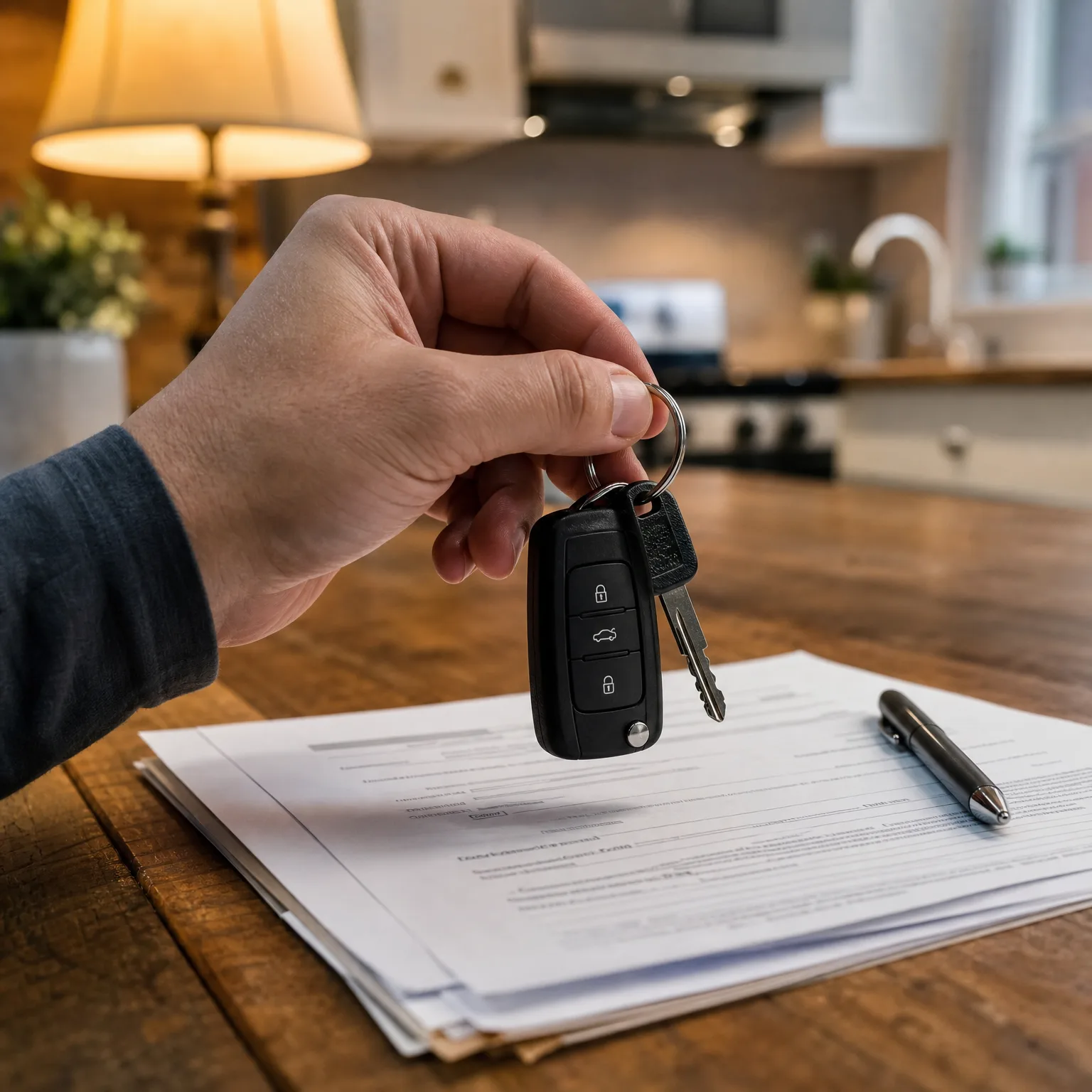
What documentation you need to reinstate after clearing a failure-to-appear warrant
The MVC requires three items before reinstating your license after a failure-to-appear suspension: proof that the court warrant has been cleared, proof of current liability insurance, and payment of the $100 MVC restoration fee. The court clearance proof is the most commonly missed piece. Municipal courts issue a clearance letter or stamped docket entry showing the warrant was resolved and fines were paid or a payment plan was established. Request this document the same day you appear in court—do not leave the courthouse without it.
Proof of insurance means either an insurance ID card from your carrier showing current coverage or a signed declaration page showing your policy is active. New Jersey's electronic insurance monitoring system allows the MVC to verify coverage in real time for most carriers, but having a physical card prevents processing delays if the carrier's reporting is lagged. If you are filing for non-owner insurance to meet this requirement, confirm with your agent that the policy shows as active in the state's system before going to the MVC.
The $100 restoration fee applies per suspension. If you have multiple active suspensions—for example, a failure-to-appear suspension and a separate insurance lapse suspension triggered during the failure-to-appear period—you will owe $100 for each suspension. The MVC does not waive or reduce restoration fees for financial hardship, and payment plans are not available for this fee. Bring payment in full, either by credit card, debit card, or certified check. Personal checks are not accepted for restoration fees at most MVC offices.
Why lapse-gap documentation matters even when SR-22 isn't required
New Jersey's electronic insurance monitoring system creates a separate trap for drivers reinstating after failure-to-appear suspensions. If your insurance policy lapsed at any point during the suspension period—even for a single day—the MVC receives an automatic notification from your carrier. That lapse triggers a second suspension under N.J.S.A. 39:6B-2, which is the uninsured-driving statute. This second suspension stacks on top of the failure-to-appear suspension and requires separate clearance.
The gap most single parents miss is the timing of when the lapse occurred relative to when the court warrant was resolved. If you let your policy lapse because you assumed you didn't need insurance while your license was suspended, the MVC still tracked that lapse and added a new suspension. When you go to reinstate, the MVC shows two active suspensions: one for failure to appear, one for uninsured driving. You clear the first, but the second remains until you submit proof of current insurance and pay an additional $100 restoration fee.
To avoid this, maintain continuous liability coverage throughout your suspension period, even if you are not driving. If you already have a lapse on record, address it before attempting reinstatement. Obtain a new policy or reinstate your old policy, then wait for the carrier to report the new coverage to the MVC's electronic system. This reporting lag typically takes 3–5 business days. Do not go to the MVC until your coverage shows as active in the state's system, or you will be turned away and told to return after the lapse is resolved.

Line Up Coverage Before Your License Comes Back
Get Back on the Road
How to handle reinstatement when you're on a court payment plan
New Jersey municipal courts allow payment plans for fines and court costs if you cannot pay the full amount upfront. Entering a payment plan clears the failure-to-appear warrant, but the court clearance process works differently than it does for lump-sum payments. Courts issue a conditional clearance letter showing you entered a payment plan and made your first payment. The MVC accepts this conditional clearance for reinstatement purposes, but only if the letter explicitly states the warrant has been lifted and the payment plan is in good standing.
If you miss a payment plan installment after your license is reinstated, the court can reissue the warrant and notify the MVC to suspend your license again. This creates a reinstatement loop: you clear the warrant, reinstate your license, miss a payment, and the suspension returns. Single parents managing childcare costs, rent, and transportation expenses on tight budgets need to treat the court payment plan as non-negotiable. Set up automatic payments if the court allows, or calendar each due date separately.
Before leaving the municipal court after setting up your payment plan, confirm the court will submit the conditional clearance to the MVC electronically. Some municipalities still mail clearance notices rather than transmitting them through the state's electronic system, which adds 10–15 days to the MVC processing timeline. If your municipality uses mail-based clearance, request a stamped copy of the payment plan agreement and clearance letter to bring to the MVC yourself. This eliminates the transmission delay and allows same-day reinstatement if your insurance and restoration fee are in order.

What insurance options work for single parents without a vehicle
Non-owner car insurance is the most cost-effective solution for single parents who need to reinstate their license but don't currently own a vehicle. A non-owner policy provides the liability coverage New Jersey requires without insuring a specific car. This satisfies the MVC's insurance verification requirement and costs significantly less than insuring a vehicle you don't drive. Monthly premiums for non-owner policies in New Jersey typically range from $40 to $70 depending on your municipal court record, age, and zip code.
Non-owner policies cover you when you borrow a vehicle, rent a car, or use a car-sharing service. They do not cover vehicles you own, lease, or have regular access to—if you live with a family member who owns a car and you drive it regularly, the MVC and most carriers will require you to be added to that vehicle's policy as a listed driver rather than carrying a separate non-owner policy. Misrepresenting your household vehicle situation to obtain a non-owner policy can result in claim denials and policy cancellations, which trigger new insurance lapse suspensions.
If you plan to purchase or lease a vehicle within the next six months, coordinate the timing of your non-owner policy with your vehicle purchase. Non-owner policies cannot be transferred to a vehicle you own—you will need to cancel the non-owner policy and obtain a standard auto policy the day you take possession of the vehicle. Most carriers allow same-day policy switches, but the gap between cancellation and new policy activation can create a lapse in the MVC's system if not handled correctly. Work with an agent who understands New Jersey's electronic insurance monitoring requirements to avoid triggering a new suspension during the transition.
When to get insurance and when to go to the MVC
Obtain insurance before going to the MVC. New Jersey requires proof of current liability insurance as a condition of reinstatement, and the MVC will not process your reinstatement application without it. If you show up with a court clearance letter and the $100 restoration fee but no proof of insurance, you will be turned away and told to return after obtaining coverage. This wastes time and creates additional childcare and transportation costs for single parents who have to make multiple MVC trips.
Once you obtain a new policy, wait 3–5 business days before going to the MVC. Carriers report new policies to New Jersey's electronic insurance monitoring system, but that reporting is not instantaneous. If you go to the MVC the same day you purchase a policy, the MVC's system may not yet show your coverage as active, which means the clerk cannot process your reinstatement even though you have a valid insurance ID card in hand. Confirm with your carrier that your policy has been transmitted to the state's system before scheduling your MVC appointment.
If you are reinstating on a court payment plan rather than a lump-sum payment, confirm the court has submitted your conditional clearance to the MVC before scheduling your appointment. Call the MVC's suspension unit at the number listed on your suspension notice and ask whether the court clearance has posted to your driver record. If it has not, bring the stamped court clearance letter with you to the MVC as backup documentation. This prevents the common scenario where the court says it submitted clearance but the MVC has no record of receiving it, leaving you stuck between two bureaucracies with no clear resolution path.
Frequently Asked Questions
Do I need SR-22 insurance to reinstate my New Jersey license after a failure-to-appear suspension?
No. Failure-to-appear suspensions in New Jersey are administrative and do not require SR-22 filing or its New Jersey equivalent, the FS-1 form. You need proof of active liability insurance to reinstate, but the filing requirement applies only to DUI/DWI convictions, uninsured driving violations, or certain reckless driving cases.
How long does it take the MVC to process reinstatement after I clear a failure-to-appear warrant?
If you bring the court clearance letter directly to the MVC along with proof of insurance and the $100 restoration fee, reinstatement is processed the same day. If you rely on the court to transmit clearance electronically, processing typically takes 30–45 days depending on the municipality's transmission cycle and MVC processing backlog.
Can I get my New Jersey license reinstated if I'm on a court payment plan for the ticket?
Yes. Municipal courts issue a conditional clearance letter when you enter a payment plan and make your first payment. The MVC accepts this for reinstatement as long as the letter explicitly states the warrant has been lifted and the payment plan is in good standing. Missing a payment after reinstatement can trigger a new suspension.
What happens if my insurance lapsed during my failure-to-appear suspension in New Jersey?
New Jersey's electronic insurance monitoring system tracks lapses even during suspension periods. If your policy lapsed, the MVC adds a second suspension under N.J.S.A. 39:6B-2 for uninsured driving. You must resolve both suspensions separately, pay a $100 restoration fee for each, and show proof of current insurance before reinstatement is processed.
How much does non-owner car insurance cost in New Jersey for reinstatement?
Non-owner policies in New Jersey typically cost $40–$70 per month depending on your municipal court record, age, and zip code. This is the most cost-effective option for single parents who don't currently own a vehicle but need to meet the MVC's insurance requirement to reinstate their license.
Do I have to go to the MVC in person to reinstate after a failure-to-appear suspension?
Yes. Failure-to-appear suspensions require in-person reinstatement at an MVC office. You must bring the court clearance letter, proof of current insurance, and payment for the $100 restoration fee. Online reinstatement is not available for this suspension type.
What if the court says it sent my clearance to the MVC but the MVC has no record of it?
This is common. Request a stamped court clearance letter the day you resolve the warrant and bring it directly to the MVC yourself. Do not rely on the court's electronic or mailed transmission. The stamped letter serves as backup documentation if the MVC's system does not show the clearance has posted to your driver record.
Related Articles

NJ Failure-to-Appear Warrant: SR-22 Timing & Lapse Gaps
5/3/2026

NJ Insurance Lapse Suspension & FS-1 Filing for Parents
5/3/2026

NJ Child Support License Suspension & Reinstatement
5/3/2026

NJ Warrant Suspension: SR-22 Timing for Rideshare Drivers
5/3/2026

NJ Child Support Suspension: SR-22 & CDL Clearance
5/3/2026

NJ Rideshare SR-22 for Unpaid Ticket Suspensions
5/3/2026