
Louisiana CDL Reinstatement After Failure-to-Appear Warrant
Free to compare
Louisiana OMV processes CDL reinstatements separately from standard license suspensions
Louisiana treats commercial driver's license (CDL) suspensions under a different procedural track than standard Class D or E license suspensions. When your CDL is suspended for a failure-to-appear warrant, the Louisiana Office of Motor Vehicles (OMV) flags your commercial driving privilege separately from your personal driving privilege—even if both privileges appear on the same physical card.
Failure-to-appear warrants in Louisiana are administrative holds, not traffic violations. The court issues the warrant when you miss a scheduled court date for a citation or fail to satisfy a fine payment arrangement. The court then transmits the warrant data to OMV, which suspends your driving privileges until the court transmits a clearance notice. For CDL holders, this suspension applies to both commercial and personal driving—you cannot legally operate any vehicle until the hold is cleared.
The reinstatement fee for a failure-to-appear suspension in Louisiana is $60, per La. R.S. 32:415.1. This fee applies whether you hold a standard license or a CDL. However, CDL holders face additional steps after the court clears the warrant: OMV requires proof that you remain medically qualified and have satisfied any FMCSA reporting requirements triggered by the suspension, depending on the underlying citation that led to the court appearance you missed.
SR-22 filing is not required for failure-to-appear warrant suspensions in Louisiana
Louisiana does not require SR-22 proof of financial responsibility for administrative suspensions triggered by failure-to-appear warrants. SR-22 filing is mandatory in Louisiana only for DWI suspensions, uninsured motorist violations, serious traffic convictions, and certain habitual offender cases, per La. R.S. 32:415.1 and 32:862.
If the underlying citation that led to your missed court date was a DWI, reckless driving charge, or uninsured motorist violation, SR-22 may be required to reinstate—but the requirement stems from the underlying offense, not from the failure-to-appear warrant itself. Most CDL holders suspended for failure to appear on speeding tickets, equipment violations, or unpaid fines do not need SR-22 filing to reinstate their license.
When you visit OMV to reinstate after clearing the warrant, the clerk will check your driver record for any additional flags requiring SR-22 or other compliance documents. If your suspension was purely administrative (court hold with no underlying serious violation), you will pay the $60 reinstatement fee and provide proof the warrant was cleared. OMV does not require proof of insurance for administrative reinstatements unless your record shows a separate insurance lapse suspension or uninsured motorist violation.


Lapse-gap documentation matters for CDL holders with employer-provided coverage
CDL holders who drive company-owned vehicles typically do not carry personal auto insurance policies—their employer's commercial fleet policy covers them while operating company equipment. When your license is suspended for a failure-to-appear warrant, your employer's fleet insurer may not cancel your coverage, but your employer may remove you from the authorized driver list until your license is reinstated.
Louisiana does not require proof of active insurance to reinstate a license suspended for administrative reasons. However, OMV's system flags any insurance lapse detected through the Louisiana Insurance Verification System (LAIVS) during the suspension period. If you personally owned a vehicle and let your insurance lapse while suspended, OMV may impose a separate insurance lapse suspension on top of the failure-to-appear suspension—extending your total suspension period and adding a separate reinstatement fee.
The gap most CDL holders miss: if you sold your personal vehicle or transferred the title during the suspension, you must provide OMV with documentation showing the vehicle was removed from your name before the insurance lapsed. Without that documentation, OMV assumes you drove uninsured and imposes a lapse penalty. Acceptable documentation includes the bill of sale, title transfer receipt, or DMV vehicle registration cancellation notice. Bring these documents to your reinstatement appointment if you sold or transferred a vehicle while suspended.
Restricted license options are not available for failure-to-appear warrant suspensions
Louisiana offers a Restricted License program under La. R.S. 32:415.1 that allows limited driving privileges during certain suspension periods. The program is designed for DWI suspensions, serious traffic violations, and point accumulation suspensions—not for administrative holds like failure-to-appear warrants.
OMV will not process a Restricted License application while a court hold is active on your record. The court hold is a binary flag: either the warrant is cleared and your license is eligible for reinstatement, or the warrant remains active and your license remains suspended. There is no intermediate hardship option for administrative holds.
This distinction matters for CDL holders who need to return to work quickly. You cannot apply for a Restricted License to drive commercially while the warrant remains unresolved. The only path forward is to clear the warrant with the court, wait for the clearance to post to OMV's system (or bring written proof of clearance), pay the reinstatement fee, and restore your full driving privileges. Some CDL holders attempt to negotiate a hardship license with OMV after paying the court fine—this wastes time and does not move the reinstatement process forward.

Line Up Coverage Before Your License Comes Back
Get Back on the Road
Medical certification and FMCSA reporting obligations apply separately from state reinstatement
Louisiana OMV requires all CDL holders to maintain a current medical examiner's certificate on file, per FMCSA regulations. If your medical certification expired during your suspension period, OMV will downgrade your license to a standard Class D or E license when you reinstate—even if the warrant clearance and reinstatement fee are processed correctly.
Before you visit OMV to reinstate, verify your medical certification status on your FMCSA driver record. If your medical card expired while you were suspended, schedule a new DOT physical and submit the updated medical examiner's certificate to OMV before attempting to reinstate your CDL. Louisiana allows you to submit updated medical documentation online through the OMV portal or in person at any OMV office.
Some underlying offenses that lead to failure-to-appear warrants trigger mandatory FMCSA reporting by your employer or the state. If your missed court date was for a DWI, reckless driving charge, or serious traffic violation committed in a commercial vehicle, the violation must be reported to FMCSA and will appear on your national CDL driving record. Louisiana OMV does not control this reporting—it is a federal requirement. Your employer may require you to complete additional safety training or face employment consequences even after your state license is reinstated.
What to bring to your OMV reinstatement appointment
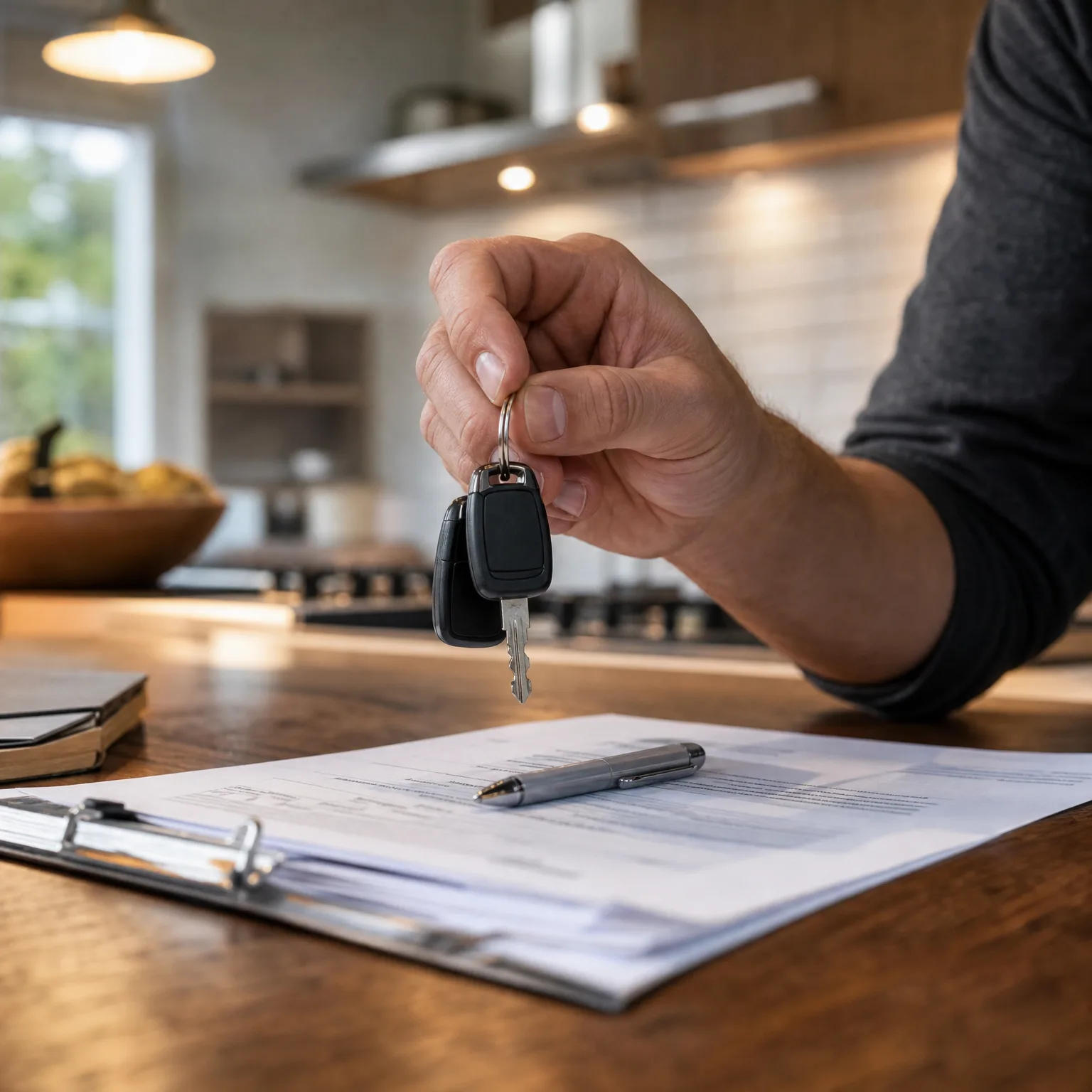
You need four documents to reinstate your CDL after clearing a failure-to-appear warrant in Louisiana: (1) written proof the warrant was cleared, issued by the court clerk, (2) payment for the $60 reinstatement fee, (3) a current medical examiner's certificate if your CDL medical card expired during the suspension, and (4) documentation of any insurance lapse resolution if you owned a personal vehicle that was sold or transferred during the suspension.
The written proof of warrant clearance is the most critical document. Louisiana courts issue a clearance letter or stamped receipt when you pay the fine or satisfy the court's conditions. Some courts call this a "release of suspension" or "clearance for OMV." If the court clerk does not automatically provide this document, request it explicitly. Without written proof, you are dependent on the court-to-OMV electronic sync, which can take 7-14 days or longer in rural parishes.
OMV accepts payment for the reinstatement fee by cash, check, money order, or credit card at most offices. Some OMV locations require separate payments for the reinstatement fee and any outstanding tickets or fines—verify with the court that all fines are paid before you drive to OMV. If you owe money to multiple parishes, each court must clear its hold separately, and you must provide OMV with clearance documentation from every court.
Insurance while suspended and after reinstatement
Louisiana does not require you to maintain personal auto insurance while your license is suspended for a failure-to-appear warrant—unless you own a registered vehicle. If you own a vehicle registered in your name, Louisiana law requires continuous liability coverage on that vehicle regardless of whether you are legally allowed to drive it, per La. R.S. 32:863.
Most CDL holders suspended for failure-to-appear warrants do not own personal vehicles and rely on employer-provided commercial fleet coverage. If this describes your situation, you do not need to purchase a personal auto insurance policy to reinstate your license. Once your license is reinstated and your employer adds you back to their authorized driver list, you are covered under their fleet policy again.
If you do own a personal vehicle and let your insurance lapse during the suspension, you face a separate vehicle registration suspension and must file SR-22 proof of financial responsibility to reinstate your vehicle registration, even though SR-22 is not required to reinstate your driver's license for the failure-to-appear suspension. This is a common point of confusion: the SR-22 requirement stems from the insurance lapse on your personal vehicle, not from the court hold. To clear the vehicle registration suspension, purchase a liability policy from a Louisiana-licensed carrier, request SR-22 filing, and maintain that coverage continuously until OMV releases the lapse flag from your record—typically 3 years from the date you reinstate the vehicle registration.
Frequently Asked Questions
How long does it take Louisiana OMV to process a failure-to-appear warrant clearance?
Louisiana courts transmit warrant clearance data to OMV electronically on a 7-14 day sync schedule in most parishes. If you bring a written clearance letter from the court clerk to your OMV reinstatement appointment, the clerk can manually verify the clearance and process your reinstatement the same day without waiting for the electronic sync.
Can I drive commercially in Louisiana while waiting for my failure-to-appear warrant clearance to post to OMV?
No. Louisiana suspends both your commercial and personal driving privileges when a court issues a failure-to-appear warrant. You cannot legally operate any vehicle—commercial or personal—until the warrant is cleared, the clearance posts to OMV's system, and you pay the $60 reinstatement fee.
Do I need SR-22 insurance to reinstate my CDL after a failure-to-appear suspension in Louisiana?
No. Louisiana does not require SR-22 filing for failure-to-appear warrant suspensions. SR-22 is required only for DWI suspensions, uninsured motorist violations, and certain serious traffic offenses. If the citation that led to your missed court date was a DWI or reckless driving charge, SR-22 may be required for the underlying offense—not for the warrant itself.
What happens if my DOT medical card expired while my Louisiana CDL was suspended?
Louisiana OMV will downgrade your license to a standard Class D or E license when you reinstate if your medical certification is expired. Before your reinstatement appointment, schedule a new DOT physical and submit the updated medical examiner's certificate to OMV online or in person to preserve your CDL status.
Do I need personal auto insurance to reinstate my Louisiana CDL if I only drive company vehicles?
No. Louisiana does not require proof of personal auto insurance to reinstate a license suspended for a failure-to-appear warrant unless you own a vehicle registered in your name. CDL holders who drive only company-owned vehicles under employer fleet coverage do not need to purchase a personal policy to reinstate their license.
Can I get a restricted license in Louisiana to drive for work while my failure-to-appear warrant is being resolved?
No. Louisiana's Restricted License program does not apply to administrative holds like failure-to-appear warrants. You must clear the warrant with the court, wait for the clearance to post to OMV, and pay the reinstatement fee to restore your full driving privileges—there is no intermediate hardship option for court holds.
What documentation do I need to bring to OMV to reinstate my Louisiana CDL after clearing a failure-to-appear warrant?
Bring written proof the warrant was cleared (issued by the court clerk), payment for the $60 reinstatement fee, a current DOT medical examiner's certificate if yours expired during the suspension, and documentation of any insurance lapse resolution if you owned a personal vehicle during the suspension. The written court clearance letter is the most critical document—it allows OMV to process your reinstatement without waiting for the electronic data sync.
Related Articles
Louisiana CDL Warrant Suspension: Court to DMV Timeline
5/3/2026

Louisiana CDL Reinstatement Costs After Warrant Suspension
5/3/2026
Louisiana CDL Reinstatement Costs: Unpaid Tickets
5/3/2026
Reinstate CDL After Unpaid Tickets in Louisiana
5/3/2026
Reinstate Louisiana CDL After Insurance Lapse Suspension
5/3/2026

Louisiana Failure-to-Appear SR-22 & Warrant Clearance
5/3/2026