
Kansas CDL Reinstatement After Warrant Suspension: Filing Timing
Free to compare
Why Kansas CDL Holders Face a Dual-Track Clearance Problem After Warrant Suspensions
You paid the court fees yesterday and the clerk confirmed your failure-to-appear warrant is satisfied. Your commercial driving job needs you back next Monday. But Kansas runs two separate systems for warrant clearance that do not automatically sync: the court's case management database and the Kansas Department of Revenue Driver Control Bureau's suspension records.
The court processes your payment and updates their internal system within 1-3 business days. But they do not push that clearance to KDOR in real time. Most Kansas counties mail clearance notices to KDOR's Driver Control Bureau in Topeka weekly or biweekly, which creates a 7-14 day administrative gap before KDOR's system shows you're eligible to reinstate. If you file SR-22 during that gap, KDOR's system flags the filing as premature and rejects it because their suspension record still shows an active warrant hold.
This coordination failure is invisible to most commercial drivers because both agencies confirm their piece is done — the court says you're cleared, your carrier says SR-22 is filed — but KDOR's reinstatement desk won't process either until both systems reflect compliance. The result is a 45-60 day delay loop while you refile SR-22 after the court record finally syncs. No aggregator surfaces this because they treat reinstatement as a single linear process. CDL holders lose contracts waiting for bureaucratic synchronization they didn't know existed.
What the Kansas Division of Vehicles Requires for CDL Reinstatement After a Failure-to-Appear Suspension
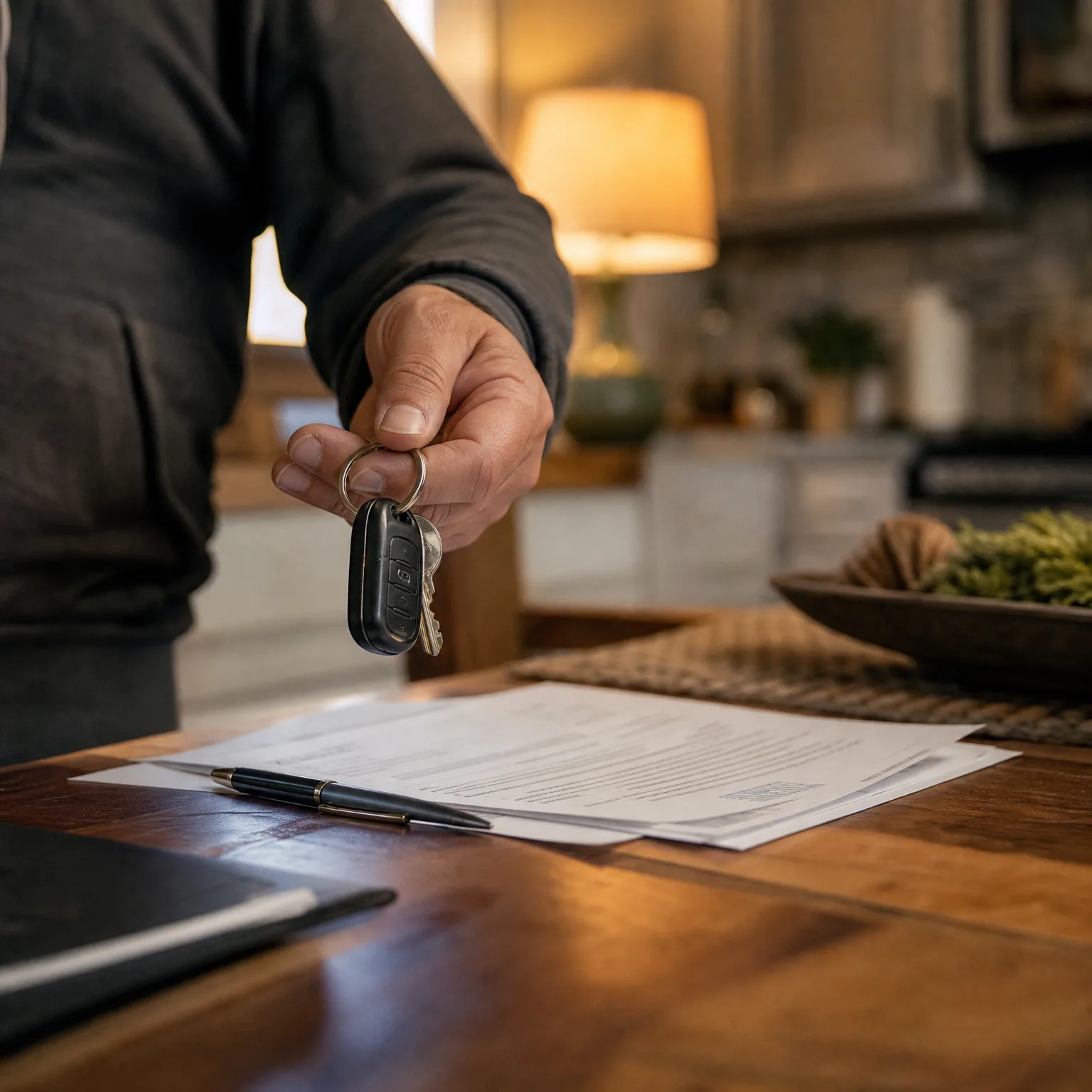
Kansas requires three separate documents before your CDL reinstatement application will be accepted: proof of court clearance (either a dismissal order or a compliance certificate from the court clerk), proof of SR-22 filing submitted by your carrier directly to KDOR, and payment of the $50 reinstatement fee. You cannot substitute one for another. All three must show in KDOR's Driver Control Bureau system simultaneously or the application is denied.
The court clearance requirement is not satisfied by your own copy of the dismissal paperwork or a receipt showing you paid the fine. KDOR requires either a certified court order mailed directly from the court to Driver Control Bureau or a digital clearance submission through Kansas eFiling if your county participates in that program. Most Kansas counties still mail paper notices, which adds the 7-14 day delay described above.
SR-22 filing must come from your carrier, not from you. Kansas law does not require SR-22 for failure-to-appear suspensions in all cases, but if your underlying violation was DUI-related, uninsured motorist, or a second points-based suspension within 36 months, SR-22 is mandatory for reinstatement and must remain active for 3 years post-reinstatement. If your warrant suspension was purely administrative — unpaid tickets, missed court dates unrelated to driving violations — SR-22 may not be required. Verify with KDOR Driver Control Bureau at 785-296-3671 before filing, because unnecessary SR-22 costs you $25-$50 in carrier fees and locks you into high-risk premiums for 3 years even when not legally required.
The SR-22 Filing Sequence That Kansas KDOR Actually Enforces for CDL Holders
Kansas statute does not explicitly prohibit early SR-22 filing, but KDOR's Driver Control Bureau rejects filings that arrive before the suspension clearance posts to their system. This creates a procedural Catch-22: your carrier files SR-22 immediately when you request it, but if KDOR's database still shows an active warrant hold, the filing is flagged as non-compliant and returned to the carrier with a rejection notice. The carrier does not automatically refile. You must request a second filing, which restarts the 3-5 day processing window.
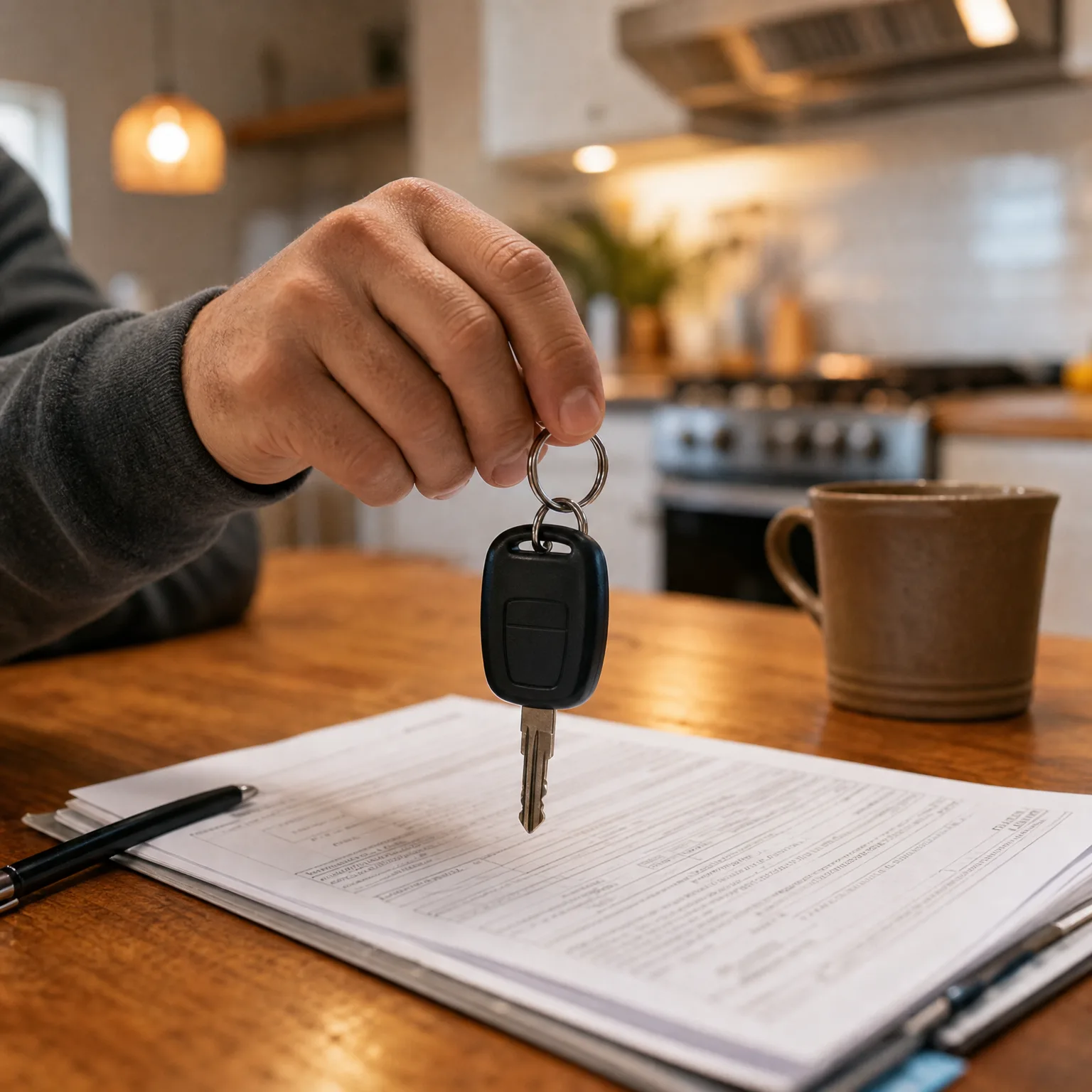
The correct sequence is: (1) pay court and obtain proof of clearance, (2) confirm with KDOR Driver Control Bureau by phone that the court clearance has posted to your driver record — provide your Kansas driver's license number and ask the clerk to verify suspension status shows "eligible for reinstatement," (3) only after KDOR confirms court clearance is visible in their system, contact your carrier to request SR-22 filing, (4) wait 3-5 business days for carrier to submit SR-22 electronically to KDOR, (5) call KDOR again to confirm SR-22 filing is accepted and visible, (6) submit reinstatement application with $50 fee either in person at a Kansas driver's license office or by mail to Driver Control Bureau.
Most commercial drivers skip step 2 and file SR-22 the same day they pay court, assuming the systems sync automatically. They do not. That assumption adds 45-60 days to your reinstatement because the rejection notice from KDOR takes 10-14 days to reach your carrier, the carrier notifies you another 5-7 days later, you refile, and KDOR processes the second filing in another 3-5 days. By the time the loop closes, you've lost 6-8 weeks of CDL driving income waiting for paperwork that could have been sequenced correctly in 10 days.
Non-Owner SR-22 Options for CDL Holders Who Don't Own a Personal Vehicle
If your CDL suspension occurred while driving a company truck and you do not own a personal vehicle, Kansas allows you to satisfy the SR-22 requirement with a non-owner policy. A non-owner SR-22 provides liability coverage when you drive vehicles you do not own — exactly the situation most commercial drivers are in when operating employer-owned trucks, leased tractors, or rental vehicles.
Non-owner SR-22 policies in Kansas typically cost $30-$60 per month for clean-record drivers and $60-$120 per month for drivers with DUI, uninsured motorist violations, or multiple points-based suspensions. This is significantly cheaper than adding SR-22 to a standard auto policy because non-owner policies carry no collision or comprehensive coverage and cover only your liability exposure while driving.
Kansas does not require you to own a vehicle to reinstate your CDL, but it does require continuous liability coverage if SR-22 is part of your reinstatement conditions. If you let the non-owner policy lapse at any point during the 3-year SR-22 maintenance period, your carrier notifies KDOR electronically within 24-48 hours and KDOR re-suspends your license automatically. There is no grace period. The re-suspension is immediate and requires starting the entire reinstatement process over, including paying another $50 reinstatement fee.

Line Up Coverage Before Your License Comes Back
Get Back on the Road
How Kansas Lapse-Gap Documentation Affects CDL Holders Differently Than Class C Drivers
Kansas uses an electronic insurance verification system where carriers report policy cancellations and new policies directly to KDOR. If your SR-22 policy lapses for any reason — non-payment, cancellation, switching carriers without maintaining continuous coverage — KDOR receives notice within 1-2 business days and triggers an automatic suspension. For CDL holders, this creates a secondary employment problem: most trucking companies and fleet operators run monthly MVR checks and terminate drivers immediately when a suspension posts, even if the suspension is administrative and even if you reinstate within days.
The lapse-gap documentation Kansas requires after a re-suspension is more onerous than the original reinstatement. You must provide proof of continuous coverage for the entire period between the lapse date and the reinstatement application date, which means if you lapsed for 10 days, switched carriers, and refiled SR-22, you need letters from both carriers showing exact coverage dates with no gap. If any gap exists — even one day — KDOR treats it as a new violation and may restart your 3-year SR-22 maintenance clock from the reinstatement date, not the original conviction date.
Commercial drivers should set up automatic payment for SR-22 policies and request email alerts from their carrier for any payment issues, policy changes, or cancellation notices. Kansas does not send courtesy reminders before suspending for lapse. The first notice most drivers receive is the suspension letter, which arrives 5-10 days after the carrier notifies KDOR, by which time your employer has already been notified through their own MVR monitoring system.
Whether Kansas Offers Restricted Driving Privileges for CDL Holders During Suspension
Kansas does offer restricted driving privileges (commonly called a restricted license) for certain suspension types, but the availability and process depend entirely on what triggered your suspension. Failure-to-appear warrant suspensions are administratively imposed by KDOR, not by a court, which means you cannot petition for restricted privileges through the criminal court — you must apply directly to KDOR or, in some cases, petition the district court that issued the original warrant.
Kansas statute K.S.A. 8-1015 allows restricted driving privileges for DUI-related suspensions, but requires ignition interlock device (IID) installation as a condition. If your failure-to-appear was related to a DUI case, you may be eligible for restricted privileges, but only after installing an IID and filing SR-22. The restricted license does not waive the SR-22 requirement; it runs parallel to it. Most Kansas IID providers charge $75-$125 for installation and $70-$90 per month for monitoring and calibration.
For non-DUI failure-to-appear suspensions — unpaid tickets, missed court dates on traffic violations — Kansas does not have a statutory restricted license program. Some judges grant restricted privileges on a case-by-case basis if you can demonstrate hardship (employment necessity, medical appointments, child care responsibilities), but this requires filing a petition with the court, appearing at a hearing, and presenting documentation that your job requires driving. The court sets the restrictions (allowed routes, allowed hours, allowed purposes) and KDOR issues the restricted license only after receiving a certified court order. Processing time is typically 30-45 days from petition filing to restricted license issuance, which means most commercial drivers lose their job before the restricted license is granted.
What CDL Holders Should Do Right Now If They've Cleared a Kansas Warrant Suspension
Call KDOR Driver Control Bureau at 785-296-3671 and provide your Kansas driver's license number. Ask the clerk to confirm whether your court clearance has posted to your driver record and whether your suspension status shows "eligible for reinstatement." Write down the date and time of the call and the name of the clerk you spoke with. If the court clearance has not posted yet, ask how long KDOR typically waits for clearance notices from your county — some counties submit weekly, others biweekly.
Once KDOR confirms court clearance is visible, contact your current auto insurance carrier or a non-owner SR-22 specialist carrier and request SR-22 filing. Confirm the carrier will submit the SR-22 electronically to Kansas KDOR and ask for the filing confirmation number. Wait 3-5 business days, then call KDOR again to confirm the SR-22 filing is accepted and visible in their system. Only after both court clearance and SR-22 filing show in KDOR's database should you submit your reinstatement application with the $50 fee.
If you do not currently own a vehicle, ask your carrier about non-owner SR-22 policies specifically. These policies provide the liability coverage Kansas requires for SR-22 compliance without requiring you to insure a vehicle you do not own. If your suspension was purely administrative and unrelated to DUI, uninsured motorist violations, or points-based suspensions, confirm with KDOR whether SR-22 is actually required before filing — unnecessary SR-22 locks you into high-risk premiums for 3 years and costs you thousands in avoidable premium increases.
Frequently Asked Questions
Does Kansas require SR-22 for all failure-to-appear warrant suspensions?
No. Kansas requires SR-22 only if your underlying violation was DUI-related, uninsured motorist, or a second points-based suspension within 36 months. If your warrant suspension was purely administrative — unpaid tickets or missed court dates unrelated to driving violations — SR-22 is typically not required. Call KDOR Driver Control Bureau at 785-296-3671 to confirm your specific case before filing.
Can I reinstate my Kansas CDL if I don't own a personal vehicle?
Yes. Kansas allows non-owner SR-22 policies to satisfy reinstatement requirements for drivers who do not own a vehicle. A non-owner policy provides liability coverage when you drive vehicles you do not own, which covers most commercial drivers operating employer-owned trucks. Non-owner SR-22 policies in Kansas typically cost $30-$120 per month depending on your driving record.
How long does it take for Kansas courts to notify KDOR that my warrant is cleared?
Most Kansas counties mail clearance notices to KDOR weekly or biweekly, creating a 7-14 day administrative gap between when you pay court and when KDOR's system shows you're eligible to reinstate. Some counties using Kansas eFiling submit clearances digitally within 1-3 business days. Call KDOR at 785-296-3671 to confirm your court clearance has posted before filing SR-22.
What happens if my SR-22 policy lapses during the 3-year maintenance period in Kansas?
Kansas carriers report lapses electronically to KDOR within 24-48 hours and KDOR re-suspends your license automatically with no grace period. For CDL holders, this creates immediate employment problems because most trucking companies run monthly MVR checks and terminate drivers when a suspension posts. You must reinstate again, pay another $50 fee, and may have your 3-year SR-22 clock restarted from the new reinstatement date.
Can I get a restricted license in Kansas while my CDL is suspended for a failure-to-appear warrant?
It depends on what triggered the warrant. DUI-related failure-to-appear suspensions may qualify for restricted driving privileges under K.S.A. 8-1015, but require ignition interlock device installation and SR-22 filing first. Non-DUI failure-to-appear suspensions do not have a statutory restricted license program, but some judges grant case-by-case hardship petitions. Processing time is typically 30-45 days from petition filing to restricted license issuance.
Why did KDOR reject my SR-22 filing even though my court case is closed?
KDOR rejects SR-22 filings that arrive before the court clearance posts to their Driver Control Bureau database. The court processes your payment within 1-3 days, but most Kansas counties mail clearance notices to KDOR weekly or biweekly. If you file SR-22 before that notice arrives, KDOR's system still shows an active warrant hold and flags the filing as premature. You must wait until KDOR confirms court clearance is visible before requesting SR-22 filing.
Does Kansas require ignition interlock for CDL reinstatement after a failure-to-appear suspension?
Only if your failure-to-appear was related to a DUI case. Kansas statute K.S.A. 8-1015 requires ignition interlock device installation for DUI-related suspensions as a condition of restricted driving privileges or full reinstatement, depending on your BAC level and conviction count. Non-DUI failure-to-appear suspensions do not require ignition interlock. Verify your specific case with KDOR Driver Control Bureau before installing an IID.
Related Articles

Kansas CDL Reinstatement: FTA Court Clearance Timing
5/3/2026
Kansas Warrant Suspension SR-22 Timing for Single Parents
5/3/2026

Kansas CDL FTA Warrant Reinstatement Costs & Fees
5/3/2026

Kansas FTA Warrant SR-22 Timing for Rideshare Drivers
5/3/2026
Kansas CDL DUI Reinstatement: Court vs DMV Timing
5/3/2026

Kansas CDL DUI Reinstatement: SR-22 Timing Guide
5/3/2026