
Alaska Failure-to-Appear Warrant Suspension: Full Cost Breakdown
Free to compare
Court Clearance Doesn't Equal License Reinstatement in Alaska
You paid the court to clear the failure-to-appear warrant. Your case shows resolved in the Alaska Court System records. But when you check with Alaska DMV, your license is still flagged as suspended.
Alaska maintains separate suspension tracks: the court suspends driving privileges as a penalty for missing your hearing, and DMV suspends your license administratively for non-compliance with a court order. Clearing the warrant satisfies the court—it does not automatically notify DMV or trigger reinstatement. You must petition DMV separately and pay their reinstatement fee even after the court matter is closed.
This creates a dual-fee structure most drivers don't budget for. The court collects its own fines and administrative fees when you resolve the warrant. DMV collects a separate $100 base reinstatement fee under Alaska's reinstatement regulations when you apply to lift the suspension. If the underlying charge that triggered your failure-to-appear was DUI or another alcohol-related offense, you'll also need SR-22 insurance filing, which adds carrier markup to your premium for the entire filing period Alaska requires post-reinstatement.

Court Fees: What You Pay Before DMV Sees Any Paperwork
Court fees vary by district and the severity of the underlying charge. Failure-to-appear warrants in Alaska typically carry a bond forfeiture fee or contempt fine ranging from $200 to $1,500, depending on whether the original charge was a traffic infraction, misdemeanor, or felony-level offense. If you were charged with DUI and missed your arraignment, expect the higher end of that range.
You'll also pay the original fine or bail amount if it wasn't posted before the warrant issued. Traffic infractions in Alaska run $50 to $300. DUI fines start at $1,500 for a first offense under AS 28.35.030. If the court issued a bench warrant for non-appearance on a DUI charge, you're now facing the DUI fine plus the failure-to-appear penalty as separate line items.
Once you've paid the court, ask for a signed court order or dismissal document showing the warrant is cleared and the case resolved. You'll need this document when you apply for DMV reinstatement. The court does not forward this to DMV automatically—you are the messenger between the two systems.

Alaska DMV Reinstatement Fee and Processing Timeline
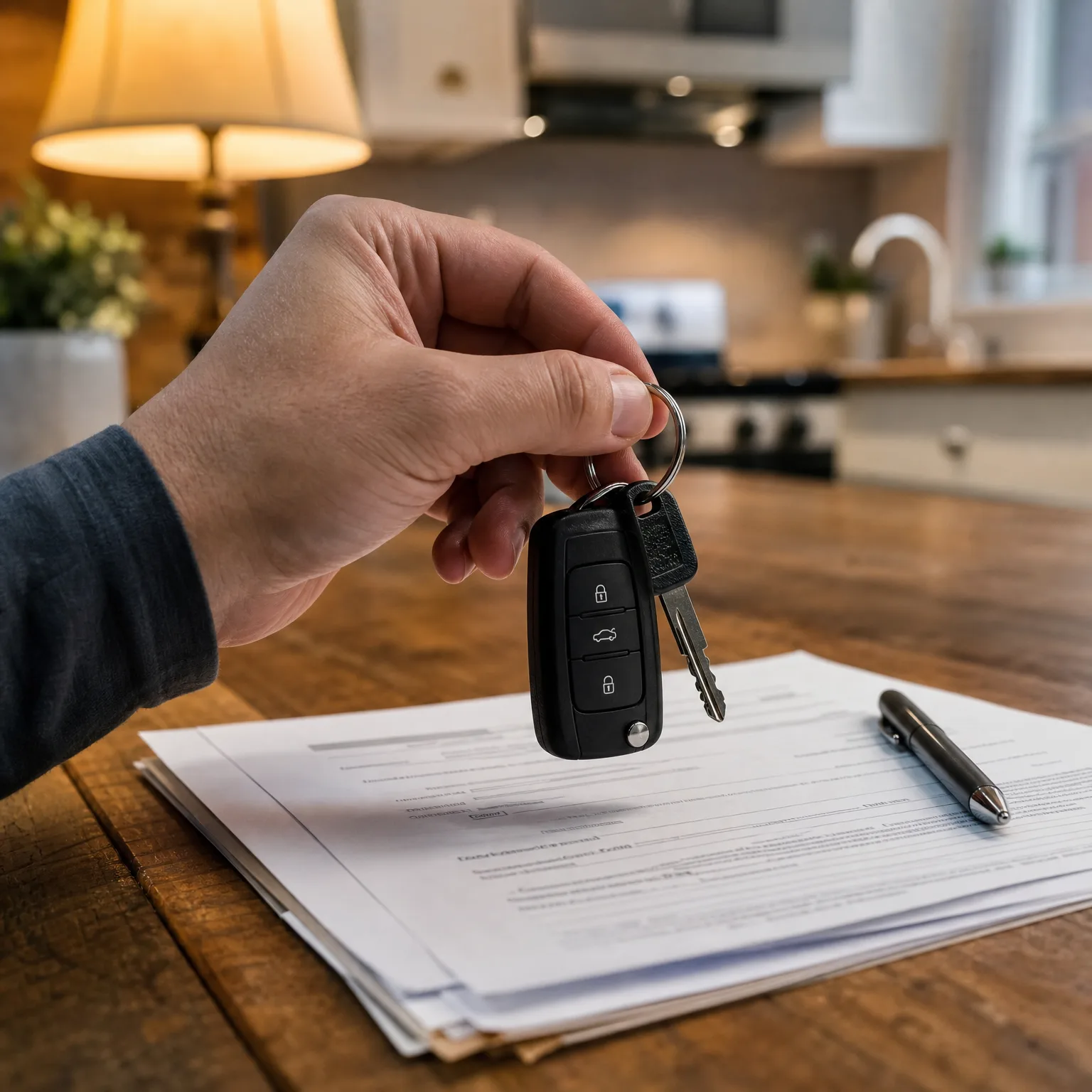
After the court clears your warrant, you apply to Alaska DMV for reinstatement. The base reinstatement fee is $100. This is separate from any court fees you already paid. DMV processes reinstatement applications by mail or online for most cases, which accommodates Alaska's geographically dispersed population.
Processing timelines are not published with high confidence in Alaska DMV documentation, but drivers in Anchorage and Fairbanks typically report 7 to 14 business days for standard reinstatements when all documentation is submitted correctly. Drivers in rural or roadless communities may experience longer functional delays due to mail transit times and limited DMV field office staffing outside the urban corridor.
If your failure-to-appear was on a DUI charge, you'll need proof of SR-22 filing before DMV will process reinstatement. Alaska requires SR-22 for alcohol-related suspensions under AS 28.22 and AS 28.35.030. Your carrier files the SR-22 certificate electronically with Alaska DMV—do not wait for the court to tell you this, because the court won't. SR-22 filing must be active at the time you submit your reinstatement application, or DMV will reject the packet and you'll start the timeline over.
SR-22 Carrier Markup: The Hidden Long-Term Cost
SR-22 is not a separate insurance product. It's a certificate your carrier files with Alaska DMV proving you carry at least the state's minimum liability coverage. But not all carriers file SR-22, and those that do charge a filing fee plus higher monthly premiums because you're now classified as high-risk.
One-time SR-22 filing fees in Alaska range from $25 to $50, depending on carrier. That's the smallest cost. The real expense is the monthly premium increase. High-risk carriers price SR-22-required policies 40% to 80% higher than standard rates. For college students in Anchorage or Fairbanks, expect monthly premiums of $140 to $220 per month for minimum liability coverage with SR-22 filing, compared to $70 to $100 per month for a clean-record driver of the same age.
Alaska does not publish a fixed SR-22 filing duration for failure-to-appear suspensions in the same way it does for DUI convictions. If the underlying charge was DUI, you'll maintain SR-22 for 3 years from the conviction date under AS 28.35.030. If the failure-to-appear was on a non-alcohol charge, SR-22 may not be required at all—verify this with Alaska DMV before purchasing high-risk coverage you don't legally need.
If you don't own a vehicle, ask your carrier about non-owner SR-22 policies. These meet Alaska's filing requirement without insuring a specific car. Monthly premiums for non-owner SR-22 in Alaska run $50 to $90 per month for minimum liability, significantly cheaper than owner policies and appropriate for college students relying on campus transit or rideshare.

Line Up Coverage Before Your License Comes Back
Get Back on the Road
Limited License Option During Suspension: Court Petition Required
Alaska offers a Limited License program for drivers whose license is suspended but who can demonstrate hardship. The program is governed by AS 28.15.201 and administered entirely through the courts—there is no DMV administrative pathway.
You petition the court that issued the suspension order. The court has broad discretion to grant or deny the petition based on your demonstrated need for driving privileges. Approved purposes typically include employment, medical treatment, and education. If you're a college student, document your class schedule, campus location, and the lack of viable public transit between your residence and campus. Alaska's limited road network and sparse transit options work in your favor here—judges understand that roadless or transit-poor communities make restricted licenses necessary, not convenient.
For DUI-related suspensions, Alaska law requires ignition interlock device installation before a limited license is issued. First-offense DUI carries a mandatory 90-day hard suspension under AS 28.35.030 during which no limited license is available. After the hard suspension period ends, you may petition for a limited license, but you must install an IID before the court will approve restricted driving.
Limited license petitions for failure-to-appear suspensions are less common and more dependent on judicial discretion. If the underlying charge was not alcohol-related, you may petition without IID installation, but you'll still need SR-22 proof if the court or DMV require it for reinstatement. Coordinate with your insurance carrier before filing your petition—showing the court you've already secured compliant coverage strengthens your case.

Total Cost Stack for College Students: Realistic Budget
Here's the full itemization for an Alaska college student clearing a failure-to-appear warrant suspension where the underlying charge was DUI:
Court warrant clearance fee: $200 to $1,500, depending on district and charge severity. DUI first-offense fine: $1,500 minimum under AS 28.35.030. Alaska DMV reinstatement fee: $100. SR-22 filing fee: $25 to $50 one-time. SR-22 monthly premium increase over 3 years: approximately $2,520 to $4,320 total (based on $70 to $120 per month additional cost compared to standard rates, maintained for 36 months).
If ignition interlock is required, add IID installation ($75 to $150), monthly device lease ($70 to $100 per month for the required period), and removal fee ($50 to $75). Alaska IID vendors are concentrated in Anchorage, Fairbanks, and Juneau—students in roadless bush communities face practical inability to comply, creating a hardship-within-a-hardship problem the court must address during limited license petitions.
If the failure-to-appear was on a non-alcohol traffic charge and SR-22 is not required, your total drops significantly: court fees ($200 to $800 for non-DUI infractions), DMV reinstatement ($100), and standard insurance rates with no high-risk markup. Verify SR-22 requirement with Alaska DMV before assuming you need it—not all failure-to-appear suspensions trigger SR-22 filing.
What to Do Right Now
Clear the warrant with the court first. Pay all fines and fees, obtain a signed court order showing the case is resolved, and ask the clerk whether the court will notify DMV or whether you must submit the clearance document yourself. In Alaska, you are typically the messenger.
Contact Alaska DMV immediately after court clearance. Ask whether your suspension requires SR-22 filing for reinstatement. If yes, contact high-risk carriers or non-owner SR-22 providers before submitting your reinstatement application. DMV will not process reinstatement without proof of active SR-22 filing if it's required for your case.
If you need driving privileges before full reinstatement, petition the court for a limited license. Document your employment, education, or medical need with specific addresses, schedules, and transit availability. Alaska courts have broad discretion—detailed documentation of genuine hardship improves approval odds. If the underlying charge was DUI, confirm the 90-day hard suspension period has ended and install your IID before filing the petition.
Frequently Asked Questions
Does clearing a failure-to-appear warrant in Alaska automatically reinstate my license?
No. Clearing the warrant with the court resolves the criminal or traffic case, but Alaska DMV maintains a separate administrative suspension that requires you to apply for reinstatement and pay a $100 fee. The court does not notify DMV automatically—you must submit proof of warrant clearance to DMV along with your reinstatement application.
Do I need SR-22 insurance to reinstate my license after a failure-to-appear suspension in Alaska?
It depends on the underlying charge. If you failed to appear on a DUI or other alcohol-related charge, Alaska requires SR-22 filing for reinstatement and you must maintain it for 3 years from the conviction date. If the failure-to-appear was on a non-alcohol traffic infraction, SR-22 is typically not required. Verify with Alaska DMV before purchasing high-risk coverage.
Can I get a hardship license in Alaska while my license is suspended for failure-to-appear?
Yes, but you must petition the court that issued the suspension—Alaska does not offer DMV-administered hardship licenses. The court has broad discretion to grant a Limited License for employment, education, or medical purposes. If the underlying charge was DUI, you'll need ignition interlock device installation before the court approves restricted driving, and a 90-day hard suspension applies for first-offense DUI before any limited license is available.
How much does SR-22 insurance cost in Alaska for college students?
SR-22 filing fees are $25 to $50 one-time, but the real cost is the monthly premium increase. College students in Alaska pay approximately $140 to $220 per month for minimum liability coverage with SR-22, compared to $70 to $100 per month for clean-record drivers. Non-owner SR-22 policies cost $50 to $90 per month if you don't own a vehicle.
How long does Alaska DMV take to process reinstatement after a failure-to-appear suspension?
Processing timelines are not officially published, but drivers in Anchorage and Fairbanks typically report 7 to 14 business days when all documentation is submitted correctly. Rural and roadless communities may experience longer delays due to mail transit times and limited DMV field office staffing. If SR-22 filing is required and not active at the time you submit your application, DMV will reject the packet and you'll restart the timeline.
Do I have to install an ignition interlock device for a failure-to-appear suspension in Alaska?
Only if the underlying charge was DUI or another alcohol-related offense. Alaska requires ignition interlock installation before issuing a limited license for DUI suspensions, and the device must remain installed for the court-ordered period. Failure-to-appear suspensions on non-alcohol charges do not require IID installation unless the court orders it as a condition of limited license approval.
Related Articles
Alaska Warrant Suspension Cost: Rideshare Filing Fees
5/3/2026
Alaska Warrant Suspension: Limited License SR-22 Filing
5/3/2026
Alaska Failure-to-Appear: Court vs DMV Timeline
5/3/2026

Alaska CDL FTA Reinstatement: Real Cost Breakdown
5/3/2026
Alaska Unpaid Tickets Suspension Cost for Single Parents
5/3/2026

Alaska FTA Warrant Reinstatement Costs for Parents
5/3/2026