Wisconsin DUI Reinstatement Costs for Rideshare Drivers: Real Numbers
Free to compare
Why Wisconsin Rideshare DUI Reinstatement Costs More Than Standard Cases
Wisconsin requires rideshare drivers to hold an occupational license during OWI suspension before Uber or Lyft will reactivate accounts. The occupational license itself costs $60-$200 in court petition fees depending on county, plus mandatory ignition interlock device installation (typically $150-$250 upfront, then $75-$100/month monitoring). Standard DUI reinstatements don't require the occupational license step if the driver isn't working during suspension.
SR-22 filing adds another layer. Wisconsin requires 3-year SR-22 filing for OWI reinstatement under Wis. Stat. § 343.10, and carriers charge $15-$35 filing fees plus 40-80% premium increases for high-risk classification. A Milwaukee rideshare driver paying $85/month for liability coverage before suspension will see premiums jump to $140-$190/month with SR-22 filing — $1,980-$3,780 in additional premium costs over the 3-year filing period.
The coordination requirement drives the cost gap. Wisconsin DMV will not process SR-22 filings until the court order granting your occupational license posts to WisDOT Division of Motor Vehicles records. Filing SR-22 before that clearance appears creates a 30-45 day delay where you're paying for coverage DMV can't accept, and most carriers won't refund filing fees for premature submissions. Rideshare drivers need the occupational license immediately to return to work, which means paying court and IID costs upfront before SR-22 becomes processable.

Itemized Cost Stack for Wisconsin Rideshare DUI Reinstatement
Court petition for occupational license: $60-$200 depending on county circuit court filing fees. Dane County typically charges $175, Milwaukee County $150, Waukesha County $120. This is a one-time payment submitted with your occupational license petition under Wis. Stat. § 343.10.
Ignition interlock device installation: $150-$250 upfront installation fee, then $75-$100/month monitoring and calibration fees. Wisconsin mandates IID for most OWI-related occupational licenses under Wis. Stat. § 343.301. First-offense OWI convictions typically require 12-month IID periods, which totals $1,050-$1,450 over the full device period.
SR-22 filing fee: $15-$35 one-time carrier fee. Progressive and State Farm typically charge $25, GEICO $15, Dairyland and Bristol West $30-$35. This fee is separate from premium increases.
SR-22 premium increase: 40-80% surcharge on liability coverage for 3 years. A Madison driver paying $90/month pre-suspension will pay $145-$175/month with SR-22, which totals $1,980-$3,060 in additional premium over the 3-year filing period required by Wisconsin.
DMV reinstatement fee: $60 base fee under Wis. Stat. § 343.38, paid when your occupational license converts to full reinstatement after suspension ends. If you have multiple concurrent suspensions, Wisconsin assesses $60 for each underlying action.
AODA assessment and treatment: $200-$500 for state-mandated alcohol and drug assessment, plus variable treatment program costs if recommended. Wisconsin requires AODA completion before full reinstatement for OWI revocations, separate from occupational license requirements.
Total realistic cost range: $2,500-$5,500 over the first year, then $900-$2,100 annually for years two and three while SR-22 filing remains active. Rideshare drivers who delay occupational license petitions to save court fees end up paying more in lost earnings than the $60-$200 petition cost.
The Occupational License Court Process and Timing Windows Wisconsin DMV Won't Tell You
Wisconsin circuit courts grant occupational licenses under Wis. Stat. § 343.10, not DMV. You file a petition with the court that handled your OWI conviction (or the county circuit court where you reside if the conviction was out-of-state). The court sets your driving schedule — maximum 12 hours per day, 60 hours per week — and defines permitted purposes: work, school, medical appointments, church, AODA treatment programs.
First-offense OWI suspensions carry a 30-day hard suspension period before occupational license eligibility under Wis. Stat. § 343.10(5)(b). Second or subsequent OWI within 10 years requires 90-day hard suspension before you can petition. Most rideshare drivers don't realize the hard period countdown starts from conviction date, not suspension notice date. If your conviction posts 45 days after your arrest, your 30-day hard period hasn't started yet.
The two-step issuance process catches drivers off guard. The court grants your petition and issues an order, but you must take that order to a Wisconsin DMV service center to receive the physical occupational license document. The court order alone does not permit driving. DMV processing takes 1-3 business days once the court order appears in WisDOT records, but many counties don't electronically transmit orders — you'll carry a certified copy to DMV yourself.
SR-22 filing timing matters. Wisconsin DMV will not process your SR-22 until the court order granting your occupational license posts to state records. If you file SR-22 the day your court hearing concludes, DMV rejects it because no occupational license exists in their system yet. Wait 5-7 business days after your court order is signed, verify the order posted to WisDOT (call the DMV customer service line at 608-266-2353), then contact your carrier to file SR-22. Filing prematurely wastes your carrier's $15-$35 filing fee and delays your return to rideshare work by 2-4 weeks while you refile.
How SR-22 Carrier Markup Varies for Wisconsin Rideshare Drivers
Not all carriers price rideshare OWI SR-22 filings identically. Wisconsin law requires 3-year SR-22 filing from conviction date, and the clock does not pause if you switch carriers — but premiums vary significantly by carrier willingness to underwrite rideshare exposure after DUI.
Progressive and State Farm typically offer the lowest SR-22 surcharges for Wisconsin OWI cases: 40-60% premium increases over pre-suspension rates. A Green Bay driver paying $95/month for liability coverage before OWI will pay $135-$150/month with Progressive SR-22 filing. Both carriers allow rideshare endorsements on occupational license policies, which is critical — many carriers exclude rideshare use from high-risk policies.
Dairyland and Bristol West specialize in non-standard auto insurance and accept Wisconsin OWI SR-22 filings other carriers reject, but their base rates run 60-80% higher than standard market rates. A Kenosha rideshare driver quoted $110/month from Progressive might pay $175-$200/month from Dairyland for equivalent liability limits. The tradeoff: Dairyland rarely declines rideshare drivers with recent OWI convictions, while standard carriers frequently do.
Non-owner SR-22 policies cost less if you don't own a vehicle during suspension. Wisconsin accepts non-owner SR-22 filings for occupational license purposes under Wis. Stat. § 344.62. A Madison driver using rental vehicles or borrowed cars for rideshare work (uncommon but legal for occupational license compliance) will pay $45-$75/month for non-owner SR-22 coverage, compared to $140-$190/month for standard liability with SR-22 on an owned vehicle.
The 3-year filing clock resets if coverage lapses. Wisconsin DMV receives electronic notifications from carriers when SR-22 policies cancel or lapse under Wis. Stat. § 344.62. A lapse triggers immediate suspension and restarts your 3-year filing requirement from the lapse date, not your original conviction date. Most rideshare drivers don't realize a single missed payment can add 1-2 years to total SR-22 costs.
Line Up Coverage Before Your License Comes Back
Get Back on the Road
What Rideshare Drivers Miss About Occupational License Restrictions
Wisconsin occupational licenses permit driving only for court-approved purposes. Rideshare work qualifies as employment under Wis. Stat. § 343.10, but the court order must explicitly list rideshare driving as an approved activity. If your petition states "employment at [specific employer address]" without mentioning rideshare routes, you're violating your occupational license terms every time you accept a ride.
Court-defined hour restrictions apply strictly. Most Wisconsin circuit courts limit occupational licenses to 12 hours per day and 60 hours per week. If your petition states you work Monday-Friday 6am-6pm, driving for Uber at 7pm Saturday violates your court order. Wisconsin law enforcement can arrest you for operating without a valid license even though you hold an occupational license — the violation is driving outside permitted hours, which invalidates the license for that trip.
Ignition interlock device compliance is non-negotiable. Wisconsin requires IID for most OWI-related occupational licenses, and your device provider reports violations (failed breath tests, missed calibrations, tampering attempts) electronically to WisDOT. Two failed rolling retests within 30 days typically trigger automatic occupational license revocation without additional court hearings. Your rideshare account will be suspended again before you receive notice from DMV.
Absolute sobriety restrictions apply during occupational license periods. Wisconsin imposes 0.00% BAC limits on drivers with OWI-related occupational licenses under Wis. Stat. § 343.10(5). One beer the night before a morning rideshare shift can register on your IID startup test. A failed startup test counts as a violation and gets reported to DMV, even if you don't drive.
Occupational licenses do not automatically convert to full reinstatement. When your suspension period ends, you must complete AODA treatment requirements, pay the $60 DMV reinstatement fee, and submit proof of continued SR-22 coverage. Most Milwaukee rideshare drivers assume their occupational license simply becomes a regular license — it doesn't. You'll need to visit a DMV service center with your AODA completion certificate, SR-22 proof, and reinstatement fee to receive a new unrestricted license.
How to Sequence Filing to Avoid Wasting Money on Rejected Submissions
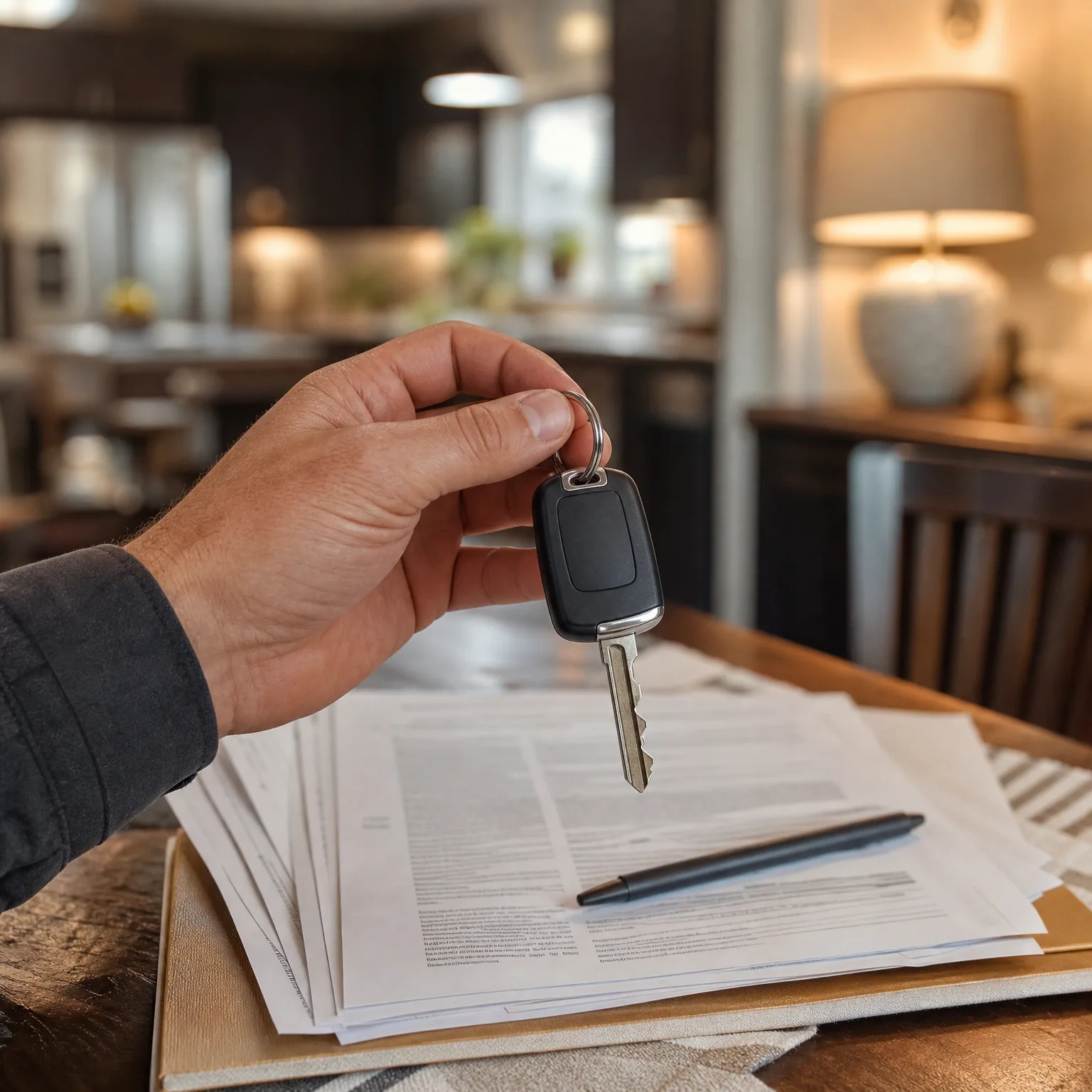
The correct sequence for Wisconsin rideshare DUI reinstatement: (1) complete AODA assessment, (2) arrange IID installation appointment, (3) file occupational license petition with circuit court, (4) attend court hearing and receive order, (5) verify court order posted to WisDOT records, (6) file SR-22 with carrier, (7) take court order and SR-22 proof to DMV for physical occupational license issuance.
Step 5 is where most drivers fail. Courts don't notify you when your order posts to state records. Call WisDOT customer service at 608-266-2353 five business days after your court hearing, provide your driver license number, and ask whether your occupational license order appears in their system. If the answer is no, wait another three business days and call again. Do not contact your insurance carrier to file SR-22 until DMV confirms the court order exists in their records.
IID installation timing matters for court petitions. Many Wisconsin circuit courts require proof of scheduled IID installation before granting occupational license petitions. Schedule your installation appointment before your court hearing date, bring the appointment confirmation to court, and your petition approval rate increases significantly. Courts view scheduled installations as evidence you're serious about compliance.
SR-22 filing takes 1-3 business days after you contact your carrier. Progressive and State Farm process electronic SR-22 filings to Wisconsin DMV within 24 hours. Dairyland and Bristol West sometimes take 2-3 business days. Budget an extra week between SR-22 filing and your DMV visit to ensure the filing appears in state records when you arrive for physical occupational license issuance.
Bring all documentation to your DMV visit: certified court order granting occupational license, SR-22 certificate (you can print this from your carrier's online portal or request email delivery), IID installation verification from your device provider, and payment for any outstanding DMV fees. Missing any one document means you leave without your occupational license and must schedule another appointment, delaying your return to rideshare work by 1-2 weeks in high-volume counties like Milwaukee and Dane.
Where to Find Coverage That Accepts Rideshare After Wisconsin OWI
Progressive, State Farm, and Dairyland write Wisconsin SR-22 policies with rideshare endorsements after OWI convictions. Not all carriers do. GEICO and American Family frequently decline rideshare drivers with OWI convictions within the past 3 years, even for occupational license coverage.
Request quotes from at least three carriers before filing SR-22. Premium variance for Wisconsin OWI SR-22 with rideshare endorsement runs 30-50% between lowest and highest quotes for identical coverage limits. A Racine driver quoted $155/month from one carrier might pay $210/month from another for the same 100/300/100 liability limits.
Non-owner SR-22 is an option if you're using rental vehicles or borrowed cars during suspension. Rideshare rental programs through Uber and Lyft don't require you to own a vehicle, and Wisconsin accepts non-owner SR-22 filings for occupational license purposes. Non-owner premiums with SR-22 run $45-$75/month, compared to $140-$190/month for owned-vehicle coverage.
Verify your carrier allows rideshare use under occupational license restrictions before purchasing. Some carriers exclude Transportation Network Company driving from high-risk policies entirely. If your policy excludes rideshare and you're in an accident during a ride, your claim will be denied and your SR-22 filing may be cancelled, restarting your 3-year filing clock.
Wisconsin SR-22 requirements and carrier options vary by suspension type and driver history. Compare quotes from carriers familiar with occupational license restrictions and rideshare endorsements to avoid paying for coverage that won't let you return to work.
Frequently Asked Questions
Can I drive for Uber or Lyft with a Wisconsin occupational license after DUI?
Yes, but your occupational license court order must explicitly list rideshare driving as an approved employment activity. Wisconsin circuit courts grant occupational licenses under Wis. Stat. § 343.10, and the order defines permitted purposes and hours. If your petition states only a specific employer address without mentioning rideshare routes, you're violating your license terms when you accept rides.
How much does SR-22 insurance cost in Wisconsin for rideshare drivers after OWI?
Expect $140-$190/month for liability coverage with SR-22 and rideshare endorsement, compared to $85-$110/month before suspension. Carriers add 40-80% surcharges for OWI SR-22 filings in Wisconsin, and the surcharge remains for the full 3-year filing period required under Wis. Stat. § 343.10. Total additional premium costs over 3 years typically run $1,980-$3,780.
Do I need ignition interlock device to drive for rideshare in Wisconsin after DUI?
Yes, Wisconsin mandates ignition interlock for most OWI-related occupational licenses under Wis. Stat. § 343.301. Installation costs $150-$250 upfront plus $75-$100/month monitoring fees. Your IID provider reports violations electronically to WisDOT, and two failed rolling retests within 30 days typically trigger automatic occupational license revocation.
When can I file SR-22 after my Wisconsin occupational license court hearing?
Wait 5-7 business days after your court order is signed, then verify the order posted to WisDOT records by calling 608-266-2353. Wisconsin DMV rejects SR-22 filings submitted before the court order appears in state records. Filing prematurely wastes your carrier's $15-$35 filing fee and delays occupational license issuance by 2-4 weeks while you refile.
What happens if my SR-22 lapses while I'm driving for Uber in Wisconsin?
Wisconsin DMV receives electronic notification of the lapse under Wis. Stat. § 344.62 and immediately suspends your license and occupational license. Your 3-year SR-22 filing requirement restarts from the lapse date, not your original conviction date. One missed insurance payment can add 1-2 years to your total SR-22 costs and suspend your rideshare account again.
Can I use non-owner SR-22 for Wisconsin occupational license if I don't own a car?
Yes, Wisconsin accepts non-owner SR-22 filings for occupational license purposes under Wis. Stat. § 344.62. Non-owner policies with SR-22 cost $45-$75/month, compared to $140-$190/month for owned-vehicle coverage. This works if you're using rideshare rental programs or borrowed vehicles, but verify your carrier allows rideshare use under non-owner policies.
How long does the hard suspension last before I can get occupational license in Wisconsin?
First-offense OWI carries a 30-day hard suspension before occupational license eligibility under Wis. Stat. § 343.10(5)(b). Second or subsequent OWI within 10 years requires 90-day hard suspension. The countdown starts from conviction date, not arrest or suspension notice date, which catches many drivers off guard.
Related Articles
WI Rideshare Lapse Reinstatement Costs
7/13/2026
Wisconsin DUI Reinstatement Costs: Real Fee Breakdown
5/3/2026

IL DUI Reinstatement Costs for Rideshare Drivers
5/3/2026
MN DUI Rideshare Reinstatement: Real Cost Breakdown
5/3/2026
CO DUI Reinstatement for Rideshare: Full Cost Stack
5/3/2026
WI Unpaid Tickets Suspension: Rideshare Reinstatement Cost
5/3/2026