
WA DUI Reinstatement for Rideshare: Court Clearance & DMV Timing
Free to compare
Why Washington Rideshare Drivers Face Longer DUI Reinstatement Timelines
Your sentencing hearing ended last week. The judge ordered DUI school, SR-22 filing, and ignition interlock device installation. You scheduled IID installation for tomorrow and called your insurance carrier to file SR-22 today. Most rideshare drivers assume they can apply for Washington's Ignition Interlock License the moment these pieces are in place.
Washington Department of Licensing operates a separate administrative timeline that does not sync automatically with court proceedings. Your court compliance must post to DOL's database before they will accept your IIL application—even if you physically hold proof of completion from every required program. Court records typically take 14–30 days to transmit to DOL after your final compliance date, which means applying the day after sentencing guarantees rejection.
Rideshare platforms require continuous valid licensing. Uber and Lyft deactivate drivers the moment DOL reports a suspension, and reactivation requires submitting proof of valid IIL status through their background check portals. The court-to-DOL processing gap creates a window where you have completed every legal requirement but cannot yet prove it to DOL or your platform, which extends your income loss by weeks most drivers never anticipated.
How Washington's Dual DUI Suspension Track Works for IIL Eligibility
Washington separates DUI suspensions into two parallel tracks under RCW 46.20.308 and RCW 46.61.5055. The administrative suspension begins when you fail or refuse a breath test at the time of arrest—DOL suspends your license for 90 days on first-offense BAC failure or 1 year on refusal, independent of court proceedings. The criminal suspension begins when the court convicts you and imposes a separate revocation period based on your BAC level and prior DUI history.
Your Ignition Interlock License eligibility depends on which suspension track controls your case. If you accepted a plea deal that deferred prosecution, the administrative suspension may be the only active suspension, and you can apply for an IIL immediately after installing your device. If you were convicted in criminal court, DOL requires both court compliance verification and proof of IID installation before processing your IIL application. RCW 46.20.385 governs IIL requirements and explicitly allows unrestricted driving—no time limits, no route restrictions—provided you drive only IID-equipped vehicles.
Most rideshare drivers assume the IIL functions like a traditional occupational license with employer verification and route documentation. Washington eliminated those restrictions when the state adopted the IIL system. You do not need employer letters. You do not need to document your driving schedule. The only restriction is vehicle-based: every vehicle you operate must have a DOL-approved ignition interlock device installed and calibrated. This distinction matters because Uber and Lyft classify drivers as independent contractors, which created eligibility problems under the old occupational license framework that required employer affidavits.
What Court Clearance Means and Why DOL Won't Accept Your Application Without It
Court clearance is not a document the judge hands you at sentencing. It is an administrative record update that occurs after you complete all court-ordered DUI requirements: alcohol/drug information school enrollment, victim impact panel attendance, probation check-ins, fine payments, and any jail time served. Each county court transmits compliance records to DOL on different schedules—King County typically updates within 10–14 days, while Spokane and Pierce counties average 21–30 days.
DOL's licensing system checks for three clearance flags before processing an IIL application: court compliance posted, SR-22 insurance filing active, and ignition interlock device installation verified by a DOL-approved provider. If any flag shows incomplete, the application is rejected and you must reapply after the missing record posts. The rejection does not notify you which flag triggered it—you receive a generic denial letter citing "incomplete requirements," which forces most drivers to call DOL's suspension unit and wait 45–90 minutes on hold to identify the missing piece.
Rideshare drivers lose income during this gap because platform background checks pull directly from DOL's real-time licensing database. Your IIL does not appear in that database until DOL processes your application and issues the physical license. Completing requirements and waiting for records to sync are separate steps, and the second step has no customer-facing timeline. Calling the court clerk to confirm they transmitted your compliance record to DOL does not accelerate DOL's internal processing—it only confirms the record left the court's system, not that DOL received and posted it.
SR-22 Filing Timing: Before or After IIL Application
Washington requires SR-22 insurance filing for all DUI-related license actions under RCW 46.29.090. Your carrier must file SR-22 electronically with DOL before you apply for an IIL, and the filing must remain active for 3 years from your conviction date—not your suspension date, not your IIL issue date. Missing this distinction costs drivers thousands in unnecessary premium years.
SR-22 filing costs $15–$35 as a one-time administrative fee, but it triggers high-risk insurance classification that raises your liability premium by approximately $85–$140/month compared to standard rates. Estimates based on available industry data; individual rates vary by driving history, vehicle, coverage selections, and location. Most rideshare drivers carry higher liability limits than Washington's 25/50/10 minimum because Uber and Lyft require $100,000 per person and $300,000 per accident while logged into the app—your personal SR-22 policy must meet state minimums, but it will not satisfy platform requirements alone.
File SR-22 the same day you schedule ignition interlock installation. Carriers typically process SR-22 filings within 24–72 hours, and DOL's system updates within 3–5 business days after the carrier transmits the filing. This creates a narrow timing window: if you wait until court compliance posts to file SR-22, you add another week to your IIL eligibility. Filing early ensures the SR-22 flag clears before court compliance posts, which allows you to apply for your IIL the moment DOL's system shows all three clearance flags.

Line Up Coverage Before Your License Comes Back
Get Back on the Road
Ignition Interlock Device Installation Requirements for IIL Approval
DOL maintains a list of approved ignition interlock device providers on their website at dol.wa.gov. Only installations performed by DOL-approved providers generate the electronic verification certificate DOL requires to process your IIL application. Installing a device purchased online or through an unapproved mechanic will not satisfy this requirement, even if the device itself is a DOL-approved model.
Installation appointments typically cost $75–$150, and monthly calibration/monitoring fees run $60–$90. The provider submits installation verification to DOL electronically within 24–48 hours of completing the install, which posts to your DOL record faster than court compliance in most cases. Schedule installation before your court sentencing date if possible—Washington law does not prohibit pre-conviction installation, and having the IID flag cleared early eliminates one variable in your IIL application timeline.
Rideshare drivers using personal vehicles for platform work must install IID in every vehicle they plan to drive, including personal errands and platform shifts. Driving any non-equipped vehicle while holding an IIL—even once, even for a grocery run—triggers automatic IIL revocation and a new suspension period under RCW 46.20.740. Most platforms allow you to register multiple vehicles under one driver account, but each vehicle requires a separate IID installation and monthly monitoring contract. If you drive a partner's vehicle or a rental occasionally, that vehicle must also have an approved IID installed or you cannot legally operate it while your IIL is active.
IIL Application Process and DOL Processing Timeline
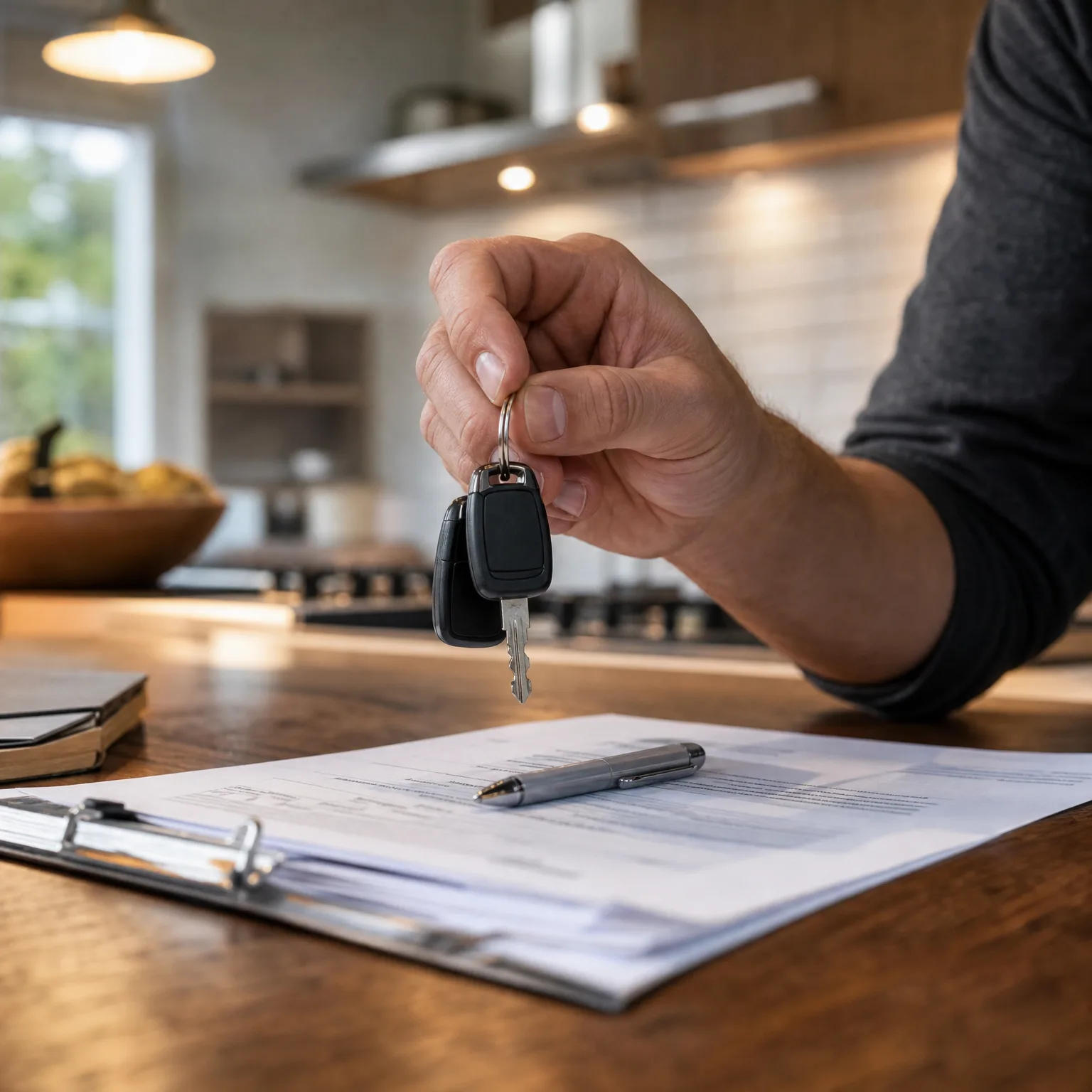
Apply for your Ignition Interlock License in person at any Washington DOL licensing office or by mail using form DL-31A available at dol.wa.gov. The application fee is $100, separate from the $75 reinstatement fee you will pay after your full suspension period ends. Bring proof of ignition interlock installation (the certificate your IID provider gave you), proof of SR-22 insurance filing (your carrier's filing confirmation or an SR-22 certificate), and payment for the $100 fee.
DOL processes IIL applications within 5–10 business days if all three clearance flags show complete in their system. If court compliance has not posted yet, your application sits in pending status until the record updates—DOL does not reject it immediately, but they also do not notify you that it is pending. Calling DOL's customer service line at 360-902-3900 after 10 business days confirms whether your application is pending records or actively processing.
Your IIL arrives by mail as a physical card that looks identical to a standard Washington driver's license except for the restriction code printed on the front: "I" for ignition interlock required. Rideshare platforms require you to upload this license through their driver portal before reactivation. Uber and Lyft processing times for license updates vary by region—Seattle-area drivers report 24–72 hour reactivation after uploading valid IIL documentation, while Spokane and Tacoma drivers report 5–7 day waits. The platform does not reactivate your account automatically when DOL issues your IIL; you must manually upload the new license and request reactivation through the app.
What Happens After IIL Approval: Maintaining Platform Eligibility
Your Ignition Interlock License remains valid until your full suspension period ends, at which point you must apply for full license reinstatement and pay the $75 reinstatement fee. The IIL does not automatically convert to a standard license—reinstatement is a separate application with separate fees. Washington requires ignition interlock devices to remain installed for the entire IIL period plus any additional time the court ordered as part of your DUI sentence.
Missing monthly IID calibration appointments triggers automatic provider notification to DOL, which revokes your IIL within 10 days. Calibration appointments must occur every 30–60 days depending on your provider's contract terms, and rescheduling a missed appointment does not stop the revocation clock. Most rideshare drivers schedule calibration the same day each month and set phone reminders 48 hours in advance—providers typically allow same-day appointments if you call before noon.
SR-22 insurance filing must remain active for 3 years from your DUI conviction date. If your carrier cancels your policy or you switch carriers without ensuring the new carrier files SR-22 before the old policy ends, DOL suspends your license again and your IIL is automatically revoked. When switching carriers, request SR-22 filing from the new carrier at least 5 business days before your old policy cancels. This overlap ensures DOL's system never shows a lapse, which avoids triggering a new suspension that requires restarting the IIL application process from the beginning.
Frequently Asked Questions
Can I drive for Uber or Lyft in Washington with an Ignition Interlock License?
Yes. Washington's IIL allows unrestricted driving with no time or route limits, provided you operate only IID-equipped vehicles. Uber and Lyft accept IIL as valid licensing, but you must upload the physical IIL card through the driver portal and wait for platform approval before accepting rides. Most Seattle-area drivers report 24–72 hour reactivation after uploading valid IIL documentation.
How long does it take for Washington court records to post to DOL after sentencing?
Court compliance records typically post to DOL's system within 14–30 days after your final court requirement is completed, not your sentencing date. King County averages 10–14 days, while Spokane and Pierce counties average 21–30 days. DOL will not process your IIL application until this record posts, even if you physically hold proof of completion.
What happens if I miss an ignition interlock calibration appointment in Washington?
Your IID provider notifies DOL within 24–48 hours of a missed calibration appointment, and DOL revokes your IIL within 10 days. Rescheduling the appointment does not stop the revocation. You must reapply for a new IIL and pay the $100 application fee again. Schedule calibration appointments the same day each month and set phone reminders 48 hours in advance.
Do I need employer verification for a Washington IIL as a rideshare driver?
No. Washington's IIL system does not require employer letters, route documentation, or work schedule verification. RCW 46.20.385 eliminated those restrictions when the state adopted the IIL framework. The only restriction is vehicle-based: you may drive anywhere at any time, provided the vehicle has a DOL-approved ignition interlock device installed.
How much does SR-22 insurance cost for rideshare drivers in Washington?
SR-22 filing costs $15–$35 as a one-time fee, but high-risk classification raises your monthly liability premium by approximately $85–$140/month compared to standard rates. Total cost over the 3-year SR-22 filing period typically runs $3,060–$5,040 in additional premium. Estimates based on available industry data; individual rates vary by driving history, vehicle, coverage selections, and location.
Can I install an ignition interlock device before my Washington DUI conviction?
Yes. Washington law does not prohibit pre-conviction IID installation, and installing early clears the IID verification flag in DOL's system before your court compliance posts. This eliminates one variable in your IIL application timeline. Use only DOL-approved providers listed at dol.wa.gov—installations by unapproved mechanics will not generate the electronic certificate DOL requires.
What is the $100 IIL fee versus the $75 reinstatement fee in Washington?
The $100 fee applies when you apply for an Ignition Interlock License during your suspension period. The $75 reinstatement fee applies after your full suspension ends when you convert from IIL to a standard unrestricted license. These are separate applications with separate fees—your IIL does not automatically convert to a standard license when your suspension period ends.
Related Articles
WA Rideshare DUI Reinstatement: SR-22 Filing Timing
5/3/2026
WA DUI Reinstatement Costs for Rideshare Drivers
5/3/2026
WA Rideshare Reinstatement: Court & DOL Timing Gaps
5/3/2026
WA DUI Reinstatement: Court vs DOL Clearance Timing
5/3/2026
WA DUI IIL: SR-22 Filing Timing for College Students
5/3/2026

Reinstate DUI License Seattle: SR-22, Interlock & Court Steps
4/29/2026