
CDL Holders: Texas DUI Suspension Reinstatement Cost Breakdown
Free to compare
Why CDL Holders Face a Separate Reinstatement Cost Structure in Texas
Texas DWI convictions trigger two parallel disqualification tracks for commercial drivers: a state-level Administrative License Revocation under Transportation Code Chapter 724, and a federal CDL disqualification under 49 CFR Part 383. You cannot reinstate one without addressing both.
Most cost estimates online assume private-vehicle suspensions. CDL holders face different filing requirements, longer SR-22 periods for some violations, and significantly higher carrier premiums because commercial driving history is underwritten separately from personal auto coverage. The state reinstatement base fee is $125, identical for all driver classes, but that figure represents less than 15% of your actual out-of-pocket cost.
An Occupational Driver License cannot restore or substitute for a disqualified CDL. You will need to address federal reinstatement through FMCSA separately, even if you obtain an ODL for personal driving during your suspension period.
State Filing Fees and Court Petition Costs: The Base Layer
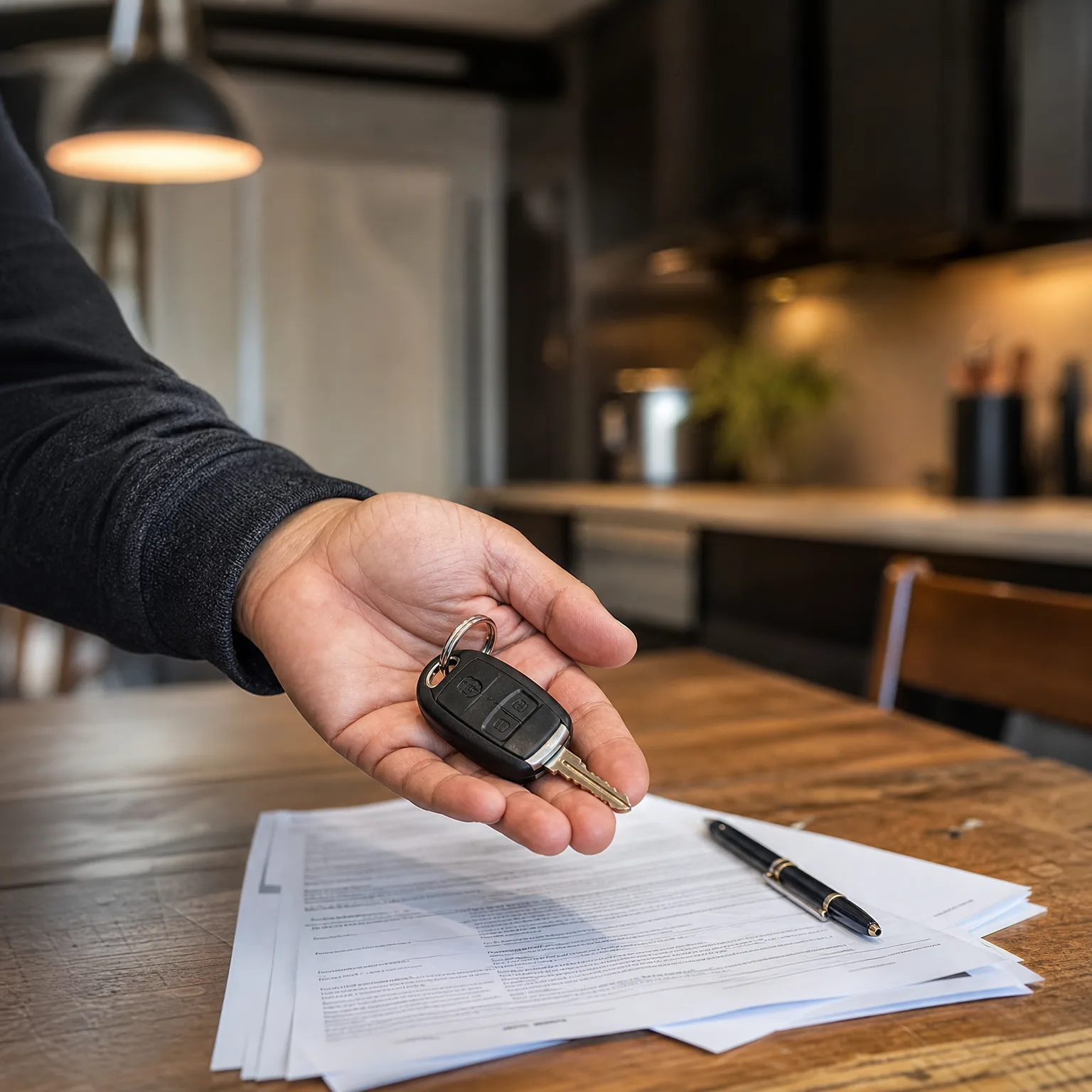
Texas DPS charges a $125 reinstatement fee to process your license restoration after you satisfy all suspension conditions. This fee applies whether you held a Class A, B, or C CDL or a standard operator license.
If you petition for an Occupational Driver License during your suspension, you file through county or district court, not DPS. Filing fees vary by county because the ODL is a court-granted order, not a DPS administrative process. Expect $200 to $400 in petition filing fees depending on your jurisdiction. Harris County and Dallas County typically charge at the higher end of that range. Rural counties may charge closer to $200.
These court fees are separate from the eventual DPS reinstatement fee. Most drivers pay both: court filing when petitioning for the ODL, then the DPS reinstatement fee when the full suspension ends and you apply for unrestricted license restoration.

SR-22 Filing Fees and the Two-Year Requirement
Texas requires SR-22 financial responsibility filing for 2 years from reinstatement for DWI-related suspensions under Transportation Code §601.153. This period starts when your license is reinstated, not when you file the SR-22 certificate.
Carriers charge an SR-22 filing fee to submit the certificate to DPS on your behalf. Standard filing fees for private-vehicle drivers range from $15 to $30. CDL holders typically pay $25 to $50 per filing because commercial status increases the administrative burden on the carrier's compliance team.
Some carriers charge annually; others charge once upfront for the full filing period. Ask whether the quoted fee covers the entire 2-year period or requires annual renewal. A $50 annual fee becomes $100 over the required filing period.
SR-22 Carrier Premium Markup: Where CDL Status Costs the Most
SR-22 filing fees are not the same as SR-22 insurance premiums. The premium is what you pay monthly for the liability coverage itself. The filing fee is the administrative charge to notify the state.
Carriers price SR-22 policies based on violation type, driver class, and anticipated future risk. A DWI violation already places you in the high-risk tier. Holding a CDL adds a second risk factor because you are licensed to operate commercial vehicles, even if your DWI occurred in a personal vehicle.
Typical SR-22 monthly premiums for private-vehicle Texas drivers with a single DWI conviction range from $140 to $210 per month for minimum liability coverage. CDL holders in the same age and violation profile typically see quotes $190 to $280 per month, a 40-65% increase attributable to commercial driver classification alone.
Over the 2-year SR-22 filing period, this markup costs an additional $1,200 to $1,680 compared to non-commercial high-risk drivers. Most online cost calculators do not account for CDL status because they assume standard operator licenses.

Line Up Coverage Before Your License Comes Back
Get Back on the Road
Ignition Interlock Device Installation and Monthly Monitoring
Texas courts frequently order ignition interlock installation as a condition of DWI probation or ODL eligibility, particularly for repeat offenses or BAC readings above 0.15. Installation is not universally mandated by statute for all first-offense DWI cases, but expect it if you petition for an ODL or if your court order includes ignition interlock as a probation condition.
Installation costs range from $70 to $150. Monthly monitoring and calibration fees range from $60 to $90. If you are required to maintain the device for 12 months, total cost is $790 to $1,230.
Texas DPS requires SR-22 filing for the entire period your ignition interlock device is installed plus 2 years after removal. If your court order mandates a 1-year interlock period, your SR-22 filing period runs 3 years total: 1 year during device installation, then 2 additional years post-removal. Most CDL holders do not realize the SR-22 clock does not start until the interlock comes out, which extends the high-risk premium period significantly.

Federal CDL Disqualification and Reinstatement Process Costs
A DWI conviction in any vehicle disqualifies your CDL for 1 year minimum under 49 CFR §383.51 for a first offense. A second lifetime offense disqualifies you permanently. This federal disqualification runs separately from your Texas state license suspension.
After the federal disqualification period ends, you must reapply for your CDL through DPS. Texas charges a $61 CDL issuance fee plus written and skills testing fees if your CDL has been expired for more than 2 years. The skills test costs $11 for the knowledge exam and varies by endorsement.
You cannot obtain an ODL that authorizes commercial vehicle operation. The ODL is limited to essential personal driving needs only. Federal law prohibits commercial operation under any form of restricted or hardship license during a CDL disqualification period.
Total Realistic Cost Stack for Texas CDL Holders
Combining state reinstatement fees, court filing costs, SR-22 filing and premiums, and ignition interlock requirements, most Texas CDL holders face total out-of-pocket costs between $5,500 and $9,200 over the reinstatement and filing period.
Here is the itemized breakdown for a first-offense DWI with 1-year ignition interlock requirement and 2-year post-removal SR-22 filing:
State reinstatement fee: $125. Court ODL petition filing: $200–$400. SR-22 filing fee (2-year period): $50–$100. SR-22 monthly premiums (24 months): $4,560–$6,720. Ignition interlock installation and monitoring (12 months): $790–$1,230. CDL reissuance and testing fees: $72–$150.
This estimate assumes minimum liability coverage only and does not include attorney fees, DWI education program costs, or court fines. If your court order requires a longer ignition interlock period or if you carry higher liability limits, your total cost increases proportionally.
Frequently Asked Questions
Can I use an Occupational Driver License to keep driving commercially during my CDL disqualification in Texas?
No. An Occupational Driver License authorizes only essential personal driving for work, school, or household duties. Federal law prohibits commercial vehicle operation under any restricted or hardship license during a CDL disqualification period. You must complete the full disqualification term before reapplying for your CDL.
Does the SR-22 filing period start when I file the certificate or when my license is reinstated?
The 2-year SR-22 filing period starts on your reinstatement date, not your filing date. If you file SR-22 6 months before your suspension ends, you still owe 2 full years of SR-22 coverage from the reinstatement date forward.
Why do SR-22 premiums cost more for CDL holders even when the DWI happened in a personal vehicle?
Carriers price CDL status as a separate risk tier because you hold a commercial license, regardless of which vehicle you were operating during the violation. Commercial driver classification increases underwriting risk and typically adds 40-65% to monthly SR-22 premiums compared to non-commercial high-risk drivers.
If my court order requires ignition interlock for 1 year, how long do I have to maintain SR-22 filing in Texas?
Texas requires SR-22 filing for the entire ignition interlock period plus 2 years after device removal. A 1-year interlock order creates a 3-year total SR-22 filing requirement: 1 year during installation, then 2 additional years post-removal.
Can I get a non-owner SR-22 policy if I sold my vehicle after my DWI conviction?
Yes. Non-owner SR-22 policies satisfy Texas filing requirements for drivers who do not own a vehicle. You pay for liability coverage that follows you when driving borrowed or rented vehicles, and the carrier files the SR-22 certificate with DPS on your behalf.
Do I pay the $125 DPS reinstatement fee before or after my suspension period ends?
You pay the reinstatement fee when applying to restore your license after satisfying all suspension conditions. DPS will not process your reinstatement until you submit proof of SR-22 filing, ignition interlock compliance if required, and payment of the $125 fee.
How long does federal CDL disqualification last for a first-offense DWI in Texas?
Federal law disqualifies your CDL for 1 year minimum for a first lifetime DWI offense, regardless of the vehicle class you were operating. A second lifetime offense results in permanent CDL disqualification with no reinstatement option.
Related Articles
Texas DUI Reinstatement Costs: ODL, SR-22 & Fees
5/3/2026

TX CDL Reinstatement After Lapse: Full Cost Breakdown
5/3/2026

Texas CDL Child Support Reinstatement Costs Breakdown
5/3/2026

Texas DUI Reinstatement Costs for College Students
5/3/2026

OK CDL DUI Reinstatement Cost Stack & Filing Order
5/3/2026

TX CDL Unpaid Ticket Suspension: Costs & Timeline
5/3/2026