
Illinois CDL Holders: DUI Reinstatement SR-22 Timing and Gap Docs
Free to compare
Why Illinois separates your CDL and personal license reinstatement after a DUI
Illinois treats your commercial driver's license and your personal Class D license as separate entities with distinct reinstatement processes. A DUI conviction in your personal vehicle triggers disqualification of your CDL under federal FMCSA rules and revocation of your personal license under Illinois law. You cannot reinstate one without the other, but the timelines and requirements do not align.
Your CDL disqualification period—typically one year for a first offense—is federally mandated and runs independently of your Illinois personal license revocation. The Illinois Secretary of State will not restore your CDL until your personal license is reinstated, your SR-22 filing is active, and you meet all court-ordered DUI program requirements. Most CDL holders assume the processes run in parallel; they do not. Your personal license reinstatement must clear first.
The gap that creates the most denials: Illinois requires you to maintain continuous insurance coverage even during your suspension period, and the Secretary of State hearing officer will request documentation proving no lapse between your revocation date and your reinstatement application. If you cancelled your policy during suspension—reasoning you were not driving—you now have a coverage gap that extends your timeline by months.
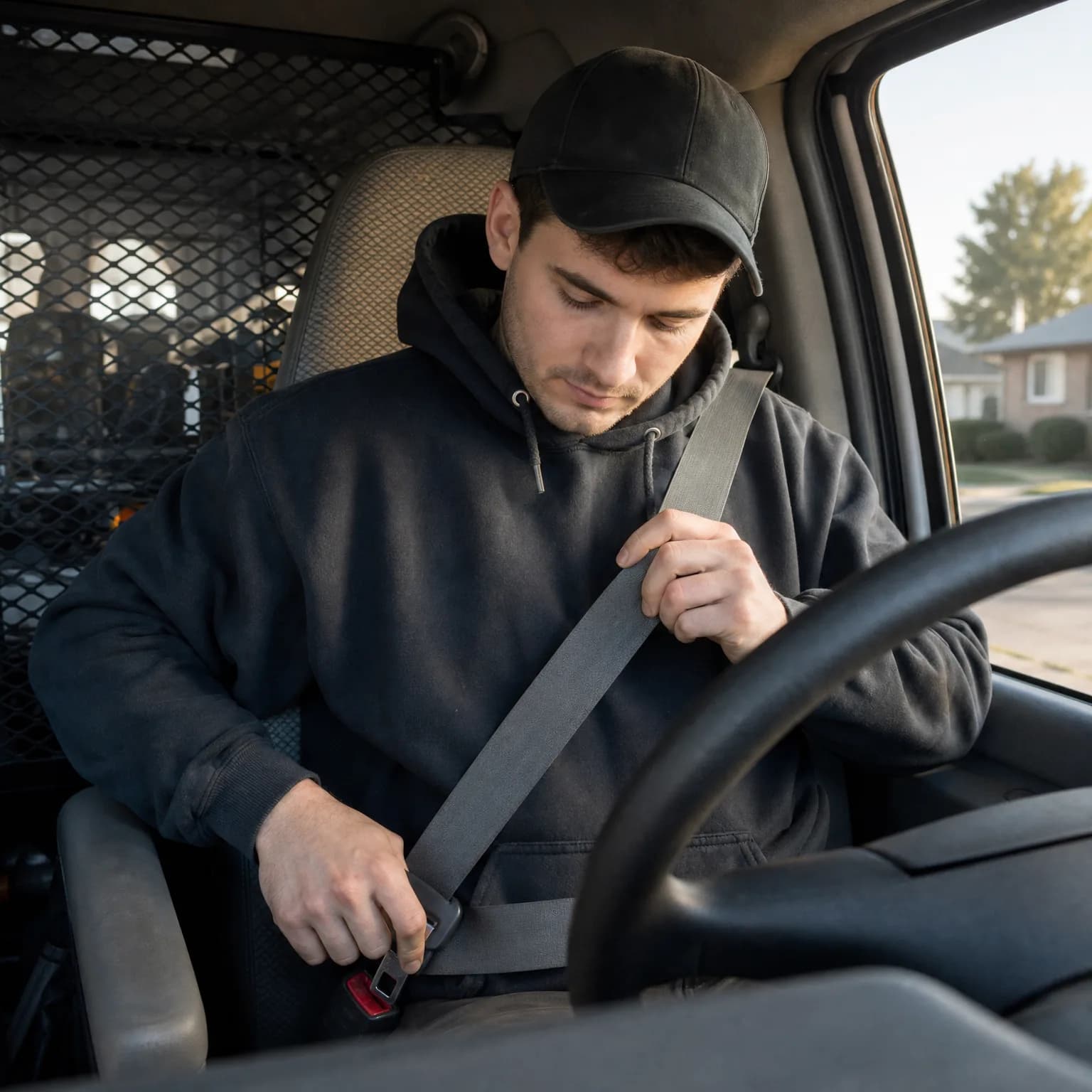
When to file SR-22 in the Illinois CDL DUI reinstatement sequence
Illinois requires SR-22 filing before your formal Secretary of State reinstatement hearing, not after the hearing is granted. Most CDL holders wait until they receive a favorable hearing decision to file SR-22, assuming the filing is a post-reinstatement compliance step. This is incorrect and delays your license restoration by 60 to 90 days.
The SR-22 must be active and on file with the Secretary of State at the time of your formal hearing. The hearing officer verifies SR-22 status as part of the eligibility review. If your SR-22 is not yet filed or shows as pending, your hearing will be continued and you will be required to reschedule after filing is confirmed. The rescheduling window typically adds 45 to 60 days to your timeline.
File SR-22 at least 15 business days before your scheduled hearing date. Illinois carriers submit SR-22 filings electronically to the Secretary of State, but processing is not instantaneous. The Secretary of State system updates within 7 to 10 business days under normal conditions, but during high-volume periods or if your driving record shows multiple violations, manual review can extend confirmation to 15 days. Filing early eliminates the risk of a continued hearing due to processing lag.
The SR-22 filing fee ranges from $15 to $35 depending on your carrier. This is separate from your policy premium and separate from the $500 DUI reinstatement fee you will pay the Secretary of State after your hearing is approved. Your SR-22 must remain active for three years from your reinstatement date, not from your conviction date.

What gap documentation the Secretary of State requires and why most CDL holders fail this step
Illinois requires proof of continuous insurance coverage from your revocation date through your reinstatement application date. This is not the same as SR-22 filing. Gap documentation proves you maintained liability coverage—even while suspended—without a lapse exceeding 30 days. The Secretary of State uses this to verify you did not drive uninsured during your suspension period.
Most CDL holders cancel their personal auto policy after losing their license, reasoning they are not driving and do not need coverage. This creates a coverage gap. When you apply for reinstatement and file SR-22, the Secretary of State pulls your insurance history and identifies the lapse. The hearing officer will request a sworn statement explaining the gap and proof you did not operate a vehicle during that period. If you cannot provide this, your hearing will be denied or continued pending further documentation.
Acceptable gap documentation includes: carrier letters confirming policy start and end dates with no lapse; non-owner SR-22 policy records showing continuous coverage during suspension; affidavits from carriers confirming you were listed on a household policy as a rated driver even without driving privileges. If you let coverage lapse entirely, you will need to provide DMV printouts showing no vehicle registrations in your name during the gap period and a notarized affidavit stating you did not operate any motor vehicle.
The safest path: maintain a non-owner SR-22 policy from your revocation date forward. This satisfies both the continuous coverage requirement and the SR-22 filing requirement simultaneously, eliminates the gap-documentation burden, and costs significantly less than maintaining full coverage on a vehicle you cannot legally drive. Non-owner SR-22 policies in Illinois typically run $40 to $70 per month for CDL holders with a single DUI.

Line Up Coverage Before Your License Comes Back
Get Back on the RoadHow BAIID installation timing affects your SR-22 filing and hearing eligibility
Illinois requires installation of a Breath Alcohol Ignition Interlock Device (BAIID) for all DUI-related Restricted Driving Permits and full reinstatements. The BAIID requirement is separate from SR-22 filing, but the two interact in ways most CDL holders miss. You cannot drive legally—even under an RDP—until your BAIID is installed and verified by your device provider to the Secretary of State.
If you apply for an RDP during your revocation period, you must install the BAIID before the Secretary of State will issue the permit. Installation costs range from $80 to $150, with monthly monitoring fees of $70 to $100. Your BAIID provider submits installation verification electronically to the Secretary of State, and the permit is issued only after that verification clears the system. This process takes 5 to 10 business days after installation.
For full reinstatement after your revocation period ends, Illinois does not require BAIID installation before your formal hearing—but the hearing officer will verify your BAIID compliance status if you held an RDP during revocation. Any violations recorded on your BAIID during the RDP period—failed breath tests, missed rolling retests, or tampering alerts—will appear in your hearing file and significantly reduce your likelihood of approval. Most CDL holders assume RDP violations are minor and do not affect full reinstatement; this is incorrect.
Your SR-22 filing and BAIID installation do not need to occur simultaneously, but both must be active at the time of your reinstatement hearing. File SR-22 first if you are not seeking an RDP. Install BAIID only if you are applying for an RDP or if your formal hearing decision requires it post-approval. Coordinate timing with your carrier and device provider to avoid creating a compliance gap that delays your hearing.
What happens to your CDL after your personal license is reinstated
Reinstating your Illinois Class D personal license does not automatically restore your CDL. After your Secretary of State hearing is approved, your SR-22 is filed, and your reinstatement fee is paid, your personal license is issued. Your CDL remains disqualified until you apply separately for CDL reinstatement and meet all FMCSA and Illinois commercial licensing requirements.
You must retake the CDL knowledge tests and skills tests to restore your commercial driving privileges. Illinois does not waive testing for DUI-related disqualifications, even for first offenses. The knowledge test covers general knowledge, air brakes (if applicable to your previous endorsements), and combination vehicles (if applicable). The skills test includes pre-trip inspection, basic vehicle control, and on-road driving in a commercial vehicle matching your endorsement class.
Your personal license must be valid and show no active suspensions or revocations at the time you apply for CDL reinstatement. The Secretary of State verifies your SR-22 filing is current and your DUI reinstatement conditions are satisfied before scheduling your CDL skills test. This adds 30 to 45 days to your timeline after personal license reinstatement.
If you held hazmat or passenger endorsements before your disqualification, you will need to complete TSA background checks and retest for those endorsements separately. Most CDL holders do not realize these endorsements do not automatically transfer after reinstatement. Budget an additional 60 to 90 days if hazmat reinstatement is required, as TSA processing timelines are outside Illinois Secretary of State control.
How to structure your insurance approach from suspension through CDL restoration
Start with a non-owner SR-22 policy the day your revocation is effective. This eliminates the coverage gap issue entirely and positions you for the fastest possible reinstatement timeline. Non-owner policies provide liability coverage when you drive a vehicle you do not own—critical if you need to use a household vehicle for essential purposes under an RDP—and satisfy Illinois's continuous coverage requirement without the cost of insuring a vehicle you cannot legally drive.
Maintain the non-owner SR-22 policy through your entire revocation period, through your formal hearing, and through your CDL reinstatement process. Do not cancel coverage after your personal license is restored. Your SR-22 filing obligation runs for three years from your personal license reinstatement date, and cancelling before that period ends triggers an immediate notice to the Secretary of State and re-suspension of your driving privileges.
Once your CDL is reinstated and you return to commercial driving, convert your non-owner policy to a standard personal auto policy if you own a vehicle, or maintain the non-owner policy if you drive only commercial vehicles for work. Verify your employer's commercial auto policy covers you as a scheduled driver. Most commercial policies exclude drivers with recent DUI convictions unless specifically endorsed, and operating a commercial vehicle without proper coverage voids your CDL reinstatement conditions.
Your SR-22 requirement continues for the full three-year period regardless of your employment or driving status. If you stop driving commercially or sell your personal vehicle, maintain at least a non-owner policy to keep your SR-22 active. Letting SR-22 lapse for any reason restarts the three-year clock from the date you refile.
Frequently Asked Questions
Can I reinstate my CDL in Illinois without reinstating my personal driver's license first?
No. Illinois will not restore your CDL until your personal Class D license is fully reinstated, your SR-22 filing is active, and all DUI program requirements are completed. The CDL disqualification period runs independently under federal rules, but the Secretary of State requires personal license reinstatement as a prerequisite for CDL restoration.
Do I need SR-22 if I only drive commercial vehicles and don't own a personal car?
Yes. Illinois requires SR-22 filing for DUI reinstatement regardless of whether you own a vehicle or drive only commercially. A non-owner SR-22 policy satisfies the filing requirement and provides liability coverage when you drive any vehicle you do not own, including during your reinstatement process.
What happens if I let my SR-22 lapse after my Illinois CDL is reinstated?
Your driving privileges will be suspended immediately. Illinois requires continuous SR-22 filing for three years from your reinstatement date. If your carrier cancels your policy or you allow coverage to lapse, the carrier notifies the Secretary of State within 10 days and your license is suspended until you refile and pay a reinstatement fee.
Can I get an Illinois Restricted Driving Permit for work as a CDL holder during my DUI revocation?
You can obtain a Restricted Driving Permit (RDP) for personal driving purposes—work commute, medical appointments, DUI classes—but the RDP does not restore your commercial driving privileges. Your CDL remains disqualified under federal FMCSA rules until your full reinstatement is approved and you retest for commercial licensing.
How long does the Illinois Secretary of State formal hearing process take for DUI CDL reinstatement?
From hearing request to decision, the process typically takes 90 to 120 days. Scheduling your formal hearing takes 45 to 60 days after your application is filed. The hearing itself lasts 30 to 60 minutes, and you receive a written decision 10 to 15 business days later. Approval does not mean immediate license issuance—you still pay the reinstatement fee and wait for processing.
Will my commercial employer's insurance cover me after a DUI reinstatement in Illinois?
Not automatically. Most commercial auto policies exclude drivers with DUI convictions unless the employer requests a specific endorsement adding you as a scheduled driver. Verify coverage with your employer's risk manager before operating any commercial vehicle post-reinstatement, as driving without proper coverage voids your CDL reinstatement conditions.
Do I need to retake the CDL written and driving tests after a DUI revocation in Illinois?
Yes. Illinois requires full CDL retesting—knowledge tests and skills tests—for all DUI-related disqualifications, even first offenses. No testing waivers are available. You must hold a valid reinstated personal license before you can schedule CDL testing, and the process adds 30 to 45 days after personal license reinstatement.
Related Articles
Illinois CDL Reinstatement: SR-22 & Lapse-Gap Docs
5/3/2026
IL CDL DUI Reinstatement: Court vs SOS Timing
5/3/2026
CDL DUI Reinstatement CA: SR-22 Timing & Lapse Gaps
5/3/2026
PA CDL DUI: SR-22 Timing & Lapse-Gap Documentation
5/3/2026

MN CDL DUI Reinstatement: SR-22 Timing & Documentation
5/3/2026

IL DUI Reinstatement: SR-22 Timing for College Students
5/3/2026