Reinstating Unpaid Tickets Suspension in SD for Rideshare Drivers
Free to compare
Why South Dakota Separates Court Clearance From DMV Reinstatement
South Dakota Division of Motor Vehicles does not automatically receive notification when you clear unpaid traffic tickets or failure-to-appear warrants. You pay your fines at the circuit court, the court closes your case in their system, and then nothing happens at DMV unless you submit proof manually.
Most rideshare drivers assume payment triggers automatic reinstatement because that's how vehicle registration renewals work in South Dakota. It does not. The court and DMV operate separate databases with no real-time linkage for unpaid ticket suspensions.
This creates a processing gap. You satisfy the court on Monday. DMV still shows your license suspended on Wednesday. If you try to activate your rideshare account mid-week, background check systems pull DMV records showing active suspension even though you paid everything owed.
What Court Clearance Actually Requires in South Dakota
You need a court-stamped clearance document showing all fines, fees, and court costs paid in full. The document must list your case number, the violation that triggered suspension, and the date of final payment. Generic receipts do not satisfy DMV.
Circuit court clerks in most South Dakota counties issue this clearance on request after verifying your account shows zero balance. Some counties call it a "compliance certificate." Others call it a "reinstatement clearance." The name varies but the function is identical: proof for DMV that the court matter is resolved.
You obtain this document in person at the county courthouse where the ticket was issued or failure-to-appear warrant was filed. If you were cited in Minnehaha County but live in Pennington County, you must go to Minnehaha County circuit court or request the document by mail, which adds 7-10 business days.
How to Submit Court Clearance to South Dakota DMV
South Dakota DMV requires you to submit the court clearance document in person at a driver licensing office or by mail to the Driver Licensing Program in Pierre. Email and fax are not accepted for reinstatement submissions as of current DMV policy.
Bring the original court-stamped clearance document, a completed reinstatement application (Form MV-454), proof of current liability insurance, and the $50 reinstatement fee. Payment must be by check, money order, or card—no cash by mail.
Processing takes 3-5 business days if submitted in person at a DMV office with all required documents. Mail submissions add 10-14 business days because the Pierre office processes them in batch. If you are trying to reactivate rideshare driving quickly, in-person submission at your nearest DMV office is the faster path.

Line Up Coverage Before Your License Comes Back
Get Back on the RoadWhy Rideshare Background Checks Fail Before DMV Posts Reinstatement
Uber and Lyft use third-party background check providers that pull South Dakota driving records from the state's Driver License Information System in real time. The system does not show "pending reinstatement" or "court matter resolved but not yet processed." It shows suspended or valid, nothing in between.
If you submit your court clearance and reinstatement application on Monday, DMV processes it by Thursday, but the background check company pulls your record Tuesday night, the record still shows active suspension. Your rideshare reactivation gets denied even though you did everything correctly.
The only solution is timing. Wait until DMV confirms your license shows valid status in their system before you request rideshare account reactivation. Call the DMV driver licensing office, provide your license number, and ask them to confirm your status shows valid in DLIS before you trigger a new background check. Most rideshare platforms allow you to request a manual re-check after initial denial, but that adds another 5-7 days.
Does South Dakota Require SR-22 for Unpaid Ticket Suspensions
South Dakota does not require SR-22 filing for suspensions caused solely by unpaid traffic tickets or failure to appear in court. SR-22 is required for DUI convictions, uninsured driving violations, and certain repeat offenses under SDCL 32-35, but not for administrative suspensions related to court compliance.
You still need active liability insurance to reinstate your license. South Dakota requires continuous insurance on all registered vehicles under SDCL 32-35-113, and DMV will verify your policy is active before processing reinstatement. Your insurer does not need to file SR-22 unless your suspension involved one of the specific triggers listed above.
If you are driving for Uber or Lyft, verify your personal auto policy includes rideshare coverage or obtain a separate rideshare endorsement. Standard personal policies exclude coverage during Period 1 (app on, no ride request) in most cases, which creates a gap that could trigger a future uninsured driving suspension if you are cited while logged into the app but not transporting a passenger.
What Happens If You Drive for Rideshare Before Reinstatement Posts
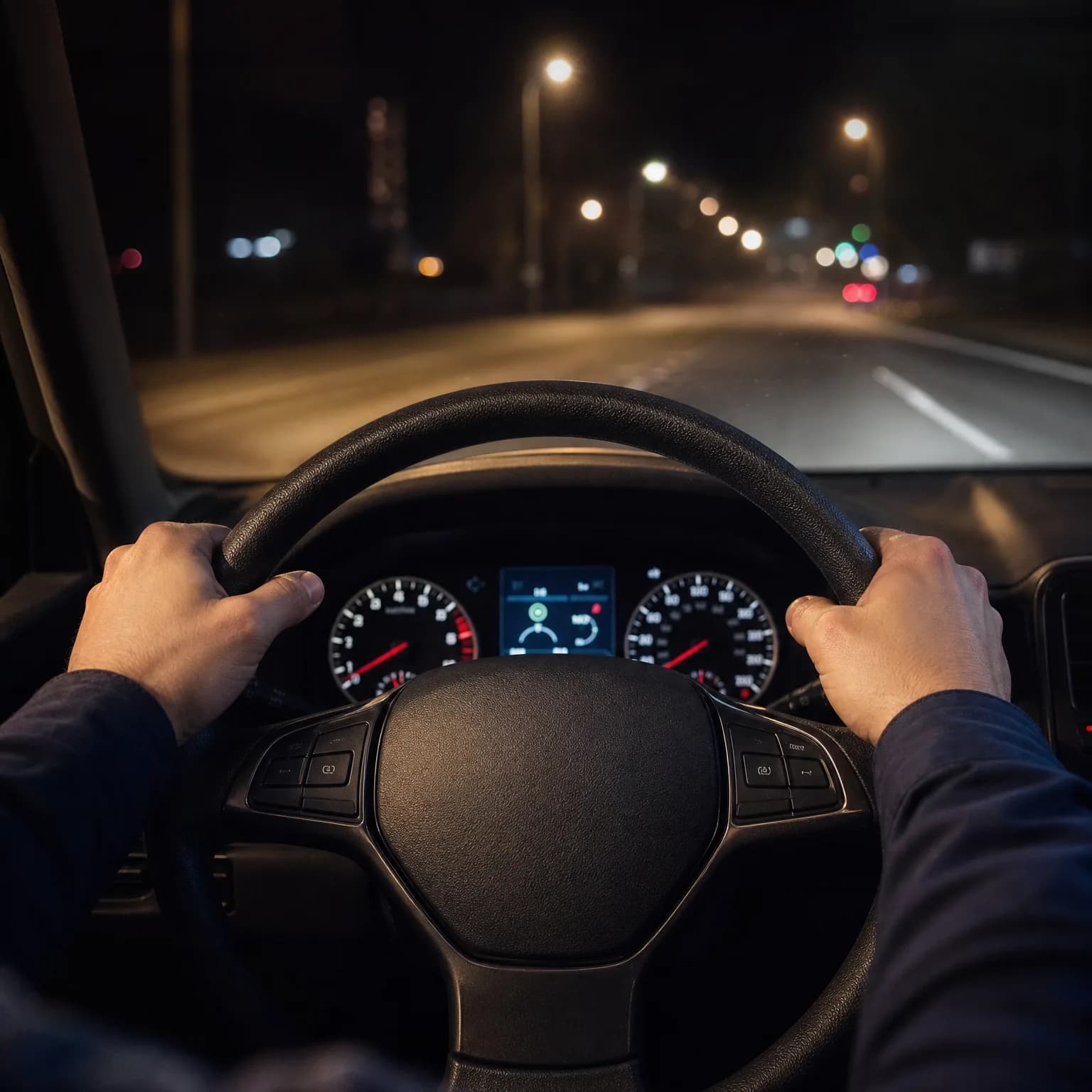
Operating a vehicle in South Dakota on a suspended license is a Class 2 misdemeanor under SDCL 32-12-65. First offense carries up to 30 days in jail and fines up to $500, though jail time is rarely imposed for non-DUI suspensions.
Rideshare platforms deactivate drivers immediately upon discovering suspended license status. If you activate your account using an old valid license verification and South Dakota reports the suspension mid-week, the platform locks your account without warning. Reactivation after suspension-related deactivation typically requires manual review and proof of current valid license, which adds 10-14 days even after DMV reinstatement posts.
The larger risk is liability exposure. If you are involved in an accident while driving on a suspended license, your personal auto policy and the rideshare platform's commercial policy both deny coverage in most cases. You become personally liable for property damage and injury claims with no insurer to defend you or pay settlements.
Frequently Asked Questions
How long does South Dakota DMV take to process reinstatement after I submit court clearance?
In-person submissions at a DMV driver licensing office process in 3-5 business days if all documents are complete. Mail submissions to the Pierre office take 10-14 business days because they are processed in batch. Your license will not show valid status in the Driver License Information System until processing is complete.
Can I reactivate my rideshare account the same day I pay my court fines in South Dakota?
No. Payment at the circuit court does not trigger automatic DMV reinstatement in South Dakota. You must obtain a court-stamped clearance document, submit it to DMV with the reinstatement application and $50 fee, and wait for DMV to process the reinstatement before your license shows valid. Background checks will show active suspension until DMV posts the reinstatement.
Does South Dakota require SR-22 insurance to reinstate my license after unpaid ticket suspension?
No. SR-22 filing is required for DUI convictions, uninsured driving violations, and certain repeat offenses, but not for suspensions caused solely by unpaid tickets or failure to appear. You still need active liability insurance to reinstate, but your carrier does not need to file SR-22 with the state.
What happens if I get caught driving for Uber on a suspended license in South Dakota?
Operating a vehicle on a suspended license is a Class 2 misdemeanor in South Dakota, carrying up to 30 days in jail and fines up to $500 for first offense. Rideshare platforms deactivate your account immediately, and both your personal auto policy and the platform's commercial policy deny coverage if you are in an accident, leaving you personally liable for all damages.
Can I submit South Dakota court clearance by email or fax to speed up reinstatement?
No. South Dakota DMV does not accept reinstatement documents by email or fax as of current policy. You must submit the court-stamped clearance document, reinstatement application, proof of insurance, and $50 fee in person at a driver licensing office or by mail to the Driver Licensing Program in Pierre.
Do I need rideshare endorsement on my policy to drive after reinstatement in South Dakota?
Yes, if you drive for Uber or Lyft. Standard personal auto policies exclude coverage during Period 1 when the rideshare app is on but you have not accepted a ride request. Without a rideshare endorsement or separate rideshare policy, you have no coverage during this period, which creates uninsured driving exposure and could trigger a future suspension.
How do I know when my South Dakota license shows valid after reinstatement?
Call the South Dakota DMV driver licensing office at 605-773-6883, provide your license number, and ask them to confirm your status shows valid in the Driver License Information System. Do not request rideshare account reactivation or new background checks until DMV confirms valid status, or the check will pull outdated suspension records.
Related Articles

SD Unpaid Ticket Suspension: Rideshare SR-22 & DMV Lag
5/3/2026
SD CDL Unpaid Ticket Suspension: Court & DMV Timing
5/3/2026
SD Rideshare FTA Warrant Suspension: Court & DMV Steps
5/3/2026
SD Unpaid Tickets Suspension: SR-22 & Court Clearance
5/3/2026
SD Child Support Suspension: Reinstatement Cost for Rideshare
5/3/2026
SD Child Support Suspension: Court to DMV Timeline
5/3/2026