
NY CDL Unpaid Tickets: Court Clearance vs DMV Verification Timing
Free to compare
Why Paying Your Tickets Doesn't Automatically Reinstate Your CDL in New York
New York operates a dual-clearance system for CDL suspensions triggered by unpaid tickets: you must satisfy the court that issued the suspension, then separately notify DMV that the court case is resolved. Courts do not automatically transmit clearance confirmations to DMV when you pay your fines or complete your sentence.
Most commercial drivers assume paying the fine closes the loop. It does not. DMV maintains a separate suspension record tied to your CDL number, and that record remains active until DMV receives court clearance verification. The court and DMV are two separate systems with no real-time data sync.
This creates a procedural gap. You resolve the court matter on Day 1. DMV receives the clearance paperwork on Day 30 or later. Your CDL stays suspended for that entire window, even though you've satisfied the legal obligation. The delay is administrative, not punitive, but it costs you weeks of work if you don't know to initiate the DMV verification step yourself.
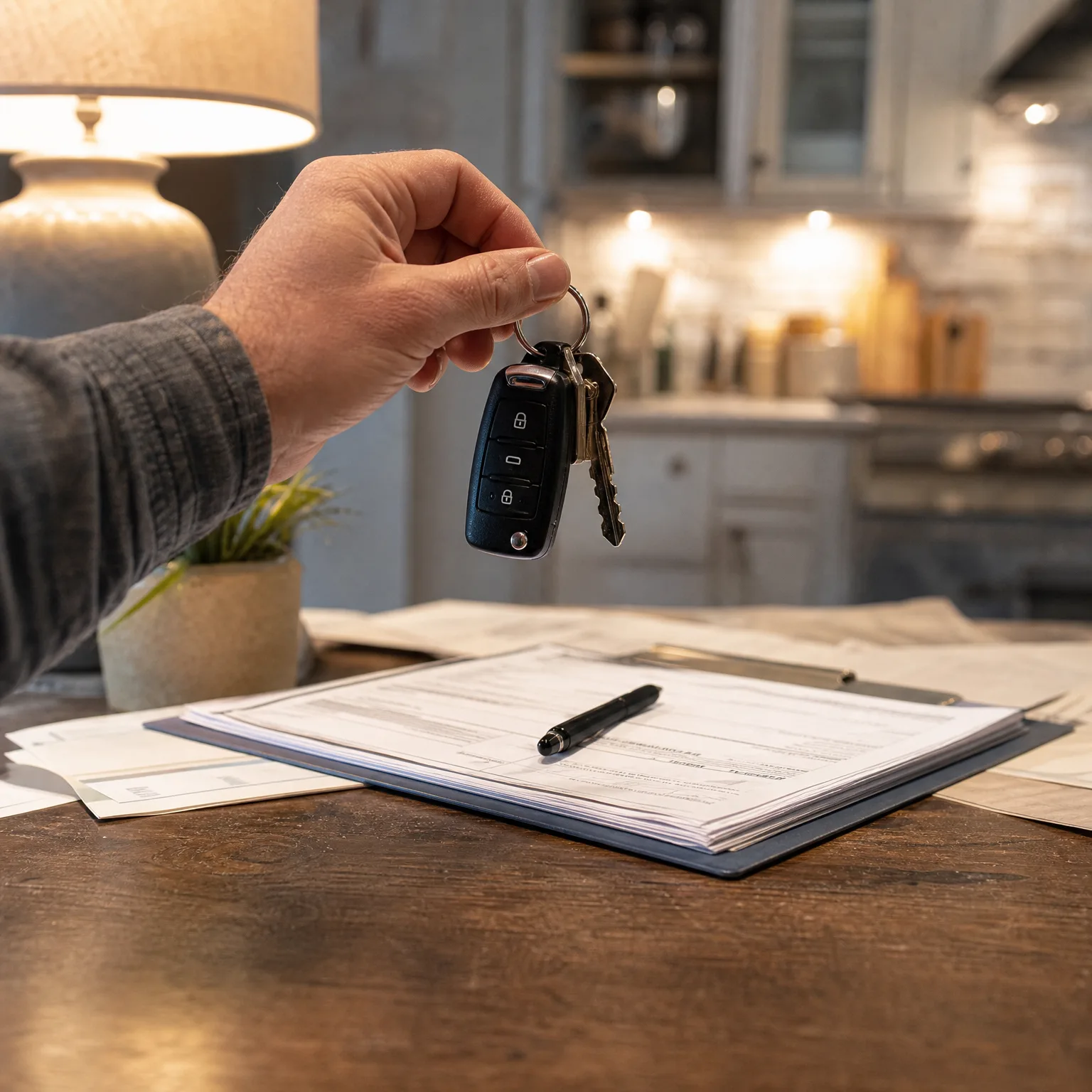
How Court Clearance Timing Works for CDL Unpaid Ticket Suspensions
When you pay your outstanding fines or resolve a failure-to-appear case, the court clerk closes your case file and issues a certificate of disposition or clearance letter. This document confirms the court matter is satisfied. The court does not forward this document to DMV automatically in most New York counties.
You must request a certified copy of the certificate of disposition from the court clerk. Some counties provide this immediately upon payment. Others require a separate written request and charge a fee of $6 to $10 per certified copy. Processing time varies by county: 3 to 10 business days is typical.
Once you have the certified court clearance document, you submit it to DMV. You can mail it to the DMV Suspension Termination Unit at PO Box 2950, Albany NY 12220-0950, or bring it in person to a DMV office that processes CDL transactions. In-person submission at a regional DMV office with CDL services typically results in faster processing than mailing to Albany. DMV's internal processing time after receipt is 7 to 14 business days under normal volume, but can stretch to 30 days during peak periods or when the clearance document is incomplete.

What DMV Verification Requires Before Lifting a CDL Suspension
DMV will not lift your CDL suspension until it receives proof that the triggering court case is fully resolved. The court clearance document must show: the docket number of the original case, the date of disposition, the sentence or fine paid, and the court's certification that no further action is required.
If the suspension was triggered by multiple unpaid tickets across different jurisdictions, you must obtain separate clearance documents from each court and submit all of them to DMV. A clearance from one court does not satisfy obligations to another. DMV's suspension record lists each outstanding case by docket number and issuing court. You need matching clearances for every listed case.
DMV also verifies that the suspension termination fee has been paid. New York charges a $50 suspension termination fee for most CDL suspensions triggered by unpaid tickets or failure to appear. This fee is separate from the court fines. You pay it directly to DMV after the court clearances are submitted. DMV will not process reinstatement until both the clearance documents and the termination fee are on file.
The 30-60 Day Processing Gap Most CDL Holders Miss
The most common delay pattern: commercial drivers pay their court fines on Day 1, assume DMV will be notified automatically, and continue waiting. On Day 20 they call DMV and learn their suspension is still active. On Day 25 they finally request the court clearance document. On Day 30 the court issues it. On Day 32 they mail it to DMV. DMV processes it on Day 50. Total elapsed time from payment to reinstatement: 50 days. Total time the legal obligation was satisfied: Day 1.
The gap exists because courts and DMV do not share real-time data. Some counties participate in electronic clearance programs where court dispositions are transmitted to DMV weekly or monthly, but these programs are not universal across New York and do not cover all case types. If your case was resolved in a county without electronic clearance integration, you must handle the document submission yourself.
Commercial drivers lose weeks of work during this gap. If you drive for a carrier that requires active CDL status to remain employed, the suspension clock matters more than it would for a personal-use driver. Knowing to request the clearance document immediately upon paying your fine, then hand-delivering it to a regional DMV office the same week, compresses the entire reinstatement timeline to 10-15 days instead of 45-60.

Line Up Coverage Before Your License Comes Back
Get Back on the Road
How to Compress the Clearance Timeline After Paying Your Fines
Request your certified certificate of disposition from the court clerk the same day you pay your fines. Do not wait for the court to mail it. Many courts provide same-day certified copies if you ask in person. If the court requires a written request, submit it immediately and pay any expedite fee the clerk offers.
Hand-deliver the clearance document to a DMV office that handles CDL transactions rather than mailing it to Albany. Regional DMV offices in Albany, Rochester, Buffalo, Syracuse, and the downstate commercial driver license offices process CDL reinstatements locally and can confirm receipt immediately. Mailing adds 5-10 days of transit and processing delay.
Pay the $50 suspension termination fee at the same DMV visit. Bring a check or money order; some offices accept card payments but not all. If you submit the clearance document without paying the fee, DMV will hold your reinstatement until payment is received, adding another week to the timeline.
Confirm with the DMV clerk at the time of submission that all required documents are present and that your file shows no other outstanding suspensions or holds. If another issue exists on your record, you will learn about it that day rather than two weeks later when DMV processes the clearance and discovers the hold.

Insurance Requirements During and After CDL Reinstatement
New York does not require SR-22 filing for CDL suspensions triggered by unpaid tickets or failure to appear. SR-22 is reserved for DWI, uninsured driving, and specific high-risk violations. Unpaid tickets are an administrative suspension, not a moving violation suspension, and do not trigger financial responsibility filing requirements.
You must maintain valid liability insurance throughout the suspension period if you own a vehicle registered in New York. New York's Insurance Information and Enforcement System monitors coverage continuously. If your policy lapses while your CDL is suspended, DMV will add a separate insurance lapse suspension on top of the unpaid tickets suspension, which requires additional fees and proof of coverage to clear.
If you do not own a vehicle and are suspended only for unpaid tickets, you are not required to carry insurance during the suspension. However, you will need proof of insurance to reinstate your CDL if you plan to drive commercially after reinstatement. Most commercial carriers require active liability coverage before allowing you to operate their vehicles, and some require you to maintain continuous coverage even during suspension to preserve your employment status.
Once your CDL is reinstated, verify that your insurance policy reflects your commercial driver status if you drive for-hire vehicles or haul cargo. Personal auto policies exclude commercial use. If you drive a commercial vehicle under your employer's commercial auto policy, confirm with your employer's insurance department that your reinstatement is on file and that you are listed as an eligible driver before resuming work.
What Happens If You Miss the DMV Verification Step
If you pay your court fines but never submit the clearance document to DMV, your CDL remains suspended indefinitely. New York does not impose a statutory time limit after which unpaid-ticket suspensions automatically expire. The suspension stays active until DMV receives court clearance verification and the termination fee.
Some commercial drivers discover this months or years later when they apply for a CDL renewal or attempt to transfer their license to another state. The suspension appears on their driving record and blocks the transaction. At that point they must backtrack to the original court, request clearance documents for a case that may be several years old, and submit them to DMV along with the termination fee. Court records older than five years may require additional retrieval fees or manual searches.
If you are operating a commercial vehicle with a suspended CDL because you did not realize the suspension was still active, you are driving without a valid license. This is a misdemeanor in New York under VTL §511 and carries up to 30 days in jail, fines up to $500, and a mandatory additional suspension period. Employers who allow you to drive without verifying your CDL status face separate penalties under FMCSA regulations.
Frequently Asked Questions
Does paying my tickets immediately reinstate my CDL in New York?
No. Paying your court fines satisfies the court obligation but does not automatically notify DMV. You must request a certified certificate of disposition from the court, submit it to DMV along with a $50 suspension termination fee, and wait 7-14 business days for DMV to process the reinstatement.
Can I hand-deliver court clearance documents to DMV to speed up reinstatement?
Yes. Hand-delivering the certified clearance document to a regional DMV office that handles CDL transactions is faster than mailing it to Albany. Processing time after in-person submission is typically 7-10 business days compared to 20-30 days for mailed submissions.
Do I need SR-22 insurance to reinstate a CDL suspended for unpaid tickets in New York?
No. New York does not require SR-22 filing for CDL suspensions triggered by unpaid tickets or failure to appear. SR-22 is required only for DWI, uninsured driving, and specific high-risk moving violations. Unpaid tickets are administrative suspensions and do not trigger financial responsibility filing requirements.
What happens if I have unpaid tickets in multiple New York counties?
You must obtain separate certified clearance documents from each court where you had unpaid tickets and submit all of them to DMV. A clearance from one court does not satisfy obligations to another. DMV's suspension record lists each case by docket number and will not lift the suspension until all listed cases show clearance.
How long does DMV take to process a CDL reinstatement after receiving court clearance?
DMV typically processes CDL reinstatements 7-14 business days after receiving the certified court clearance document and suspension termination fee. Processing can extend to 30 days during peak volume periods or if the clearance document is incomplete or missing required information.
Can I drive commercially while waiting for DMV to process my reinstatement?
No. Your CDL remains suspended until DMV completes processing and updates your driving record. Operating a commercial vehicle with a suspended CDL is a misdemeanor under New York VTL §511, punishable by up to 30 days in jail, fines up to $500, and an additional mandatory suspension period.
What is the suspension termination fee for CDL unpaid ticket suspensions in New York?
$50. This fee is separate from court fines and must be paid directly to DMV at the time you submit your court clearance documents. DMV will not process your reinstatement until both the clearance documents and the termination fee are on file.
Related Articles

NY CDL Reinstatement After Warrant Suspension Timeline
5/3/2026

NY Child Support CDL Suspension: DMV Clearance Timing
5/3/2026

NY Unpaid Ticket Suspensions: Court vs DMV Timing Gap
5/3/2026

NY Unpaid Tickets: Court Clearance vs DMV Timing
5/3/2026
CA CDL Reinstatement: Court Clearance vs DMV Timing
5/3/2026
DC CDL Unpaid Ticket Suspension: Court Clearance Timing
5/3/2026