
KY Unpaid Tickets Suspension: SR-22 Timing for Single Parents
Free to compare
Why Kentucky's Unpaid Ticket Suspension Doesn't Trigger SR-22 Filing
Kentucky suspends licenses for unpaid traffic tickets through court order, not through the Transportation Cabinet's financial responsibility enforcement system. This means you are not required to file SR-22 insurance to reinstate your license after paying outstanding fines. SR-22 filing in Kentucky applies to DUI convictions, uninsured accident involvement, and specific violations under KRS 304.39, none of which apply to unpaid ticket cases.
The reinstatement process requires paying the base fee of $40 to the Kentucky Transportation Cabinet after resolving all court obligations. You do not need to maintain high-risk insurance or file proof of financial responsibility with the state. Most aggregators lump all suspensions into a single SR-22 messaging framework because their economics depend on insurance referrals, not accurate procedural guidance.
Single parents facing this suspension often assume they need expensive SR-22 coverage to get back on the road. That assumption costs money and delays reinstatement. The actual barrier is court clearance and the $40 administrative fee, not insurance filing requirements.
How Single Parents Navigate Kentucky's Hardship License Application for Ticket Suspensions
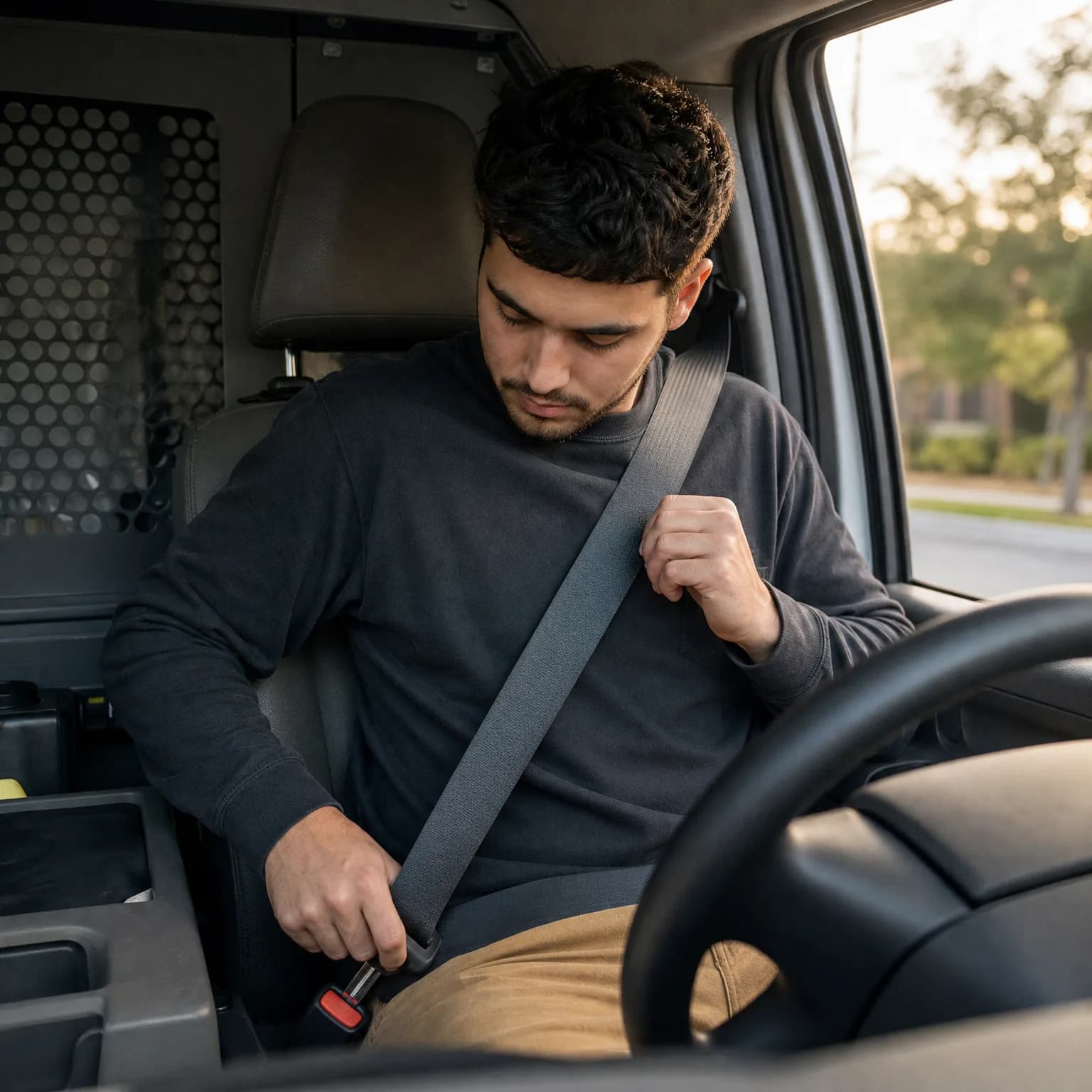
Kentucky offers a Hardship License through District Court petition for drivers whose licenses are suspended for unpaid tickets. The application goes through individual District Courts, not the Transportation Cabinet, which means processing times and specific documentation requirements vary by county. Jefferson County and Fayette County maintain more formalized petition procedures than rural district courts, but all require proof of hardship tied to employment, medical necessity, school enrollment, or childcare obligations.
Single parents must document why driving is essential for fulfilling parental responsibilities. The District Court petition form lists employment records and medical necessity documentation as standard proof, but it does not explicitly call out childcare transport as a separate hardship category. Judges in family-heavy jurisdictions recognize childcare necessity, but they require documentation that proves the need: pediatrician appointment schedules, custody agreements showing primary physical custody, school enrollment records showing no bus service, or daycare facility letters confirming drop-off and pickup obligations.
Most first-time applicants submit only employment verification and assume parental obligations are self-evident. They are not. Jefferson County judges denied approximately 40% of hardship petitions in recent case reviews for insufficient documentation of claimed necessity. Single parents who documented childcare obligations with pediatrician letters or custody orders had materially higher approval rates than those who relied on verbal explanations during the hearing.
The petition must also include proof of SR-22 insurance, even though SR-22 is not required for reinstatement after the suspension ends. This is a procedural quirk: the Kentucky Transportation Cabinet requires SR-22 filing for any hardship license issuance, regardless of the underlying suspension cause. You maintain SR-22 only during the hardship license period. Once you pay all fines, complete the suspension term, and reinstate your full license, the SR-22 requirement ends. Most carriers allow immediate cancellation at that point without penalty.


Court-Specific Petition Filing Procedures Single Parents Miss
Kentucky's District Courts process hardship petitions independently. There is no centralized state-level hardship application portal. You file with the District Court in the county where the suspension originated, not where you currently live. If your unpaid tickets came from multiple counties, you must resolve each county's court obligations before any District Court will consider a hardship petition.
Court costs vary by county. Most District Courts charge $50 to $150 in filing fees for hardship petitions, separate from the unpaid ticket balances and separate from the $40 Transportation Cabinet reinstatement fee. Jefferson County charges approximately $100. Fayette County charges approximately $85. Rural counties often charge lower fees but have less predictable processing timelines. You pay these fees at the time of petition filing, before the judge grants or denies the request.
Processing times range from 14 days in high-volume urban counties to 45 days in rural jurisdictions. The court schedules a hearing after reviewing your petition and documentation. You must appear in person unless the court grants a waiver, which is rare. Single parents who cannot attend during standard court hours face automatic denial in most counties. Jefferson County offers limited evening docket slots for hardship hearings, but these must be requested at the time of filing and availability is not guaranteed.
If the judge grants the hardship license, the court issues an order to the Transportation Cabinet authorizing restricted driving privileges. The Cabinet then processes the order and issues the physical hardship license, which takes an additional 7 to 10 business days. You cannot drive legally until the physical license is in hand. Driving on the court order alone without the issued hardship license is operating under suspension and creates a new violation.

Line Up Coverage Before Your License Comes Back
Get Back on the RoadWhat Restricted Driving Privileges Actually Allow for Kentucky Single Parents
Kentucky hardship licenses restrict driving to court-approved purposes. The judge defines permissible routes and hours in the court order. Most orders allow travel between home and work, home and school for the applicant's own education, home and medical appointments, and home and childcare facilities or schools for dependent children. The restrictions are not standardized statewide; each judge writes the order based on what you documented in your petition.
Single parents who petition for childcare-related driving must specify exact addresses in the petition: home address, work address, daycare or school address for each child, and pediatrician office address if medical transport is part of the claimed necessity. The court order lists these addresses explicitly. Driving outside the approved routes or outside approved hours violates the hardship license terms and triggers revocation.
Time restrictions typically limit driving to specific hours necessary for approved purposes. A parent working 9 a.m. to 5 p.m. with daycare drop-off at 8 a.m. and pickup at 6 p.m. would receive approval for driving between 7:30 a.m. and 6:30 p.m. on weekdays. Weekend driving for grocery shopping, errands, or non-emergency activities is generally not permitted unless documented as part of the hardship necessity. Judges in urban counties are more restrictive than rural judges, who sometimes grant broader discretion for multi-purpose trips.
Kentucky law requires ignition interlock device installation for DUI-related hardship licenses under KRS 189A.340. Unpaid ticket suspensions do not fall under this statute, so IID installation is not required for non-DUI hardship licenses. If your suspension involved any alcohol-related violation, even a minor-in-possession charge years earlier, verify with the court whether IID is being imposed as a condition. Some judges apply IID requirements broadly as a discretionary condition, even when the statute does not mandate it.

How Insurance Works During and After the Hardship License Period
You must purchase SR-22 insurance before filing your hardship petition. The SR-22 certificate proves financial responsibility to the court and the Transportation Cabinet. Kentucky's electronic insurance verification system requires your carrier to file the SR-22 directly with the Cabinet; you cannot submit it yourself. Most carriers process SR-22 filings within 24 to 48 hours, but some take up to 5 business days. Plan for this lag when scheduling your court petition filing.
SR-22 insurance for non-DUI suspensions typically costs $85 to $140 per month for minimum liability coverage in Kentucky. Single parents without a vehicle can purchase non-owner SR-22 policies, which cover you when driving borrowed or rented vehicles but do not insure a specific car. Non-owner policies cost approximately $60 to $100 per month and satisfy the SR-22 filing requirement for hardship license issuance.
You maintain SR-22 coverage for the duration of your hardship license period. Once you pay all outstanding fines, satisfy all court obligations, and reinstate your full unrestricted license, the SR-22 requirement ends. Contact your carrier the day you receive full reinstatement confirmation from the Transportation Cabinet and request SR-22 cancellation. Most carriers process same-day cancellations and adjust your premium to standard liability rates within one billing cycle.
If your SR-22 policy lapses during the hardship license period, the carrier notifies the Transportation Cabinet electronically within 24 hours. The Cabinet automatically suspends your hardship license and revokes driving privileges. There is no grace period. Reinstatement after a lapse requires refiling SR-22, paying a new reinstatement fee, and in some counties, returning to District Court for a compliance hearing. Single parents managing tight budgets should set up automatic payments to avoid lapse-triggered suspensions.

What Happens If You Don't Qualify for a Hardship License
Not all unpaid ticket suspensions qualify for hardship relief. Kentucky judges deny petitions when the underlying violation involved alcohol, drugs, reckless driving, or fleeing law enforcement. Courts also deny petitions when applicants have multiple prior suspensions within the past 5 years or when the claimed hardship does not meet the statutory necessity standard.
Single parents denied hardship licenses must serve the full suspension period before applying for reinstatement. Suspension durations for unpaid tickets vary by court order but typically range from 90 days to 12 months. During this period, you cannot drive legally, and arranging alternative transportation becomes the only option. Public transit, rideshare services, family assistance, or employer carpool programs are the paths most parents use during suspended periods when hardship relief is unavailable.
After the suspension period ends, reinstatement requires paying all outstanding fines, paying the $40 Transportation Cabinet reinstatement fee, and confirming all court holds are cleared. Kentucky participates in the Driver License Compact, which means out-of-state convictions and unpaid tickets from other states can block reinstatement until resolved. Verify your driving record through the Transportation Cabinet's online portal at drive.ky.gov before attempting reinstatement to avoid rejected applications and wasted fees.
Frequently Asked Questions
Do I need SR-22 insurance to reinstate my Kentucky license after paying unpaid tickets?
No. Kentucky does not require SR-22 filing for reinstatement after unpaid ticket suspensions. You pay the $40 reinstatement fee to the Transportation Cabinet after clearing all court obligations. SR-22 is required only during a hardship license period if you apply for one.
Can I get a hardship license in Kentucky if my suspension is for unpaid parking tickets?
Yes, but only if the suspension stems from a District Court order for failure to pay moving violations or court costs. Parking ticket suspensions processed administratively by municipalities do not qualify for hardship relief through District Court. You must verify the suspension source before filing a petition.
How long does it take to get a hardship license approved in Kentucky?
District Courts take 14 to 45 days to process hardship petitions and schedule hearings, depending on county caseload. After approval, the Transportation Cabinet takes an additional 7 to 10 business days to issue the physical hardship license. Total timeline from petition filing to driving legally is typically 21 to 55 days.
What happens if my SR-22 insurance lapses while I have a Kentucky hardship license?
The Transportation Cabinet automatically suspends your hardship license within 24 hours of carrier-reported lapse. There is no grace period. Reinstatement requires refiling SR-22, paying a new reinstatement fee, and potentially returning to District Court for a compliance hearing.
Can I use a Kentucky hardship license to drive my kids to school if I don't have a job?
Possibly, but you must document the childcare necessity in your District Court petition with school enrollment records, custody agreements, or proof that no bus service is available. Judges approve childcare-only hardship petitions less frequently than employment-based petitions, and you must prove the transportation need is essential, not merely convenient.
Do I need an ignition interlock device for a Kentucky hardship license if my suspension is only for unpaid tickets?
No. Kentucky requires ignition interlock devices only for DUI-related hardship licenses under KRS 189A.340. Unpaid ticket suspensions do not trigger IID requirements unless the underlying violation involved alcohol or drugs. Verify with the District Court if your case includes any alcohol-related charges.
Can I apply for a hardship license in Kentucky if I have unpaid tickets in multiple counties?
You must resolve all court obligations in every county before any District Court will consider a hardship petition. Kentucky's court system does not consolidate multi-county suspensions. Pay all outstanding fines and obtain clearance letters from each county before filing your hardship application.
Related Articles
KY Unpaid Ticket Suspension Costs: Full Breakdown
5/3/2026

KY CDL Unpaid Ticket Suspension: Reinstatement Costs
5/3/2026

KY Child Support Suspension Reinstatement Costs
5/3/2026
KY Child Support License Suspension: Real Costs
5/3/2026

Kentucky CDL Reinstatement After Unpaid Tickets Guide
5/3/2026

KY Rideshare Drivers: Unpaid Ticket Suspension Reinstatement
5/3/2026