
Wisconsin Child Support Suspension: Court Clearance vs DMV Timing
Free to compare
Why Your Court Clearance Doesn't Automatically Reinstate Your License
Wisconsin operates two parallel child support suspension systems. The court issues a compliance notice when you satisfy arrears or establish a payment plan through the county clerk or child support agency. WisDOT Division of Motor Vehicles maintains the actual license suspension record. These systems do not communicate automatically.
Most drivers assume paying the court clears the suspension immediately. The court updates its own records. DMV keeps your license suspended until it receives direct notification from the child support agency or court. This gap creates a 3-6 week delay even when you have met all legal obligations.
The court clearance is necessary but not sufficient. DMV requires a separate submission—typically Form MV2825 (Notice to Department Regarding Child Support) or electronic transmission from the child support agency—before processing reinstatement. You can be legally compliant and still unable to drive because the paperwork hasn't crossed agency boundaries.

The Two-Step Clearance Process Wisconsin Actually Requires
First step: satisfy the underlying child support obligation. This means paying arrears in full, entering a court-approved payment plan, or demonstrating compliance through the county child support agency. The court or agency issues a compliance notice—usually called a release or clearance letter—confirming you have met the legal threshold.
Second step: submit that compliance notice to WisDOT DMV. Some counties transmit this electronically through the state's Child Support Enforcement System. Many do not. If your county does not auto-transmit, you must physically deliver or mail the court-issued clearance document to DMV along with the $60 reinstatement fee and any other documentation DMV requires for your specific case.
Failure to complete the second step leaves your license suspended indefinitely. The court considers you compliant. DMV has no record of that compliance. Your driving privilege remains revoked until someone bridges that gap. Most drivers discover this only after being pulled over or attempting to renew their license weeks after court clearance.


How to Confirm DMV Received Your Court Clearance
Do not assume transmission happened. Call WisDOT DMV customer service at 608-266-2353 and provide your driver license number. Ask whether a child support clearance has been posted to your record. If the answer is no, ask whether your county transmits electronically or requires manual submission.
If manual submission is required, obtain a certified copy of your court compliance notice from the county clerk or child support agency that issued it. Mail or deliver it to WisDOT Division of Motor Vehicles, PO Box 7917, Madison, WI 53707-7917, along with the $60 reinstatement fee. Include a cover letter stating your name, date of birth, driver license number, and the reason for submission.
Processing takes 7-10 business days after DMV receives the documents. Do not drive until you receive written confirmation from DMV that your license has been reinstated. Driving on a suspended license while waiting for processing creates a new violation with separate penalties, including additional suspension time and potential criminal charges.

Line Up Coverage Before Your License Comes Back
Get Back on the RoadWhat Happens If You're a College Student With No Vehicle
Wisconsin does not require vehicle ownership to maintain a valid driver license. If your license was suspended for child support arrears while you are enrolled in college and do not own a car, you still must complete the clearance and reinstatement process to restore your driving privilege. The suspension affects your legal ability to drive any vehicle, not just vehicles you own.
Many college students need a valid license for employment, internships, rideshare driving, or rental car access during school breaks. The suspension remains on your driving record and can complicate out-of-state employment, professional licensing applications, and background checks even if you do not currently drive.
Once court clearance is obtained, follow the same two-step process: confirm DMV received the compliance notice, submit documentation if your county does not auto-transmit, and pay the $60 reinstatement fee. If you plan to drive after reinstatement, verify whether you need to add yourself to a family member's policy or obtain non-owner liability coverage before operating any vehicle. Wisconsin does not require SR-22 filing for child support suspensions, but it does require proof of insurance if you are cited while driving.
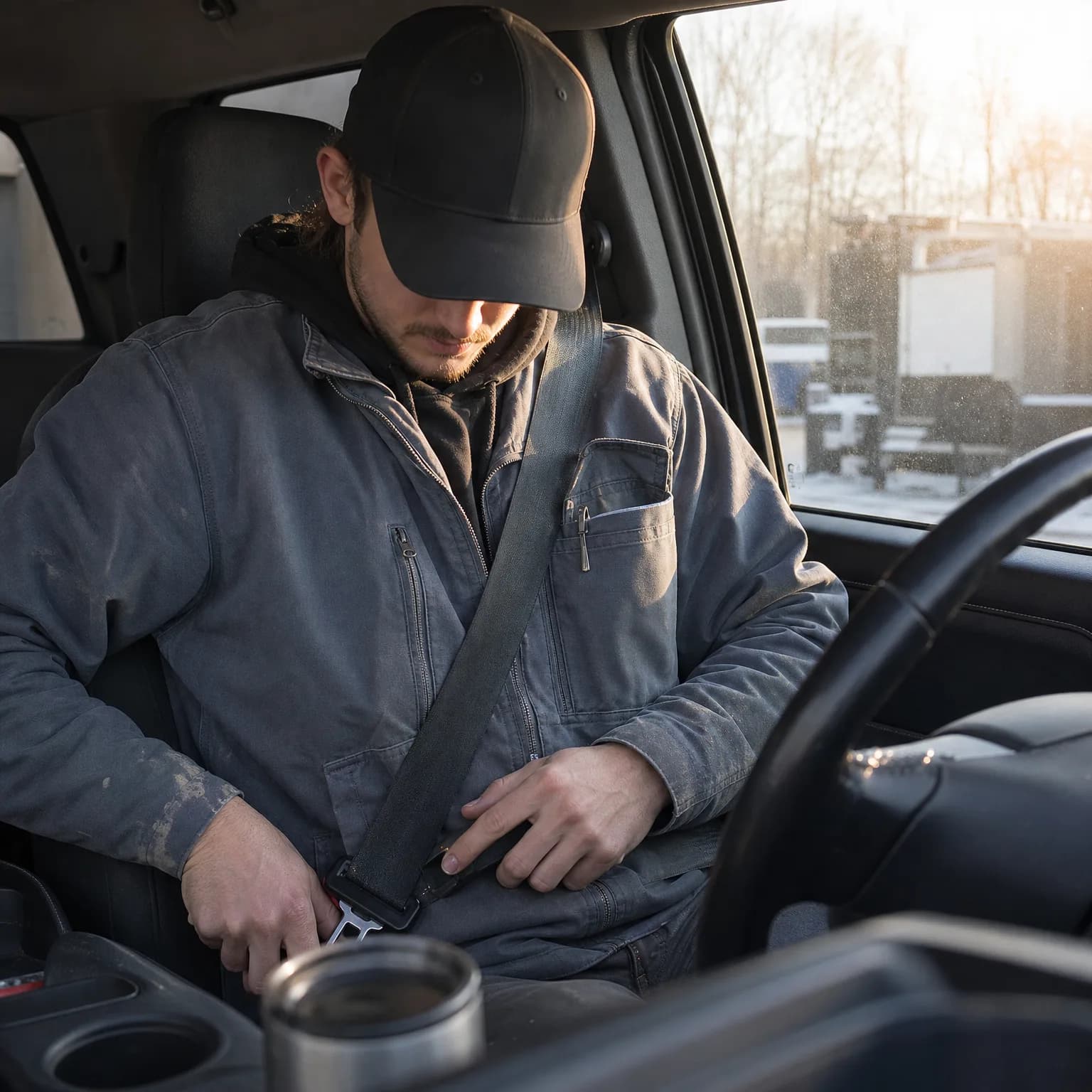
Insurance Requirements After Child Support Suspension Reinstatement
Wisconsin does not require SR-22 filing to reinstate a license suspended for child support arrears. This suspension type is administrative, not violation-based. You pay the $60 reinstatement fee, submit court clearance to DMV, and your license is restored without an SR-22 certificate.
If you own a vehicle or plan to drive regularly after reinstatement, Wisconsin law requires proof of insurance. Minimum coverage is $50,000 bodily injury per accident, $25,000 bodily injury per person, and $15,000 property damage. If you do not own a vehicle but need to drive occasionally—borrowing a family member's car, renting during travel, rideshare driving—consider non-owner liability coverage. This meets Wisconsin's insurance requirement without the cost of insuring a specific vehicle.
Carriers do not treat child support suspensions the same way they treat DUI or reckless driving suspensions. Most drivers reinstating from child support arrears qualify for standard rates, not high-risk rates, assuming no other violations on their record. Verify coverage is active before driving. Wisconsin participates in electronic insurance verification, and driving uninsured after a recent suspension reinstatement creates immediate risk of a new suspension under Wis. Stat. § 344.64.
Frequently Asked Questions
Does paying child support automatically reinstate my Wisconsin driver license?
No. Paying arrears or entering a payment plan clears the court obligation, but DMV requires separate notification before reinstating your license. You must confirm DMV received the court clearance and submit it manually if your county does not transmit electronically. Reinstatement also requires a $60 fee.
How long does Wisconsin DMV take to process child support clearance after I submit it?
WisDOT DMV processes clearance submissions in 7-10 business days after receipt. Processing begins only after DMV receives both the court compliance notice and the $60 reinstatement fee. Do not drive until you receive written confirmation from DMV that your license has been reinstated.
Do I need SR-22 insurance to reinstate my license after a child support suspension in Wisconsin?
No. Wisconsin does not require SR-22 filing for child support suspensions. This suspension type is administrative, not violation-based. You need only the $60 reinstatement fee, court clearance documentation, and proof of insurance if you plan to drive after reinstatement.
Can I get an occupational license in Wisconsin while my license is suspended for child support?
Wisconsin occupational licenses are available for some suspension types, but child support suspensions are typically excluded from eligibility. Courts prioritize child support compliance over restricted driving privileges. Focus on clearing the arrears and completing the reinstatement process rather than pursuing an occupational license.
What happens if I drive in Wisconsin before DMV processes my child support clearance?
Driving on a suspended license is a separate violation regardless of whether you have satisfied the underlying child support obligation. If stopped, you face additional suspension time, fines up to $2,500, and potential criminal charges. Wait for written confirmation from DMV that your license has been reinstated before driving.
Does a child support suspension in Wisconsin affect my car insurance rates after reinstatement?
Most carriers do not treat child support suspensions the same way they treat DUI or reckless driving suspensions. If you have no other violations on your record, you typically qualify for standard rates after reinstatement. Your rates are determined by your driving history, not the administrative suspension itself.
Related Articles

WI Child Support Clearance: Court vs DMV Timing
5/3/2026
License Suspended for Child Support in Madison WI
4/29/2026

WI Child Support CDL Reinstatement: Court to DMV Timing
5/3/2026
WI Child Support SR-22 After College Reinstatement
5/3/2026

License Suspended for Child Support in Milwaukee WI
4/29/2026

WI Unpaid Ticket Suspension: Court-DMV Clearance Gap
5/3/2026