
South Carolina Child Support Suspension: Court vs DMV Timing
Free to compare
Why Your Court Clearance Doesn't Automatically Reinstate Your License
South Carolina's family court system and the Department of Motor Vehicles operate on separate administrative tracks with no real-time data integration. When you satisfy your child support arrears or enter a payment agreement, the family court issues a clearance notice—but that notice must be manually transmitted to SCDMV before your suspension is lifted.
Most drivers assume the court clearance triggers immediate reinstatement. It does not. SCDMV requires physical receipt of the court's compliance notification, processed through South Carolina's Department of Social Services (Child Support Enforcement Division), before they will remove the suspension flag from your driving record. This inter-agency handoff typically takes 7 to 14 business days after your court date.
Rideshare drivers in Columbia, Charleston, and Greenville lose the most earnings during this gap because they cannot activate their accounts until SCDMV confirms reinstatement. Uber and Lyft run real-time license verification checks that pull directly from SCDMV's database—not the family court's records. Your court paperwork proving compliance means nothing to the platform until SCDMV updates their system.

The Three-Entity Coordination Problem South Carolina Doesn't Explain
Reinstating a child support suspension in South Carolina requires coordinating three separate entities: the family court that issued the suspension order, the Department of Social Services Child Support Enforcement Division that monitors compliance, and SCDMV that controls your driving privilege. Each entity operates on its own timeline and none is responsible for notifying you when the next step is ready.
Here's the actual sequence: you satisfy the arrears or establish a payment plan and attend your compliance hearing. The family court issues a clearance order. That order is transmitted to Child Support Enforcement, which verifies the payment or plan terms. Child Support Enforcement then notifies SCDMV to lift the suspension. SCDMV processes the notice and updates your driving record.
The problem is visibility. You receive confirmation from the court that you're cleared. You assume that means you can drive. But SCDMV has not yet received the clearance notice from Child Support Enforcement, so the suspension flag remains active in their system. If you attempt to reinstate at a branch before SCDMV receives and processes the notice, you'll be turned away—and many drivers interpret this as a problem with their court compliance rather than a processing delay.
South Carolina does not provide a direct hotline or online portal where you can check the status of this inter-agency transmission. The court clerk cannot tell you when SCDMV will receive the notice. SCDMV cannot confirm receipt until it appears in their system. You are waiting in an information blackout.
What You Actually Need to Bring to SCDMV After Court Clearance
When you go to an SCDMV branch to reinstate after child support clearance, bring three documents: the family court's signed clearance order, a government-issued photo ID, and payment for the $100 reinstatement fee. Do not assume the court clearance alone is sufficient.
SCDMV clerks will first check their internal system to see if the suspension flag has been removed. If Child Support Enforcement has already transmitted the clearance notice and SCDMV has processed it, your reinstatement is straightforward—you pay the fee, your license is reinstated, and you walk out ready to drive. If the clearance notice has not yet posted to SCDMV's system, the clerk cannot process your reinstatement even if you have the court order in hand.
This is the disconnect most drivers don't expect. The court order proves you satisfied the requirement, but SCDMV operates on their own database, not your paperwork. Some clerks will accept the court order as documentation and manually process the reinstatement if the notice is still in transit. Others will tell you to wait until the notice posts and return later. Policy varies by branch and by clerk.
If you are reinstating specifically to activate a rideshare account, call SCDMV's reinstatement line at 803-896-5000 before driving to a branch. Ask whether the child support suspension has been cleared in their system. If the answer is no, ask how long the typical processing delay is for clearances submitted within the past week. This saves you a wasted trip.
Line Up Coverage Before Your License Comes Back
Get Back on the RoadDoes South Carolina Require SR-22 for Child Support Suspensions?
No. South Carolina does not require SR-22 insurance filing for child support arrears suspensions. SR-22 is mandated only for DUI convictions, uninsured motorist violations, and certain reckless driving offenses under South Carolina Code § 56-1-460.
Child support suspensions are administrative actions triggered by non-payment, not driving violations. Once you satisfy the arrears or establish a payment plan and SCDMV processes the clearance notice, you pay the reinstatement fee and your license is restored. You do not need to contact an insurance carrier to file SR-22 before or after reinstatement.
If your suspension was for child support alone, you can reinstate with your existing auto insurance policy or purchase a new policy without any SR-22 requirement. Rideshare drivers who own a vehicle will need personal auto coverage that meets South Carolina's minimum liability limits: $25,000 per person, $50,000 per accident for bodily injury, and $25,000 for property damage. Rideshare platforms require commercial rideshare endorsements or separate rideshare policies during active periods, but those are platform requirements, not state reinstatement requirements.
If you do not currently own a vehicle but need to reinstate to drive for Uber or Lyft using a rental or a vehicle you will lease after reinstatement, you can purchase a non-owner liability policy to satisfy the state's financial responsibility requirement. Non-owner policies provide the minimum liability coverage without insuring a specific vehicle. Once you have secured a vehicle and signed up with a rideshare platform, you will need to upgrade to a full rideshare policy.
Route Restricted License Eligibility During Child Support Suspension
South Carolina does not clearly define whether Route Restricted License eligibility extends to child support arrears suspensions in publicly available SCDMV materials. The Route Restricted License program documented by SCDMV focuses on DUI, uninsured motorist, and point accumulation suspensions. Administrative suspensions for unpaid fines, child support, or failure to appear are not explicitly listed as qualifying triggers.
If you need to drive for work during a child support suspension and cannot immediately satisfy the arrears, contact the family court that issued the suspension order and ask whether a restricted license is available under a payment plan arrangement. Some South Carolina counties allow restricted driving privileges as part of a court-supervised payment agreement, but this is handled at the family court level, not through SCDMV's standard Route Restricted License application process.
The distinction matters because SCDMV's Route Restricted License program has a defined application process, a $100 fee, and specific route and time restrictions. Family court-supervised restricted privileges, when granted, operate under the terms set by the judge and may not require a separate SCDMV application. Verify with the court clerk whether your county offers this option before assuming you must go through SCDMV.
What to Do If SCDMV Says Your Suspension Is Still Active After Court Clearance
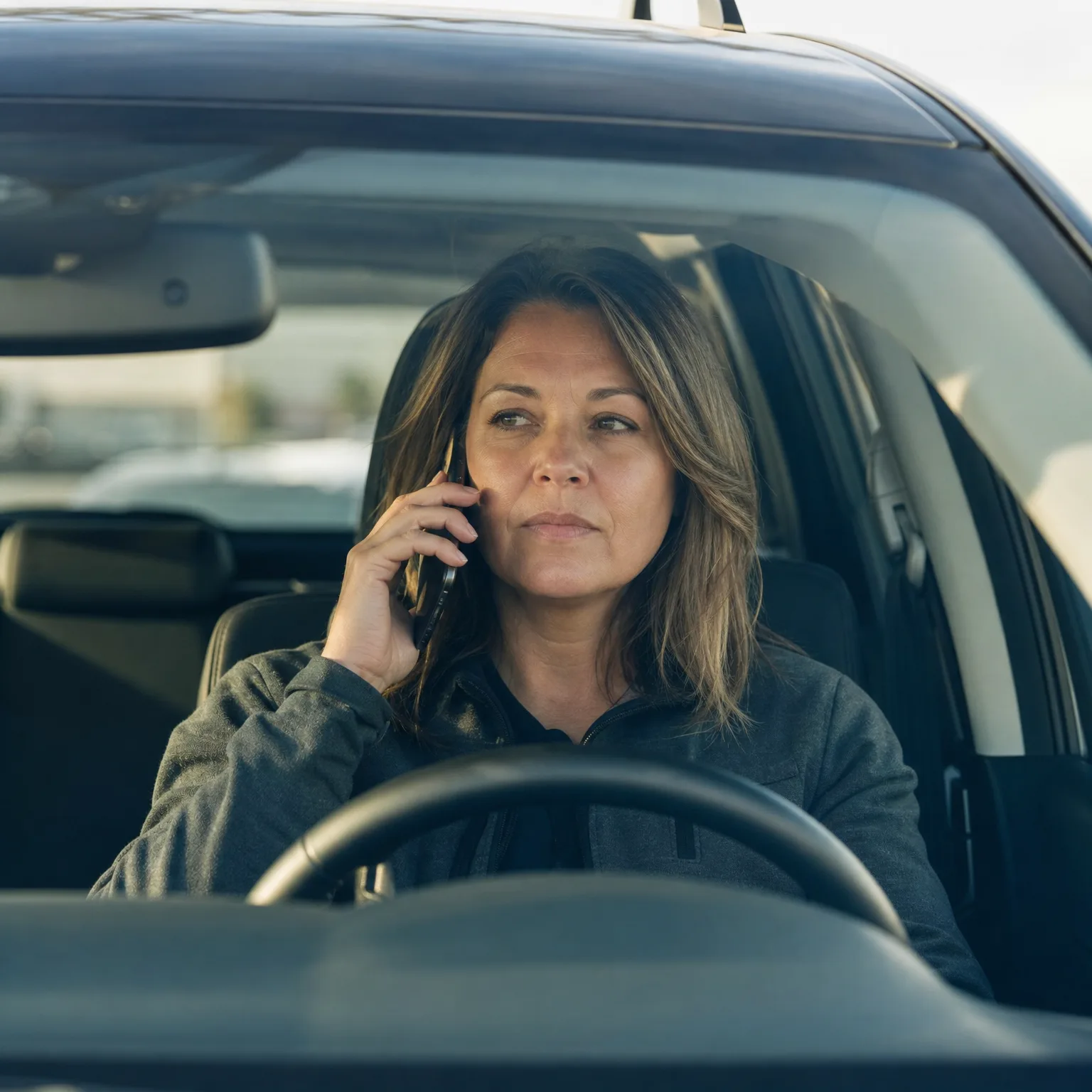
If you go to an SCDMV branch with your court clearance order and the clerk tells you the suspension is still active in their system, do not leave without documentation. Ask the clerk to print a copy of your driving record showing the active suspension and the date SCDMV last updated your record. This printout will show whether SCDMV has received any clearance notice from Child Support Enforcement.
Take that printout back to the family court clerk's office where your clearance was issued. Ask the clerk to confirm that the clearance order was transmitted to the Department of Social Services Child Support Enforcement Division and request the transmission date. If the court clerk confirms transmission but SCDMV has not received it, contact the South Carolina Department of Social Services at 803-898-7601 and reference your case number. Ask for the status of the clearance notice sent to SCDMV.
This is the gap where most drivers get stuck. The court believes the clearance was sent. SCDMV has not received it. Child Support Enforcement is the intermediary, and there is no public-facing online portal to check transmission status. You must call and reference your case number to get an answer.
If more than 14 business days have passed since your court clearance and SCDMV still shows an active suspension, return to the family court and request a certified copy of the clearance order. Some SCDMV branches will accept a certified court order as sufficient documentation to manually override the suspension flag, but this is not guaranteed. Expect to make multiple trips and multiple phone calls before the three-agency coordination completes.
Frequently Asked Questions
How long does it take for South Carolina DMV to process a child support clearance notice?
SCDMV typically processes child support clearance notices within 7 to 14 business days after the Department of Social Services Child Support Enforcement Division transmits the notice. This timeline is not guaranteed and varies by the volume of clearances being processed. SCDMV does not provide real-time tracking of clearance notice status.
Can I drive in South Carolina immediately after my family court clears my child support suspension?
No. You cannot legally drive until SCDMV receives the clearance notice from Child Support Enforcement, processes it, removes the suspension flag from your driving record, and you pay the $100 reinstatement fee at an SCDMV branch. Court clearance alone does not lift the suspension in SCDMV's system.
Does South Carolina require SR-22 insurance to reinstate after a child support suspension?
No. South Carolina does not require SR-22 filing for child support arrears suspensions. SR-22 is required only for DUI convictions, uninsured motorist violations, and certain reckless driving offenses. You can reinstate with standard auto insurance that meets South Carolina's minimum liability coverage requirements.
What happens if I start driving for Uber before SCDMV processes my reinstatement?
Uber and Lyft run real-time license verification checks that pull directly from SCDMV's database. If your suspension flag is still active in SCDMV's system, your account will not activate even if you have court clearance paperwork. You must wait for SCDMV to process the clearance notice and complete reinstatement before the platform will allow you to drive.
Can I get a Route Restricted License in South Carolina during a child support suspension?
South Carolina's SCDMV does not clearly document whether Route Restricted License eligibility extends to child support suspensions. Some family courts may grant restricted driving privileges as part of a payment plan agreement, but this is handled at the court level, not through SCDMV's standard restricted license program. Contact the family court clerk in your county to ask if this option is available.
What do I do if SCDMV says my suspension is still active two weeks after my court clearance?
Return to the family court clerk's office and confirm the clearance order was transmitted to the Department of Social Services Child Support Enforcement Division. Request the transmission date. If transmission is confirmed but SCDMV has not received it, call the Department of Social Services at 803-898-7601 and reference your case number to check the status of the clearance notice sent to SCDMV.
Related Articles
SC Child Support Suspension: Court to DMV Timeline
5/3/2026

SC Unpaid Ticket Suspension: Rideshare Reinstatement
5/3/2026
SC Rideshare DUI Reinstatement: Court & DMV Timing
5/3/2026
SC Child Support Suspension: Court-DMV Clearance Gap
5/3/2026

SC Child Support CDL Suspension: Court & DMV Timing
5/3/2026
SD Child Support Suspension: Court to DMV Timeline
5/3/2026