
Rhode Island Child Support Arrears Suspension: CDL SR-22 Timing
Free to compare
Why Rhode Island child support suspensions don't require SR-22 filing
Child support arrears suspensions in Rhode Island are administrative actions, not moving violations or insurance-related offenses. SR-22 certificates of financial responsibility are not required for reinstatement after a child support suspension.
The Rhode Island Division of Motor Vehicles suspends licenses under RIGL § 15-11.1 when the Department of Human Services notifies them of non-compliance with a child support order. This is a coordination mechanism between state agencies, not a finding of unsafe driving or uninsured operation.
SR-22 filing is typically required only for DUI convictions, uninsured motorist violations under RIGL § 31-47, and certain high-risk traffic violations. Child support suspensions follow a separate administrative track. You need proof of compliance with the family court order and payment of the DMV reinstatement fee, but no SR-22 filing or high-risk insurance policy.
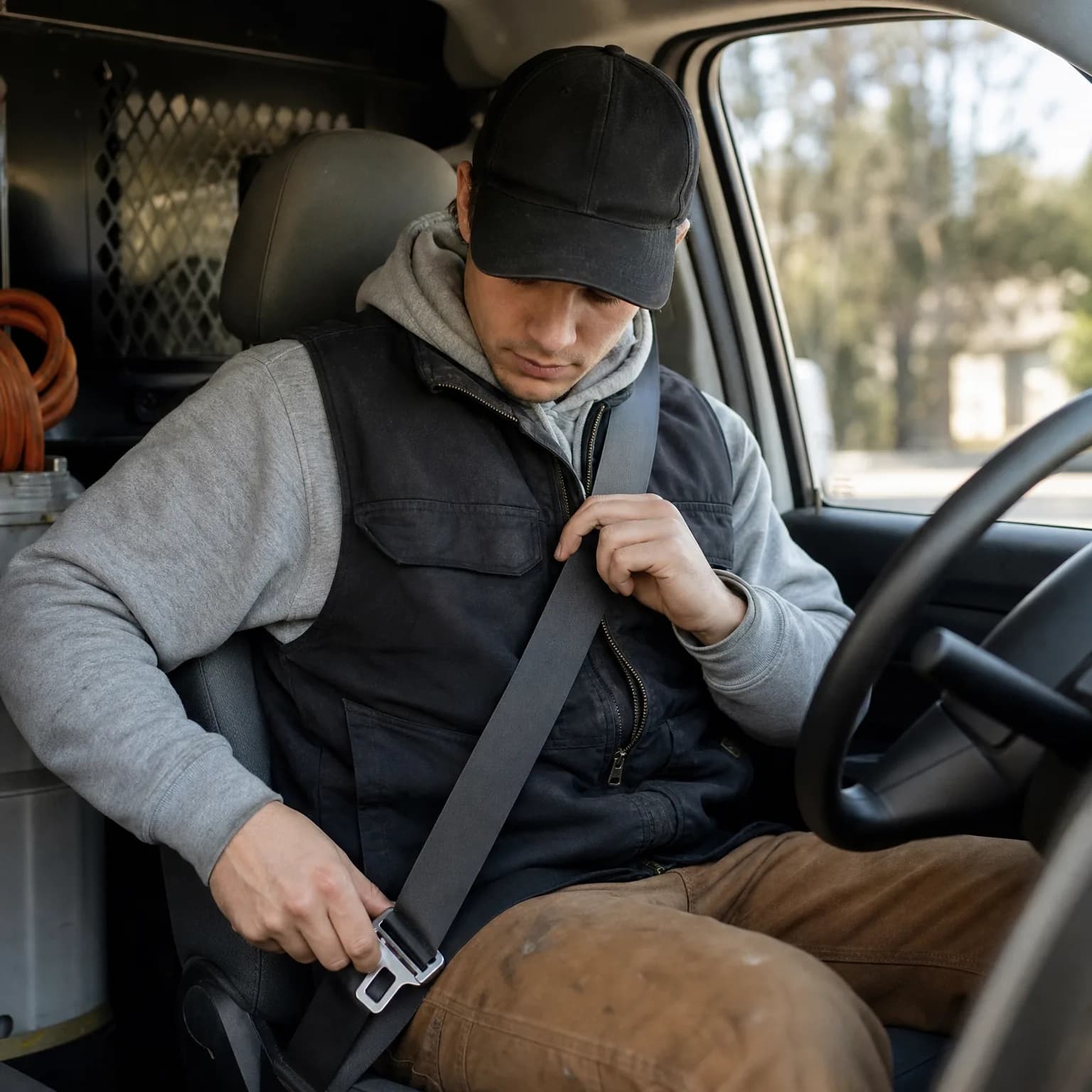
The three-agency clearance process Rhode Island CDL holders must navigate
Reinstatement after a child support suspension in Rhode Island requires sequential clearances from three separate entities: the family court, the Department of Human Services, and the DMV. Most CDL holders assume paying the arrears completes the process. It does not.
First, you satisfy the child support obligation and obtain a compliance release from family court. This typically requires proof of payment, establishment of a payment plan, or court-approved modification of the order. The court issues a clearance notice.
Second, the Department of Human Services must update its records and notify the DMV that you are no longer subject to suspension. This agency coordination step takes 7–14 business days in most cases. The DMV will not process your reinstatement until DHS updates their system.
Third, the DMV processes the administrative reinstatement. You submit the court clearance documentation, pay the $30 base reinstatement fee (plus any additional fees for concurrent suspensions), and wait for DMV processing. For CDL holders, this step also triggers medical certification re-verification, which requires submitting a current DOT medical examiner's certificate if your previous certification expired during the suspension.
The gap most commercial drivers miss: these three steps do not happen simultaneously. The family court does not automatically notify DHS. DHS does not instantly update DMV records. Even if you submit court clearance paperwork to the DMV on the same day you receive it, the DMV will reject your reinstatement application if DHS has not yet posted your compliance status to the shared database.


CDL-specific complications: medical certification and FMCSA compliance during suspension
Commercial driver's license holders face an additional layer of complexity: federal medical certification requirements under FMCSA regulations. If your CDL medical certification expired during the child support suspension, you cannot reinstate your CDL until you obtain a new DOT physical examination and submit the updated medical examiner's certificate to the Rhode Island DMV.
Rhode Island's CDL program requires continuous medical certification. A lapse in certification — even during an administrative suspension when you were not driving commercially — downgrades your license class to non-commercial. You must re-certify medically before reinstatement if your previous certification expired.
Most CDL holders do not realize this until they arrive at the DMV Operator Control Unit with court clearance paperwork and are told they cannot reinstate because their medical certificate is invalid. Schedule a DOT physical as soon as you obtain family court clearance, before attempting reinstatement. The medical examiner's certificate must be submitted to the DMV and processed into the CDLIS database before your CDL can be reinstated.
This creates a fourth sequential step in the reinstatement timeline: court clearance, DHS notification, DMV administrative processing, and medical certification re-verification. Each step adds 5–10 business days. The total timeline from final child support payment to full CDL reinstatement is typically 21–45 days, not the 3–5 days most drivers expect.

Line Up Coverage Before Your License Comes Back
Get Back on the RoadDocumentation the Rhode Island DMV requires for child support reinstatement
You need three categories of documentation to reinstate your license after a child support suspension in Rhode Island: proof of family court compliance, proof of current insurance (not SR-22), and proof of medical certification if you hold a CDL.
Family court compliance documentation must show either: full payment of arrears with a court-issued clearance letter, establishment of a court-approved payment plan with current payments up to date, or a modified support order with proof of compliance under the new terms. The clearance letter must come from the family court clerk's office or the Department of Human Services, not from your attorney or a third party.
Insurance documentation requires proof of current liability coverage meeting Rhode Island minimum requirements ($25,000 bodily injury per person, $50,000 bodily injury per accident, $25,000 property damage). A standard insurance ID card is sufficient. SR-22 filing is not required unless you have a separate suspension for uninsured operation or DUI.
CDL holders must submit a current DOT medical examiner's certificate if the previous certification expired during suspension. The certificate must be dated within 90 days and issued by a FMCSA-registered medical examiner. Rhode Island requires the original certificate or a certified copy, not a photocopy.

Why most CDL holders lose three extra weeks of work during this process
The gap between family court clearance and DMV reinstatement creates a dead zone where most commercial drivers cannot work but believe they should be able to. You have satisfied the underlying obligation. You hold proof of compliance. But your license remains suspended in the DMV database until all three agencies complete their coordination steps.
Employers verify CDL status through CDLIS, the Commercial Driver License Information System. Your license will show as suspended in CDLIS until the Rhode Island DMV posts the reinstatement. Even if you physically possess court clearance paperwork, your employer cannot legally dispatch you until CDLIS reflects an active, valid CDL.
Most drivers lose 14–21 days of work between obtaining court clearance and CDLIS reinstatement. This delay is structural, not bureaucratic laziness. The family court does not have direct write access to the DMV database. The Department of Human Services processes clearances in batches, not in real time. The DMV Operator Control Unit processes reinstatements as applications arrive, not as court orders are issued.
You can reduce this timeline slightly by submitting clearance documentation to the DMV in person rather than by mail, and by scheduling your DOT physical examination before court clearance so the medical certificate is ready the day you need it. But you cannot eliminate the inter-agency coordination delay entirely.

What to do if you need insurance to meet reinstatement requirements
Child support suspensions in Rhode Island do not require SR-22 filing, but you must maintain continuous liability coverage to avoid triggering a separate suspension under RIGL § 31-47. If your insurance lapsed during the suspension, reinstate coverage before attempting license reinstatement.
If you do not currently own a vehicle, a non-owner liability policy satisfies Rhode Island's insurance requirement. Non-owner policies provide liability coverage when you drive a vehicle you do not own, which is common for CDL holders who drive employer-owned commercial vehicles.
If you have a separate suspension for uninsured operation or DUI in addition to the child support suspension, you will need SR-22 filing for the insurance-related suspension. Rhode Island charges a separate $30 reinstatement fee for each concurrent suspension reason, meaning multiple simultaneous suspensions require multiple fees before full reinstatement is granted.
Compare quotes from carriers experienced with suspended-license situations. Standard carriers sometimes decline coverage for drivers with recent suspensions, even administrative suspensions unrelated to driving. Non-standard carriers and high-risk specialists typically offer more consistent approval.
Frequently Asked Questions
Do I need SR-22 insurance to reinstate my Rhode Island license after a child support suspension?
No. Child support suspensions in Rhode Island are administrative actions that do not require SR-22 filing. You need proof of current liability insurance meeting state minimums and proof of family court compliance, but SR-22 is only required for DUI, uninsured motorist violations, or certain high-risk traffic offenses.
How long does Rhode Island DMV take to process a child support reinstatement after I get court clearance?
The DMV cannot process your reinstatement until the Department of Human Services updates its compliance database, which typically takes 7–14 business days after family court issues clearance. Once DHS notifies DMV, administrative processing takes another 5–10 business days. Total timeline from court clearance to license reinstatement is typically 14–30 days.
Can I drive commercially in Rhode Island while waiting for DMV to process my child support reinstatement?
No. Your CDL remains suspended in the CDLIS database until the Rhode Island DMV posts the reinstatement. Employers verify CDL status through CDLIS before dispatch, and your license will show as suspended until DMV completes all processing steps, even if you hold court clearance paperwork.
What happens if my DOT medical certificate expired during my Rhode Island child support suspension?
You must obtain a new DOT physical examination and submit the updated medical examiner's certificate to the DMV before you can reinstate your CDL. Rhode Island requires continuous medical certification for CDL holders, and a lapse during suspension downgrades your license class until you re-certify.
Does Rhode Island charge separate reinstatement fees if I have multiple suspensions at the same time?
Yes. Rhode Island charges a separate $30 reinstatement fee for each concurrent suspension reason. If you have both a child support suspension and an insurance lapse suspension, you pay $60 total. Each suspension must be cleared independently before full reinstatement is granted.
Can I get a hardship license in Rhode Island while my CDL is suspended for child support arrears?
Rhode Island allows hardship license petitions through the court for some suspension types, but child support suspensions are administrative holds that typically require full compliance with the support order before any driving privileges are restored. Hardship licenses are more commonly granted for DUI or point-accumulation suspensions than for child support cases.
Related Articles
RI Child Support Suspension: SR-22 & Lapse Filing
5/3/2026

RI Child Support Suspension: SR-22 & Reinstatement
5/3/2026

RI CDL Child Support Reinstatement Costs & Timeline
5/3/2026

RI Child Support Suspension Reinstatement Costs
5/3/2026

RI Child Support Suspension: College Student Reinstatement
5/3/2026
RI Child Support Suspension: DMV Clearance Timing
5/3/2026