
PA Child Support Suspension Reinstatement for CDL Holders
Free to compare
Why Court Clearance Doesn't Automatically Restore Your CDL
Pennsylvania family courts and PennDOT operate independent record systems. When you satisfy your child support arrears and the court issues a compliance notice, that information does not automatically post to your PennDOT driver record. Most CDL holders assume paying the arrears or reaching a payment plan triggers immediate reinstatement—it does not.
PennDOT will not process your license restoration until it receives formal verification from the Domestic Relations Section (DRS) of your county's court of common pleas. This is a separate submission step that happens after your court hearing, and the timing varies by county. Some counties submit electronically within 5 business days; others mail paper notices that take 15-20 days to reach PennDOT's Bureau of Driver Licensing in Harrisburg.
The consequence: your CDL remains suspended even though you are legally compliant. If you attempt to drive commercially during this gap, you are operating under suspension regardless of what the court told you. Carriers run MVR checks that show active suspension status until PennDOT's system updates.

What Court Compliance Actually Means in Pennsylvania
Pennsylvania suspends driver licenses under 23 Pa.C.S. § 4355 when child support arrears exceed a threshold or when a support order remains unpaid for a statutorily defined period. The suspension is administrative, imposed by PennDOT at the request of the county DRS office, not by the family court judge directly.
Compliance means one of two things: you paid the arrears in full, or you entered a court-approved payment plan and have made the required number of consecutive payments (typically three to six months depending on the county and the terms of your order). The judge or hearing officer issues a compliance certification—this is the document that authorizes the DRS office to notify PennDOT that the suspension basis no longer exists.
That certification does not restore your license. It clears the legal barrier to reinstatement. You still owe PennDOT a $50 restoration fee and must complete the DMV's clearance process before your CDL privileges return.


The Two Verification Steps CDL Holders Must Navigate
First, confirm that your county DRS office has submitted the compliance notice to PennDOT. Call the DRS office directly—do not rely on the court clerk or the family court administrative office. Ask for the specific date the notice was sent and whether it was submitted electronically or by mail. If mailed, add 10-15 business days for delivery and processing. If electronic, PennDOT typically updates records within 3-7 business days after receipt.
Second, verify that PennDOT has posted the clearance to your driver record. Use PennDOT's online Driver License Restoration Requirements tool at dmv.pa.gov or call the Bureau of Driver Licensing at 717-391-6190. Ask whether the child support suspension clearance has been recorded and whether any additional restoration requirements remain on your file. Do not assume that paying the $50 restoration fee alone will lift the suspension—if the clearance notice has not posted, the fee payment will be accepted but your license will not be restored.
CDL holders face an additional layer: you must confirm that both your base driver license AND your commercial driving privileges are cleared. Pennsylvania issues these as linked but separately tracked credentials. If the suspension was applied to your CDL specifically (rather than your base license with CDL endorsement), the clearance must explicitly address the commercial credential.
How Long the DMV Verification Process Actually Takes
The statutory framework does not specify a maximum processing timeline. In practice, electronic submissions from high-volume counties like Philadelphia, Allegheny, and Delaware clear within 5-10 business days from the date of court compliance certification. Paper submissions from smaller counties can take 20-30 business days.
Once PennDOT receives the notice, the Bureau of Driver Licensing must manually review the submission, cross-reference it against your driver record, and remove the suspension flag. This internal step adds 3-7 business days after the notice posts to PennDOT's intake system. The $50 restoration fee cannot be paid until this clearance posts—attempting to pay before clearance results in either rejection or acceptance of payment without restoration.
CDL holders returning to commercial driving face compounded delay if they do not verify clearance before attempting to reinstate. Carriers require a current MVR showing no suspensions. If you pay the restoration fee before the clearance posts, your MVR will still show active suspension for an additional 5-10 days while PennDOT's system updates.

Line Up Coverage Before Your License Comes Back
Get Back on the Road
What Happens If You Drive During the Clearance Gap
Operating a commercial vehicle while your CDL is suspended—even if you have court documentation showing compliance—is treated as driving under suspension under 75 Pa.C.S. § 1543. This is a summary offense for first violation, carrying a $200 fine and an additional 6-month license suspension. For CDL holders, a conviction triggers federal disqualification under 49 CFR § 383.51.
The fact that you satisfied your child support obligation does not create a legal defense. PennDOT's suspension record is the controlling authority for law enforcement and for FMCSA compliance. If your MVR shows an active suspension at the time you were stopped or at the time of a carrier audit, you are liable regardless of what the family court told you.
Some CDL holders assume they can drive non-commercially during the clearance gap. Pennsylvania law does not distinguish between commercial and personal operation when a CDL is suspended for child support arrears—the suspension applies to all driving privileges. If the suspension was applied to your base driver license rather than your CDL specifically, the same prohibition applies.
When SR-22 Filing Is Not Required for Child Support Suspensions
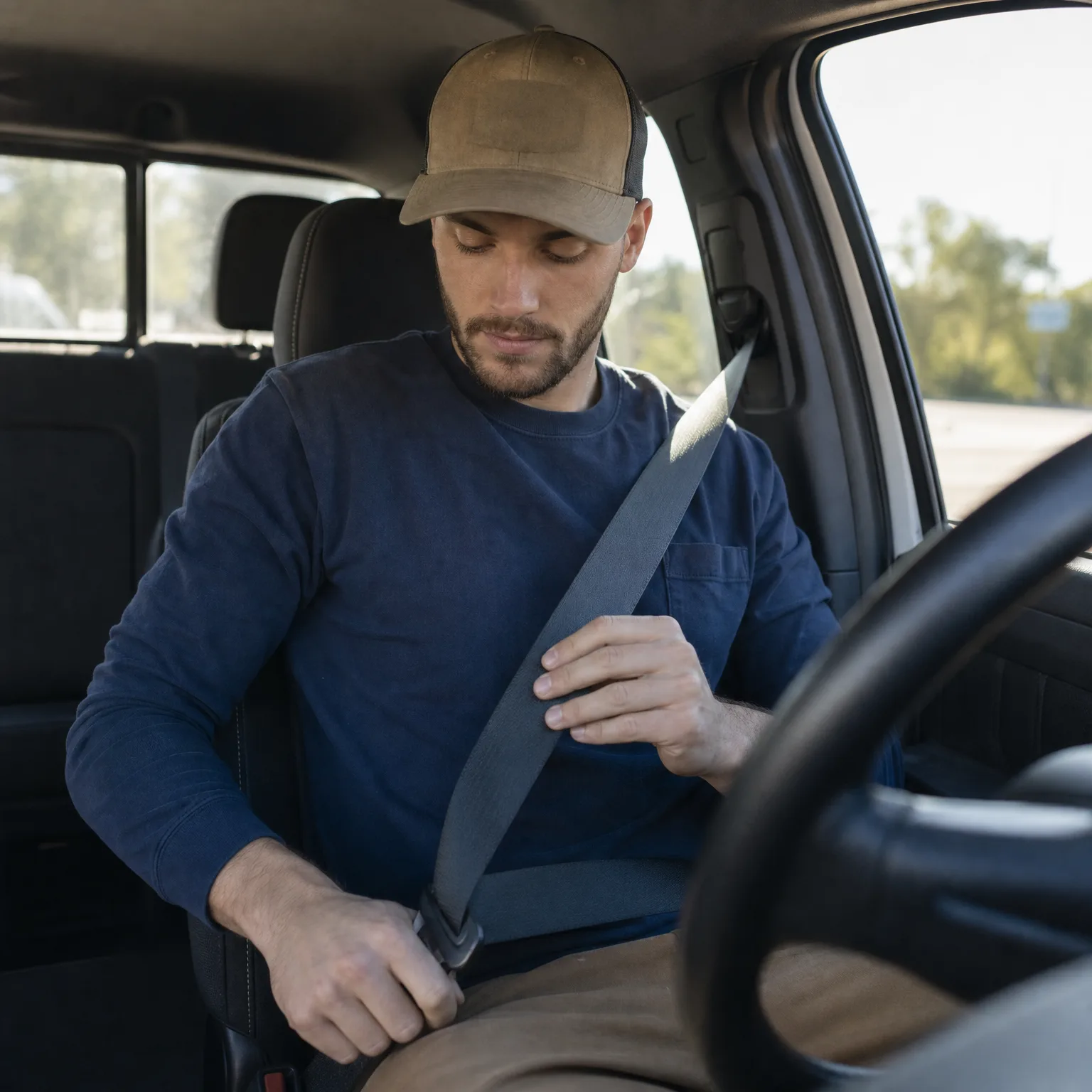
Pennsylvania does not require SR-22 filing for child support arrears suspensions. SR-22 (formally called a Financial Responsibility Certificate in Pennsylvania) is required only for DUI convictions, uninsured motorist violations under 75 Pa.C.S. § 1786, certain reckless driving convictions, and court-ordered cases where proof of insurance is mandated as a condition of reinstatement.
You are required to maintain valid liability insurance to operate a vehicle in Pennsylvania, but you do not need to file an SR-22 certificate with PennDOT as part of your child support suspension reinstatement process. Carriers and insurance agents sometimes incorrectly state that SR-22 is required for all reinstatements—this is false for child support cases.
If you own a vehicle, maintain standard liability coverage. If you do not own a vehicle but need to reinstate your CDL for employment, verify with your carrier whether they require a non-owner liability policy as a condition of hiring. Pennsylvania DMV does not require proof of insurance at reinstatement for child support suspensions, but your employer may.
How to Confirm Your CDL Is Actually Reinstated
After paying the $50 restoration fee, request a current copy of your driving record from PennDOT. Use the online request system at dmv.pa.gov or visit a Driver License Center in person. The official MVR is the only document that confirms your CDL is legally restored and eligible for commercial operation.
Verify that the suspension flag is removed and that your CDL class and endorsements appear as active. If your CDL expired during the suspension period, you must reapply for the CDL credential separately—reinstatement does not automatically renew an expired license. Pennsylvania requires knowledge and skills testing for CDL renewal if the credential has been expired for more than 60 days.
Provide the current MVR to your carrier or prospective employer. Do not rely on verbal confirmation from PennDOT phone representatives or court staff—carriers require documentation. If you are self-employed or operate as an owner-operator, confirm that your FMCSA record shows no disqualifications before resuming interstate operations.
Frequently Asked Questions
How long does it take PennDOT to process a child support clearance notice in Pennsylvania?
Electronic submissions from your county Domestic Relations Section typically post to PennDOT records within 5-10 business days. Paper submissions can take 20-30 business days. After the notice posts, PennDOT's Bureau of Driver Licensing requires an additional 3-7 business days to manually clear the suspension flag from your driver record.
Can I pay the Pennsylvania license restoration fee before the court clearance posts to DMV?
You can submit payment, but PennDOT will not reinstate your license until the clearance notice from your county DRS office posts to your driver record. Paying early does not expedite the process and can result in acceptance of the $50 fee without actual restoration.
Does a Pennsylvania child support suspension require SR-22 insurance filing?
No. Pennsylvania does not require SR-22 filing for child support arrears suspensions. SR-22 is required only for DUI convictions, uninsured motorist violations, and certain court-ordered cases—not for administrative child support suspensions.
What happens if I drive my CDL during the clearance gap after court compliance?
Operating a commercial vehicle while your CDL shows active suspension on PennDOT records is driving under suspension under 75 Pa.C.S. § 1543. This carries a $200 fine, an additional 6-month suspension, and federal CDL disqualification under 49 CFR § 383.51.
How do I verify that my Pennsylvania CDL is actually reinstated after child support clearance?
Request a current MVR from PennDOT at dmv.pa.gov or at a Driver License Center. The official driving record must show the suspension flag removed and your CDL class and endorsements listed as active before you can legally resume commercial driving.
If my CDL expired during the child support suspension, does reinstatement renew it?
No. Reinstatement clears the suspension, but does not renew an expired credential. If your Pennsylvania CDL has been expired for more than 60 days, you must retake knowledge and skills tests to reapply for the commercial license.
Related Articles

PA Child Support Suspension: Court to DMV Clearance Gap
5/3/2026

PA Child Support Suspension: Court-to-DMV Clearance Gap
5/3/2026

PA Child Support Suspension: SR-22 & Reinstatement
5/3/2026

PA Child Support Suspension: DMV Clearance Timeline
5/3/2026
PA CDL Reinstatement: Court Clearance to DMV Timing Gap
5/3/2026
PA Child Support Suspension: CDL & SR-22 Rules
5/3/2026