
NC Child Support Arrears Suspension: CDL Reinstatement Cost Stack
Free to compare
Why CDL holders face a different reinstatement path than Class C drivers in North Carolina
Your commercial driver's license cannot be reinstated through North Carolina's Limited Driving Privilege court petition process. The LDP framework under N.C.G.S. § 20-179.3 explicitly prohibits operation of commercial motor vehicles under a limited privilege, which means CDL holders suspended for child support arrears must pursue full reinstatement through NCDMV rather than the hardship route available to personal-vehicle drivers.
This creates a coordination gap most drivers miss. Family court processes child support compliance independently from NCDMV's licensing division. When you satisfy your arrears payment plan or obtain a court-issued compliance notice, the court clerk submits that clearance to the state's child support enforcement database—but NCDMV requires a separate reinstatement application and fee before your commercial driving privilege is restored.
The cost stack compounds because commercial drivers often pursue an LDP for personal vehicle operation while working toward full CDL reinstatement. You pay court filing fees for the LDP petition (typically $100–$175 depending on county), the $50 NCDMV reinstatement fee for your personal Class C privilege under the LDP, and eventually the $65 standard restoration fee when your CDL is fully reinstated after child support clearance posts to NCDMV records. Most drivers budget for one reinstatement cycle and encounter three.

The three-agency coordination timeline North Carolina does not publish in one place
Child support suspension reinstatement in North Carolina requires coordinated action across three separate agencies: the county clerk of court handling your child support case, the North Carolina Division of Social Services Child Support Enforcement division, and NCDMV's Driver License Section. None of these agencies operates as a single point of contact, and each assumes another has notified you of deadlines.
Here is the actual sequence. First, you satisfy the compliance condition set by family court—either full arrears payment, an approved payment plan with demonstrable on-time payments for a set period (commonly 90–180 days), or a court-issued finding that suspension is creating undue hardship preventing employment income needed to pay support. The court clerk issues a compliance notice and submits it to the state child support enforcement database. This step typically takes 7–14 business days from the court order date.
Second, NCDMV's automated suspension monitoring system checks the child support enforcement database for clearance flags. This is not real-time. The sync occurs in batches, and the processing lag adds another 10–21 days before your NCDMV record reflects the court's compliance notice. Until that sync completes, NCDMV will not accept a reinstatement application—your submission will be rejected as premature, and you lose the application fee.
Third, once the compliance notice posts to NCDMV records, you submit a reinstatement application via myNCDMV.gov or in person at a driver license office, pay the $50 reinstatement fee specific to child support suspensions, and provide proof of liability insurance if your suspension exceeded 90 days. NCDMV processes the application in 3–5 business days for online submissions, 5–10 business days for in-person submissions. Your CDL privilege is restored only after this final step clears.

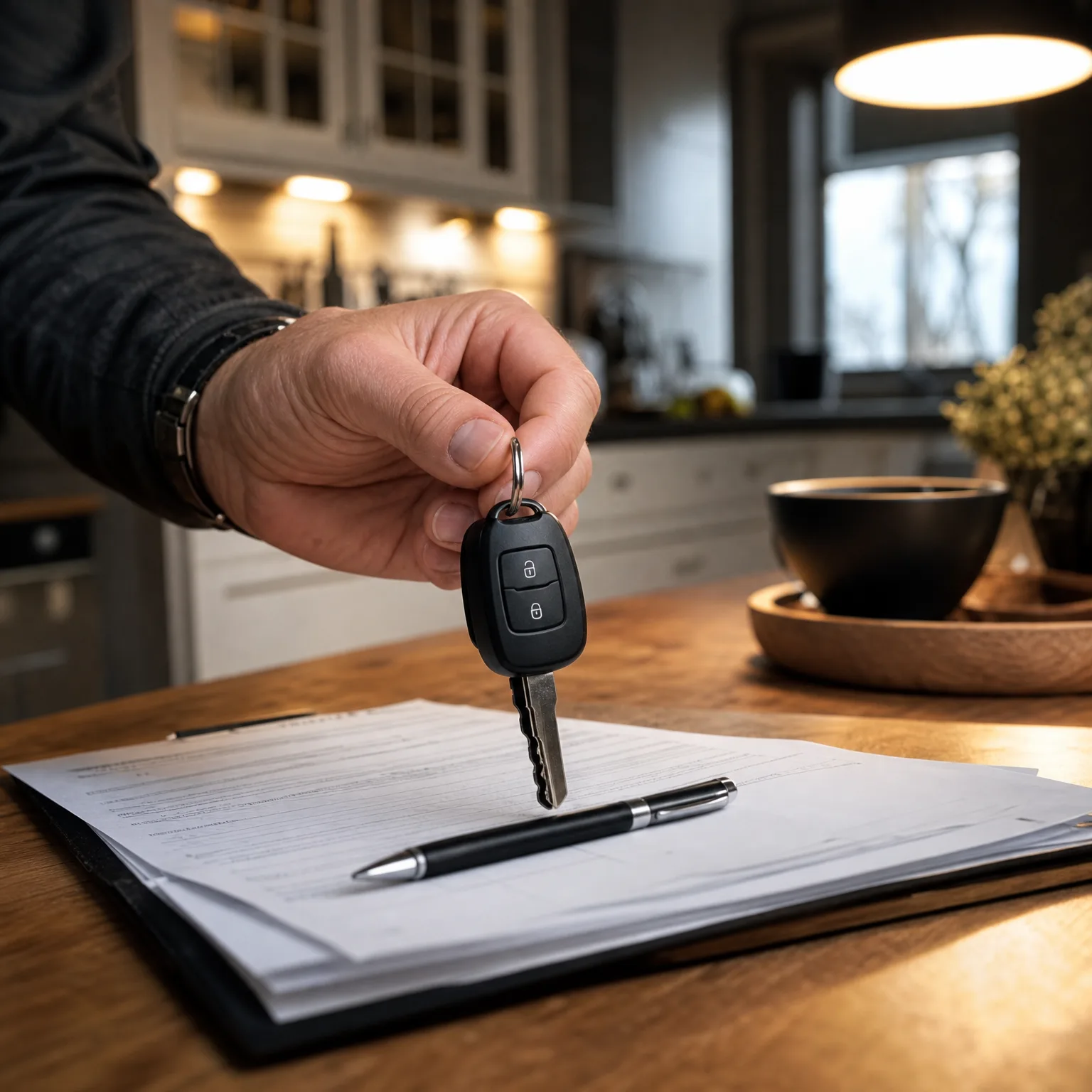
What Limited Driving Privilege actually costs when you cannot use it for commercial operation
The Limited Driving Privilege court petition route allows personal vehicle operation during suspension but carries its own cost structure. Filing fees vary by county: Durham and Wake counties typically charge $150–$175, rural counties $100–$125. You must provide proof of liability insurance—most suspended drivers obtain a non-owner policy for this purpose, which runs $40–$85/month in North Carolina depending on prior violation history.
The court requires documented proof of employment need or family hardship justifying limited driving. For CDL holders, this means submitting an employer affidavit confirming your job requires personal vehicle operation for non-commercial purposes (commuting to a CDL job site, attending mandatory training, transporting dependents to medical appointments). The affidavit must specify routes, days, and hours. Generic letters stating you need to drive do not satisfy the court's documentation standard.
Judges issue LDPs with strict route and time restrictions: home to work, work to home, medical appointments, religious activities, court-ordered obligations. Deviation from the approved routes or operating outside approved hours triggers automatic revocation. Most LDPs in child support suspension cases allow driving Monday through Friday, 6am to 8pm, for employment and essential errands only. Weekend driving is rarely approved unless you document weekend work shifts.
The insurance requirement persists for the entire LDP period. If your non-owner policy lapses, the carrier notifies NCDMV electronically within 48 hours, and your LDP is revoked immediately. Reinstatement after an LDP revocation requires starting the court petition process over, paying a new filing fee, and waiting for a new court hearing date.
SR-22 filing is not required for child support suspensions in North Carolina
North Carolina does not mandate SR-22 financial responsibility certification for license suspensions triggered by unpaid child support arrears. SR-22 is reserved for suspensions involving driving violations: DWI, uninsured motorist operation, excessive points accumulation, or at-fault accidents without insurance. Child support suspensions are administrative actions under N.C.G.S. § 50-13.12, not driving-related enforcement.
This distinction matters because SR-22 filing adds $25–$50 annually in carrier fees and restricts your policy options to high-risk carriers. If an agent or online quote tool suggests you need SR-22 for child support reinstatement, they are either confusing North Carolina's requirements with another state's rules or incorrectly coding your suspension trigger.
You do need proof of liability insurance if your suspension exceeded 90 days. NCDMV requires verification of active coverage meeting North Carolina's minimum liability limits: $30,000 bodily injury per person, $60,000 bodily injury per accident, $25,000 property damage. A standard liability policy or non-owner policy satisfies this requirement without SR-22 certification.

Line Up Coverage Before Your License Comes Back
Get Back on the Road
Why most CDL holders delay reinstatement by 30–60 days without realizing it
The single most common delay point is submitting your NCDMV reinstatement application before the court's compliance notice finishes syncing to the DMV database. You receive the court order clearing your suspension, assume NCDMV has the same information immediately, and file your reinstatement application within days. NCDMV rejects the application because their system still shows an active child support hold. You wait weeks for the rejection notice, resubmit, and lose another processing cycle.
The second delay point is missing NCDMV's insurance verification window. If your suspension exceeded 90 days, NCDMV requires proof of continuous liability coverage for the 90 days immediately preceding your reinstatement application. A policy purchased the day before you apply does not satisfy this requirement. Most suspended drivers do not maintain insurance during suspension because they assume they cannot drive—but NCDMV interprets the lapse as additional non-compliance and flags your application for manual review, adding 15–30 days to processing.
The third delay point is geographic. If you moved to a different county during your suspension, family court records may not follow you automatically. Your new county's child support enforcement office operates independently from your original case county. When you satisfy compliance conditions in your original county, that clearance posts to the state database under your original case number—but if you have since opened a new case or modified custody in a different county, NCDMV may see conflicting records and freeze your reinstatement pending manual reconciliation. This adds 30–45 days and requires you to contact both county child support offices to consolidate records.
Insurance options for CDL holders without a personal vehicle during suspension
Non-owner liability policies are the standard solution for CDL holders who sold their personal vehicle during suspension or never owned one. These policies provide the liability coverage NCDMV requires for reinstatement without insuring a specific vehicle. Monthly premiums in North Carolina typically range from $40 to $85 depending on your county, age, and whether you have prior at-fault claims or violations unrelated to the child support suspension.
Non-owner policies do not cover vehicles you drive regularly with the owner's permission—for example, a spouse's car or a vehicle provided by your employer for personal use. If you regularly operate a household vehicle, you need to be listed as a rated driver on that vehicle's policy instead. Misrepresenting your vehicle access to obtain a cheaper non-owner policy creates coverage gaps that surface during reinstatement verification.
The policy must remain active continuously from application through reinstatement completion. If you purchase a 6-month policy term but your reinstatement drags to 7 months due to processing delays, a lapse triggers electronic notification to NCDMV and freezes your application. Set policy renewals to auto-pay or choose a 12-month term upfront to avoid gaps.
What happens when you apply for full CDL reinstatement before LDP expires
You can hold an active Limited Driving Privilege and pursue full CDL reinstatement simultaneously. The LDP covers personal vehicle operation under court-approved restrictions while your full reinstatement application processes through NCDMV. Once NCDMV approves your full reinstatement and restores your CDL privilege, the LDP becomes moot—you no longer need limited permission because you have unrestricted driving authority again.
The catch: NCDMV charges separate fees for each action. The $50 reinstatement fee you paid when the court granted your LDP applies only to the Class C personal driving privilege under limited terms. When your child support compliance notice clears and you apply for full CDL restoration, NCDMV assesses the standard $65 restoration fee. This is not double-billing—it reflects two distinct licensing actions processed at different times under different statutory authorities.
Most CDL holders assume the LDP reinstatement fee satisfies the full reinstatement requirement. It does not. Budget for both fees if you pursue the LDP route while waiting for child support clearance.
Frequently Asked Questions
How long does it take for a North Carolina family court compliance notice to reach NCDMV records?
Court compliance notices typically take 7–14 business days to post to the state child support enforcement database, then another 10–21 days for NCDMV's automated sync to update your driver record. Total lag from court order to NCDMV clearance averages 20–35 days.
Can I use a Limited Driving Privilege to operate a commercial vehicle in North Carolina?
No. North Carolina law under N.C.G.S. § 20-179.3 explicitly prohibits operating commercial motor vehicles under a Limited Driving Privilege. CDL holders must pursue full reinstatement through NCDMV to restore commercial driving authority.
Do I need SR-22 insurance to reinstate my North Carolina CDL after child support suspension?
No. SR-22 filing is not required for child support arrears suspensions in North Carolina. You need proof of liability insurance meeting state minimums if your suspension exceeded 90 days, but SR-22 certification is reserved for driving-violation suspensions like DWI or uninsured operation.
What happens if my non-owner insurance lapses while my reinstatement application is pending?
Your carrier notifies NCDMV electronically within 48 hours of the lapse. NCDMV freezes your reinstatement application immediately and requires proof of new continuous coverage before processing resumes, adding 15–30 days to your timeline.
Can I apply for CDL reinstatement before my court compliance notice shows up in NCDMV records?
You can submit the application, but NCDMV will reject it as premature if their system still shows an active child support hold. Wait until you confirm the compliance notice has synced to NCDMV records—typically 20–35 days after the court order—to avoid losing your application fee and restarting processing.
Does the $50 Limited Driving Privilege reinstatement fee cover my full CDL restoration later?
No. The $50 fee applies only to the Class C personal driving privilege under LDP terms. When you apply for full CDL reinstatement after child support clearance, NCDMV charges a separate $65 restoration fee for the commercial privilege.
What proof of employment does the court require for a Limited Driving Privilege petition in a child support case?
You must submit an employer affidavit on company letterhead specifying your job title, work address, shift days and hours, and why personal vehicle operation is required for non-commercial purposes. Generic letters stating you need to drive are insufficient—judges require documented routes and schedules.
Related Articles

NC CDL Child Support Suspension: Court & DMV Timing
5/3/2026
NC Child Support Suspension Reinstatement Costs
5/3/2026
NC CDL Unpaid Tickets Reinstatement: True Cost Stack
5/3/2026

NC Child Support Suspension Reinstatement Costs
5/3/2026

NC CDL Reinstatement After Failure-to-Appear Warrant
5/3/2026
ND CDL Child Support Suspension: Real Cost Stack
5/3/2026