
NY Child Support License Suspension: Court vs DMV Clearance Timing
Free to compare
Why Your Court Compliance Notice Doesn't Automatically Reinstate Your CDL
New York suspends commercial and passenger driver licenses administratively for child support arrears under Family Court Act §454-a and Vehicle and Traffic Law §510(4-a). When you satisfy the arrears or enter a payment agreement, the county Support Collection Unit (SCU) issues a compliance notice to Family Court, which then generates a clearance order. That court order does not automatically lift your DMV suspension.
DMV operates a separate verification system. The court filing posts to the statewide Unified Court System database, but DMV reviews compliance notices manually through its own records-matching process. This creates a gap: your court record shows cleared, your SCU case shows compliant, but your license remains suspended in the DMV database until a clerk processes the match and updates your driver record.
Most CDL holders discover this gap when they arrive at a DMV office expecting same-day reinstatement and are told the suspension is still active. The court clearance is real. The DMV just hasn't verified it yet. The delay is administrative, not judicial—and it's predictable if you know the sequence.

The Two-Step Clearance Process New York Requires
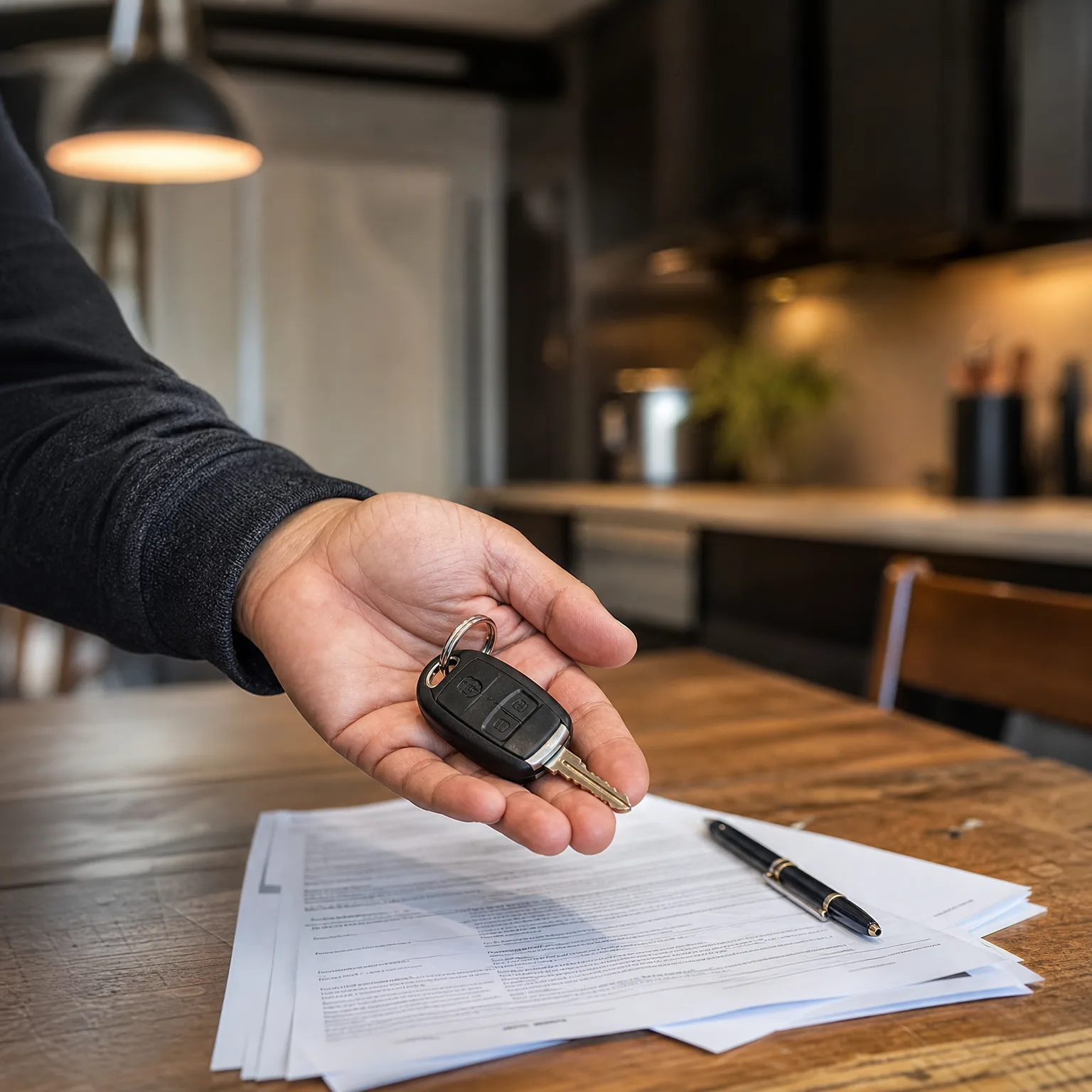
Step one: obtain written confirmation from the Support Collection Unit that your arrears are satisfied or that you've entered an acceptable payment plan. This is typically a Compliance Affidavit or a court-stamped notice showing your case status changed from delinquent to current or compliant. The SCU submits this to Family Court, which issues a formal clearance order. You need a copy of that order—not just verbal confirmation from the caseworker.
Step two: submit the court clearance order to DMV along with the suspension termination fee and proof of insurance. New York does not use SR-22 certificates. Financial responsibility verification is handled through the Insurance Information and Enforcement System (IIES), where your carrier reports coverage directly to DMV electronically. You do not need an SR-22 filing for child support suspension reinstatement unless a separate suspension trigger (DWI, uninsured driving) also requires it.
DMV charges a $50 suspension termination fee for child support suspensions. If your CDL was also suspended for insurance lapse or points accumulation simultaneously, additional fees apply—each suspension trigger generates a separate termination fee. Check your driver record abstract before paying to confirm how many active suspensions are listed.
The court clearance must show your name exactly as it appears on your driver license. Middle initial discrepancies, suffix errors (Jr./Sr.), or nickname usage can delay DMV processing. If your court documents use a different name variation, bring supporting identification to the DMV office and request a manual review.

How Long DMV Verification Actually Takes
DMV states on its website that reinstatement processing occurs "upon receipt of the required documents," but in practice, manual review of child support clearances takes 10 to 15 business days after you submit the court order and fee payment. This timeframe reflects the volume of reinstatement requests DMV processes statewide and the need for clerks to verify court filings against SCU databases.
If you mail your documents to DMV's central office in Albany rather than appearing in person at a local office, add another 5 to 10 business days for mail handling and document routing. In-person submission at a DMV office with Transaction Office designation shortens this slightly, but the verification step still occurs centrally—your local office forwards the documents electronically, and you wait for Albany to update your driver record.
Some CDL holders try to accelerate the process by calling the DMV Problem Driver Point System Bureau or the License Suspension unit. These calls rarely speed clearance. The bottleneck is not awareness of your submission—it's the manual verification queue. Your case enters a processing batch alongside hundreds of other reinstatement requests, and clerks work them in order received.
The only reliable way to confirm your license is clear is to check your driver record online through MyDMV or request an abstract in person. When the suspension disappears from your abstract, you can legally drive. Until then, operating a commercial vehicle—even with a court clearance in hand—counts as driving while suspended under VTL §511, which triggers additional criminal penalties and extends your CDL disqualification.

Line Up Coverage Before Your License Comes Back
Get Back on the RoadWhat CDL Holders Need to Know About Restricted Use Licenses
New York does not issue Restricted Use Licenses (RULs) for child support arrears suspensions. RULs are available for DWI convictions, aggravated unlicensed operation, and certain point-accumulation cases under VTL §530, but child support suspensions fall under a separate administrative framework that offers no hardship driving option during the suspension period.
If you hold a CDL and your passenger vehicle license is suspended for child support, your commercial driving privilege is also suspended. Federal Motor Carrier Safety Administration (FMCSA) regulations prohibit states from issuing restricted CDLs—there is no "work-only" CDL available while your passenger license is under suspension. You cannot legally operate a commercial motor vehicle until full reinstatement.
Some drivers assume they can maintain their CDL by keeping insurance active on a commercial vehicle. This does not work. The suspension is tied to your driver record, not your vehicle registration. Maintaining coverage prevents an additional insurance lapse suspension, but it does not restore your driving privilege.
If your employment requires a CDL and you face termination during the suspension period, document the timeline of your compliance, court clearance, and DMV submission. Many employers have reinstatement-pending policies that allow administrative leave rather than immediate termination when you can prove you've satisfied the support order and submitted reinstatement documents. This does not guarantee job protection, but it establishes your eligibility timeline in case of dispute.
Insurance Requirements During and After Child Support Suspension
New York does not require SR-22 filing for child support suspensions. Your carrier does not need to file any special certificate with DMV. When you reinstate, DMV verifies your active coverage through IIES, the real-time electronic system that tracks policy issuance and cancellations across all admitted carriers in the state.
If you allowed your insurance to lapse during the suspension, reinstatement becomes more complicated. A lapse triggers a separate suspension under VTL §319, which adds a civil penalty of $8 per day for each day you were uninsured, capped at $900 for a 90-day lapse period, plus a $50 failure-to-surrender-plates penalty if you did not return your registration. You must clear both the child support suspension and the lapse suspension before DMV will reinstate.
Many suspended CDL holders cancel their personal auto policy to save money, then purchase a non-owner liability policy before reinstatement. This works if you no longer own a vehicle. Non-owner policies satisfy New York's financial responsibility requirement and report through IIES the same way standard policies do. Rates for non-owner coverage typically run $30 to $60 per month for drivers with clean records; add $15 to $30 per month if you have prior violations or points on your record.
If you own a commercial vehicle registered in your name, you must maintain commercial auto liability coverage during the suspension even though you cannot legally drive. Allowing commercial registration to lapse creates reinstatement complications when you return to work—many carriers require a continuous coverage history for commercial policies, and a gap can trigger underwriting review or declination.
Shop coverage before you submit your reinstatement documents. Some carriers decline drivers with active suspensions on their record even after court clearance. Others accept reinstating drivers but require higher deposits or shorter payment terms. Comparing quotes from three to five carriers gives you leverage to negotiate terms and avoid high-cost assigned-risk plans.

Common Mistakes That Delay CDL Reinstatement
Submitting partial documentation is the most common error. DMV requires the original court clearance order or a certified copy—a photocopy or faxed document is not acceptable. Many drivers submit the SCU compliance affidavit alone, which proves you paid the arrears but does not satisfy DMV's requirement for a Family Court-issued clearance. Both documents are needed: the SCU affidavit shows payment, the court order shows legal clearance.
Paying the suspension termination fee without submitting the clearance order also delays processing. DMV accepts the fee but holds your reinstatement in pending status until the court documents arrive. If you pay online or by mail, include a cover letter listing the suspension ID number from your driver abstract and your date of birth—this helps clerks match your payment to your reinstatement file.
Assuming you can drive immediately after court clearance is legally risky. VTL §511 penalizes driving while suspended as a misdemeanor if you have prior suspensions on your record or as a traffic infraction for first offenses. CDL holders convicted under §511 face federal disqualification periods ranging from 60 days to one year under FMCSA rules, which apply on top of New York's state-level penalties. Wait until your abstract shows the suspension is lifted before you operate any vehicle.
Ignoring additional suspensions on your record compounds delay. Many drivers discover during reinstatement that they also have scofflaw suspensions for unpaid parking tickets, failure-to-answer summonses, or failure-to-pay fines under VTL §226 or §510. Each suspension requires separate clearance and a separate termination fee. Check your full driver record abstract before starting the process so you can resolve all holds simultaneously.
Frequently Asked Questions
Do I need SR-22 insurance to reinstate my CDL after a child support suspension in New York?
No. New York does not use SR-22 certificates for any suspension type. DMV verifies your insurance coverage electronically through the Insurance Information and Enforcement System (IIES), which carriers report to directly. You only need active liability coverage from a New York-admitted carrier when you submit your reinstatement documents.
Can I get a restricted license to drive for work while my CDL is suspended for child support?
No. New York does not issue Restricted Use Licenses for child support suspensions, and federal FMCSA regulations prohibit states from issuing any form of restricted or conditional CDL. You cannot legally operate a commercial vehicle until full reinstatement is complete.
How long does it take DMV to process reinstatement after I submit my court clearance?
DMV typically processes child support reinstatements in 10 to 15 business days after you submit the court clearance order and suspension termination fee. In-person submission at a Transaction Office is slightly faster than mailing documents to Albany, but the verification step occurs centrally regardless of submission method.
What happens if I drive my commercial vehicle before DMV processes my reinstatement?
Driving while suspended is a criminal misdemeanor under VTL §511 if you have prior suspensions, or a traffic infraction for first offenses. CDL holders convicted under §511 face federal disqualification periods of 60 days to one year under FMCSA rules, which apply in addition to New York state penalties.
Do I need to keep my insurance active during a child support suspension?
Yes. Allowing your insurance to lapse during suspension triggers a separate VTL §319 suspension, which adds a civil penalty of $8 per day (capped at $900 for 90 days) plus a $50 failure-to-surrender-plates fee. You must clear both suspensions before DMV will reinstate your license.
Can I use my SCU compliance letter instead of the court clearance order?
No. DMV requires the Family Court-issued clearance order, not just the Support Collection Unit's compliance affidavit. The SCU letter proves you paid arrears or entered a payment plan, but only the court order legally clears the suspension. Submit both documents to avoid processing delays.
Related Articles
NY Child Support Suspension: Court vs DMV Clearance
5/3/2026
NY Child Support Suspension: Court to DMV Timing Gap
5/3/2026
NY Child Support Suspension: Court to DMV Timeline
5/3/2026

NY Child Support CDL Suspension: No SR-22, IIES Timing
5/3/2026

NY Child Support Suspension: No SR-22, DMV Clearance Gap
5/3/2026

NY CDL Reinstatement After Warrant Suspension Timeline
5/3/2026