
NH Child Support Suspension: Court Clearance vs DMV Timing
Free to compare
Why Your Payment Doesn't Automatically Restore Your License
New Hampshire's child support suspension operates through two parallel systems that don't communicate automatically. The Division of Child Support Services (DCSS) certifies your suspension to DMV when arrears exceed a threshold or court-ordered payment plans lapse. Once you satisfy arrears or negotiate a new payment plan, the family court issues a compliance notice. That notice clears your obligation with DCSS and the court—but it doesn't trigger DMV reinstatement until you physically deliver it to the DMV or the court clerk transmits it through the state's interagency system.
Most college students navigating this process assume payment completion ends the suspension immediately. It doesn't. The DMV operates on a separate timeline and won't process reinstatement until it receives the compliance notice from the court or directly from you. This creates a 15 to 45-day gap between when you're legally compliant and when your license is actually reinstated.
The delay isn't intentional obstruction. New Hampshire's family court system and DMV are distinct agencies with separate record systems. Courts handle payment compliance; DMV handles licensing. The handoff between them requires manual transmission or courier delivery of the compliance notice. If you wait for automatic notification, you'll wait weeks longer than necessary.

The Court Clearance Process for College Students
If your suspension stems from child support arrears accrued before or during college enrollment, you'll work with the family court that issued the original support order. Payment of arrears in full is the most direct path to clearance. Once DCSS receives and processes your payment, they notify the court. The court then issues a compliance letter confirming you've satisfied the arrearage that triggered the suspension.
College students without full arrearage payment capacity can petition the court for a payment plan modification based on student income status. New Hampshire family courts have discretion to adjust payment schedules for obligors enrolled in degree programs, especially when the suspension itself prevents employment necessary to satisfy arrears. You'll need to file a motion for modification with the court that issued the original order, provide enrollment verification from your college registrar, and demonstrate good-faith compliance history if you've been making partial payments.
Once the court approves a modified payment plan, it issues the same compliance notice as for full payment. The notice states you are current under the terms of a court-approved plan. DCSS removes the suspension certification, but again—the court does not automatically transmit this clearance to DMV. You must obtain a certified copy of the compliance order and deliver it to DMV yourself or confirm the court clerk has transmitted it electronically.


DMV Reinstatement Timeline After Court Clearance
New Hampshire DMV requires three items to process reinstatement after a child support suspension: the court's compliance notice, payment of the $100 reinstatement fee per RSA 263:42, and proof of financial responsibility if your suspension exceeded 90 days or involved other violations. For pure child support suspensions with no other violations, SR-22 filing is not required. You satisfy the financial responsibility requirement by presenting proof of insurance or filing an SR-22 only if a separate violation (DUI, at-fault uninsured accident, refusal) occurred during the same period.
Once DMV receives the compliance notice, processing takes 5 to 10 business days if all documentation is complete and fees are paid in person. Mail submissions add 7 to 14 days. If you submit reinstatement paperwork before the compliance notice reaches DMV, your application will be held in pending status until the notice arrives. This is the most common timing gap college students encounter—they pay the reinstatement fee and submit paperwork immediately after paying arrears, then wait weeks because the court's compliance notice hasn't reached DMV yet.
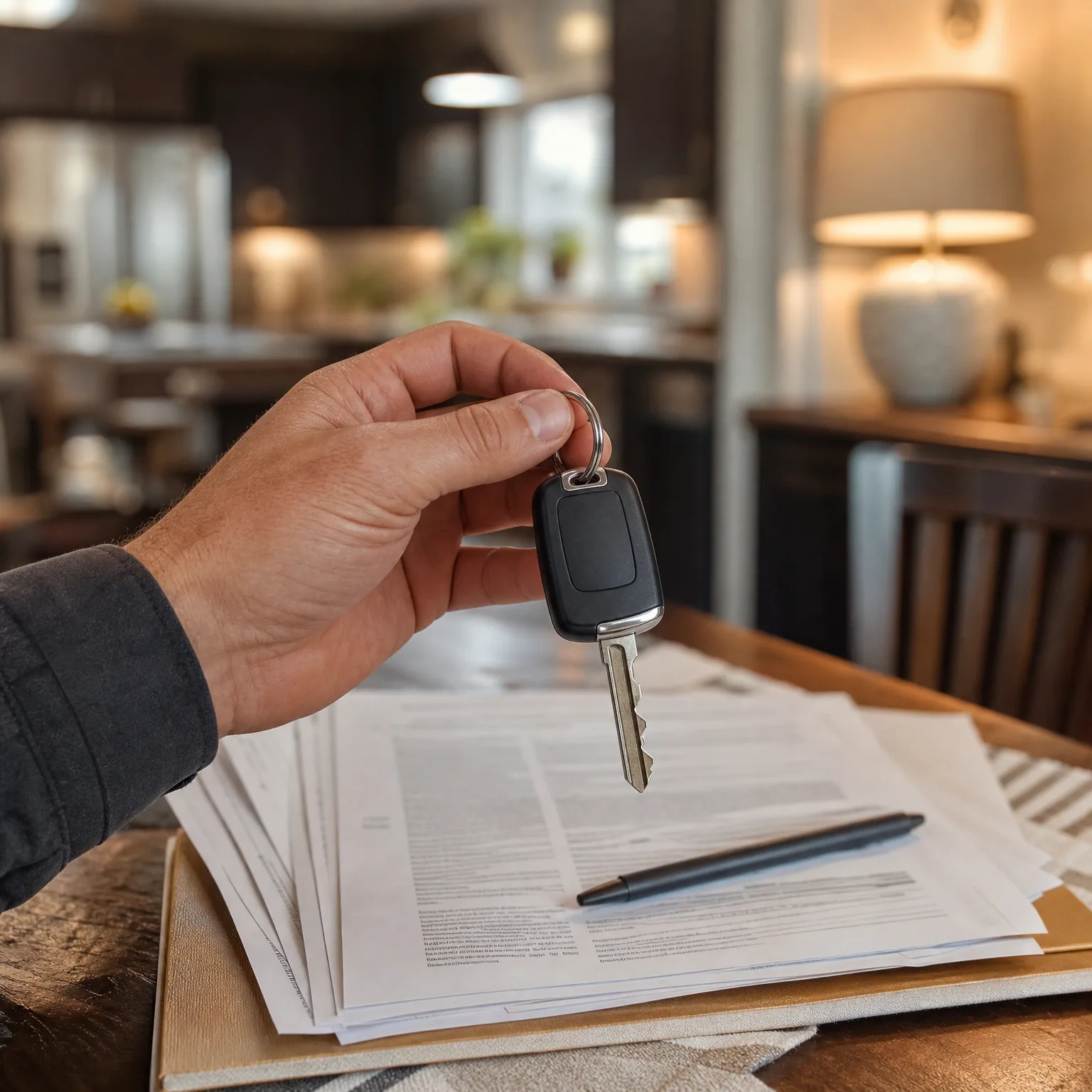
To avoid this delay, request a certified copy of the compliance order from the family court clerk the same day it's issued. Hand-deliver it to a DMV office along with your reinstatement fee and insurance documentation. This compresses the timeline from 30-45 days down to 5-10 days. The DMV will not process your reinstatement based on a payment receipt from DCSS alone—they require the court's formal compliance notice.

Line Up Coverage Before Your License Comes Back
Get Back on the RoadRestricted Driving Privilege While Waiting for Reinstatement
New Hampshire offers a Restricted Driving Privilege during child support suspensions, but eligibility is limited and requires court approval, not DMV approval. The restriction is available only after you've negotiated a payment plan with DCSS and the family court. You cannot obtain restricted driving solely because you're a college student with classes to attend—the court evaluates whether employment, medical appointments, or educational obligations justify limited driving, and whether denying driving would prevent you from earning income to satisfy the arrears.
College students with part-time jobs that fund both tuition and child support payments have stronger petitions than students relying entirely on loans or parental support. The court wants evidence that restricted driving directly enables arrearage payment. If approved, the restriction typically limits you to routes between home, work, school, and court-ordered visitation or medical appointments. Hours are usually restricted to documented work or class schedules.
You'll need to demonstrate financial responsibility to obtain the restricted privilege. Because New Hampshire does not mandate auto insurance as a baseline requirement, you satisfy this through either an insurance policy or an SR-22 filing if another violation triggered that requirement. For most college students with clean records aside from the child support suspension, standard insurance without SR-22 is sufficient. The restricted privilege also requires ignition interlock device installation if you have any DUI-related suspension active concurrently, per RSA 265-A:36.
What Happens If You Miss Court-Ordered Payment Plan Deadlines
If you negotiate a payment plan to lift the suspension but then miss scheduled payments, DCSS re-certifies the suspension to DMV without additional court hearing. Your restricted driving privilege, if you obtained one, is revoked immediately. New Hampshire does not provide a grace period for missed child support payments under a court-approved plan—the compliance notice is conditional on continued adherence to the plan terms.
College students facing income disruption (summer break ending employment, unexpected tuition expenses) should file a motion to modify the payment plan before missing a payment, not after. Courts are more receptive to proactive modification requests than to excuse petitions filed after a missed payment has already triggered re-suspension. If re-suspension occurs, you'll need to bring the account current again and pay a second reinstatement fee to restore your license.
The second reinstatement requires the same court compliance notice process. You cannot bypass the court and pay DMV directly—child support compliance is a family court matter, and DMV will not process reinstatement without a new court-issued clearance. This restart adds 30 to 60 days to your total timeline if you're relying on automatic notification instead of hand-delivery of court documents.

Insurance Requirements for Child Support Reinstatement
New Hampshire does not require SR-22 filing for child support suspensions unless a separate violation occurred during the same period. If your only suspension cause is child support arrears, you satisfy DMV's financial responsibility requirement by presenting proof of insurance—a standard auto insurance policy ID card showing your name, policy number, and effective dates.
College students who sold their vehicle during suspension or who commute primarily by campus transit can use a non-owner insurance policy to satisfy this requirement. Non-owner policies provide liability coverage when you drive a vehicle you don't own—a roommate's car, a family member's car, or a rental. Rates for non-owner policies in New Hampshire typically range from $30 to $60 per month for drivers with clean records aside from the suspension.
If you had a DUI, refusal, or at-fault uninsured accident during the same period as the child support suspension, SR-22 filing will be required. In that case, your insurer files an SR-22 certificate with DMV electronically, and you must maintain the filing for 3 years from your reinstatement date. SR-22 itself isn't a separate insurance policy—it's a proof-of-insurance certificate your carrier files on your behalf. Not all carriers offer SR-22 filing; if your current insurer doesn't, you'll need to switch to a carrier that does before DMV will process reinstatement.
Frequently Asked Questions
Do I need SR-22 insurance to reinstate my license after a child support suspension in New Hampshire?
No, child support suspensions do not require SR-22 filing in New Hampshire. You only need proof of standard auto insurance. SR-22 is required only if you had a separate violation like DUI, refusal, or an at-fault uninsured accident during the same period.
How long does it take DMV to process reinstatement after the court clears my child support arrears?
DMV processes reinstatement in 5 to 10 business days once it receives the court's compliance notice and your reinstatement fee. The delay occurs because the court does not automatically transmit the notice to DMV—you must hand-deliver it or confirm the court clerk sent it. Waiting for automatic notification adds 15 to 45 days.
Can I get a restricted license for college classes while my child support suspension is active?
Yes, but only if you petition the family court and demonstrate that restricted driving will enable you to earn income to pay arrears. New Hampshire grants Restricted Driving Privilege for employment, medical, and educational purposes when denying driving would prevent compliance with the support order. Approval is not automatic.
What happens if I miss a payment under my court-approved child support plan?
DCSS re-certifies the suspension to DMV immediately without a new court hearing. If you have a restricted driving privilege, it's revoked. You'll need to bring the account current, obtain a new compliance notice from the court, and pay another $100 reinstatement fee to restore your license.
Can I reinstate my license if I'm still in college and can't pay the full arrears amount?
Yes, but you must negotiate a payment plan modification with the family court based on student income status. Courts can adjust payment schedules for obligors enrolled in degree programs. Once the modified plan is approved, the court issues a compliance notice that clears the suspension as long as you stay current on the new payment terms.
Does paying my child support arrears automatically lift my license suspension?
No. Paying arrears triggers the family court to issue a compliance notice, but the court does not automatically send that notice to DMV. You must obtain a certified copy of the compliance order and deliver it to DMV yourself, along with the $100 reinstatement fee and proof of insurance, to trigger license restoration.
Related Articles

NH Child Support Suspension: Court vs DMV Clearance Gap
5/3/2026

NH Child Support Suspension: CDL Court & DMV Timeline
5/3/2026

NH Child Support Suspension: No SR-22, But Clearance Gaps
5/3/2026
NH Child Support Suspension Reinstatement Costs
5/3/2026

NH Child Support Suspension Reinstatement for Rideshare
5/3/2026
NH Unpaid Ticket Suspension: Court vs DMV Timeline
5/3/2026