
Child Support Arrears & CDL Reinstatement in Louisiana: Timing Guide
Free to compare
Why Your CDL Stays Suspended Even After You Pay Louisiana Child Support Arrears
Louisiana suspends your commercial driver's license administratively through the Office of Motor Vehicles (OMV), not the court. The suspension originates when the Department of Children and Family Services (DCFS) Division of Child Support Services (DCSS) reports noncompliance to OMV under La. R.S. 32:415. Payment clears your debt to DCSS, but OMV receives no automatic notification when you pay.
The gap happens because Louisiana runs three parallel timelines. DCSS processes your payment and updates their internal compliance status. DCSS then notifies the family court handling your case. The court issues a compliance notice, which DCSS forwards to OMV. OMV updates your driving record only after receiving that formal clearance document. Each handoff adds processing days.
Most commercial drivers assume paying the arrears immediately lifts the suspension. Louisiana law does not work that way. OMV requires documented proof from DCSS that you have satisfied the support obligation or established a payment plan the court approved. Without that clearance notice in OMV's system, your CDL remains suspended even if your account balance shows zero.
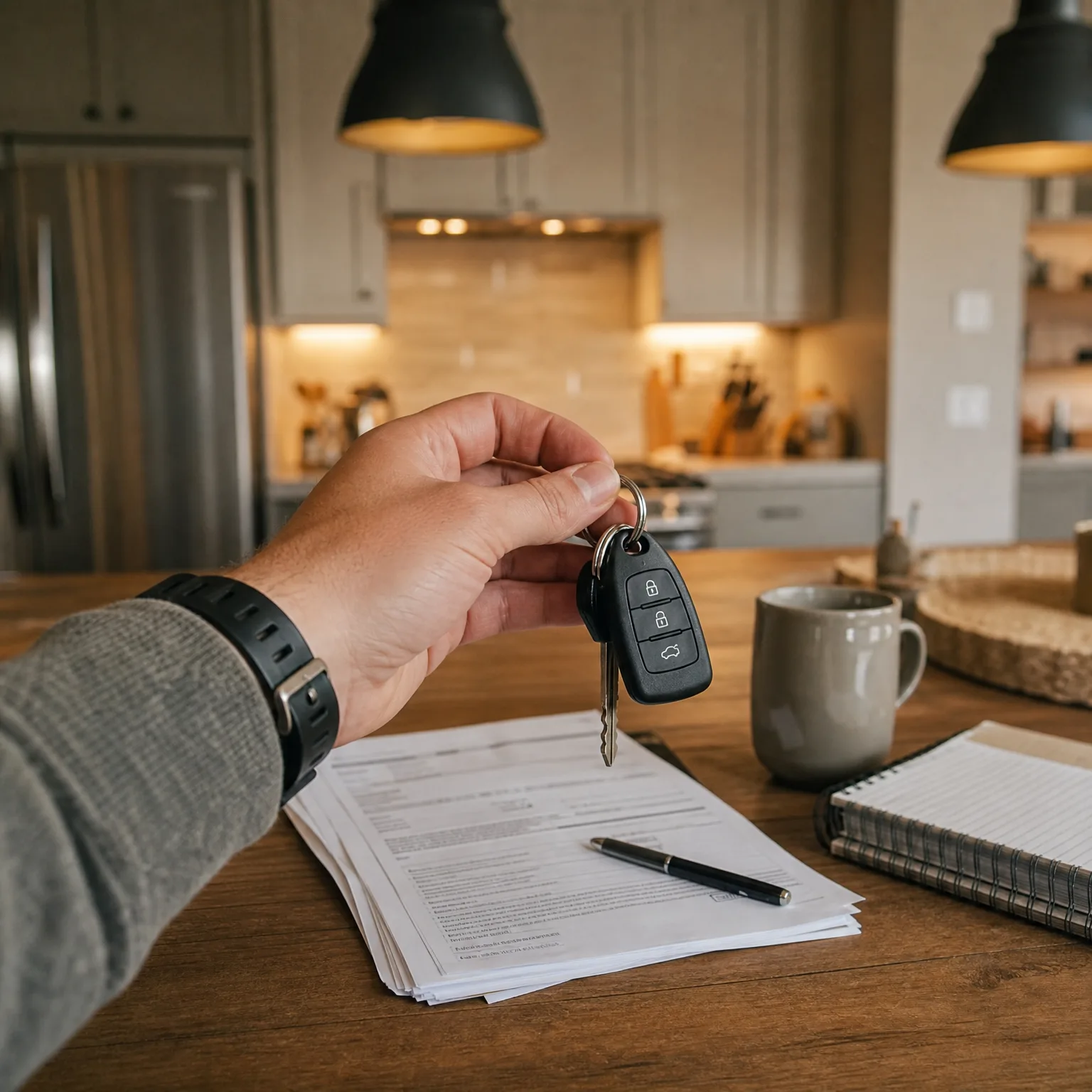
The Three-Entity Coordination Sequence Louisiana CDL Holders Must Navigate
Reinstating your Louisiana CDL after a child support suspension requires coordinating three separate government entities in a specific order. You cannot skip steps or assume one agency notifies the others.
First, you resolve the arrears with DCSS directly. This means either paying the full balance, entering a court-approved payment plan, or obtaining a compliance agreement from the court that issued the support order. DCSS processes your payment or agreement and updates their records. Processing time varies by parish but typically takes 7–14 business days from payment receipt to internal clearance.
Second, DCSS generates a compliance notice and submits it to the family court that issued your support order. The court reviews the notice, confirms your account status, and issues a formal clearance order. Court processing adds another 10–21 days depending on court docket load and whether your case requires a hearing.
Third, the court or DCSS forwards the clearance order to OMV. OMV receives the document, matches it to your driver record, and removes the administrative hold. OMV processing adds 7–14 business days after they receive the clearance. Only then does the suspension lift. Total elapsed time from payment to reinstatement: 30–60 days in most cases, longer if any entity requires additional documentation.

How Louisiana SR-22 Filing Does Not Apply to Child Support Suspensions
Louisiana does not require SR-22 proof of financial responsibility for child support arrears suspensions. SR-22 filing is mandatory under Louisiana law for DWI suspensions, uninsured motorist violations, and certain serious traffic offenses under La. R.S. 32:415.1 and 32:851. Child support suspension is purely administrative and unrelated to driving behavior or insurance compliance.
If you were told you need SR-22, verify the actual suspension trigger on your OMV record. Some commercial drivers face multiple suspensions simultaneously—child support plus a separate DWI or insurance lapse. Each suspension has independent reinstatement requirements. SR-22 would apply only to the DWI or insurance-related suspension, not the child support hold.
Reinstatement after child support suspension requires paying the $60 base reinstatement fee and presenting the court clearance notice at an OMV office. No SR-22 certificate is required unless you have a separate suspension that independently mandates it. OMV processes each suspension trigger separately; clearing one does not automatically clear the other.
What Lapse-Gap Documentation Means When You Have a CDL
Louisiana law does not use the term "lapse-gap documentation" in child support suspension contexts. If you were asked to provide lapse-gap proof, the request likely originated from your employer's HR department or insurance carrier, not from OMV.
Commercial carriers and fleet insurers often require drivers to document any period when their CDL was suspended or invalid. This is not a state reinstatement requirement—it is a private employer or insurer requirement. The documentation typically includes a copy of your OMV reinstatement receipt, the court clearance notice, proof of payment to DCSS, and a current driver record abstract showing the suspension has been removed.
Request a certified driver record from OMV after reinstatement. The record will show the suspension dates, the clearance date, and current valid status. Most employers accept this as sufficient lapse-gap documentation. If your employer requires additional proof, ask them specifically what format they need—Louisiana OMV does not issue a separate "lapse certificate" or "gap clearance letter." The driver record abstract is the authoritative state document.

Line Up Coverage Before Your License Comes Back
Get Back on the Road
How to Accelerate the Clearance Process Between DCSS and OMV
You cannot force DCSS, the court, or OMV to process faster, but you can eliminate common delays caused by missing or incomplete documentation.
After you pay the arrears or establish a payment plan, request written confirmation from DCSS immediately. DCSS should provide a receipt showing the payment date, amount, and account status. Call DCSS at (888) 524-3578 within three business days of payment to confirm they received it and ask when they will submit the compliance notice to the court. Document the name of the DCSS representative and the date they expect to forward the notice.
Contact the family court clerk handling your support order one week after DCSS confirms submission. Ask whether the court has received the compliance notice and when they expect to issue the clearance order. Some parishes process these administratively without requiring a hearing; others schedule brief compliance hearings. If a hearing is required, request the earliest available date. Missing a scheduled compliance hearing restarts the timeline.
Once the court issues the clearance order, do not wait for DCSS or the court to forward it to OMV. Obtain a certified copy of the clearance order from the court clerk yourself and deliver it to an OMV office in person. Bring your payment receipt from DCSS, the court clearance order, a valid photo ID, and the $60 reinstatement fee. OMV can process your reinstatement the same day if all documents are complete.
Why Louisiana Does Not Offer Restricted CDL Privileges During Child Support Suspension
Louisiana's restricted license program under La. R.S. 32:415.1 does not apply to commercial driver's licenses. Restricted licenses (sometimes called hardship licenses) allow limited driving for employment, medical, or educational purposes during certain suspensions. The program is available for DWI suspensions, points-related suspensions, and some other administrative suspensions affecting Class D (non-commercial) licenses.
Federal Motor Carrier Safety Administration (FMCSA) regulations prohibit states from issuing restricted commercial driving privileges. A CDL is either valid and unrestricted, or it is suspended. No middle category exists. Louisiana law complies with this federal requirement by excluding CDL holders from the restricted license program entirely.
If you hold both a CDL and a Class D license, the child support suspension affects both. You cannot drive commercially or personally during the suspension period. Some drivers attempt to downgrade to a Class D license during suspension to qualify for a restricted license, but Louisiana OMV will not process a downgrade while an active suspension is on record. The suspension must be fully cleared before you can request any license class change.
What Commercial Drivers Need to Know About Louisiana Insurance Requirements After Reinstatement
Child support suspensions do not trigger SR-22 filing requirements, but reinstating your CDL does not restore your commercial driving authorization automatically. Your employer or fleet insurer must verify your reinstated status and confirm you meet their insurability standards before allowing you to return to driving duties.
Louisiana requires all drivers to maintain minimum liability coverage: $15,000 bodily injury per person, $30,000 bodily injury per accident, and $25,000 property damage (15/30/25). Commercial drivers operating vehicles over 26,001 pounds or carrying hazardous materials face higher federal minimum coverage requirements under FMCSA regulations, typically $750,000 to $5,000,000 depending on cargo type and vehicle classification.
Your employer's insurer will request a current driver record abstract from OMV after you reinstate. The suspension will appear in your record history even after clearance. Some carriers impose waiting periods or surcharges for drivers with recent suspension history, regardless of cause. Ask your employer whether their insurer treats child support suspensions differently from moving violation or DWI suspensions—some do, many do not.
If you operate as an owner-operator or lease to a carrier, contact your commercial auto insurer before you reinstate. Confirm whether the suspension affects your policy status and whether you need to file updated proof of coverage with FMCSA or Louisiana OMV after reinstatement. Do not assume your policy remained active during suspension—some insurers cancel coverage automatically when a CDL suspension is reported.
Frequently Asked Questions
Does Louisiana OMV automatically reinstate my CDL when I pay child support arrears?
No. Louisiana OMV reinstates your CDL only after receiving a formal compliance notice from DCSS or the family court. Payment clears your debt to DCSS, but OMV receives no automatic notification. The compliance notice must move through DCSS, the court, and then to OMV—a process that typically takes 30–60 days after payment.
Can I get a restricted CDL in Louisiana while my license is suspended for child support?
No. Federal FMCSA regulations prohibit states from issuing restricted commercial driving privileges. Louisiana's restricted license program under La. R.S. 32:415.1 applies only to Class D non-commercial licenses. A CDL is either valid and unrestricted or suspended—no middle category exists.
Do I need SR-22 insurance to reinstate my Louisiana CDL after a child support suspension?
No. Louisiana does not require SR-22 filing for child support suspensions. SR-22 is mandatory only for DWI suspensions, uninsured motorist violations, and certain serious traffic offenses. If you have a separate DWI or insurance-related suspension in addition to the child support hold, SR-22 would apply only to that separate suspension.
How do I prove to my employer that my Louisiana CDL suspension is cleared?
Request a certified driver record abstract from Louisiana OMV after reinstatement. The abstract shows suspension dates, clearance date, and current valid status. Most employers and fleet insurers accept this as sufficient documentation. Bring your OMV reinstatement receipt and the court clearance notice as backup if your employer requests additional proof.
Can I speed up the clearance process between DCSS and Louisiana OMV?
You cannot force faster processing, but you can eliminate delays. After paying arrears, request written confirmation from DCSS and ask when they will submit the compliance notice to court. One week later, contact the family court clerk to confirm receipt and expected clearance date. Once the court issues the clearance order, deliver a certified copy to OMV yourself rather than waiting for DCSS or the court to forward it.
Will a child support suspension on my Louisiana CDL record affect my commercial insurance rates?
It depends on your employer's insurer. Some commercial carriers impose waiting periods or surcharges for drivers with recent suspension history regardless of cause. Others treat child support suspensions differently from DWI or moving violation suspensions. Ask your employer or fleet manager how their insurer handles non-driving administrative suspensions before you reinstate.
What is the Louisiana OMV reinstatement fee after a child support suspension?
The base reinstatement fee is $60. This fee applies to the administrative processing of your reinstatement once OMV receives the court clearance notice. You must also satisfy any arrears owed to DCSS—the reinstatement fee is separate from and in addition to your child support payment.
Related Articles

LA CDL Child Support Reinstatement: Court & DCSE Timing
5/3/2026

Child Support License Suspension in New Orleans: Reinstate
4/29/2026
License Suspended for Child Support in Louisiana
4/29/2026

LA Child Support License Reinstatement: Court vs OMV
5/3/2026
LA Child Support Suspension: Rideshare Clearance Timeline
5/3/2026
LA Child Support Suspension: Court to OMV Clearance Gap
5/3/2026