Kansas CDL Child Support Reinstatement: Real Cost Breakdown
Free to compare
Why Kansas Child Support Suspensions Don't Require SR-22 Filing
Kansas child support suspensions are administrative actions processed through the Department for Children and Families (DCF) Child Support Services division, not insurance-related violations. The state does not require SR-22 proof of insurance for reinstatement after child support arrears suspensions. Your carrier won't charge the SR-22 endorsement fee, you won't face high-risk premium markups, and you won't enter the typical 3-year SR-22 maintenance period that follows DUI or uninsured motorist suspensions.
This distinction matters for CDL holders because your reinstatement cost stack is lower than DUI-related suspensions, but your timeline exposure is higher. Commercial drivers operate under federal and state licensing frameworks simultaneously. A personal child support suspension affects your base Kansas driver's license, which is the foundation your CDL rests on. Lose the base license and your CDL is automatically suspended under federal regulation 49 CFR 383.5, even though the underlying issue has nothing to do with your driving record.
The Kansas Division of Vehicles (KDOR) administers all license suspensions, but child support holds originate from DCF and require clearance from that agency before KDOR will process reinstatement. Most drivers assume paying the court-ordered amount resolves everything. It doesn't. The court and DCF operate on separate timelines, and KDOR won't see your compliance until DCF submits official clearance notification.
The Dual-Track Reinstatement Process Kansas CDL Holders Face
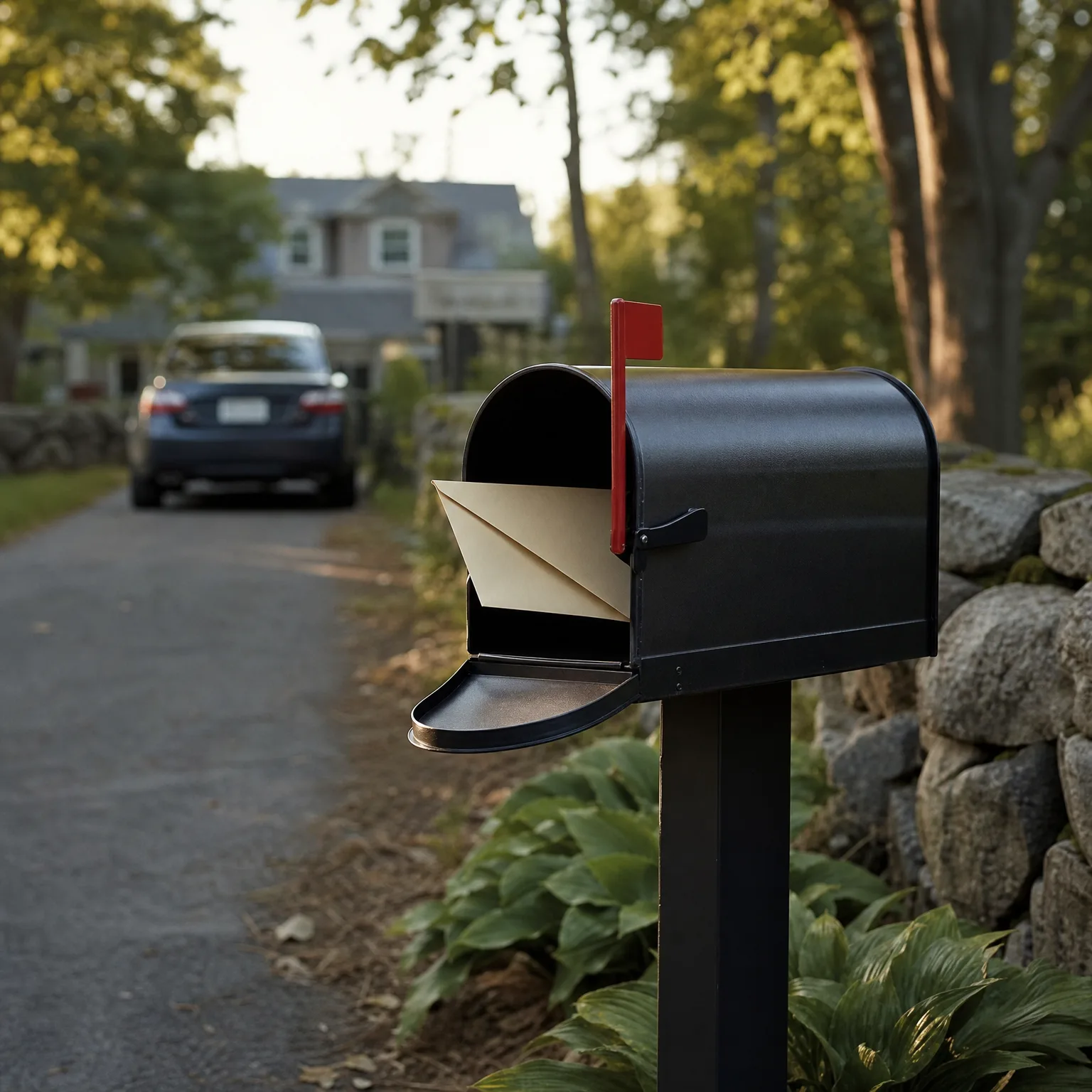
Kansas requires two distinct clearance steps before your CDL can be reinstated after a child support suspension. First, you satisfy DCF's arrears compliance requirements through the family court or CSE office that issued the suspension order. Second, you complete KDOR's administrative reinstatement process, which includes a $50 base reinstatement fee and confirmation that your base driver's license is valid.
Here's where commercial drivers lose time: DCF does not automatically notify KDOR when you've satisfied arrears or entered a compliant payment plan. You receive a compliance notice from DCF, but that document doesn't flow electronically to the Division of Vehicles. You must submit proof of DCF clearance to KDOR separately, either in person at a Driver's License Bureau or by mail to the Driver Control Bureau in Topeka. Processing takes 5-10 business days after KDOR receives the compliance notice, assuming no other holds appear on your record.
Most CDL holders discover this gap when they show up at a KDOR office with their DCF clearance letter, expecting same-day reinstatement, and learn they're entering a multi-day processing queue. If you're an over-the-road driver or operate under a time-sensitive contract, those 5-10 days represent lost income you can't recover. The coordination failure isn't malicious—DCF and KDOR are separate agencies with separate data systems—but the burden of connecting them falls entirely on you.


Realistic Reinstatement Cost Stack for Kansas CDL Holders
Kansas child support reinstatement costs break into three categories: arrears compliance costs set by the court, KDOR reinstatement fees, and insurance continuation costs during suspension. The $50 KDOR base reinstatement fee is fixed and applies to all license types. CDL holders do not pay a separate commercial license reinstatement fee on top of the base fee—the $50 covers both your Class D base license and your CDL endorsement restoration.
Arrears compliance costs vary by case. Kansas family courts typically require either full payment of outstanding arrears or entry into a court-approved payment plan before issuing a clearance notice. If your case involves contempt of court proceedings, you may face additional court costs or attorney fees, which are case-specific and not part of the KDOR reinstatement process. These costs are determined by your CSE caseworker or the judge overseeing your case, not by the Division of Vehicles.
Insurance costs during suspension depend on whether you own a vehicle. Kansas requires continuous liability insurance on all registered vehicles under K.S.A. 40-3104, even during a license suspension. If your vehicle registration lapses due to non-payment of insurance during the suspension period, you'll face a separate vehicle registration reinstatement process and fee when you're ready to drive again. Non-owner liability policies cost $25-$50/month in Kansas for suspended drivers who don't currently own a vehicle but need to maintain coverage. CDL holders often maintain higher liability limits than the state minimum ($25,000/$50,000/$25,000) because commercial driving jobs require proof of higher coverage, which increases monthly premiums to $60-$90/month even for non-owner policies.

Line Up Coverage Before Your License Comes Back
Get Back on the RoadWhy Standard Non-Owner Policies Don't Cover CDL Employment Gaps
A non-owner liability policy satisfies Kansas's proof-of-insurance requirement during your personal license suspension, but it does not cover you while operating a commercial vehicle for an employer. Non-owner policies explicitly exclude coverage for vehicles you drive in the course of employment or business use. If you're suspended and trying to maintain insurability so you can return to a CDL job immediately after reinstatement, a non-owner policy keeps your insurance history continuous but won't allow you to drive commercially during the suspension.
Commercial liability coverage is tied to the vehicle and the carrier, not the driver. Your employer's commercial auto policy covers you while operating their equipment, assuming you hold a valid CDL and meet their underwriting requirements. During suspension, you can't operate commercial vehicles legally regardless of what insurance you carry personally. The non-owner policy's function is to prevent a coverage gap on your insurance record, which some carriers flag as a risk factor when underwriting post-reinstatement policies.
If you own your vehicle and operate as an owner-operator under your own authority, your situation is different. You'll need commercial liability coverage, not a non-owner policy, and that coverage must remain active on your registered vehicle even during suspension unless you surrender your plates and cancel registration. Letting commercial coverage lapse triggers KDOR registration suspension under the state's electronic insurance verification system, which adds a separate reinstatement requirement on top of the child support clearance.

What Happens If You Miss the KDOR Notification Step After DCF Clearance
Receiving a compliance notice from DCF does not reinstate your license automatically. Kansas requires you to submit that notice to KDOR and pay the reinstatement fee before your driving privileges are restored. If you assume the suspension lifts when you satisfy arrears and you drive before completing the KDOR reinstatement process, you're operating on a suspended license. Kansas treats driving under suspension as a Class B nonperson misdemeanor under K.S.A. 8-262, which carries up to 6 months in jail and a fine up to $1,000 for a first offense.
For CDL holders, a conviction for driving under suspension while holding a commercial license triggers federal disqualification under 49 CFR 383.51. A first offense results in a 60-day CDL disqualification. A second offense within 3 years results in a 120-day disqualification. A third offense within 3 years results in a 1-year disqualification. These federal penalties apply on top of any state penalties Kansas imposes, and they follow you to any other state if you attempt to transfer your CDL.
The gap between DCF clearance and KDOR processing creates the highest risk window. You have proof you've satisfied the child support hold, but your license remains suspended in the state's system until KDOR processes the clearance. Most violations happen during the 5-10 business days after DCF issues the compliance notice but before KDOR completes reinstatement processing. Verify your license status online at kansas.gov/kdor before operating any vehicle, personal or commercial.

Filing Fees and Hidden Costs Most Kansas Commercial Drivers Miss
The $50 KDOR reinstatement fee is the only state-mandated cost for license restoration, but it's not the only cost you'll encounter. If your case required court involvement beyond standard CSE proceedings—for example, a contempt hearing or modification of the support order—you may owe court filing fees ranging from $50 to $150 depending on the county. These are paid to the district court clerk, not to KDOR, and they're separate from your arrears payment.
If you're reinstating after an extended suspension (more than 90 days), Kansas may require you to retake the written knowledge test and the driving skills test to restore your CDL, depending on how long your license has been suspended and whether other violations appear on your record. The written test costs $2.50 per attempt. The driving skills test costs $50 for the basic skills component and $50 for the road test component, for a total of $100 if you pass on the first attempt. KDOR waives the retest requirement for most first-time child support suspensions under 6 months, but the policy is not automatic—verify with the Driver Control Bureau before assuming you're exempt.
Some CDL holders hire attorneys to negotiate arrears payment plans or represent them in contempt proceedings. Attorney fees in Kansas child support cases typically range from $1,500 to $3,500 depending on case complexity and whether the matter goes to trial. These costs are not part of the reinstatement process, but they're common enough among commercial drivers with high arrears balances that they belong in any realistic cost stack calculation.
Frequently Asked Questions
Do I need SR-22 insurance to reinstate my CDL after a Kansas child support suspension?
No. Kansas child support suspensions are administrative actions unrelated to insurance violations, so the state does not require SR-22 filing for reinstatement. You'll pay the $50 KDOR reinstatement fee and submit proof of DCF arrears clearance, but you won't face SR-22 endorsement fees or high-risk premium markups.
How long does KDOR take to process reinstatement after I clear my child support arrears?
KDOR typically processes reinstatement 5-10 business days after receiving your DCF compliance notice and reinstatement fee payment. The delay exists because DCF does not automatically notify KDOR when you satisfy arrears—you must submit the clearance notice to the Driver Control Bureau separately, either in person or by mail.
Can I drive my personal vehicle while my CDL is suspended for child support in Kansas?
No. Kansas child support suspensions affect your base Class D driver's license, which suspends all driving privileges including personal and commercial vehicle operation. Federal regulation 49 CFR 383.5 suspends your CDL automatically when your base license is suspended, regardless of the underlying reason.
What happens if I get pulled over in Kansas after DCF clears my arrears but before KDOR processes reinstatement?
You'll be cited for driving under suspension under K.S.A. 8-262, a Class B misdemeanor carrying up to 6 months in jail and a $1,000 fine. CDL holders face an additional 60-day federal disqualification under 49 CFR 383.51 for a first offense. Your license remains suspended in the state's system until KDOR completes processing, even if you hold a DCF compliance notice.
Do I have to retake the CDL skills test after a child support suspension in Kansas?
Kansas waives the retest requirement for most first-time child support suspensions under 6 months with no other violations on record. If your suspension exceeded 90 days or you have additional suspensions or disqualifications, KDOR may require both the written knowledge test ($2.50) and the driving skills test ($100 total). Verify with the Driver Control Bureau before assuming you're exempt.
Does a non-owner insurance policy cover me while I'm working as a CDL driver in Kansas?
No. Non-owner policies explicitly exclude coverage for vehicles you operate in the course of employment or business use. A non-owner policy maintains continuous insurance history during your suspension, which prevents a coverage gap on your record, but it does not allow you to drive commercially. Your employer's commercial auto policy covers you when you're operating their equipment with a valid CDL.
Can I transfer my Kansas CDL to another state to avoid the child support suspension?
No. The Commercial Driver's License Information System (CDLIS) is a nationwide database that shares suspension and disqualification records across all states. If Kansas suspends your base license for child support arrears, that suspension appears on your CDLIS record and prevents any other state from issuing you a CDL until the Kansas suspension is cleared and your Kansas license is reinstated.
Related Articles

Kansas CDL Child Support Reinstatement: SR-22 & Lapses
5/3/2026

Kansas Child Support CDL Suspension: Clearance Timeline
5/3/2026
Kansas Child Support Reinstatement Costs Explained
5/3/2026
Kansas Child Support Suspension: Reinstatement Costs
5/3/2026

Kansas Child Support Suspension: SR-22 & Lapse Rules
5/3/2026

Kansas Child Support Suspension: Reinstatement Costs
5/3/2026