
Indiana Child Support Suspension: Real Cost to Reinstate for Rideshare Drivers
Free to compare
Why Indiana's Child Support Suspension Reinstatement Costs More Than the BMV Website States
The Indiana BMV lists a $250 base reinstatement fee for child support arrears suspensions under IC 31-16-12-7. That figure is accurate but incomplete for rideshare drivers who need immediate driving privileges.
Indiana requires coordination between three separate entities before your license is valid: the state IV-D child support enforcement agency must issue a clearance notice confirming compliance, the BMV must process that clearance and accept your reinstatement fee, and your insurance carrier must file SR-22 proof of financial responsibility if your suspension exceeded 90 days or overlapped with any other violation.
Rideshare platforms reject drivers whose license status shows any pending administrative holds. The BMV's online portal mybmv.com reflects your reinstatement status, but Uber and Lyft background checks pull from a separate INSPECT database that updates 24-72 hours after BMV processing completes. That gap creates a hidden cost: days without platform access while administrative systems sync.

The Child Support Clearance Fee Indiana Doesn't Advertise
Before the BMV will accept your $250 reinstatement payment, you must obtain a compliance notice from Indiana's child support enforcement division. That notice costs $50-$75 in administrative processing fees in most Indiana counties, though the state does not publish a uniform schedule.
The IV-D agency requires proof of current compliance, which means either full arrears payment, an approved payment plan with at least two consecutive on-time payments, or a court order modifying your obligation. Each of those paths has its own cost structure. Full arrears payment is immediate but often financially impossible. Payment plans typically require a $100-$200 upfront payment before the agency will issue the clearance notice. Court-ordered modifications require filing fees of $150-$300 depending on your county.
Most rideshare drivers choose the payment plan route because it preserves cash flow. The hidden cost: your clearance notice is not issued until the second payment clears, which adds 30-60 days to your reinstatement timeline. Every day without platform access is lost income that most cost calculators omit.


Ignition Interlock Requirements for Non-DUI Child Support Suspensions
Indiana administrative code requires ignition interlock device installation for any license suspension exceeding 90 days, regardless of the original trigger. IC 9-30-8 governs IID mandates, and BMV administrative rules apply the requirement broadly.
Child support suspensions typically last until compliance, which means most exceed the 90-day threshold. The BMV's reinstatement checklist will show IID installation as a prerequisite even though your suspension was not alcohol-related. You cannot skip this step.
IID installation costs $70-$100, monthly monitoring fees run $60-$80, and removal costs another $50-$75. The minimum required installation period for non-DUI suspensions in Indiana is typically 90 days, though the BMV may extend this based on your driving record. Total IID cost for a rideshare driver reinstating from child support suspension: approximately $400-$550 over three months.
Uber and Lyft vehicle inspection requirements prohibit IID-equipped vehicles in most Indiana markets. You will need to borrow or rent a non-IID vehicle for platform driving, then use your IID-equipped personal vehicle only for the legally required monitoring period. This dual-vehicle requirement adds rental costs of $800-$1,200 for three months if you lack access to a second vehicle.
SR-22 Filing Costs and Rideshare Insurance Complications
Indiana does not require SR-22 for child support suspensions as a statutory matter, but the BMV's reinstatement workflow triggers SR-22 filing requirements through a different pathway. If your suspension period overlapped with any lapse in insurance coverage, any points-related administrative action, or any other violation on your record, the BMV will mandate SR-22 as a reinstatement condition.
SR-22 filing itself costs $15-$50 depending on your carrier. The real expense is the insurance premium increase. Indiana SR-22 filers see average liability premium increases of $40-$90/month compared to standard rates. That increase lasts for three years from your reinstatement date per IC 9-25.
Rideshare drivers face an additional layer: Uber and Lyft require commercial liability coverage during active platform periods, and most SR-22 carriers exclude rideshare activity from standard policies. You will need to purchase a separate rideshare endorsement or a standalone commercial policy. Those endorsements add $80-$150/month in Indiana markets for drivers with SR-22 filing requirements.
Total insurance cost over three years: base liability ($85-$140/mo standard Indiana rates) plus SR-22 surcharge ($40-$90/mo) plus rideshare endorsement ($80-$150/mo) equals approximately $205-$380/month or $7,380-$13,680 over the three-year SR-22 filing period.

Line Up Coverage Before Your License Comes Back
Get Back on the Road
Probationary License Costs for Immediate Rideshare Access
Indiana offers a Probationary License (also called Specialized Driving Privileges in court contexts under IC 9-30-16) that allows employment-related driving during your suspension period. For rideshare drivers, this is the only path to platform access before full reinstatement completes.
The Probationary License application requires proof of employment need, SR-22 insurance, and ignition interlock installation verification. Application fees are not standardized statewide; most Indiana BMV branches charge $75-$125 for Probationary License processing. Processing takes 10-15 business days after all documentation is submitted.
Probationary License restrictions in Indiana limit driving to specific approved purposes: work, school, medical appointments, religious activities, or other BMV-approved necessity. Rideshare driving qualifies as employment, but you must document your platform driver agreement and submit it with your application. The BMV may impose time restrictions limiting your driving to specific hours, which most rideshare drivers find incompatible with peak-earning periods.
If you apply for a Probationary License, you still pay the full $250 reinstatement fee later when your suspension period ends or when you obtain child support clearance. The Probationary License fee does not offset the reinstatement fee. Total cost for both: $325-$375.
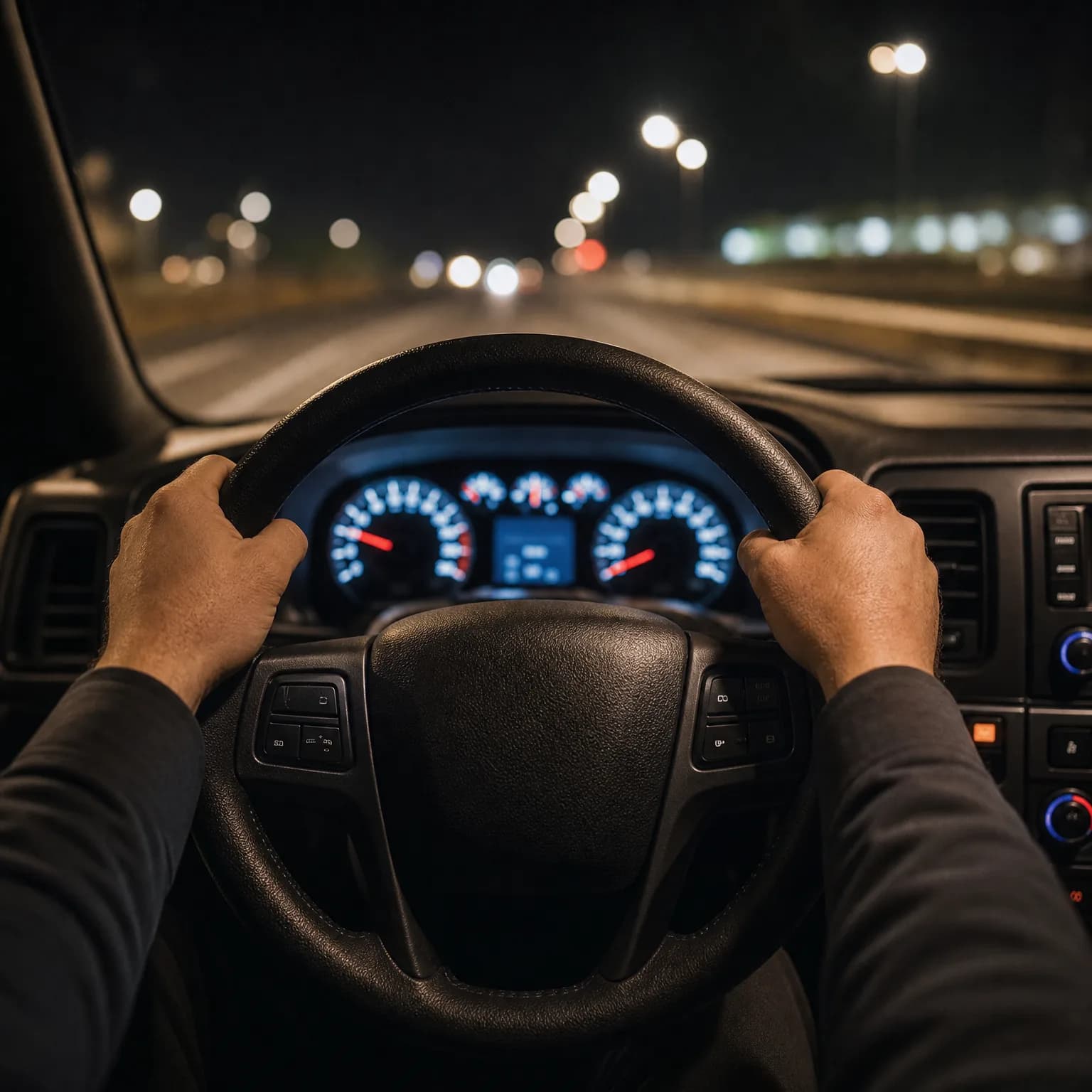
Total Reinstatement Cost Stack for Indiana Rideshare Drivers
BMV reinstatement fee: $250. Child support clearance processing: $50-$75. Payment plan upfront deposit: $100-$200. Ignition interlock installation, monitoring, and removal over 90 days: $400-$550. SR-22 filing fee: $15-$50. Probationary License application if needed for immediate platform access: $75-$125.
One-time cost total: $890-$1,250. Ongoing insurance cost increases over three years due to SR-22 filing and rideshare endorsement requirements: $7,380-$13,680. Vehicle rental costs if your IID-equipped vehicle cannot be used for rideshare: $800-$1,200 over the three-month interlock period.
Grand total reinstatement cost for Indiana rideshare drivers with child support suspension: approximately $9,070-$16,130 over three years. Most rideshare drivers budget only for the $250 BMV fee and discover the full cost structure after their first application is rejected for missing documentation.
What to Do Right Now
Contact Indiana's child support enforcement IV-D agency in your county and request a payment plan application. Submit proof of income showing your rideshare earnings history if you were driving before suspension. Make your first payment immediately and schedule the second payment 30 days out to start the clearance notice timeline.
Call your current auto insurance carrier and ask whether they file SR-22 in Indiana and whether they offer rideshare endorsements. If not, request quotes from carriers that specialize in high-risk and rideshare coverage. Bristol West, The General, and Direct Auto all operate in Indiana and offer SR-22 filing with rideshare endorsements.
Schedule ignition interlock installation with an Indiana-certified provider before you apply for reinstatement or a Probationary License. The BMV will not process your application until installation verification is submitted. Installation must be completed by a state-certified provider; the BMV publishes an approved vendor list on their website.
If you need immediate platform access, apply for a Probationary License as soon as your IID installation and SR-22 filing are complete. Submit your Uber or Lyft driver agreement as employment documentation. Request unrestricted hours if your income depends on peak rideshare periods; the BMV may approve broader time windows if you document financial hardship.
Frequently Asked Questions
Does Indiana require SR-22 for child support suspensions?
Indiana does not require SR-22 solely because of child support arrears suspension under IC 31-16-12-7. The BMV mandates SR-22 filing if your suspension period overlapped with any insurance lapse, points-related action, or other violation on your driving record. Most suspensions exceeding 90 days trigger SR-22 requirements through these secondary pathways even when the original suspension cause was administrative.
Can I drive for Uber with a Probationary License in Indiana?
Yes, Indiana's Probationary License allows employment-related driving, and rideshare work qualifies as employment. You must submit your platform driver agreement as proof of employment need when you apply. The BMV may impose time or route restrictions that limit your ability to drive during peak-earning hours, so request unrestricted hours in your application and document financial hardship if your income depends on flexible scheduling.
How long does Indiana child support clearance take after I pay arrears?
Indiana's IV-D child support enforcement agency typically issues clearance notices 7-14 business days after receiving proof of compliance. Payment plans require two consecutive on-time payments before clearance is issued, which adds 30-60 days to your timeline. The BMV's mybmv.com portal shows reinstatement status within 24-48 hours after clearance posts, but rideshare background checks pull from the INSPECT database, which updates 24-72 hours after BMV processing completes.
Why does Indiana require ignition interlock for non-DUI suspensions?
Indiana administrative code under IC 9-30-8 requires ignition interlock device installation for any license suspension exceeding 90 days, regardless of whether the suspension was alcohol-related. Child support suspensions typically last until compliance is verified, which means most exceed the 90-day threshold. The BMV applies IID mandates through administrative rules, not statute, so the requirement appears during reinstatement processing even when your suspension was purely administrative.
Can I use an IID-equipped car for rideshare in Indiana?
No, Uber and Lyft prohibit IID-equipped vehicles in most Indiana markets under their vehicle inspection requirements. You will need access to a second vehicle without an ignition interlock device for platform driving. Your IID-equipped personal vehicle must be used only for the legally required monitoring period, which is typically 90 days minimum for non-DUI suspensions in Indiana. This creates a dual-vehicle requirement that adds rental or borrowing costs for most rideshare drivers.
What happens if I drive for rideshare without full reinstatement in Indiana?
Driving on a suspended license in Indiana is a Class A misdemeanor under IC 9-24-19-2, carrying up to one year in jail and a $5,000 fine. Uber and Lyft conduct continuous background monitoring and will deactivate your account if your license shows any administrative hold. Driving with a Probationary License outside your approved purposes or time restrictions violates your reinstatement terms and triggers automatic revocation, requiring you to restart the entire reinstatement process from the beginning.
Does the $250 BMV reinstatement fee cover the Probationary License?
No, the $250 BMV reinstatement fee under IC 9-29-8 applies only to full license reinstatement after your suspension ends or after child support clearance is issued. The Probationary License application requires a separate fee of $75-$125 depending on your local BMV branch. If you obtain a Probationary License during your suspension period, you still pay the full $250 reinstatement fee later when your suspension is lifted. Total cost for both: $325-$375.
Related Articles

Indiana Child Support SR-22 for Rideshare Drivers
5/3/2026

Indiana Rideshare SR-22 Reinstatement Costs (Real Stack)
5/3/2026

Indiana Child Support Clearance & Rideshare Timeline
5/3/2026

Indiana Child Support Suspension Reinstatement Costs
5/3/2026
Indiana Rideshare Reinstatement Costs: Unpaid Tickets
5/3/2026

Indiana Child Support CDL Reinstatement & SR-22 Timing
5/3/2026