
Delaware Child Support Suspension: CDL Reinstatement Costs
Free to compare
Why Delaware child support suspensions don't trigger SR-22 filing requirements
Delaware child support suspensions are administrative actions initiated by the Division of Child Support Enforcement, not traffic violations. SR-22 financial responsibility certificates are required only for moving violations, DUI convictions, uninsured motorist incidents, and at-fault accidents without insurance — none of which apply to child support enforcement cases under 21 Del. C. § 2118.
The Division of Motor Vehicles suspends your license when the Division of Child Support Enforcement submits a compliance notice flagging arrears. This is a civil enforcement mechanism, not a penalty for dangerous driving. CDL holders often assume SR-22 is part of every suspension because DUI-related content dominates search results, but child support cases follow a completely separate reinstatement path.
You will not be asked to file SR-22 at reinstatement. You will not pay SR-22 carrier markup. Your liability insurance rates may increase slightly due to the lapse in active driving status, but you avoid the 24–36 month high-risk filing surcharge that DUI offenders face. This distinction saves CDL holders $800–$1,200 annually compared to violation-based suspensions.

The actual reinstatement cost stack: filing fees and compliance documentation
Delaware's base reinstatement fee is $25, paid directly to the DMV once the Division of Child Support Enforcement issues a compliance clearance letter confirming your arrears are resolved or a payment plan is in place. This fee applies whether you hold a Class A, Class B, or Class C license.
The compliance clearance process itself carries no state-imposed fee, but most Delaware CDL holders reach compliance through one of three paths: lump-sum arrears payment, court-approved payment plan enrollment, or wage garnishment arrangement. Court-approved payment plans typically require a filing fee of $50–$75 in Family Court, plus the cost of certified copies of the court order (approximately $10 per copy). You'll need at least two certified copies: one for the Division of Child Support Enforcement and one for the DMV at reinstatement.
If you pursue reinstatement through a payment plan rather than full arrears clearance, the DMV will verify ongoing compliance before processing your reinstatement. Most CDL holders underestimate the time cost here: Delaware's centralized DMV structure routes all compliance verification through a single processing queue, and the agency does not accept partial or pending clearance letters. Expect 7–14 business days between compliance notice submission and DMV clearance, which adds opportunity cost if you're out of work during that window.


Why the ignition interlock requirement doesn't apply to child support cases
Delaware requires ignition interlock device installation for DUI-related suspensions and some high-BAC convictions under the state's Ignition Interlock Program, administered per 21 Del. C. § 2742A. Child support suspensions are not DUI-related and do not trigger interlock requirements, even for CDL holders who transport passengers or operate vehicles over 26,001 pounds.
This is a critical cost distinction. Ignition interlock installation fees in Delaware run $75–$150, monthly monitoring fees add $60–$90, and removal costs another $50–$75. Over a typical 12-month interlock period, total device costs reach $900–$1,200. CDL holders with child support suspensions avoid this entire expense.
The confusion arises because Delaware DMV materials on Conditional Licenses discuss interlock requirements prominently, and many online resources conflate all suspension types. If your suspension letter does not explicitly reference 21 Del. C. § 2742 or mention DUI, refusal, or BAC levels, you are not subject to interlock requirements. Verify this with the Division of Child Support Enforcement compliance officer listed on your suspension notice before paying for installation quotes.

Line Up Coverage Before Your License Comes Back
Get Back on the RoadConditional License eligibility during child support suspension
Delaware offers a Conditional License program that allows restricted driving during suspension for essential purposes such as work, medical appointments, and court-ordered obligations. Child support suspensions are eligible for Conditional License issuance, but the application process requires demonstrating that continued suspension would create undue hardship and that you have an approved payment plan in place.
The Conditional License application is filed directly with the Delaware DMV, not through Family Court. You must submit proof of employment or essential need, an SR-22 insurance certificate (despite the fact that SR-22 is not required for full reinstatement), and documentation of your payment plan or arrears resolution timeline. The SR-22 requirement for Conditional Licenses specifically is an odd procedural quirk: it applies during the restricted license period but is not carried forward to full reinstatement once the suspension is cleared.
Application processing takes 10–15 business days after submission. The Conditional License restricts you to court-approved routes and times, and violations trigger automatic revocation without a separate hearing. For CDL holders, the Conditional License does not restore your commercial driving privileges — you can drive a personal vehicle under the restrictions, but you cannot operate a commercial vehicle until full reinstatement is complete.

Insurance costs during suspension and at reinstatement
Delaware does not require maintaining insurance during a child support suspension if you do not own a vehicle. If you own a vehicle, the vehicle's registration is suspended along with your license, and you are not legally permitted to drive it. Most carriers will allow you to convert your policy to storage coverage or suspend the policy during this period, which reduces your premium to $15–$30/month for comprehensive-only protection.
At reinstatement, you must provide proof of active liability insurance meeting Delaware's minimum requirements: $25,000 bodily injury per person, $50,000 bodily injury per accident, and $10,000 property damage. These are among the lowest state minimums in the country, and most CDL holders carry higher limits to protect commercial opportunities.
Your premium at reinstatement will reflect a lapse in continuous coverage if you suspended your policy during the suspension period. Expect a 10–20% increase compared to pre-suspension rates, but this is not classified as high-risk pricing. If you maintained continuous coverage on a vehicle you did not drive during suspension, you avoid the lapse surcharge entirely. Non-owner liability policies are available if you do not own a vehicle and need to meet the insurance requirement for reinstatement; these typically cost $30–$50/month in Delaware and satisfy DMV proof-of-insurance requirements.
CDL-specific reinstatement complications Delaware doesn't warn about
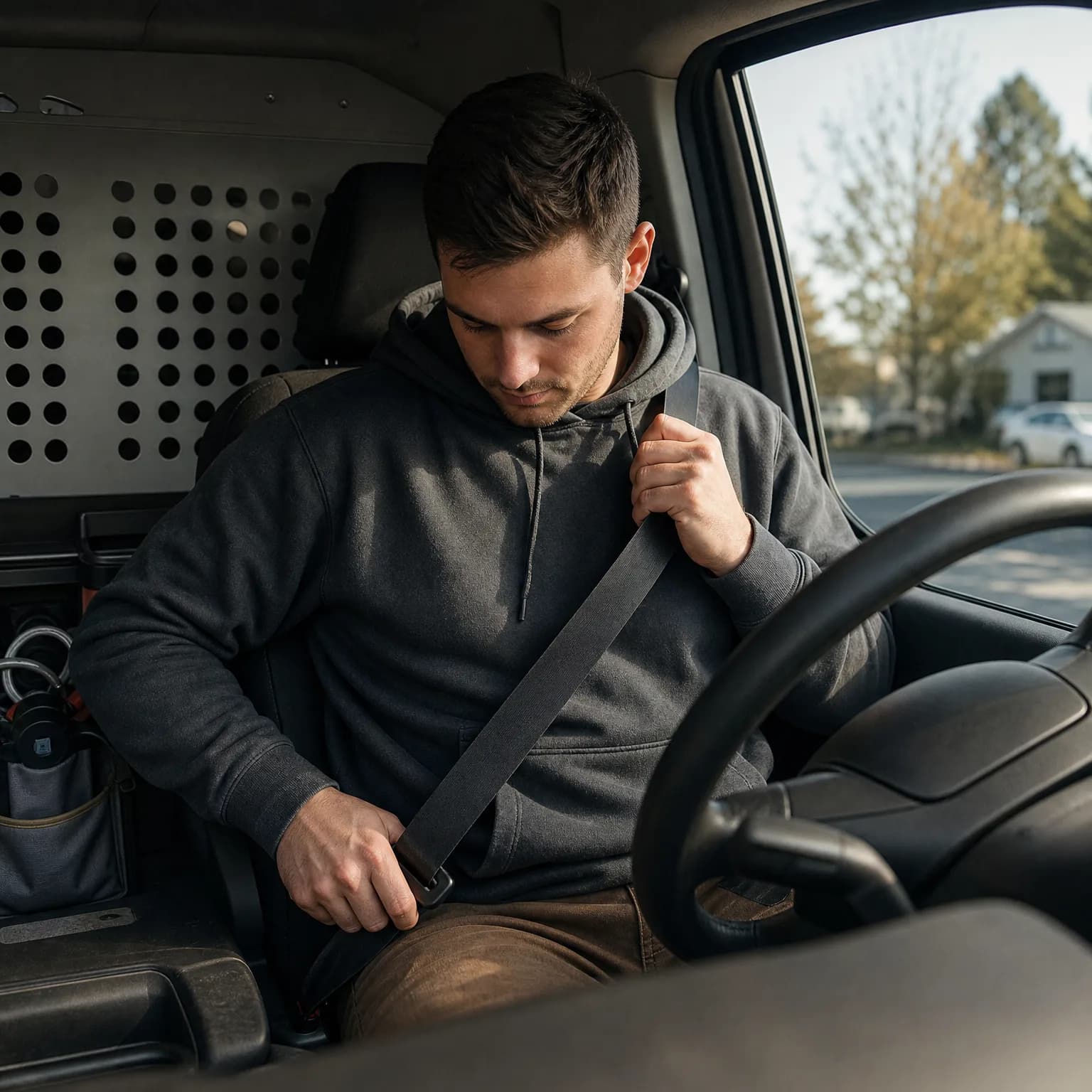
Delaware does not issue restricted or conditional commercial driver's licenses. If you hold a CDL and your base Class D license is suspended for child support arrears, your CDL is also suspended. The Conditional License program allows personal vehicle operation only, which means you cannot work in any capacity requiring a CDL until full reinstatement.
The reinstatement process for CDL holders follows the same $25 base fee structure, but many employers require a driver qualification file update before allowing you to return to work. This includes a new MVR pull, which will show the suspension period even after reinstatement. Some employers treat any suspension — regardless of cause — as a disqualifying event under their insurance policy terms. Verify your employer's driver qualification policy before paying reinstatement fees to avoid reinstating only to find you've lost your position.
Delaware does not require CDL holders to retake the knowledge or skills test after a child support suspension, but if your license was suspended for more than one year, the DMV may require a medical examiner's certificate update before processing reinstatement. This is not a statutory requirement but an administrative practice tied to FMCSA compliance. Budget an additional $80–$120 for the DOT physical if your suspension extended beyond 12 months.
Frequently Asked Questions
Do I need SR-22 to reinstate my Delaware license after child support suspension?
No. Delaware does not require SR-22 filing for child support suspensions. SR-22 is required only for moving violations, DUI convictions, uninsured motorist incidents, and at-fault accidents without insurance. Child support suspensions are administrative actions and follow a separate reinstatement path that does not involve SR-22.
How much does it cost to reinstate a Delaware CDL after child support suspension?
Delaware's base reinstatement fee is $25. If you used a court-approved payment plan to resolve arrears, add $50–$75 for the Family Court filing fee and approximately $20 for certified copies of the court order. Total reinstatement costs typically range from $25 to $120, depending on your compliance path.
Can I get a restricted license in Delaware while my CDL is suspended for child support?
You can apply for a Conditional License that allows personal vehicle operation for work, medical appointments, and court-ordered obligations. However, Delaware does not issue restricted commercial licenses, so you cannot operate a commercial vehicle until full reinstatement is complete. The Conditional License application requires proof of a payment plan and an SR-22 certificate during the restriction period.
Does Delaware require ignition interlock for child support suspensions?
No. Ignition interlock devices are required only for DUI-related suspensions under Delaware's Ignition Interlock Program. Child support suspensions are civil enforcement actions and do not trigger interlock requirements, even for CDL holders.
Will my insurance rates go up after a Delaware child support suspension?
Expect a 10–20% increase if you suspended your policy during the suspension period, due to the lapse in continuous coverage. If you maintained coverage on a vehicle you did not drive, you avoid the lapse surcharge. This is not classified as high-risk pricing and does not carry the 24–36 month SR-22 filing surcharge that DUI offenders face.
How long does Delaware DMV take to process reinstatement after child support clearance?
Expect 7–14 business days between the Division of Child Support Enforcement issuing your compliance clearance letter and DMV processing your reinstatement. Delaware's centralized DMV does not accept partial or pending clearance letters, so full compliance documentation must be in place before the processing clock starts.
Do I need to retake my CDL test after a Delaware child support suspension?
No, Delaware does not require CDL holders to retake knowledge or skills tests after a child support suspension. However, if your suspension lasted more than one year, DMV may require an updated medical examiner's certificate before processing reinstatement. Budget $80–$120 for a DOT physical if this applies to your case.
Related Articles
Delaware CDL Child Support Suspension: SR-22 Timing
5/3/2026

DE Child Support Suspension: Real Reinstatement Costs
5/3/2026
Delaware Child Support Suspension Costs & Reinstatement
5/3/2026
Delaware Child Support SR-22: When Filing Starts
5/3/2026

Delaware CDL Reinstatement Costs: Fees, SR-22 & Markup
5/3/2026

CT CDL Child Support Reinstatement: Real Cost Stack
5/3/2026