
WV CDL Insurance Lapse Suspension: Full Reinstatement Cost Stack
Free to compare
What triggers SR-22 filing for CDL holders after an insurance lapse suspension in West Virginia
West Virginia requires SR-22 filing for all insurance lapse suspensions under WV Code §17A-3-14, regardless of whether the violation occurred in a commercial or personal vehicle. The state's electronic insurance verification system (EIV) reports policy cancellations to the WV DMV in near-real-time, triggering automatic registration suspension when a lapse is detected on any registered vehicle.
For CDL holders, this creates a dual-license exposure: your commercial driving privilege is suspended along with your personal license. The SR-22 filing requirement applies to both, but the reinstatement process treats them as separate actions. Filing SR-22 clears the administrative hold on your personal license first; CDL reinstatement requires additional steps through the West Virginia Division of Motor Vehicles commercial driver licensing unit.
Most carriers classify CDL holders as higher-risk filers after a lapse suspension because the violation demonstrates both failure to maintain continuous coverage and occupational driving exposure. Expect monthly premiums in the $140–$190 range for SR-22 liability policies during the three-year filing period. Estimates based on available industry data; individual rates vary by driving history, vehicle, coverage selections, and location.

Base reinstatement fee structure and the separate DUI surcharge most commercial drivers don't expect
West Virginia charges a $50 base reinstatement fee for insurance lapse suspensions, payable to the WV DMV before your license can be restored. This fee applies once per suspension event, not per license type — you pay it once to clear the administrative hold.
If your lapse suspension occurred while you also have a pending DUI-related revocation or interlock requirement, WV adds a separate DUI reinstatement fee on top of the base $50. The exact amount varies by offense tier and is not universally published in the DMV fee schedule; verify the current surcharge amount directly with the WV DMV reinstatement unit before submitting payment. This separate DUI fee catches commercial drivers off guard because it's not triggered by the lapse itself — it's triggered by the existence of a concurrent DUI revocation, even if the lapse occurred in a personal vehicle months later.
The $50 base fee clears the lapse suspension. The DUI surcharge clears the interlock-related revocation. Both must be paid before the DMV will process your CDL reinstatement application, and payment does not start the SR-22 three-year clock — filing does.


SR-22 carrier markup and why commercial driver classification doubles your baseline premium
SR-22 filing itself costs $25–$50 as a one-time carrier processing fee. The expensive part is the three-year liability insurance policy the SR-22 certificate proves exists. West Virginia requires continuous coverage throughout the filing period; if your policy lapses for any reason, your carrier electronically notifies the DMV within 24 hours and your suspension is reinstated immediately.
CDL holders pay 40–60% more than non-commercial filers for the same liability limits because insurers classify you in a higher-risk pool. The occupation code alone — independent of your violation history — signals greater exposure. A non-CDL driver with a clean record might pay $90–$120/month for state-minimum SR-22 coverage in West Virginia; commercial drivers in the same county with the same violation start at $140/month minimum.
This premium differential persists for the entire three-year SR-22 filing period. Multiply your monthly rate by 36 months to calculate total SR-22 insurance cost. For a CDL holder paying $160/month, that's $5,760 over three years. The filing fee is noise; the policy premium is the actual expense.

Line Up Coverage Before Your License Comes Back
Get Back on the RoadInterlock timeline vs SR-22 timeline: why these don't expire simultaneously and what that means for CDL reinstatement
If your insurance lapse suspension coincided with a DUI-related interlock requirement, you face two parallel timelines that start on different dates and expire independently. West Virginia's Alcohol Test and Lock Program (ATLP) mandates ignition interlock installation for DUI offenders seeking restricted driving privileges; first-offense DUI typically requires interlock for the duration of the administrative revocation period, which varies by BAC level and refusal status.
The interlock clock starts when the device is installed and verified by your IID provider. The SR-22 clock starts when your carrier files the certificate with the WV DMV. These dates are rarely the same. Most drivers install interlock first to obtain a restricted license, then file SR-22 weeks or months later when they're ready to reinstate. The consequence: your interlock requirement might end 18 months after installation, but your SR-22 filing period runs three years from the filing date — meaning you'll carry SR-22 coverage for 12–18 months after the interlock comes out.
CDL holders assume both requirements expire together and delay filing SR-22 until interlock installation is complete. That's backward. File SR-22 as early as possible to start the three-year clock. Waiting until interlock is removed only extends your total SR-22 obligation. The two timelines don't sync automatically; you control the start date of one (SR-22) but not the other (interlock).
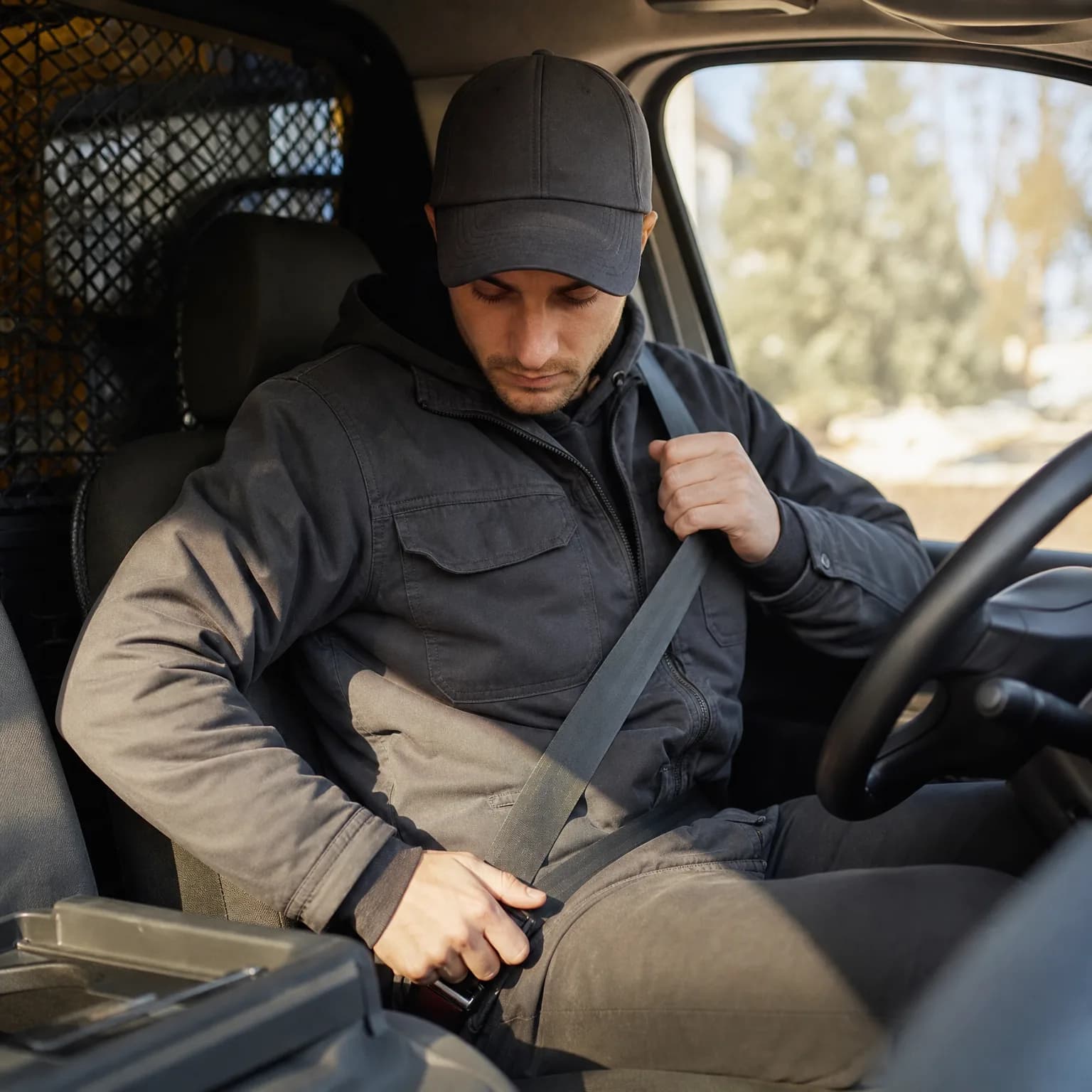
What a realistic total cost stack looks like for a West Virginia CDL holder reinstating after an insurance lapse suspension
Base reinstatement fee: $50. DUI surcharge (if applicable): verify current amount with WV DMV, typically $100–$200 depending on offense tier. SR-22 filing fee: $25–$50 one-time. SR-22 insurance premiums: $140–$190/month for 36 months, totaling $5,040–$6,840. Ignition interlock device (if required): $75–$125/month for 12–24 months depending on offense, totaling $900–$3,000. Total cost range: $6,015–$10,140 over the full reinstatement and compliance period.
This stack assumes first-offense DUI with mandatory interlock and no additional violations. Second or subsequent offenses trigger longer interlock periods and higher surcharges. The largest variable is SR-22 insurance duration — because it runs three years from filing date regardless of when interlock ends, late filing adds 12–18 months of unnecessary premiums.
Commercial drivers often ask whether they can avoid SR-22 by surrendering their personal vehicle registration and relying on employer-provided commercial vehicles. West Virginia requires SR-22 for license reinstatement, not vehicle registration. Surrendering your registration does not waive the SR-22 filing requirement; you'll need a non-owner SR-22 policy if you no longer own a personal vehicle.

CDL-specific reinstatement steps after clearing the insurance lapse hold
Paying the reinstatement fee and filing SR-22 clears the administrative suspension on your Class D (personal) license. Your CDL reinstatement requires a separate application submitted to the WV DMV commercial driver licensing unit. You'll provide proof of SR-22 filing, proof of interlock installation (if applicable), and proof of employment or intent to operate commercial vehicles.
West Virginia does not automatically reinstate your CDL when your personal license clears. The commercial licensing unit reviews each CDL reinstatement application independently and may require additional documentation depending on the suspension cause and your employer's insurance carrier requirements. Processing time is not published by the DMV; budget 15–30 business days from application submission to CDL reissuance.
If your employer terminated you during the suspension period and you're applying for CDL reinstatement without current employment, WV DMV may still process your application — but securing a new commercial driving job without an active CDL is the harder obstacle. Most carriers require an active, valid CDL before extending an offer. The reinstatement sequence matters: clear the lapse suspension, file SR-22, apply for CDL reinstatement, then begin job searching with proof of pending reinstatement.
Frequently Asked Questions
Does West Virginia require SR-22 for insurance lapse suspensions on commercial driver licenses?
Yes. West Virginia requires SR-22 filing for all insurance lapse suspensions under WV Code §17A-3-14, regardless of whether the lapse occurred on a personal or commercial vehicle. The SR-22 filing period runs three years from the date your carrier submits the certificate to the WV DMV, independent of your interlock requirement duration.
Can I reinstate my CDL without filing SR-22 if I surrender my personal vehicle registration in West Virginia?
No. West Virginia requires SR-22 for license reinstatement after an insurance lapse suspension, not vehicle registration. Surrendering your registration does not waive the SR-22 filing requirement. You'll need a non-owner SR-22 policy if you no longer own a personal vehicle but still need to clear the suspension hold.
How much does SR-22 insurance cost for CDL holders in West Virginia after a lapse suspension?
CDL holders in West Virginia typically pay $140–$190/month for SR-22 liability coverage, which is 40–60% higher than non-commercial filers due to occupational driving risk classification. Over the required three-year SR-22 filing period, total insurance cost ranges from $5,040–$6,840. Estimates based on available industry data; individual rates vary by county, driving history, and carrier.
Does the SR-22 three-year filing period start when I install the interlock device or when I file SR-22 in West Virginia?
The SR-22 three-year clock starts when your carrier files the certificate with the WV DMV, not when you install the interlock device. These are separate timelines with different start dates. Filing SR-22 late — after interlock installation — extends your total SR-22 obligation by 12–18 months because the filing period runs three years from the filing date regardless of when interlock ends.
What is the total reinstatement cost for a West Virginia CDL holder with an insurance lapse suspension and interlock requirement?
Total cost ranges from $6,015–$10,140. This includes: $50 base reinstatement fee, $100–$200 DUI surcharge (if applicable), $25–$50 SR-22 filing fee, $5,040–$6,840 in SR-22 insurance premiums over three years, and $900–$3,000 in interlock device costs over 12–24 months. The largest variable is SR-22 insurance duration, which extends 12–18 months beyond interlock removal if filing is delayed.
How long does CDL reinstatement take in West Virginia after I clear the insurance lapse hold?
Clearing the lapse suspension and filing SR-22 reinstates your personal Class D license, but your CDL requires a separate application to the WV DMV commercial driver licensing unit. Processing time is not published but typically runs 15–30 business days from application submission. Your CDL is not automatically reinstated when your personal license clears.
Can I get a restricted CDL while my insurance lapse suspension is active in West Virginia?
No. West Virginia's restricted license program (available through the ATLP for DUI offenders) applies only to personal Class D licenses, not commercial driver licenses. You cannot operate commercial vehicles on a restricted license. Full CDL reinstatement requires clearing the lapse suspension, filing SR-22, and submitting a separate CDL reinstatement application to the WV DMV commercial licensing unit.
Related Articles

WV CDL Reinstatement After Lapse: SR-22 Timing Rules
5/3/2026

WV Insurance Lapse Suspension: College Student Costs
5/3/2026

WV CDL DUI Reinstatement Costs: SR-22 & Ignition Fees
5/3/2026
WV Lapse Suspension Costs for Single Parents
5/3/2026

VA CDL Reinstatement Costs After Lapse Suspension
5/3/2026

WV CDL Reinstatement After Insurance Lapse
5/3/2026