
Utah CDL Lapse Suspension: Court Clearance & DMV Timing Gap
Free to compare
Why Your CDL Suspension Isn't Cleared When Court Records Update
Utah processes insurance lapse suspensions through two separate systems. The Driver License Division issues the administrative suspension when your carrier reports the lapse electronically. The court handles your petition for clearance or Limited License eligibility if you need restricted driving privileges during the suspension period. Most CDL holders assume filing proof of new coverage with the court automatically clears the DLD suspension—it does not.
The court updates its own database when you submit your SR-22 certificate and proof of continuous coverage going forward. The DLD maintains a parallel database of active suspensions. These systems do not cross-update in real time. Until you submit verification directly to the DLD and pay the $30 reinstatement fee, your CDL status remains suspended in the state's licensing system, even if the court shows your case as resolved.
Commercial drivers lose income during this gap because employers run MVR checks against the DLD database, not court records. Your carrier confirmation and court clearance letter are not sufficient proof for dispatch or fleet managers. You need the DLD to issue an updated driver license status showing active CDL privileges.

How Utah's Limited License Process Affects CDL Holders Differently
Utah's Limited License program is court-controlled, not DMV-administered. You petition the court for restricted driving privileges, the judge sets the route and time restrictions, and the DLD reflects the court order on your driving record. CDL holders face a complication most passenger-vehicle drivers do not: federal Motor Carrier Safety Administration regulations restrict the use of hardship or limited licenses for operating commercial vehicles in interstate commerce.
If you drive intrastate only—deliveries, construction equipment, or local hauling that never crosses state lines—your Utah court may approve a Limited License for commercial driving within those boundaries. The court has broad discretion under Utah Code § 53-3-220 and related sections. If your routes involve interstate commerce, federal law prohibits operating a CMV on a restricted license regardless of what the Utah court approves. The court order does not override FMCSA rules.
Most CDL holders petition for a Limited License that covers personal driving only—commuting to the yard, running personal errands, driving to court-ordered programs—while they complete the full reinstatement process for unrestricted CDL privileges. This keeps a valid license active during the suspension period without triggering federal conflicts. Your employer may still place you on unpaid leave if you cannot operate commercially, but the Limited License prevents additional suspensions for driving uninsured during the gap.

What Documents the DLD Requires Before Restoring CDL Status
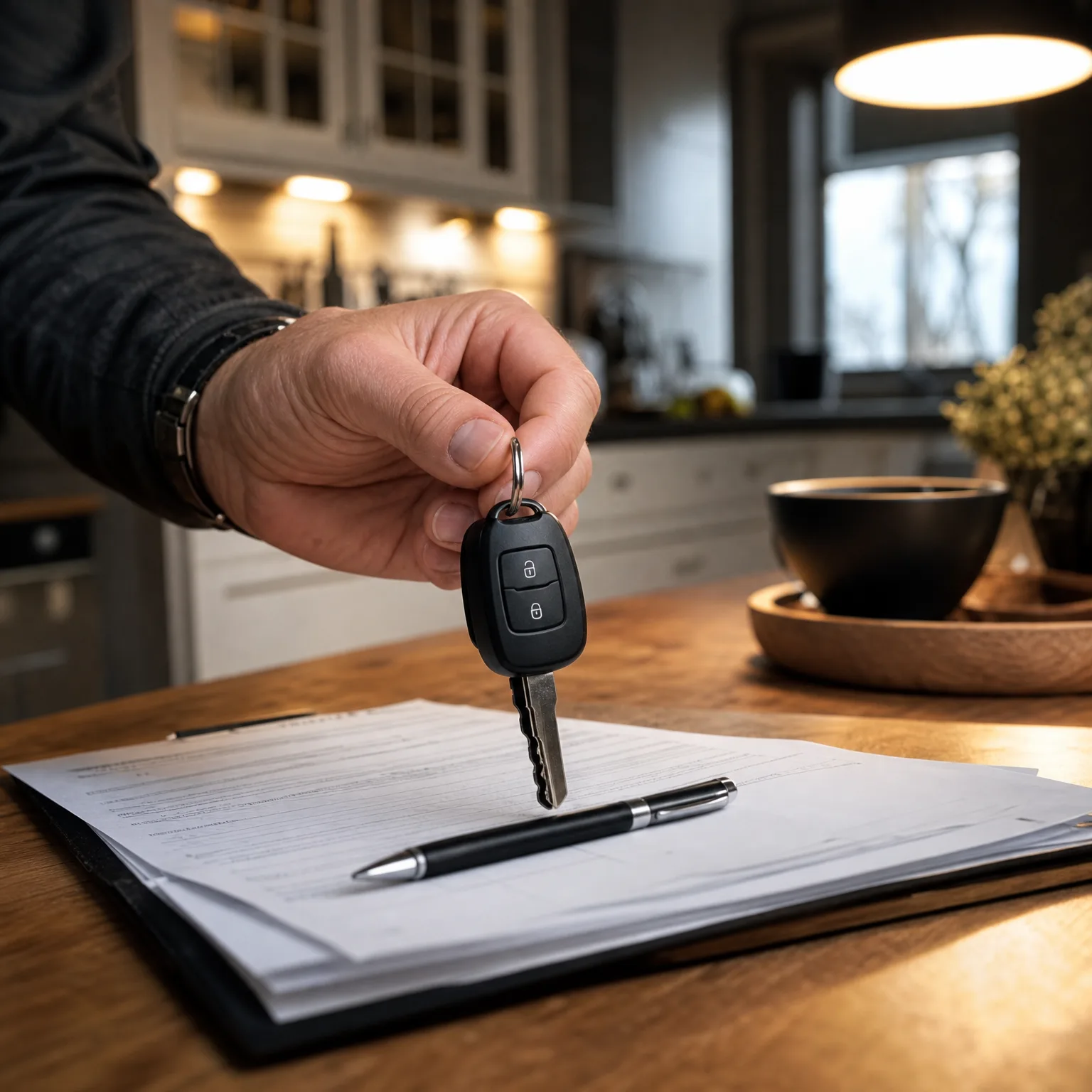
The DLD will not process your CDL reinstatement until three items appear in its system. First, proof that the underlying suspension cause is resolved—for an insurance lapse, this means an active SR-22 certificate filed by your carrier showing continuous coverage from the reinstatement date forward. Utah requires SR-22 filing for 3 years following an insurance-lapse suspension. Your carrier submits the SR-22 electronically; verify it posted to your DLD record before proceeding.
Second, payment of the $30 base reinstatement fee. This fee applies to the administrative suspension itself. If your lapse also triggered court fines, unpaid registration fees, or other penalties, those are separate and must be cleared before the DLD will accept your reinstatement application. The $30 fee is the floor, not the ceiling.
Third, verification that any court-ordered conditions are satisfied. If you were required to complete a DUI education program, install an ignition interlock device, or comply with other court mandates, the DLD needs documentation showing completion. For pure insurance-lapse suspensions without additional violations, this step typically does not apply—but confirm with the court that no secondary conditions were attached to your case. CDL holders sometimes face additional scrutiny because of the commercial driving privilege involved.

Line Up Coverage Before Your License Comes Back
Get Back on the RoadHow Long the Court-to-DLD Clearance Gap Actually Takes
Processing time between court clearance and DLD verification depends on how you submit documentation. If you mail your SR-22 proof and reinstatement fee to the DLD, expect 15 to 30 days before your record updates. In-person submission at a DLD office shortens this to same-day or next-business-day processing in most cases, though high-volume offices may take 3 to 5 business days.
The court does not automatically notify the DLD when it clears your case. You are responsible for initiating the DLD reinstatement process. Many CDL holders wait weeks assuming the systems sync automatically, then discover during an employer MVR pull that the suspension still shows active. Do not wait for the DLD to contact you—once the court issues clearance, go directly to the DLD with your documentation.
If you need to drive commercially immediately after reinstatement, schedule an in-person DLD appointment and bring printed copies of your SR-22 certificate, court clearance order, and payment. Request a temporary driving permit if your physical CDL card needs reissue. The DLD can issue updated credentials the same day if all documentation is in order and no additional flags appear on your record.

Why Non-Owner SR-22 Policies Work for CDL Reinstatement
If you do not currently own a personal vehicle, a non-owner SR-22 policy satisfies Utah's reinstatement requirement. Non-owner policies provide liability coverage when you drive vehicles you do not own—rental cars, borrowed vehicles, or in this case, employer-owned commercial vehicles. The SR-22 certificate attached to a non-owner policy meets the DLD's proof-of-financial-responsibility mandate.
Non-owner policies cost substantially less than standard auto insurance because they do not cover a specific vehicle's physical damage risk. Monthly premiums typically range from $40 to $75 for CDL holders with a lapse suspension, compared to $140 to $220 for a standard policy. You maintain the SR-22 filing for the required 3-year period, then cancel the non-owner policy once the filing obligation ends if you still do not own a vehicle.
Your employer's commercial vehicle insurance does not substitute for the SR-22 requirement. The DLD requires proof that you personally carry liability coverage, separate from any employer-provided policy. Even if you drive only company-owned trucks, you need an individual SR-22 filing in your name to clear the suspension and restore your CDL.

What Happens If You Drive Commercially Before DLD Clearance Posts
Operating a commercial vehicle while your CDL is administratively suspended—even if the court has cleared your case—triggers a separate violation under Utah Code § 53-3-227. Law enforcement and DOT inspectors verify license status against the DLD database in real time during traffic stops and weigh station checks. Your court paperwork will not prevent a citation if the DLD system still shows an active suspension.
A conviction for driving on a suspended CDL adds a mandatory 90-day disqualification under federal regulations, separate from any state penalties. This disqualification applies even if the underlying suspension was for a non-driving offense like an insurance lapse. CDL disqualifications follow you across state lines and appear on your FMCSA record, making future employment significantly harder.
Employers face liability exposure if they allow a driver with a suspended CDL to operate commercially. Most carriers run MVR checks before every dispatch or on a recurring schedule. If your suspension shows active in the DLD system, dispatch will not clear you to drive regardless of what your court documents say. Wait for DLD verification to post before resuming commercial driving, even if it costs you a few days of income.
Frequently Asked Questions
Can I get a Limited License in Utah if I only need to drive commercially, not personally?
Utah courts may approve a Limited License for intrastate commercial driving only, but federal FMCSA regulations prohibit operating a CMV in interstate commerce on any restricted license. Most CDL holders petition for a Limited License covering personal driving during the suspension period while completing full reinstatement for unrestricted commercial privileges. The court has discretion under Utah Code § 53-3-220, but your petition must align with federal rules if your routes cross state lines.
Does my employer's commercial auto insurance count as proof of coverage for DLD reinstatement?
No. Utah requires an SR-22 certificate filed in your name as proof of personal financial responsibility. Your employer's policy covering the commercial vehicle does not satisfy this requirement. You need an individual SR-22 filing, which you can obtain through a non-owner policy if you do not own a personal vehicle.
How do I know when the DLD has actually cleared my CDL suspension?
Request a current driver license status report directly from the Utah Driver License Division after submitting your reinstatement documentation. The report will show whether the suspension is cleared and your CDL privileges are active. Do not rely on court clearance alone—verify the DLD database reflects the update before resuming commercial driving or accepting dispatch assignments.
What happens to my CDL if I move to another state before clearing the Utah suspension?
Your Utah suspension follows you through the National Driver Register and Problem Driver Pointer System. You cannot obtain a CDL in another state until Utah clears the administrative suspension and reports the clearance to the interstate databases. Complete the Utah reinstatement process, including SR-22 filing and DLD verification, before applying for an out-of-state CDL transfer.
How long do I have to maintain SR-22 filing after my CDL is reinstated?
Utah requires 3 years of continuous SR-22 filing following an insurance-lapse suspension, measured from the reinstatement date. If your SR-22 lapses during this period, the DLD will suspend your license again automatically. Maintain the filing for the full 3-year term even if you change carriers or states—transfer the SR-22 to your new policy rather than allowing it to cancel.
Related Articles

Utah CDL Unpaid Tickets: SR-22 Timing & Lapse Gaps
5/3/2026
Utah CDL Reinstatement After Failure-to-Appear Warrant
5/3/2026
Utah CDL Unpaid Ticket Suspension: Court & DMV Timing
5/3/2026

Utah CDL Reinstatement After Failure-to-Appear Warrant
5/3/2026

Utah CDL Lapse Suspension: SR-22 Filing Order & Timeline
5/3/2026

Utah CDL Reinstatement Costs After Insurance Lapse
5/3/2026