
SD CDL Reinstatement After Insurance Lapse: Filing Sequence
Free to compare
Why South Dakota suspends CDL holders' registrations before their licenses
South Dakota's electronic insurance verification system under SDCL 32-35 triggers vehicle registration suspension the moment your carrier reports a lapse in required liability coverage. Your CDL remains valid during this initial period, but your vehicle registration is suspended immediately.
The Division of Motor Vehicles then issues a separate driver license suspension 30-60 days later if you haven't reinstated your vehicle registration and filed proof of continuous insurance. CDL holders face the same timeline as private-vehicle drivers, but the commercial stakes are higher—most employers terminate within 72 hours of learning about a license suspension, and federal Motor Carrier Safety Administration hours-of-service logs create a documented employment gap that recruiters scrutinize.
Under SDCL 32-35-113, operating an uninsured motor vehicle in South Dakota is a misdemeanor. The registration suspension is the state's mechanism to prevent uninsured operation. Your CDL suspension follows only if you don't cure the registration issue within the notice period.
The registration-clearance bottleneck that delays most CDL reinstatements
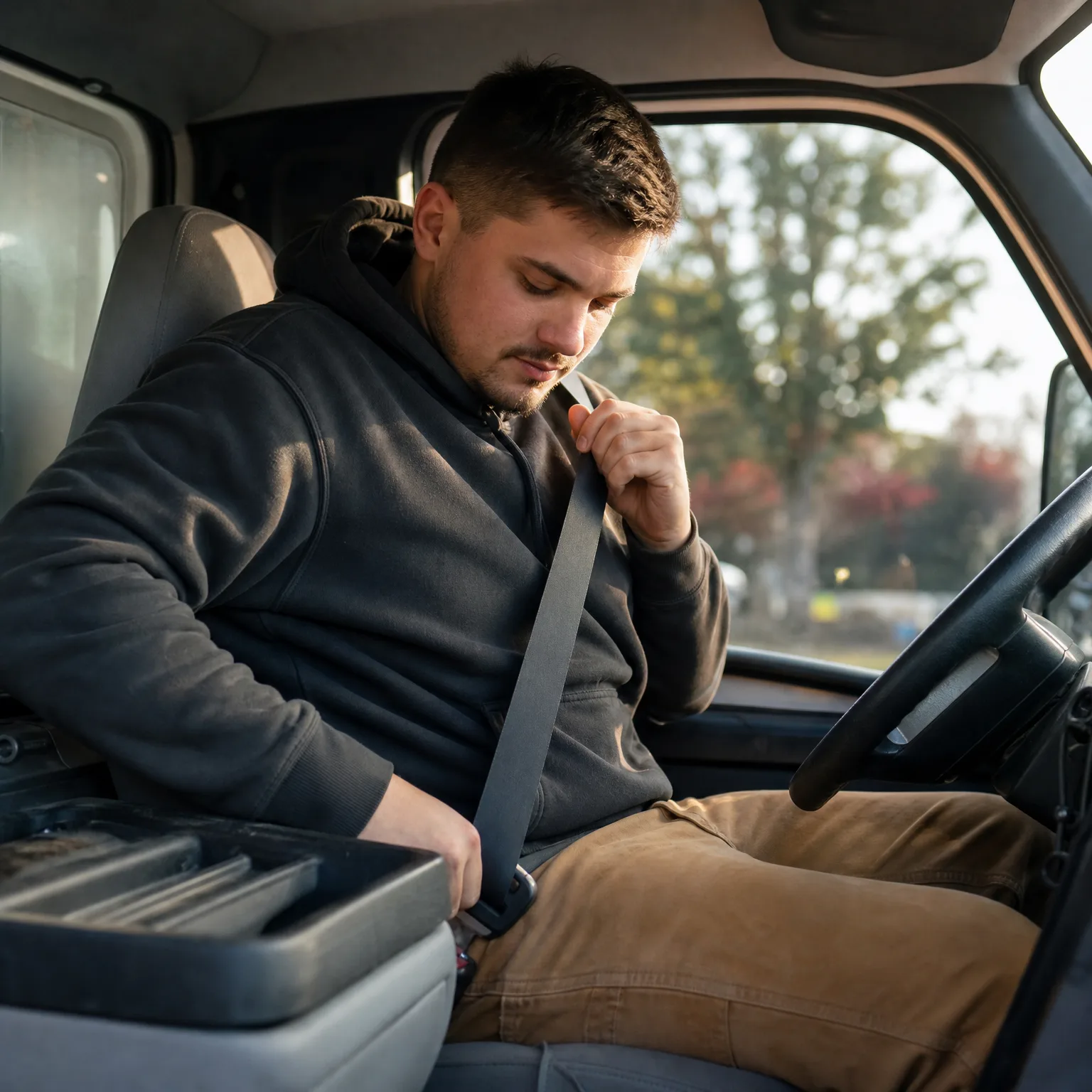
South Dakota requires you to surrender your license plates and registration to the county treasurer's office when your vehicle registration is suspended for insurance lapse. You cannot file SR-22 and reinstate your driver license until the plate surrender is processed and recorded in the state's system.
Most CDL holders purchase SR-22 coverage immediately after receiving the suspension notice, then attempt to file with the Division of Motor Vehicles. The DMV rejects the filing because the registration suspension is still active in the system. You then surrender your plates, but county processing takes 7-14 business days to post to the state database. Your SR-22 sits unfiled during this entire window.
The correct sequence: surrender plates to your county treasurer first, wait for confirmation that the registration suspension has been lifted in the state system, then file SR-22 and pay the $50 reinstatement fee. Filing SR-22 before plate clearance posts adds 14-21 days to your total downtime because you must restart the SR-22 filing process after the registration issue clears.


How long South Dakota requires SR-22 filing after insurance lapse reinstatement
Three years from the date of reinstatement. South Dakota requires continuous SR-22 filing for insurance lapse suspensions, measured from the day your license is reinstated, not the day the lapse occurred or the day you purchased coverage.
If your SR-22 lapses at any point during the three-year period, the Division of Motor Vehicles suspends your license again automatically. Your carrier is required to notify the state electronically within 15 days of policy cancellation or lapse. The second suspension carries the same reinstatement fee and plate-surrender process, but some counties flag repeat offenders for in-person verification interviews before processing plate returns.
CDL holders cannot reduce the three-year period by maintaining continuous coverage without SR-22 filing. The clock starts only when SR-22 is filed and active. Many commercial drivers assume that purchasing liability coverage and driving clean for six months will reset the requirement—it does not. The SR-22 filing obligation remains in effect for the full three years regardless of subsequent driving record.
Non-owner SR-22 options for CDL holders between jobs or driving employer-owned equipment
If you do not own a vehicle or drive only employer-owned commercial equipment, you can satisfy South Dakota's SR-22 requirement with a non-owner SR-22 policy. Non-owner policies provide liability coverage when you drive a vehicle you do not own, and the SR-22 certificate filed with the policy meets the state's proof-of-insurance requirement for license reinstatement.
Non-owner SR-22 premiums in South Dakota typically range from $45-$75 per month for CDL holders with clean records aside from the insurance lapse. Drivers with additional violations or a DUI on record pay $90-$160 per month. These rates reflect high-risk classification due to the suspension, not the non-owner policy structure itself.
Non-owner policies do not cover vehicles you own or vehicles furnished for your regular use. If you purchase a vehicle during the SR-22 filing period, you must convert to an owner policy and refile SR-22 under the new policy. The three-year clock does not reset, but any gap in SR-22 coverage between the non-owner policy cancellation and the owner policy effective date triggers automatic suspension.

Line Up Coverage Before Your License Comes Back
Get Back on the Road
What happens if your CDL suspension crosses state lines during the SR-22 period
South Dakota participates in the Driver License Compact and the Commercial Driver License Information System. If you move to another state during your three-year SR-22 filing period, the suspension and SR-22 requirement follow you. The new state's licensing agency will see the South Dakota suspension on your record and require proof of SR-22 filing before issuing a new license.
You must maintain SR-22 filing in the state where you hold a license. If you transfer your CDL to Montana, for example, you must obtain Montana SR-22 coverage and file with Montana's Motor Vehicle Division. South Dakota's Division of Motor Vehicles will not reinstate your privilege to drive in South Dakota until you complete the full three-year SR-22 period, regardless of where you now hold a license.
Some CDL holders attempt to circumvent the SR-22 requirement by transferring their license to a state with less restrictive filing rules. The CDLIS flags this as license shopping, and FMCSA regulations require employers to verify your complete driving record across all states where you have held a license in the past three years. The suspension appears on your Pre-Employment Screening Program report regardless of where your current license is issued.

Why most carriers charge CDL holders 40-60% more for SR-22 than private-vehicle drivers
Insurance carriers classify CDL holders as higher-risk for SR-22 policies because commercial drivers are held to stricter standards under federal safety regulations. A CDL holder with an insurance lapse suspension signals underwriting risk beyond what the lapse itself represents—it suggests financial instability or administrative non-compliance that could extend to vehicle maintenance, hours-of-service logs, or cargo documentation.
South Dakota does not regulate SR-22 premium rates separately from standard auto insurance rates. Carriers price SR-22 based on their filed rating algorithms, which incorporate license class, violation history, and employment status. CDL holders with steady employment and no additional violations pay 30-50% more than baseline rates. CDL holders with gaps in employment or additional moving violations pay 70-120% more.
SR-22 filing fees in South Dakota range from $15-$50 depending on the carrier, charged once at policy inception. This is separate from the $50 state reinstatement fee. Budget carriers (Bristol West, The General, Acceptance) charge lower filing fees but higher monthly premiums. Regional carriers charge higher filing fees but sometimes offer lower monthly rates for CDL holders with stable employment.
Finding SR-22 coverage that meets South Dakota's filing requirements
Not all carriers write SR-22 policies for CDL holders in South Dakota. National carriers like State Farm and Allstate often decline SR-22 applications from commercial drivers due to underwriting restrictions. Regional non-standard carriers and national high-risk specialists are your primary options.
Carriers active in South Dakota's SR-22 market for CDL holders include Progressive, The General, Bristol West, Acceptance, and National General. Monthly premiums vary by $40-$90 between carriers for identical coverage limits, depending on how each carrier's algorithm weights CDL class and suspension cause.
Compare quotes from at least three carriers before selecting a policy. The lowest monthly premium is not always the best long-term value—some carriers impose mid-term rate increases at the six-month renewal for drivers who filed SR-22 at policy inception. Ask whether the quoted rate is guaranteed for 12 months or subject to adjustment at the first renewal. Compare SR-22 quotes from carriers licensed in South Dakota to find coverage that meets your filing requirement without mid-term surprises.
Frequently Asked Questions
Can I drive a commercial vehicle while my CDL is suspended for insurance lapse in South Dakota?
No. Operating a commercial motor vehicle with a suspended CDL violates federal Motor Carrier Safety Administration regulations and South Dakota law. Your employer is prohibited from allowing you to drive, and doing so subjects both you and the carrier to civil penalties and out-of-service orders.
Does South Dakota require ignition interlock devices for CDL reinstatement after insurance lapse?
No. Ignition interlock device installation is required only for DUI-related suspensions under South Dakota's IID program (SDCL 32-23-44). Insurance lapse suspensions require SR-22 filing and payment of the $50 reinstatement fee, but no IID installation.
Will my SR-22 requirement show up on my FMCSA Pre-Employment Screening Program report?
The underlying suspension will appear on your PSP report for three years. The SR-22 filing itself is not reported to FMCSA, but the insurance lapse suspension is a reportable event under CDLIS. Prospective employers reviewing your PSP will see the suspension and its cause.
Can I get a restricted license to drive for work while my CDL is suspended in South Dakota?
South Dakota circuit courts can grant restricted driving privileges for non-commercial driving during a suspension, but federal regulations prohibit restricted commercial driving privileges for CDL holders. You cannot operate a commercial motor vehicle under any circumstances while your CDL is suspended, even with a court-granted restriction.
How long does it take to reinstate a CDL in South Dakota after filing SR-22?
Once SR-22 is filed and the $50 reinstatement fee is paid, the Division of Motor Vehicles processes CDL reinstatements within 3-5 business days if all other requirements are satisfied. Delays occur when registration suspension has not been cleared or when county plate surrender has not posted to the state system.
What happens if I let my SR-22 lapse during the three-year filing period?
Your carrier notifies the South Dakota Division of Motor Vehicles electronically within 15 days of policy cancellation or lapse. The DMV suspends your CDL automatically, and you must restart the reinstatement process—surrender plates, pay the $50 fee again, and refile SR-22 under a new policy.
Related Articles

SD CDL Reinstatement After Unpaid Tickets: SR-22 Rules
5/3/2026

SD CDL Reinstatement Costs After Insurance Lapse
5/3/2026

SD CDL Reinstatement After Insurance Lapse
5/3/2026

ND CDL Reinstatement After Insurance Lapse Suspension
5/3/2026

SD Lapse Reinstatement for Students: SR-22 Timing
5/3/2026
SD Lapse Suspension: Court & DMV Clearance Timing
5/3/2026