
NH Insurance Lapse Suspension for Rideshare Drivers: SR-22 Timing
Free to compare
Why New Hampshire's Insurance Lapse Suspension Is Different for Rideshare Drivers
New Hampshire does not require auto insurance as a baseline condition of driving. You trigger financial responsibility requirements only after specific events: an at-fault accident, a DUI conviction, or a lapse in court-ordered or DMV-ordered coverage. If you were driving for Uber or Lyft and allowed your commercial rideshare policy to lapse, the state suspension follows only if you were already under a financial responsibility order from a prior event.
Most rideshare drivers assume the lapse itself creates the suspension. It does not. The suspension stems from violating an existing SR-22 filing requirement or failing to maintain financial responsibility after a triggering event. If you had no prior DUI, no at-fault uninsured accident, and no court order to maintain coverage, the lapse does not trigger state administrative action under New Hampshire law.
The confusion compounds because Uber and Lyft require continuous personal auto coverage as a platform eligibility condition. Your rideshare account deactivation happens immediately when your carrier cancels your policy. The state suspension, if applicable, follows weeks later when the DMV processes the lapse notification from your insurer. This creates two parallel timelines: platform eligibility and legal driving status. Most drivers conflate them and waste time addressing the wrong one first.
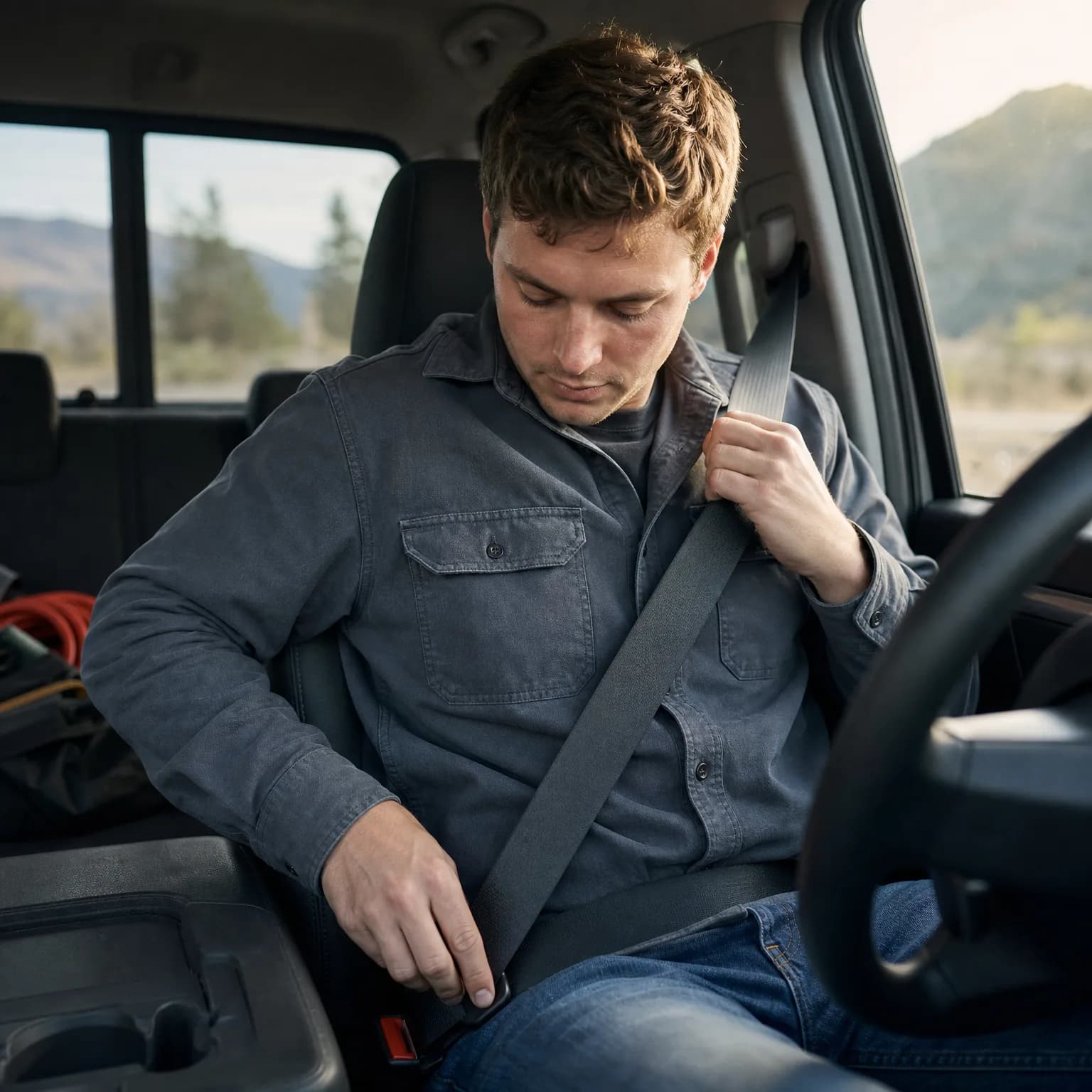
How SR-22 Filing Timing Works Under New Hampshire's Financial Responsibility Rules
New Hampshire requires SR-22 filing only when a court or the DMV orders you to maintain financial responsibility. For rideshare drivers, this happens most commonly after a DUI conviction or after an at-fault accident while uninsured. The filing demonstrates continuous coverage to the state, not proof of a minimum liability amount.
When your carrier cancels your policy, they notify the DMV electronically. The grace period for lapse notification is not clearly codified in publicly available statute, but the DMV acts on the notification within days. If you are under an SR-22 requirement, the lapse triggers suspension. The reinstatement process requires filing a new SR-22, paying the $100 reinstatement fee under RSA 263:42, and proving continuous coverage moving forward.
The filing date matters because New Hampshire calculates the SR-22 duration from the conviction or triggering event, not from the filing date. If your DUI conviction occurred three years ago and you file SR-22 today, your obligation ends immediately once reinstatement processes. If the conviction was six months ago, you owe two and a half more years of continuous SR-22 coverage. Missing this distinction costs drivers thousands in unnecessary premiums because they assume all SR-22 filings carry a flat three-year term.


New Hampshire's Non-Insurance Financial Responsibility Alternatives for Rideshare Drivers
New Hampshire law allows three pathways to satisfy financial responsibility requirements: SR-22 insurance filing, a surety bond of approximately $75,000, or a cash deposit with the state. Most rideshare drivers default to SR-22 because carriers market it aggressively and the bond or deposit options are rarely disclosed during reinstatement.
The bond option costs a fraction of high-risk insurance premiums if you qualify. A surety bond does not require proof of insurability, only proof of financial stability. If your driving record makes SR-22 insurance prohibitively expensive—common after multiple violations or a commercial driving incident—the bond becomes the cheaper reinstatement path. The bond does not satisfy Uber or Lyft's platform insurance requirement, but it clears the state reinstatement condition and allows you to drive legally while you rebuild your record and reapply to rideshare platforms later.
The cash deposit option requires tying up $75,000 with the state for the duration of your financial responsibility period. Few drivers have that liquidity, but if you do, the deposit avoids insurance premium increases entirely. The state returns the deposit with interest once your obligation period ends and no claims were filed against it. This path makes sense only for drivers with capital who plan to leave rideshare work permanently but need legal driving privileges for personal or employment use.
Lapse-Gap Documentation Rules for Rideshare Insurance in New Hampshire
New Hampshire's DMV requires proof of continuous coverage from the date your prior policy lapsed to the date you file your new SR-22. If your rideshare policy canceled on June 1 and you file SR-22 on June 15, you need documentation showing coverage for those 14 days. Most carriers will not backdate an SR-22 filing, which creates a gap you cannot close with standard insurance.
The workaround is a non-owner SR-22 policy filed the same day your rideshare policy cancels. Non-owner policies do not insure a specific vehicle—they certify that you carry liability coverage as a named driver. For rideshare drivers who no longer own a vehicle or who cannot afford to insure the vehicle they were using for platform work, non-owner SR-22 is the only viable reinstatement path. The policy satisfies the state's filing requirement without requiring vehicle registration or a vehicle listed on the policy.
If you already have a coverage gap, some carriers will issue a retroactive SR-22 filing for up to 30 days prior to the application date, but this is carrier-specific and requires underwriting approval. Most will not backdate beyond two weeks. If your gap exceeds what a carrier will cover, you face an extended suspension period while you establish continuous coverage moving forward. The DMV does not waive gap periods—you serve the full suspension, then file SR-22 and restart the reinstatement clock.

Line Up Coverage Before Your License Comes Back
Get Back on the Road
How DUI-Related SR-22 Requirements Interact with Rideshare Platform Reapproval
If your lapse suspension stems from a DUI conviction, New Hampshire requires SR-22 filing as a reinstatement condition, and you must also complete or enroll in the Impaired Driver Care Management Program (IDCMP) under state law. IDCMP clearance is a prerequisite to license restoration, not a concurrent requirement. The program involves multi-phase assessment and treatment, and the DMV will not process your reinstatement until you submit proof of enrollment or completion.
Rideshare platforms impose a separate seven-year lookback period for DUI convictions. Even if you clear your state suspension and maintain SR-22 coverage, Uber and Lyft will deny platform reapproval if your conviction falls within that window. The SR-22 filing does not accelerate platform eligibility—it only restores your legal driving status. Most drivers waste money filing SR-22 and paying high-risk premiums without realizing they cannot return to rideshare work for years.
Ignition interlock device installation is mandatory for DUI offenders seeking reinstatement in New Hampshire, even after the hard suspension period ends. The interlock period length varies by offense count and BAC level. You cannot file SR-22 until the IID provider submits installation verification to the DMV. The SR-22 filing and IID installation are not simultaneous—IID comes first, then SR-22, then reinstatement. This sequence adds 30 to 60 days to most timelines because drivers attempt to file SR-22 before the interlock is installed, triggering application rejection and forcing a restart.

Restricted Driving Privilege Eligibility for Rideshare Drivers in New Hampshire
New Hampshire offers a Restricted Driving Privilege during suspension for eligible drivers. The privilege allows limited driving for work, medical, and essential purposes. For rideshare drivers, the restricted privilege does not permit commercial driving—you cannot use it to fulfill Uber or Lyft trips. The restriction is personal-use only, which makes it useless for platform income but valuable if you need to drive to a different job while suspended.
Eligibility requires petitioning the court for DUI-based suspensions or applying to the DMV for administrative suspensions. The application path is dual: some suspensions allow DMV application, others require court petition. DUI suspensions require court approval. The court retains jurisdiction over restricted driving privilege petitions for DWI-based suspensions, not the DMV. For a first DWI offense, a nine-month hard suspension typically must be served before restricted privilege eligibility under RSA 265-A:30.
The restricted privilege requires ignition interlock installation in most cases under RSA 265-A:36. The interlock cost—installation, monthly monitoring, and removal—runs $1,200 to $2,500 over the restriction period. You also pay the restricted privilege application fee, though the specific fee amount is not confirmed from canonical DMV sources and varies by case. If your goal is returning to rideshare work, the restricted privilege does not advance that timeline. It only provides legal personal driving while you serve the commercial driving ban.
What Rideshare Drivers Should Do After an Insurance Lapse Suspension in New Hampshire
Verify whether you are under an existing financial responsibility order. If you have no prior DUI, no at-fault uninsured accident, and no court-ordered SR-22 requirement, the insurance lapse does not trigger state suspension. Your rideshare platform deactivation is a separate issue governed by Uber or Lyft policy, not state law. Reinstating platform eligibility requires filing new insurance and contacting the platform's driver support team—not the DMV.
If you are under an SR-22 requirement, file a new SR-22 policy immediately. The longer the lapse, the longer your reinstatement timeline. Non-owner SR-22 policies cost less than standard vehicle policies and satisfy the state's filing requirement without requiring vehicle ownership. If your lapse created a coverage gap, disclose it to the carrier during application—some will issue retroactive filings for short gaps, but most will not backdate beyond 14 days.
Pay the $100 reinstatement fee and submit all required documentation to the DMV. For DUI-related suspensions, include proof of IDCMP enrollment or completion and IID installation verification. The DMV processes reinstatements within weeks if all documentation is complete. Missing any single document restarts the processing clock. If your suspension includes a hard suspension period, you cannot reinstate early regardless of SR-22 filing—serve the full term, then apply.
Frequently Asked Questions
Does New Hampshire require SR-22 filing after every insurance lapse?
No. New Hampshire requires SR-22 filing only if you are already under a financial responsibility order from a prior DUI, at-fault uninsured accident, or court mandate. If you have no existing order, an insurance lapse does not trigger SR-22 requirements or state suspension.
Can I use a restricted driving privilege to drive for Uber or Lyft in New Hampshire?
No. New Hampshire's Restricted Driving Privilege permits driving only for personal purposes such as work commutes, medical appointments, and essential errands. Commercial rideshare driving is not an approved use under the restriction.
How long does New Hampshire require SR-22 filing after a DUI conviction?
New Hampshire requires SR-22 filing for three years from the DUI conviction date. The clock starts at conviction, not at the filing date, so if you file SR-22 two years after your conviction, your obligation ends in one year.
What happens if I have a coverage gap between my old policy cancellation and my new SR-22 filing?
The DMV requires proof of continuous coverage. Most carriers will not backdate SR-22 filings beyond 14 days. If your gap exceeds what a carrier will cover, you serve an extended suspension period and must establish continuous coverage moving forward before reinstatement.
Can I satisfy New Hampshire's financial responsibility requirement without buying insurance?
Yes. New Hampshire allows a surety bond of approximately $75,000 or a cash deposit with the state as alternatives to SR-22 insurance. The bond or deposit clears the state reinstatement condition but does not satisfy rideshare platform insurance requirements.
How long after filing SR-22 does New Hampshire process reinstatement?
The DMV processes reinstatements within weeks if all documentation is complete, including the $100 reinstatement fee, SR-22 filing, IDCMP enrollment proof for DUI cases, and ignition interlock installation verification. Missing any document restarts the processing timeline.
Do I need to install an ignition interlock device before I can file SR-22 in New Hampshire?
Yes, for DUI-related suspensions. The IID provider must submit installation verification to the DMV before the state will accept your SR-22 filing. Attempting to file SR-22 before interlock installation causes application rejection and delays reinstatement by 30 to 60 days.
Related Articles
NH Child Support Reinstatement for Rideshare Drivers
5/3/2026

MA Rideshare SR-22: Reinstate After Insurance Lapse
5/3/2026
NH Child Support Reinstatement Costs for Rideshare
5/3/2026
NH Rideshare SR-22 After Failure-to-Appear Warrant
5/3/2026

NH Rideshare SR-22 After Unpaid Tickets: Filing Order
5/3/2026

RI Rideshare SR-22 After Lapse Suspension: Filing Order
5/3/2026