
Indiana CDL Suspension Reinstatement: Fee Stack & SR-22 Markup
Free to compare
What Indiana Charges to Reinstate After an Insurance Lapse Suspension
Indiana BMV assesses a $250 base reinstatement fee for insurance lapse suspensions under IC 9-30-4. This applies when your insurer reports a cancellation to the INSPECT system and the BMV cannot verify replacement coverage within the monitoring window.
For CDL holders, the $250 covers your personal Class C driving privilege only. Restoring your commercial driving privilege requires a separate CDL reinstatement transaction, which carries its own $250 fee—even if both suspensions stem from the same lapse event. The BMV processes these as distinct license classes with independent fee schedules.
If your suspension involved multiple violations—say, an insurance lapse plus unpaid fines—Indiana stacks fees rather than consolidating them. A lapse suspension ($250) combined with a failure-to-appear warrant ($250) results in a $500 total reinstatement cost before you address insurance or SR-22 filing.

Why SR-22 Filing Adds $25-$75 Before Carrier Premium Increases
Indiana requires SR-22 proof of financial responsibility for insurance lapse suspensions lasting 90 days or longer under IC 9-25. The SR-22 itself is a certificate your insurer files with the BMV—not a separate insurance policy.
Carriers charge a one-time filing fee to submit the SR-22 certificate: $25-$50 for most national carriers, $50-$75 for non-standard insurers serving high-risk drivers. This fee covers the administrative cost of the filing and appears as a separate line item on your policy declaration page.
The filing fee is distinct from the premium increase. Once your carrier classifies you as an SR-22-required driver, your six-month premium rises $400-$900 compared to a clean-record driver with identical coverage limits. For CDL holders, the increase skews toward the higher end because commercial driver classifications already signal elevated risk in actuarial models.

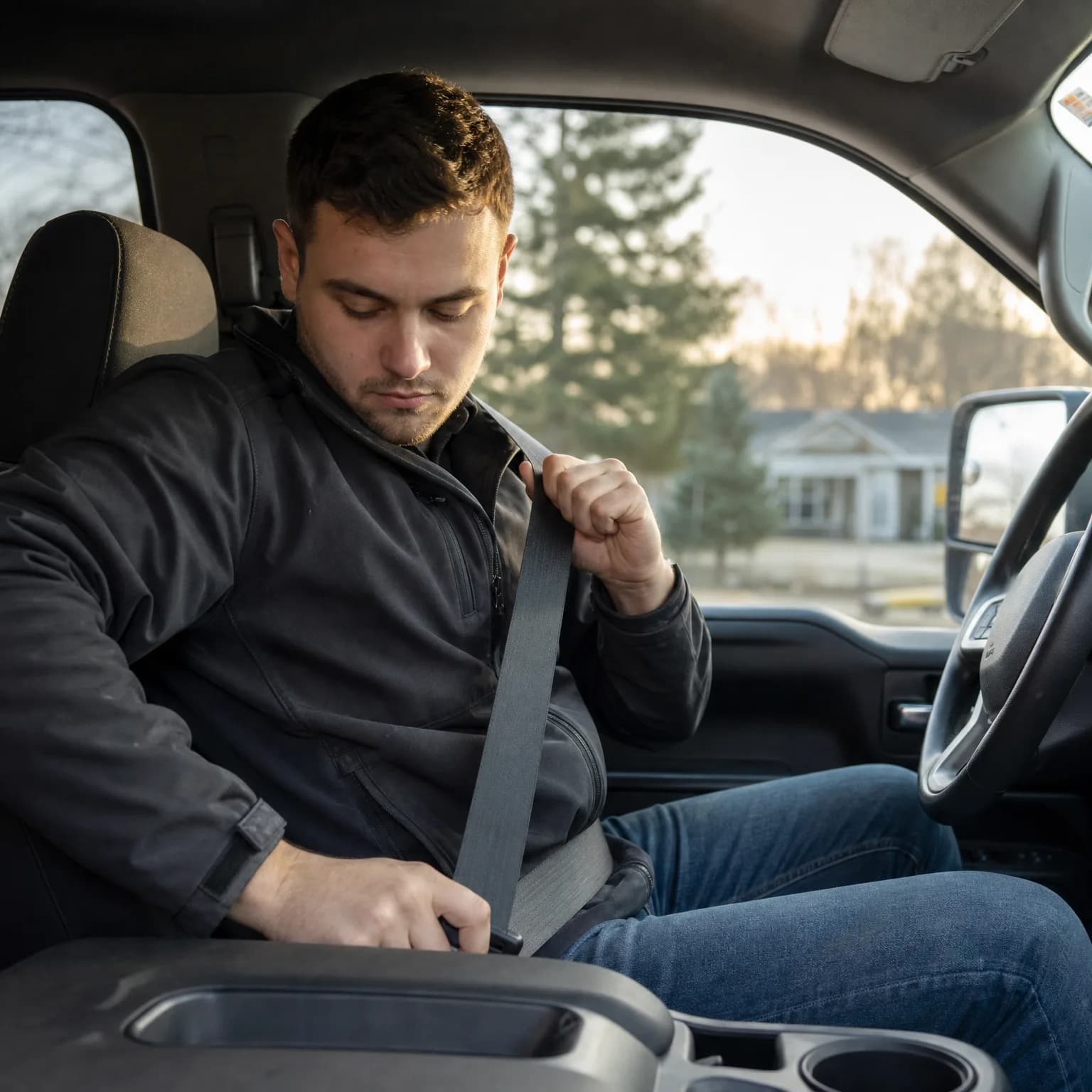
How CDL Status Amplifies Premium Markup Beyond Standard SR-22 Rates
Indiana insurers price SR-22 filings for CDL holders 30-60% higher than personal-use-only drivers. The premium differential reflects two factors: commercial drivers accumulate more annual mileage (federal hours-of-service rules permit 11-hour driving windows), and a CDL suspension signal indicates higher baseline risk because federal disqualification standards are stricter than state suspension thresholds.
A personal-use driver with a 90-day lapse suspension might pay $85-$140/month for minimum liability coverage with SR-22 in Indiana. A CDL holder with the same suspension pays $110-$200/month for identical coverage limits. The carrier applies a commercial driver underwriting surcharge even when the policy covers personal vehicles only.
Non-owner SR-22 policies—coverage for drivers without a registered vehicle—follow the same pricing structure. If you sold your personal vehicle during the suspension but need SR-22 to reinstate your CDL, expect non-owner premiums of $95-$175/month. The CDL markup applies whether you own a vehicle or not.
The Three-Transaction Sequence Most CDL Holders Miss
Indiana's reinstatement process requires three separate financial transactions in a specific order. Pay the BMV reinstatement fee first—your SR-22 filing won't post to the INSPECT system until the BMV shows your account as cleared for compliance processing. Carriers verify fee payment status before submitting the certificate.
Once the BMV processes your $250 personal reinstatement fee, purchase an SR-22 policy and confirm your insurer files the certificate electronically. Indiana law mandates continuous SR-22 coverage for three years from the reinstatement date. If your policy lapses during that period, the BMV suspends your license again and the three-year clock resets from zero.
After your personal license shows active status on the BMV portal (typically 3-5 business days after SR-22 filing), pay the second $250 CDL reinstatement fee. The BMV will not process CDL reinstatement until your personal Class C license clears suspension status. Drivers who pay the CDL fee first discover the transaction is rejected, forcing them to re-submit and wait another processing cycle.

Line Up Coverage Before Your License Comes Back
Get Back on the Road
What Probationary License Eligibility Means for CDL Holders During Suspension
Indiana offers Probationary Licenses (also called Specialized Driving Privileges under IC 9-30-16 in court-ordered contexts) for drivers with active suspensions who demonstrate essential driving need. Eligibility depends on suspension cause—insurance lapse suspensions qualify, but the BMV or court may deny probationary privileges if you have unpaid fines or child support arrears.
CDL holders face a restriction: probationary licenses authorize personal driving only (work commute, medical appointments, religious activities). You cannot operate commercial vehicles under a probationary license. If your livelihood depends on CDL operation, the probationary license provides no income-restoration path—you must complete full reinstatement before resuming commercial work.
Probationary license applications require proof of employment, SR-22 filing, and a completed BMV application. Indiana does not publish a specific application fee for probationary licenses in statute—county BMV branches report fees ranging from $0 to $50 depending on local administrative rules. For insurance lapse suspensions, ignition interlock device installation is not required unless your suspension also involves an OWI conviction.

How to Budget the Full Cost Stack Before You Start the Process
Calculate total reinstatement cost as BMV fees plus SR-22 filing plus six months of elevated premiums. For a CDL holder with a 90-day insurance lapse suspension and no other violations, the stack is: $250 personal reinstatement + $250 CDL reinstatement + $50 SR-22 filing fee + $660-$1,200 for six months of coverage = $1,210-$1,750 total before your license is fully restored.
If you apply for a probationary license during the suspension, add $0-$50 for the application and front-load the SR-22 filing cost—probationary privileges require active SR-22 coverage before approval. Drivers who wait until full reinstatement to purchase SR-22 save no money; the three-year filing period starts when the BMV processes your reinstatement, not when the suspension began.
Carriers offering SR-22 policies in Indiana include Bristol West, The General, Direct Auto, National General, and Progressive. Quote all five—premiums for identical coverage limits vary by $40-$90/month depending on underwriting model. Non-owner SR-22 policies cost 15-25% less than owner-operator policies because the carrier assumes lower per-mile exposure.
Where the Cost Stack Hits Hardest for Owner-Operators
Owner-operators suspended for insurance lapse face compounded costs because most commercial truck insurance policies exclude SR-22 filings. You must maintain two separate policies: a personal SR-22 policy to satisfy Indiana BMV requirements, and a commercial truck policy to meet federal motor carrier insurance mandates under 49 CFR 387.
The personal SR-22 policy costs $510-$1,200 for six months. The commercial policy—assuming you own or lease a truck—costs $4,000-$9,000 annually for minimum $750,000 liability limits. Carriers do not consolidate these into a single policy, and the SR-22 suspension history elevates your commercial policy premium by 20-40% compared to a clean-record operator.
If you lease through a motor carrier, confirm whether your carrier's occupational accident policy allows drivers with active SR-22 filings. Some lease agreements disqualify drivers with suspension history during the SR-22 maintenance period, forcing you to wait three years before resuming owner-operator work or switching to company-driver employment until the filing requirement expires.
Frequently Asked Questions
Can I get SR-22 insurance if I don't own a car but need to reinstate my CDL in Indiana?
Yes. Non-owner SR-22 policies provide liability coverage without requiring vehicle ownership and satisfy Indiana BMV filing requirements. Expect premiums of $95-$175/month for CDL holders—about 30% higher than personal-use-only drivers due to commercial underwriting surcharges.
Does paying the Indiana BMV reinstatement fee clear both my personal license and my CDL?
No. Indiana processes personal Class C and CDL reinstatements as separate transactions, each requiring a $250 fee. You must pay the personal reinstatement fee first, confirm your Class C license clears suspension, then pay the CDL reinstatement fee.
How long do I have to keep SR-22 insurance after reinstating my license in Indiana?
Indiana requires continuous SR-22 coverage for three years from your reinstatement date under IC 9-25. If your policy lapses at any point during that period, the BMV suspends your license again and the three-year requirement resets from zero.
Will my commercial truck insurance carrier file SR-22 for my personal license suspension?
No. Commercial truck insurance policies exclude SR-22 filings. You must purchase a separate personal SR-22 policy to satisfy Indiana BMV requirements, even if the suspension stems from a lapse in your personal vehicle coverage.
Can I drive commercially under an Indiana probationary license during my CDL suspension?
No. Indiana probationary licenses authorize personal driving only—work commute, medical appointments, religious activities. You cannot operate commercial vehicles under probationary privileges. Full CDL reinstatement is required before resuming commercial work.
What happens if I can't afford to pay both the personal and CDL reinstatement fees at the same time?
Pay the personal $250 fee first and purchase SR-22 coverage to restore your Class C license. Once that clears, save for the CDL fee. Your personal license will remain active as long as you maintain SR-22, but you cannot operate commercial vehicles until the CDL reinstatement processes.
Do I need an ignition interlock device to reinstate my CDL after an insurance lapse suspension in Indiana?
Not for insurance lapse suspensions alone. Indiana requires ignition interlock only for OWI-related suspensions. If your suspension involves both an insurance lapse and an OWI conviction, the interlock requirement applies and must be installed before SR-22 filing.
Related Articles

Indiana CDL DUI Reinstatement Costs: Full Fee Stack
5/3/2026

Indiana CDL Unpaid Ticket Suspension: Real Cost Stack
5/3/2026

Indiana Lapse Suspension Cost: SR-22 + BMV Fees
5/3/2026

Indiana CDL Reinstatement After FTA Warrant: Cost Stack
5/3/2026

Indiana Lapse Suspension Costs for College Students
5/3/2026

Indiana Rideshare SR-22 Reinstatement Costs (Real Stack)
5/3/2026