
Indiana CDL Reinstatement After Insurance Lapse: Court and DMV Timing
Free to compare
Why Your CDL Reinstatement Takes Longer Than Passenger License Reinstatement
Indiana BMV processes commercial driver's license reinstatements through a separate verification pipeline that includes National Driver Register clearance, even when the underlying suspension was purely administrative. Your passenger-vehicle counterpart walks out with a reinstated license the day their SR-22 posts and reinstatement fee clears. You wait 10-14 business days after those same steps while the BMV submits your clearance request to NDR, receives confirmation, and manually updates your CDL status.
This delay exists because federal Motor Carrier Safety Regulations require interstate commercial driving privilege verification before any state can reinstate a CDL. Indiana BMV does not control NDR processing speed. The federal database runs batch updates, not real-time queries, which means your file sits in queue even when your state-level compliance is complete.
Most CDL holders discover this gap when they attempt to schedule a road test or skills verification appointment immediately after paying their reinstatement fee. BMV scheduling systems block appointments until NDR clearance posts, but the agency does not proactively notify you when clearance arrives. You must check your MyBMV account or call the Commercial Driver License Division directly to confirm NDR status before scheduling.

The Three-Entity Clearance Sequence Indiana Requires
Indiana's insurance lapse suspension reinstatement requires coordinating clearances from your insurance carrier, the court system, and BMV in a specific order. File SR-22 before your court holds clear and BMV rejects the filing because their system flags unresolved compliance issues. Pay your reinstatement fee before SR-22 posts and you burn $250 on a transaction BMV will not process.
The correct sequence: court clears all failure-to-comply holds first, then your carrier files SR-22 with Indiana BMV, then you pay the $250 reinstatement fee plus any outstanding suspension fees. BMV will not accept payment until both court clearance and SR-22 filing show active in their system. This creates a coordination problem most drivers miss because court clearance does not automatically trigger BMV notification.
Indiana courts submit clearance notices to BMV electronically, but the transfer occurs in daily batches, not real-time. If your court hearing concludes at 2 PM and you drive to a BMV branch at 4 PM, the system will not reflect your clearance yet. Allow 2-3 business days after your court order is signed before attempting to pay reinstatement fees. Calling the BMV License Reinstatement Division at 317-233-6000 confirms whether court clearance has posted before you make the trip.


SR-22 Filing Requirements for CDL Holders After Insurance Lapse
Indiana requires SR-22 filing for any insurance lapse suspension, regardless of vehicle type or license class. Your carrier must file Indiana Form SR-22 directly with BMV showing continuous coverage for the next 3 years from the filing date. This is not 3 years from your suspension date or conviction date—the clock starts when your carrier's filing hits the BMV database.
Commercial drivers cannot satisfy SR-22 requirements with a non-owner policy if they operate a commercial vehicle as part of their employment. Non-owner SR-22 covers liability when you drive vehicles you do not own, but federal Motor Carrier Safety Regulations require commercial operators to maintain coverage on the specific vehicle they operate. If you drive a company-owned truck, your employer's commercial auto policy must name you as a covered driver AND your personal SR-22 must remain active. Indiana BMV verifies both.
If you do not currently drive commercially and need SR-22 only to satisfy the reinstatement requirement, a non-owner SR-22 policy costs approximately $30-$60 per month in Indiana. Standard SR-22 policies with a personal vehicle typically run $140-$190 per month depending on your county and driving history. Estimates based on available industry data; individual rates vary by driving history, vehicle, coverage selections, and location.
What Happens Between Court Clearance and BMV Approval
Court clearance does not equal reinstatement eligibility. Indiana's reinstatement process treats court compliance as one prerequisite among several. After your court signs the clearance order, the clerk's office submits an electronic notice to BMV's compliance database. This submission occurs in batches processed once per business day, typically overnight.
Once court clearance posts to BMV, your SR-22 filing must show active in the same system before BMV will accept your reinstatement fee payment. Carriers submit SR-22 filings electronically, but processing occurs in batches similar to court clearances. If your carrier files SR-22 at 3 PM on a Thursday, BMV's system will not reflect that filing until Friday morning at the earliest. Attempting to pay your reinstatement fee before both clearances post wastes a trip and delays your timeline further.
CDL holders face an additional verification step after reinstatement fee payment clears. BMV submits your information to the National Driver Register for interstate clearance verification. This step happens automatically once your fee posts, but NDR operates on batch processing cycles that add 10-14 business days. During this window, your MyBMV account will show reinstatement fee paid but CDL status will remain suspended. No amount of calling or visiting a branch accelerates NDR processing—the federal database does not accept expedite requests from state agencies.

Line Up Coverage Before Your License Comes Back
Get Back on the Road
How to Confirm Each Clearance Before Paying Fees
Call the BMV License Reinstatement Division at 317-233-6000 before making any payment. The automated MyBMV portal does not always reflect real-time court or SR-22 clearance status, and attempting to pay before all prerequisites clear generates a system rejection that does not refund your transaction fee.
When you call, confirm three specific items: court clearance posted to your driver record, SR-22 filing shows active with your current carrier's name, and your total reinstatement fee amount including any outstanding suspension or administrative fees. BMV representatives can see clearance status in real-time that the public portal does not display. Write down the confirmation number and representative name in case discrepancies appear later.
Once all three confirmations come back affirmative, pay your reinstatement fee online through MyBMV or at any BMV branch. Online payments post faster than in-person payments because branch transactions require manual data entry that introduces processing delays. After payment posts, CDL holders must wait for NDR clearance before scheduling any skills tests or endorsement renewals. Check your MyBMV account every 3-4 business days or call the Commercial Driver License Division at 317-233-6000 to confirm NDR clearance has arrived.
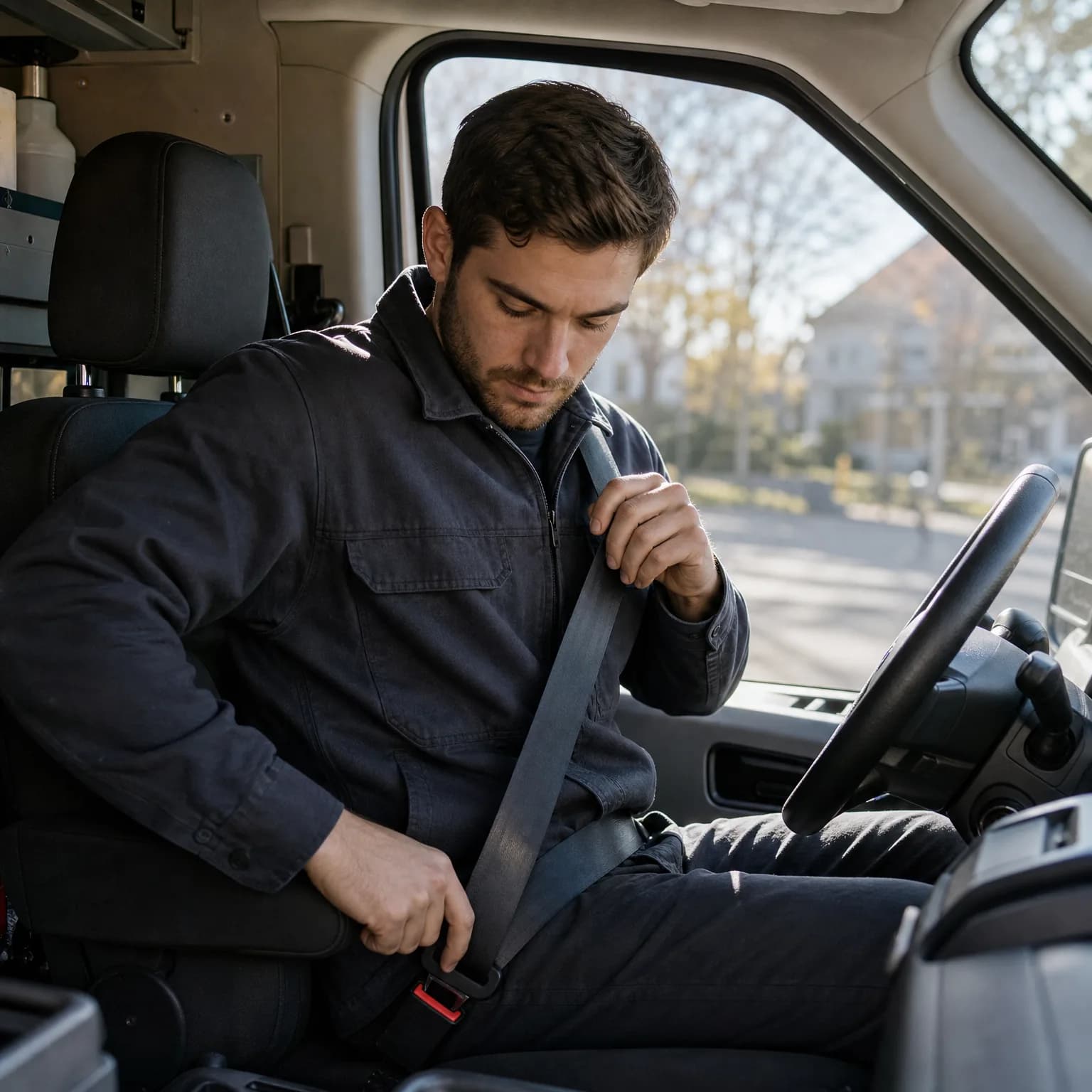
What to Do If Your Employer Needs Immediate Verification
Your employer's HR department or fleet manager may require proof of reinstatement eligibility before allowing you to return to a commercial driving role. Indiana BMV does not issue provisional clearance letters or partial reinstatement documentation during the NDR verification window. Your license status remains suspended in all state and federal databases until NDR clearance completes.
Request a certified driving record from BMV once your reinstatement fee posts. This record will show fee payment date and SR-22 compliance status, which demonstrates you have completed Indiana's state-level requirements even though CDL privileges remain suspended pending federal clearance. Some employers accept this as sufficient proof that reinstatement is in process. Others require full clearance before returning you to a driving assignment.
If your employer cannot wait 10-14 business days for NDR clearance, ask whether non-driving duties are available during the waiting period. Federal regulations prohibit operating a commercial motor vehicle with a suspended CDL regardless of state-level compliance status. No amount of documentation or employer verification overrides that prohibition. Driving commercially before your CDL shows fully reinstated in FMCSA databases exposes both you and your employer to federal Motor Carrier Safety violations.
How Long SR-22 Filing Must Remain Active After Reinstatement
Indiana requires 3 years of continuous SR-22 filing from the date your carrier submits the original SR-22 form to BMV. If your SR-22 lapses at any point during that 3-year period—because you cancel your policy, switch carriers without filing a new SR-22, or miss a premium payment—BMV suspends your license again immediately.
Carrier notification of SR-22 lapse triggers an automatic suspension notice from BMV. You receive no grace period and no warning before suspension takes effect. If you drive commercially during a lapse suspension, you accrue both state driving-under-suspension charges and federal Motor Carrier Safety violations. Reinstating after a lapse-during-SR-22-period suspension costs another $250 fee plus a new 3-year SR-22 filing period that starts from scratch.
Set a calendar reminder for 30 days before your SR-22 end date. Contact your carrier at that point to confirm whether Indiana requires SR-22 termination paperwork or whether the filing simply expires. Some states require carriers to file SR-26 termination forms; Indiana does not, but your carrier may file one anyway as part of their standard process. Verify your license status through MyBMV 7-10 days after your SR-22 period ends to confirm BMV has not flagged any compliance issues.
Frequently Asked Questions
Can I reinstate my Indiana CDL without SR-22 if the suspension was only for insurance lapse?
No. Indiana requires SR-22 filing for all insurance lapse suspensions regardless of license class. Your CDL reinstatement will not process until BMV shows active SR-22 coverage filed by your carrier.
How long does National Driver Register clearance take for Indiana CDL reinstatement?
NDR clearance typically takes 10-14 business days after you pay your reinstatement fee. BMV submits your information to the federal database automatically, but processing occurs in batches. You cannot schedule skills tests or return to commercial driving until NDR clearance posts.
Will my employer's commercial auto policy satisfy Indiana's SR-22 requirement?
No. Indiana requires a personal SR-22 filing in your name even if you drive a company-owned vehicle covered under your employer's commercial policy. BMV verifies individual driver SR-22 compliance separately from employer fleet coverage.
What happens if I switch insurance carriers during my 3-year SR-22 period in Indiana?
Your new carrier must file a replacement SR-22 with Indiana BMV before your old policy cancels. Any gap in SR-22 coverage triggers immediate suspension. Coordinate the switch carefully to ensure continuous filing—most carriers can process SR-22 transfers within 24-48 hours if you provide your old policy details.
Can I drive commercially in other states while waiting for Indiana NDR clearance?
No. Federal Motor Carrier Safety Regulations prohibit operating a commercial vehicle across state lines with a suspended CDL. Your license status in the National Driver Register shows suspended until Indiana BMV completes NDR clearance, which means you cannot legally drive commercially in any state during that window.
Does Indiana require a CDL road test after reinstatement from insurance lapse suspension?
Indiana does not require a new road test if your suspension was purely administrative and you reinstate within the timeframe that keeps your endorsements valid. If your CDL expired during suspension or your endorsements lapsed, you must retake applicable knowledge and skills tests before BMV will issue a renewed CDL.
Related Articles

Indiana CDL DUI Reinstatement: Court and BMV Timing
5/3/2026

Indiana CDL Reinstatement: Court & BMV Timing for Tickets
5/3/2026

Indiana CDL Child Support Suspension Reinstatement
5/3/2026

Indiana CDL Warrant Suspension: Court & BMV Timing
5/3/2026

Indiana CDL SR-22 After Insurance Lapse | Timing Rules
5/3/2026

Indiana CDL DUI: SR-22 Filing Before Probationary License
5/3/2026