
Alabama CDL Insurance Lapse: SR-22 Timing & Gap Documentation
Free to compare
How Alabama's Online Insurance Verification System Flags CDL Insurance Lapses
Alabama's Online Insurance Verification System (OIVS), administered by the Alabama Law Enforcement Agency (ALEA), receives electronic reports from every insurer doing business in the state. When your carrier cancels your commercial auto policy for non-payment or voluntary termination, OIVS receives that cancellation notice within 24 to 48 hours. ALEA then flags your CDL record and initiates a suspension notice.
Most CDL holders assume the suspension starts when they receive the mailed notice. It doesn't. The suspension clock starts when OIVS processes the carrier's cancellation report, which can be 10 to 15 days before you receive any physical mail. This timing gap matters because your reinstatement SR-22 filing must cover the exact period ALEA has on record as uninsured—not the period you thought you were uninsured.
Under Alabama Code § 32-7A, ALEA can suspend both your vehicle registration and your driver license upon detecting an insurance lapse. For CDL holders, the license suspension affects both your Class A/B commercial privileges and your underlying Class D license. You cannot legally operate any vehicle—commercial or personal—until reinstatement is complete.
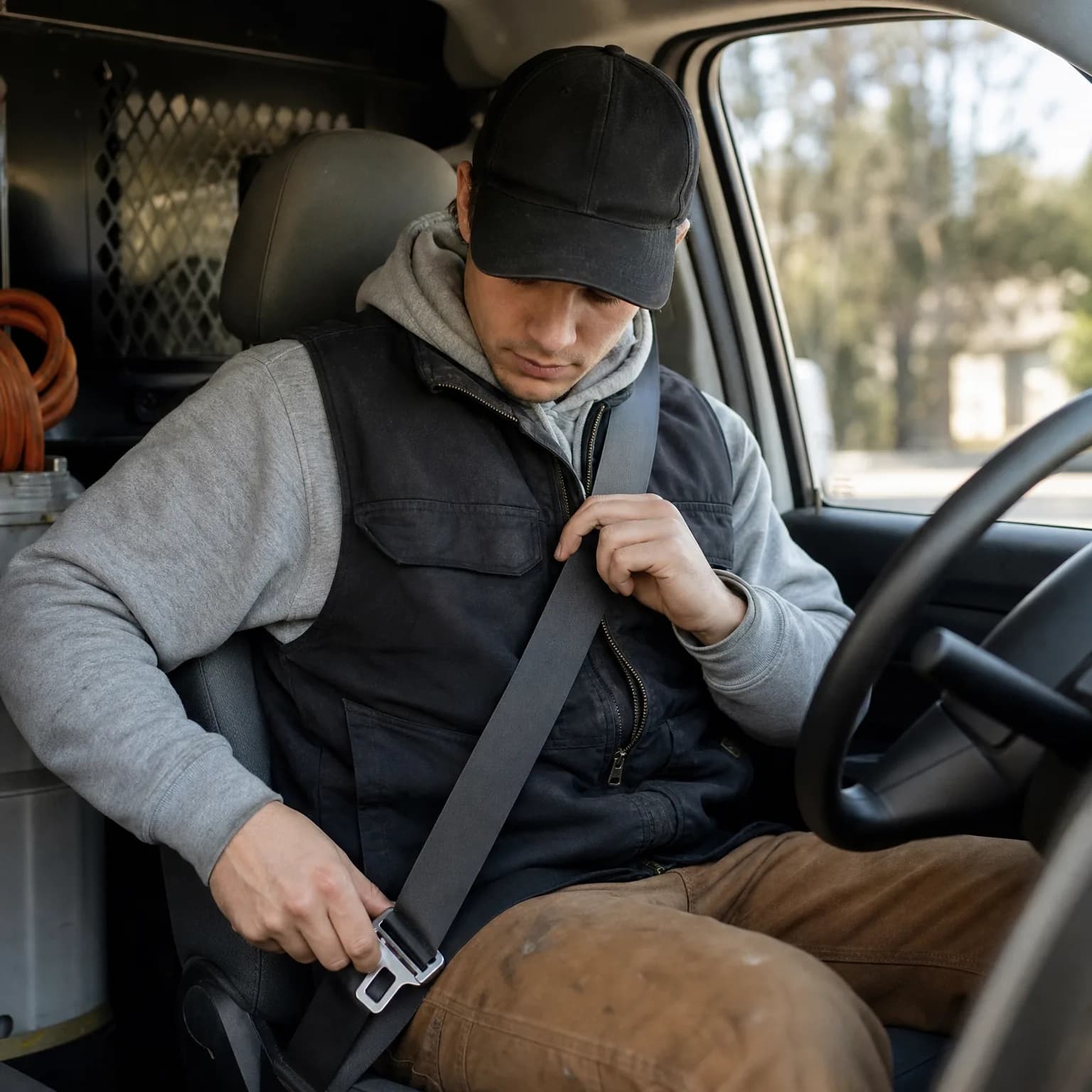
Why Filing SR-22 Before Your ALEA Lapse Record Closes Delays Reinstatement
ALEA's Driver License Division will not process your SR-22 filing until your lapse record in OIVS shows a closed date. A closed lapse record means ALEA has received proof that you obtained new coverage or reinstated your previous policy. If you file SR-22 with a new carrier on day 10 of your suspension but ALEA's system doesn't update the lapse closure until day 17, your SR-22 will sit in pending status for at least a week.
This processing delay is invisible to most drivers because ALEA does not provide real-time OIVS status to the public. Your carrier submits the SR-22 electronically, the filing shows as active in their system, and you assume reinstatement can proceed. When you arrive at an ALEA Driver License office, the clerk reviews OIVS and sees an open lapse record with no closure date. They cannot process reinstatement until the lapse shows as resolved, regardless of your SR-22 filing date.
The solution is sequence-dependent. Obtain new coverage first. Wait 3 to 5 business days for your new carrier's policy issuance report to reach OIVS. Then request SR-22 filing from that same carrier. This sequence allows ALEA's system to process the lapse closure and the SR-22 filing in the correct order, eliminating the gap that creates processing delays.


Alabama's $275 Base Reinstatement Fee Plus $200 Insurance Lapse Penalty
Alabama charges a $275 base reinstatement fee for any driver license suspension, as documented on ALEA's published fee schedules. Insurance lapse suspensions trigger an additional penalty, but the exact current amount requires verification against ALEA's Motor Vehicles Division rules—most counties report a $200 administrative fee for insurance-related suspensions, bringing your total reinstatement cost to approximately $475 before SR-22 insurance premiums.
These fees are separate from your SR-22 insurance policy cost. The $275 goes to ALEA. The lapse penalty goes to ALEA. Your SR-22 insurance premium—typically $85 to $140 per month for CDL holders with a clean record aside from the lapse—goes to your carrier. Budget for all three cost categories before initiating reinstatement.
Payment must be made in person at an ALEA Driver License office or online through the ALEA portal if your suspension qualifies for online reinstatement. Suspensions triggered solely by insurance lapse are typically eligible for online reinstatement, which saves an in-person trip. However, if you have any other active suspension, court hold, or unpaid ticket on your record, ALEA will require in-person appearance and manual review.
SR-22 Filing Duration for CDL Insurance Lapse Suspensions in Alabama
Alabama requires SR-22 filing for 3 years following reinstatement from an insurance lapse suspension. The 3-year clock starts on the date ALEA processes your reinstatement payment and SR-22 filing, not the date your carrier issued the SR-22 certificate. This distinction matters because early SR-22 filing does not shorten your total filing period.
Your carrier will monitor your SR-22 requirement and notify ALEA if you cancel your policy, let coverage lapse, or switch carriers without transferring the SR-22 filing. Any lapse or cancellation during the 3-year period triggers immediate re-suspension. ALEA does not send a warning notice—the suspension is automatic once OIVS receives the cancellation report from your carrier.
If you switch carriers during the 3-year SR-22 period, contact your new carrier before canceling your old policy. Request that the new carrier file SR-22 and confirm with ALEA that the new filing is active in OIVS before you cancel the old policy. A gap of even one day between filings will trigger re-suspension, and you will restart the entire reinstatement process including new fees.

Line Up Coverage Before Your License Comes Back
Get Back on the Road
How Lapse-Gap Documentation Affects Your CDL Reinstatement Timeline
ALEA's Driver License Division reviews lapse duration when processing CDL reinstatements. A lapse of 30 days or less is generally processed as a standard insurance lapse suspension with no additional documentation required beyond SR-22 filing and fee payment. A lapse of 31 to 90 days may trigger additional scrutiny, particularly if you hold a Class A CDL with hazmat or passenger endorsements.
If your lapse exceeded 90 days, ALEA may require proof that you were not operating any vehicle during the uninsured period. Acceptable documentation includes employment records showing you were not driving commercially, medical records if you were unable to drive, or a signed affidavit. This requirement is not clearly codified in a single statute—it reflects ALEA's administrative practice for longer lapses, particularly for CDL holders subject to Federal Motor Carrier Safety Administration oversight.
The longer your lapse, the more important it becomes to document the gap before you initiate reinstatement. Gather employment records, carrier cancellation notices showing the exact cancellation date, and your new policy's effective date before visiting an ALEA office. If you cannot document the lapse period, ALEA may impose a longer SR-22 filing period or require a CDL knowledge retest.

What Happens to Your CDL Endorsements During an Insurance Lapse Suspension
Alabama suspends your entire CDL—including all endorsements—when OIVS flags an insurance lapse. Your hazmat, tanker, doubles/triples, and passenger endorsements remain on your license record but are inactive during suspension. Upon reinstatement, endorsements are restored automatically in most cases, but hazmat endorsements expire independently of your license and may require TSA background check renewal if the suspension period caused the endorsement to lapse.
If your hazmat endorsement expired during your suspension, you cannot reinstate it as part of your CDL reinstatement process. You must complete a new TSA background check, pay the federal fingerprinting fee (currently $86.50), and pass the hazmat knowledge test again. This process adds 60 to 90 days to your return to full CDL privileges.
ALEA does not automatically notify you of endorsement expiration during suspension. Check your CDL endorsement expiration dates before initiating reinstatement. If any endorsement will expire during your suspension period, plan to renew it separately—you cannot renew endorsements while your license is suspended, but you can begin the TSA background check process for hazmat before reinstatement is complete.
Finding SR-22 Coverage as a CDL Holder After an Insurance Lapse
Most major carriers will not write new policies for CDL holders with an active insurance lapse suspension. You need a carrier willing to file SR-22 for high-risk drivers and comfortable underwriting commercial driver risk. Non-standard carriers like Progressive, The General, and Bristol West write SR-22 policies in Alabama and accept CDL holders, though premiums will be higher than standard-market rates.
If you do not currently own a vehicle, request a non-owner SR-22 policy. Non-owner policies satisfy Alabama's SR-22 requirement without insuring a specific vehicle. This is the correct option if you sold your vehicle during suspension, plan to drive a company-owned commercial vehicle after reinstatement, or will be operating under your employer's commercial auto policy once your CDL is active again.
SR-22 insurance for CDL holders after a lapse typically costs $100 to $160 per month in Alabama, depending on your age, county, and whether you need liability-only or full coverage. Non-owner SR-22 policies run $50 to $85 per month. Get quotes from at least three non-standard carriers before selecting a policy—rates vary significantly, and the lowest-cost carrier for one driver may not be the lowest for another.
Frequently Asked Questions
Can I reinstate my Alabama CDL online after an insurance lapse suspension?
Yes, if the insurance lapse is your only active suspension and you have no court holds or unpaid tickets. ALEA's online reinstatement portal processes insurance lapse suspensions without requiring an in-person visit. You will need your SR-22 certificate number, payment for the $275 base fee plus lapse penalty, and proof that your new policy is active in OIVS.
Does Alabama require SR-22 for CDL holders after an insurance lapse?
Yes. Alabama Code § 32-7A requires SR-22 filing for 3 years following reinstatement from any insurance lapse suspension, including lapses that affect CDL holders. The requirement applies whether you were driving commercially or personally when the lapse occurred.
What happens if I let my SR-22 lapse during the 3-year filing period in Alabama?
ALEA immediately re-suspends your CDL. Your carrier notifies OIVS of the cancellation or lapse electronically, and ALEA processes the suspension within 24 to 48 hours. You will restart the entire reinstatement process, including new fees and a new 3-year SR-22 filing period from the second reinstatement date.
How long does it take ALEA to process my SR-22 filing after an insurance lapse?
ALEA typically processes SR-22 filings within 3 to 5 business days after your carrier submits the electronic filing and your lapse record in OIVS shows a closure date. If you file SR-22 before the lapse closure posts, processing can take 10 to 15 days because ALEA will not accept the SR-22 until the underlying lapse is resolved in their system.
Do I need to retake the CDL knowledge test after reinstating from an insurance lapse in Alabama?
Not for standard insurance lapse suspensions under 90 days. If your lapse exceeded 90 days or ALEA cannot verify you were not operating during the uninsured period, they may require a CDL knowledge retest at their discretion. This is administrative practice, not a statutory requirement, and varies by case.
Can I drive a company-owned commercial vehicle while my personal CDL is suspended for insurance lapse?
No. Alabama suspends your entire CDL—both personal and commercial driving privileges—when OIVS flags an insurance lapse. You cannot legally operate any vehicle, including employer-owned commercial vehicles, until ALEA processes your reinstatement and your CDL shows active status.
How much does non-owner SR-22 insurance cost for CDL holders in Alabama?
$50 to $85 per month for most CDL holders after a first insurance lapse with no other violations. Non-owner policies provide liability coverage when you drive vehicles you do not own and satisfy Alabama's SR-22 filing requirement without insuring a specific vehicle.
Related Articles

Alabama CDL Reinstatement After Insurance Lapse
5/3/2026

Alabama Insurance Lapse Reinstatement for Students
5/3/2026
Alabama Rideshare SR-22 After Insurance Lapse Suspension
5/3/2026

Alabama CDL DUI Reinstatement: SR-22 & FMCSA Timing
5/3/2026

AL Child Support CDL Suspension SR-22 & Lapse Rules
5/3/2026

Alabama SR-22 Lapse Suspension: Single Parent Guide
5/3/2026