
West Virginia FTA Warrant Suspension: Court Clearance Timing
Free to compare
Why Your WV License Stays Suspended After You Clear the Warrant
West Virginia courts do not automatically notify the Division of Motor Vehicles when you resolve a failure-to-appear warrant. You handle the ticket, pay the fine, appear before the judge, and leave the courthouse believing the suspension lifts immediately. It does not.
The court clerk enters your case disposition into the county's records system. DMV operates a separate statewide database that flags your license when the original FTA notice arrives from the court. Clearing the warrant removes you from the court's active warrant list, but it does not trigger an electronic feed to DMV's suspension database. No state statute requires real-time data synchronization between county magistrate courts and the DMV central office in Charleston.
Most college students discover this gap when they try to renew registration online or when a traffic stop reveals their license still shows suspended weeks after they resolved the court case. The suspension remains active until DMV receives manual verification that the warrant no longer exists.

The Two-Step Clearance Process West Virginia Requires
Step one happens at the courthouse. You appear before the magistrate or circuit court judge, resolve the underlying charge (pay the fine, accept a plea, complete community service, or have the case dismissed), and obtain a signed court order or receipt showing the FTA warrant has been vacated or satisfied. Ask the clerk for a certified copy of the disposition order at the same visit. Many courts charge $1-$5 per certified page, but you need this document to prove closure.
Step two happens at DMV or by mail to the Charleston headquarters. West Virginia requires you to submit the certified court disposition directly to the Division of Motor Vehicles along with your reinstatement application and the $50 base reinstatement fee. If your suspension also involved other violations (DUI, uninsured driving, multiple point-related suspensions), additional fees apply and SR-22 filing may be required, but for a standalone FTA warrant suspension, the $50 reinstatement fee and proof of warrant clearance are the minimum.
DMV processes the clearance verification and updates your driver record within 5-10 business days after receiving your packet, assuming no other holds exist. If you mail the documents, add transit time. If you submit in person at a regional DMV office, the clerk uploads your documentation to the central system, but the actual reinstatement still processes through Charleston—same 5-10 day window.

Why College Students Hit This Gap More Often
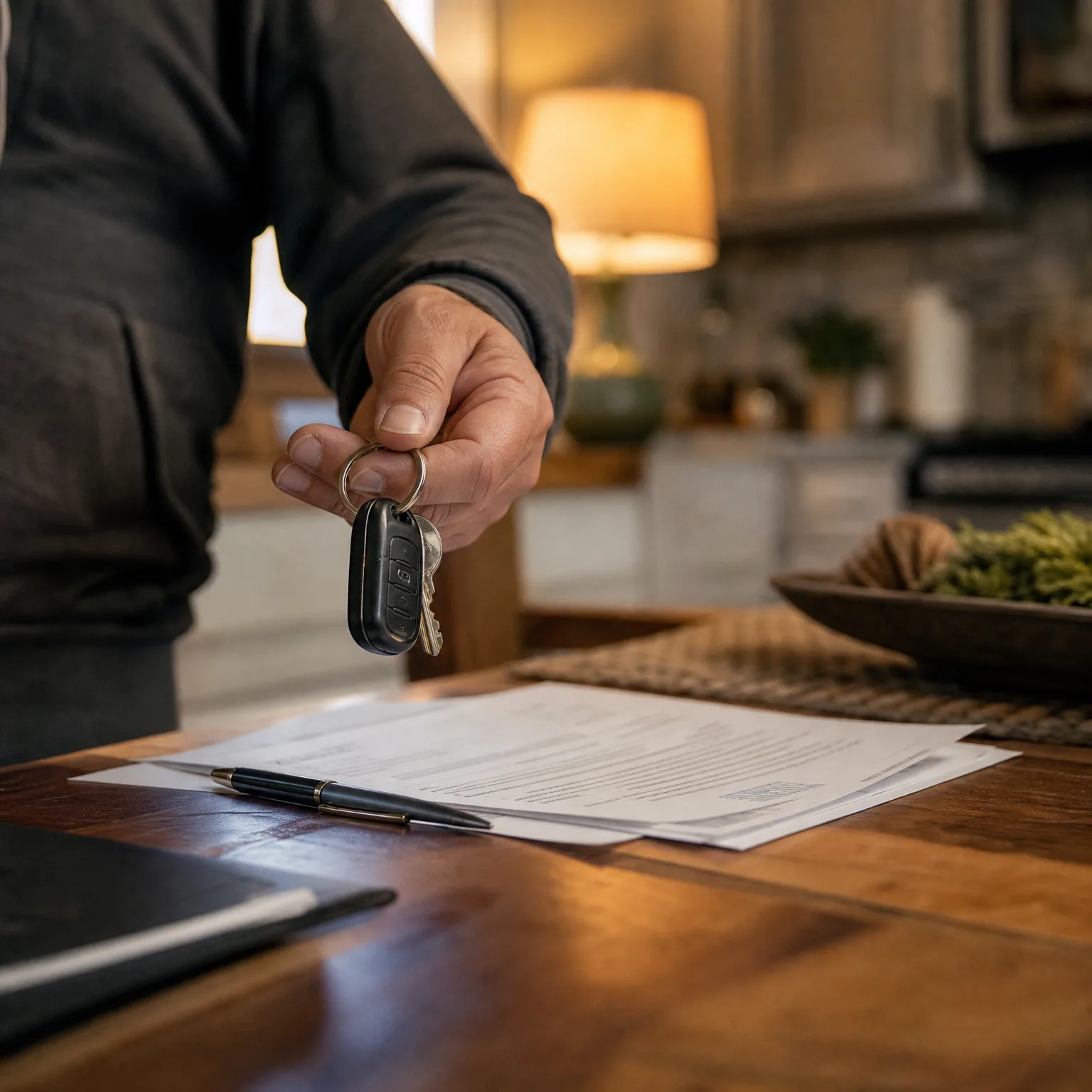
College students receive FTA notices at their parents' address while living in Morgantown, Huntington, or another campus town. The notice arrives during finals week or over winter break, gets forwarded late or not at all, and the suspension activates before they know a court date was missed. By the time the student learns about the warrant, the license has already been suspended for weeks or months.
When the student finally handles the ticket, they assume the process ends at the courthouse. Most county clerks do not proactively explain that DMV reinstatement is a separate step. The student walks out with a receipt showing the case closed, assumes their license is valid again, and continues driving. A routine traffic stop weeks later reveals the suspension is still active in DMV's system, which now adds a driving under suspension charge on top of the original offense.
West Virginia Code §17B-2-3 makes driving on a suspended license a misdemeanor punishable by a $100-$500 fine and up to six months in jail for a first offense. The fact that you cleared the underlying warrant does not retroactively excuse driving before DMV processed your reinstatement. Judges rarely impose jail time for FTA-related suspended license cases when the driver was unaware, but the conviction adds points to your record and extends your insurance consequences.

Line Up Coverage Before Your License Comes Back
Get Back on the RoadWhat Happens If You Don't File the Court Clearance With DMV
Your license remains suspended indefinitely. West Virginia DMV does not periodically audit county court records to identify resolved FTA warrants. The suspension stays on your driving record until you submit proof of clearance and pay the reinstatement fee, even if the underlying warrant was resolved years ago.
Insurance companies pull your motor vehicle record quarterly or semi-annually depending on the carrier. An active suspension flag keeps you in the high-risk pool or non-standard market, which means premiums 40-80% higher than standard rates. If you allow the suspension to remain unaddressed for more than 30 days after your previous policy expires, you create a coverage gap that most carriers treat as a separate risk factor, compounding the rate penalty.
If you need to register a vehicle, renew your current registration, or obtain a Real ID-compliant license, DMV blocks the transaction until all suspensions are cleared. The system does not distinguish between a suspension you forgot to close and one you are actively evading. Both produce the same hard stop at the counter.
How to Verify DMV Received Your Court Clearance
Call the West Virginia Division of Motor Vehicles Driver Services line at 304-926-3801 (Charleston area) or 1-800-642-9066 (toll-free). Provide your driver's license number and date of birth. The representative can confirm whether your suspension status shows active or cleared in the statewide database. This phone verification costs nothing and takes under five minutes.
If your clearance has not posted 10 business days after you submitted it, ask the DMV representative to note your inquiry and escalate the case. Occasionally documents are misfiled or lost in the mail, especially if you sent them via standard USPS without tracking. If escalation does not resolve the issue within another week, return to the courthouse where you cleared the warrant and obtain a second certified copy of the disposition order, then resubmit to DMV with a cover letter referencing your original submission date and tracking number if available.
Once DMV confirms the suspension is cleared, request a copy of your current driving record to verify no other holds exist. West Virginia provides a certified three-year driving record for $8 if requested in person or $10 if requested by mail. This record shows all suspensions, revocations, points, and convictions currently on file. If the FTA suspension is the only issue and it now shows cleared, you can proceed with insurance shopping or vehicle registration without additional DMV barriers.

Whether You Need SR-22 Filing After an FTA Warrant Suspension
West Virginia does not require SR-22 filing for standalone failure-to-appear warrant suspensions. SR-22 is a financial responsibility certificate that carriers file with DMV to prove you maintain continuous liability coverage, and the state mandates it only for specific high-risk violations: DUI/DWI convictions, uninsured motorist violations, at-fault accidents without insurance, refusal to submit to a chemical test, and habitual offender revocations under WV Code §17B-3-6.
If your FTA warrant was issued because you missed a court date for a DUI charge and you later pled guilty or were convicted, the DUI itself triggers the SR-22 requirement—not the FTA. The SR-22 filing period for a first-offense DUI in West Virginia is typically three years from the date of conviction. If your FTA was for a non-DUI offense (speeding, expired registration, failure to pay a fine), no SR-22 filing is required once you clear the warrant and reinstate your license.
Carriers will still treat the suspension period as a gap in your driving record, which raises your premiums. Expect quotes 25-50% higher than your pre-suspension rate for the first 12-18 months after reinstatement. If you were uninsured during the suspension and allowed your previous policy to lapse, that gap compounds the rate penalty. Shop at least three carriers when you reinstate—rate spreads for drivers with recent suspensions vary widely, and the carrier that offered your lowest rate before the suspension is often not the cheapest option after reinstatement.
Frequently Asked Questions
How long does it take West Virginia DMV to process a warrant clearance after I submit the court order?
West Virginia DMV typically processes warrant clearance documentation within 5-10 business days after receiving your certified court disposition order and reinstatement fee. If you mail the documents, add 3-5 days for postal transit. In-person submissions at regional DMV offices are uploaded to the Charleston central system the same day, but the actual clearance still processes on the same 5-10 day timeline.
Can I drive in West Virginia while waiting for DMV to process my court clearance?
No. Your license remains legally suspended until DMV updates your driver record to show the suspension cleared. Driving before reinstatement is processed is driving under suspension under WV Code §17B-2-3, a misdemeanor punishable by fines up to $500 and potential jail time. The fact that you already cleared the warrant at the courthouse does not excuse driving before DMV completes reinstatement.
What if I cleared my FTA warrant months ago but never filed the paperwork with DMV?
Your license remains suspended until you submit the certified court disposition and pay the reinstatement fee, regardless of how long ago you resolved the warrant. West Virginia DMV does not automatically audit county court records for closed FTA cases. Obtain a new certified copy of your disposition order from the court where you cleared the warrant and submit it to DMV along with the $50 reinstatement fee to close the suspension.
Do I need to notify my insurance company after I reinstate my license?
Yes. Most carriers pull your motor vehicle record quarterly or semi-annually, but proactive notification speeds up the transition from high-risk to standard rates. Once DMV clears your suspension, request a certified copy of your driving record and send it to your carrier to document the reinstatement. If your current carrier's post-reinstatement quote is still high, shop at least three other carriers—rate spreads for recently reinstated drivers vary significantly.
Will a failure-to-appear suspension affect my car insurance rates even after I reinstate?
Yes. Carriers treat any license suspension as a high-risk indicator, typically raising premiums 25-50% for 12-24 months after reinstatement. The suspension appears on your motor vehicle record for three years in West Virginia. If you also had a coverage lapse during the suspension period, that gap creates a second rate penalty. Expect elevated premiums until the suspension ages beyond the carrier's lookback window, usually 36 months.
Can I get a restricted license in West Virginia while my FTA suspension is still active?
West Virginia offers restricted licenses for certain suspension types (DUI, medical disqualification, points accumulation), but failure-to-appear warrant suspensions do not qualify for hardship or restricted driving privileges under WV Code §17B-3-6. The only path to reinstatement is resolving the warrant at the court level and submitting proof of clearance to DMV along with the reinstatement fee.
Related Articles

WV Failure-to-Appear Reinstatement: Court & DMV Timing
5/3/2026
WV Warrant Suspension Costs: Filing + SR-22 Breakdown
5/3/2026

WV Failure-to-Appear SR-22 Timing: Students Guide
5/3/2026

WV Unpaid Ticket Suspension: Court & DMV Timing Gap
5/3/2026

Virginia FTA Warrant: Court Clearance vs DMV Timing
5/3/2026

WV Failure-to-Appear Reinstatement: Court vs DMV Timing
5/3/2026