
Vermont FTA Warrant Clearance: Court vs DMV Verification Timing
Free to compare
Why Vermont court clearance doesn't automatically reinstate your license
Vermont operates a dual-track system for failure-to-appear warrant suspensions: the court clears the warrant, but the DMV suspends your license independently under administrative authority. Paying your court fine or appearing for your missed hearing satisfies the court's requirements, not the DMV's reinstatement conditions.
The Vermont Superior Court does not send real-time clearance notifications to the Vermont Department of Motor Vehicles. Court records update separately from DMV records, typically with a 7-14 day lag between when you resolve the warrant and when the court transmits clearance data to DMV. If you walk out of court assuming your license is valid, you're driving on a suspended license until DMV receives and processes the clearance.
Most college students discover this gap when they're pulled over during the processing window or when they try to renew their registration and learn the suspension remains active in DMV records. The court gave you proof of clearance — a stamped receipt, a dismissal order, or a payment confirmation — but that document doesn't serve as a temporary driving permit. Your license remains suspended in Vermont's driving record system until DMV updates its database.
What you must submit to Vermont DMV after clearing the warrant
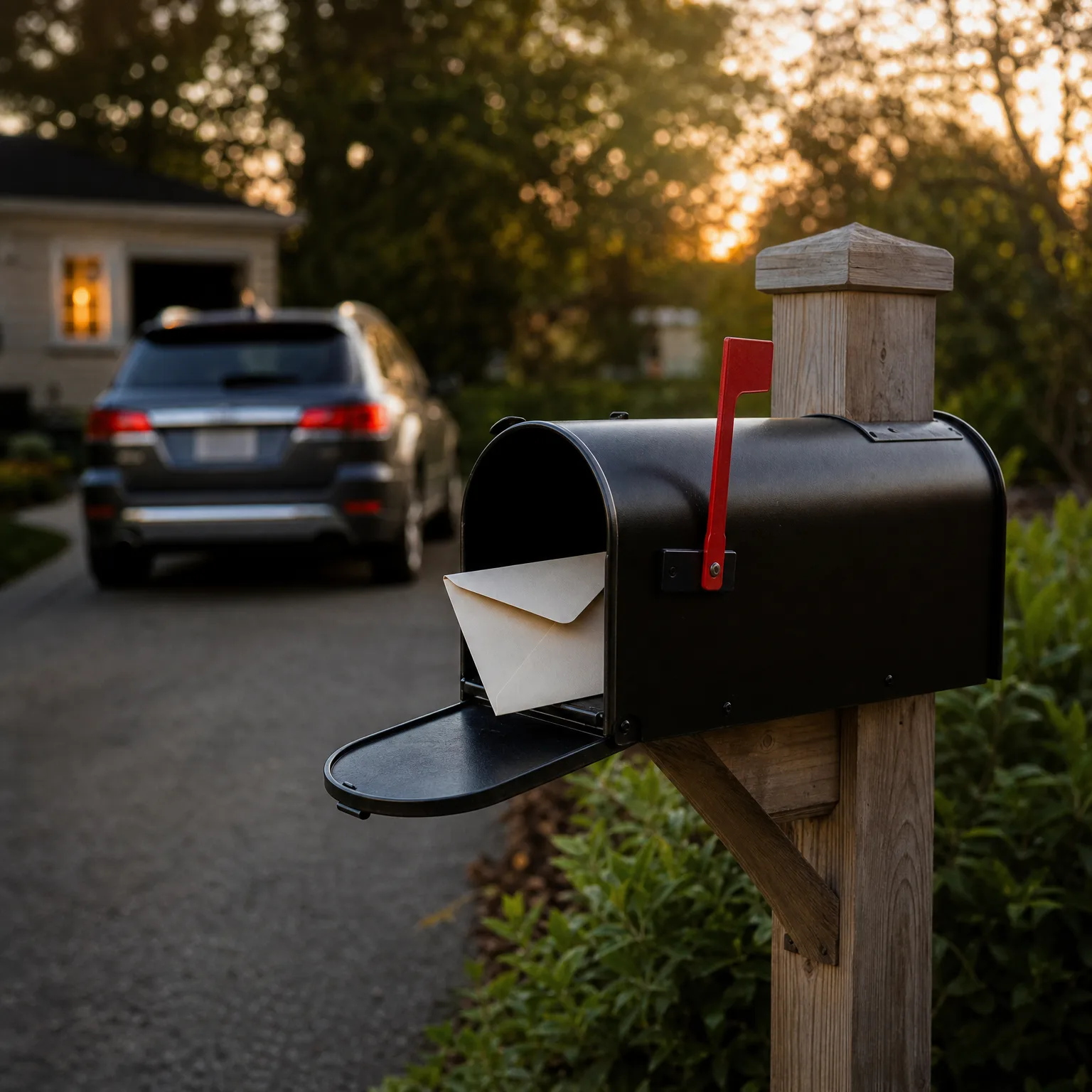
Vermont DMV requires proof of court clearance before processing reinstatement. The court does not automatically forward this proof on your behalf. You must submit documentation directly to DMV showing the warrant was resolved and any associated fines or fees were paid in full.
Acceptable proof includes: a court disposition letter confirming the case was resolved, a receipt stamped by the court clerk showing payment of all fines and fees, or a dismissal order signed by the judge. Vermont DMV will not accept verbal confirmation, phone calls from the court, or your personal statement that you resolved the matter. The documentation must come from the court itself, on court letterhead, with a clerk's signature or court seal.
Submit proof to Vermont DMV's Driver Improvement Section either in person at a Vermont DMV office or by mail to 120 State Street, Montpelier, VT 05603-0001. Mailing adds 5-10 business days to your processing timeline. If you're on campus out-of-state and can't visit a Vermont DMV office in person, mail is your only option — plan accordingly. Include your full legal name, date of birth, and Vermont driver's license number on every page you submit.
Vermont DMV does not acknowledge receipt by email or phone unless you request tracking confirmation when you mail the documents. Most students submit proof and assume reinstatement happens automatically within days. It doesn't. DMV processes clearance submissions in the order received, and processing times vary by case volume and whether your submission contains all required documentation on first review.


How long DMV verification actually takes in practice
Vermont DMV's official processing window for reinstatement after failure-to-appear warrant clearance is not published as a fixed number of days. In practice, students report verification timelines ranging from 10 days to 6 weeks depending on submission method, documentation completeness, and whether DMV requests additional information.
In-person submissions at a Vermont DMV office typically process faster because the clerk reviews your documents immediately and tells you on the spot if something is missing. You leave knowing whether your submission is complete. Mail submissions take longer because there's no real-time feedback loop — if DMV needs additional documentation, they mail a request to your address on file, you receive it 3-7 days later, you mail the missing item, and processing restarts from the beginning.
College students living on campus often use campus mailboxes or off-campus addresses that don't match their Vermont driver's license address of record. If DMV mails a request for additional documentation to your parents' address in Vermont but you're living in Massachusetts, you won't see the request until you go home for break. Meanwhile, your suspension remains active and you're driving illegally without realizing DMV is waiting on you.
The fastest path is in-person submission with all required court documentation on your first visit. If you're out-of-state and must mail, call Vermont DMV's Driver Improvement Section at 802-828-2000 after mailing to confirm receipt and ask whether your submission was complete. Don't assume silence means approval.
Vermont's $71 reinstatement fee and when you actually pay it
Vermont charges a $71 reinstatement fee for failure-to-appear warrant suspensions. This fee is separate from any court fines, court fees, or costs you paid to resolve the underlying charge. The court payment clears the warrant. The DMV fee clears the suspension.
You pay the reinstatement fee after DMV verifies your court clearance documentation, not before. Some students assume they should pay the $71 fee at the same time they submit court proof. Vermont DMV will not accept payment until your file shows clearance verification is complete. Paying early doesn't speed up processing — it creates a second transaction DMV must reconcile later, which can actually delay reinstatement if the payment gets attached to the wrong account or case number.
Once DMV completes verification, they mail a reinstatement notice to your address on file with payment instructions. You can pay online through Vermont DMV's MyDMV portal, in person at any Vermont DMV office, or by mail with a check or money order. Online payment posts immediately. Mailed checks take 5-7 business days to process after DMV receives them. Your license is not reinstated until the $71 payment posts to your account, even if verification is complete.
College students frequently miss the reinstatement notice because it's mailed to their Vermont home address, not their current campus address. If you don't see a notice within 3 weeks of submitting court clearance proof, call DMV to check your case status and ask whether payment is due. Waiting for a notice that went to the wrong mailbox adds weeks to an already slow process.

Line Up Coverage Before Your License Comes Back
Get Back on the Road
Does Vermont require SR-22 filing for failure-to-appear suspensions
Vermont does not require SR-22 certificate of financial responsibility for reinstatement after a failure-to-appear warrant suspension. SR-22 is a high-risk insurance filing triggered by DUI convictions, uninsured driving violations, or refusal to submit to chemical testing under Vermont's implied consent law. Missing a court date for a traffic ticket, even if the underlying charge was serious, does not by itself create an SR-22 filing requirement.
If the charge you failed to appear for was itself an SR-22-triggering violation — for example, you missed court for a DUI charge, then later resolved the DUI through plea or trial — the SR-22 requirement comes from the DUI conviction, not from the failure-to-appear warrant. Vermont DMV will require SR-22 filing for 3 years from the DUI conviction date as a condition of reinstatement. The failure-to-appear suspension and the DUI suspension run concurrently but have separate reinstatement requirements.
Most college students suspended for failure to appear on minor traffic charges (speeding, expired registration, equipment violations, or even reckless driving that didn't involve alcohol) do not need SR-22. You do need to maintain liability insurance that meets Vermont's minimum coverage requirements (25/50/10) to legally drive once reinstated, but you don't need to file proof with the state unless the underlying conviction triggers that requirement separately.
If you're uncertain whether your underlying charge requires SR-22, check the court disposition paperwork from your case resolution. DUI convictions, uninsured motorist violations, and refusal charges will explicitly state SR-22 filing as a condition of reinstatement. Failure-to-appear suspensions triggered by missed court dates for standard moving violations do not.
What happens if you drive before DMV processes reinstatement
Driving on a suspended license in Vermont is a criminal offense under 23 V.S.A. § 674, punishable by fines up to $500 and potential jail time for repeat offenses. Vermont law does not recognize "I paid the court and submitted proof to DMV" as a defense to driving under suspension. Your license remains legally suspended until DMV completes verification, you pay the reinstatement fee, and reinstatement posts to the state's driving record system.
College students often assume the court clearance itself reinstates driving privileges, or that mailing proof to DMV creates a grace period during processing. Neither assumption is correct. If you're pulled over between the day you clear the warrant and the day DMV reinstates your license, the officer's computer shows an active suspension. You will be cited for driving under suspension as a new criminal charge, which itself can trigger additional suspension time and create a second reinstatement cycle.
Vermont State Police and local law enforcement run real-time license checks during traffic stops. The officer doesn't see that you submitted court proof two weeks ago or that DMV is processing your case. They see the suspension flag in the system. The citation is automatic. Explaining the timeline to the officer doesn't prevent the charge — you'll have to explain it to a judge later, and Vermont judges treat driving under suspension seriously regardless of the reason.
If you're on a college campus outside Vermont and need to drive for work, classes, or emergencies during the processing window, the safest path is to avoid driving until you confirm reinstatement is complete. Call Vermont DMV at 802-828-2000 to verify your license status before getting behind the wheel. A two-minute phone call prevents a criminal charge that extends your suspension by months.
Getting insurance after reinstatement when you're a college student
Once Vermont DMV reinstates your license, you must maintain continuous liability coverage that meets state minimums to legally drive. Most college students are still listed on their parents' auto insurance policy, which covers them when they drive a family vehicle. If that's your situation, confirm with your parents' insurance agent that the policy remained active during your suspension and that you're still listed as a covered driver.
If you were removed from your parents' policy during the suspension, you'll need to be re-added before driving. Some carriers increase premiums when a listed driver has a recent suspension on their record, even if the suspension was administrative rather than violation-based. The rate increase is typically smaller for failure-to-appear suspensions than for DUI or reckless driving suspensions, but it varies by carrier. Your parents should call their agent before you drive to confirm coverage is active.
College students who own their own vehicle but don't drive it regularly while on campus may have canceled their personal policy during the suspension to save money. If that's your case, you'll need a new policy before driving post-reinstatement. Standard carriers typically offer coverage for drivers with recent administrative suspensions, though you may see higher rates for the first policy term. Rates usually normalize after 6-12 months of clean driving history.
If you don't own a vehicle and only drive occasionally when you're home from school, consider whether you need your own policy at all. Being listed on your parents' policy as an occasional driver is typically cheaper than maintaining a separate non-owner liability policy. Non-owner policies make sense for students who frequently rent cars or borrow friends' vehicles, but for most college students driving the family car a few weekends per semester, staying on the family policy is the more cost-effective option.
Frequently Asked Questions
Can I drive in Vermont immediately after paying my court fine for failure to appear?
No. Paying the court fine clears the warrant but does not reinstate your license. Vermont DMV suspends your license independently, and reinstatement requires submitting court clearance proof to DMV, waiting for verification, and paying the $71 reinstatement fee. Your license remains suspended until DMV completes all three steps.
Does the Vermont court notify DMV when I resolve a failure-to-appear warrant?
Vermont courts transmit clearance data to DMV, but the process is not real-time. Court records typically update DMV databases 7-14 days after you resolve the warrant. You must still submit proof of clearance directly to DMV to trigger reinstatement processing — the court transmission alone does not reinstate your license.
How do I check if my Vermont license is reinstated after clearing an FTA warrant?
Call Vermont DMV's Driver Improvement Section at 802-828-2000 and provide your full legal name, date of birth, and driver's license number. The representative can confirm whether verification is complete, whether the $71 reinstatement fee has been paid, and whether your license is active in the state's driving record system.
Will I need SR-22 insurance to reinstate my Vermont license after a failure-to-appear suspension?
Failure-to-appear suspensions do not require SR-22 filing unless the underlying charge you missed court for was itself an SR-22-triggering violation like DUI, uninsured driving, or test refusal. If you missed court for a standard traffic ticket, SR-22 is not required. You still need liability insurance that meets Vermont's 25/50/10 minimums.
Can I submit court clearance proof to Vermont DMV by email?
Vermont DMV does not accept court clearance documentation by email. You must submit proof in person at a Vermont DMV office or by mail to 120 State Street, Montpelier, VT 05603-0001. Mail submissions take longer to process and carry higher risk of documentation requests if anything is missing.
What happens if I move out of state while my Vermont FTA suspension is active?
Most states participate in the Driver License Compact and will honor Vermont's suspension, meaning you cannot obtain a valid license in your new state until Vermont's suspension is cleared. You must still resolve the failure-to-appear warrant with the Vermont court, submit clearance proof to Vermont DMV, and pay Vermont's reinstatement fee before applying for a license elsewhere.
Related Articles
Vermont FTA Suspension: SR-22 Timing for Students
5/3/2026
Vermont Failure-to-Appear Suspension Clearance Timing
5/3/2026
VT Unpaid Tickets Suspension: Court to DMV Clearance Gap
5/3/2026

Vermont CDL Warrant Suspension: Court & DMV Clearance
5/3/2026

Vermont CDL Reinstatement After FTA Warrant Suspension
5/3/2026
Vermont Unpaid Ticket Suspension: Court Clearance Gap
5/3/2026