
NH CDL Warrant Suspensions: Court Clearance vs DMV Timing
Free to compare
Why Your Court Clearance Doesn't Automatically Restore Your CDL
The New Hampshire Division of Motor Vehicles operates on a separate documentation track from the district and circuit courts. When you clear a failure-to-appear warrant at the courthouse, the clerk updates the court's internal case management system but does not automatically transmit that clearance to DMV's suspension database. This creates a procedural gap where your case shows resolved in court records while your CDL remains suspended in DMV records.
Most CDL holders assume paying the fine or appearing before the judge closes the entire matter. It closes the court matter. The DMV suspension requires a second step: you must obtain a certified court disposition from the clerk showing the warrant was recalled or the underlying charge resolved, then submit that document to DMV's Commercial Driver License Bureau in Concord. Until DMV receives and processes that submission, your commercial driving privilege remains suspended regardless of what the court clerk told you.
This timing gap typically runs 15-20 business days from the date you submit your court clearance proof to DMV. If you drive commercially during that window, you are operating under suspension—a disqualifying offense under federal CDL regulations that triggers minimum one-year disqualification for a first offense, permanent disqualification for a second.

The Two-Step Clearance Process CDL Holders Must Follow
Step one happens at the court where the warrant was issued. You resolve the underlying charge—typically through payment of fines, entering a plea, or appearing for the missed hearing. The clerk closes the warrant in the court's system and provides a case disposition document. Request a certified copy with the court seal at this step—DMV will not accept photocopies or unofficial printouts.
Step two requires mailing or hand-delivering that certified disposition to NH DMV Commercial Driver License Bureau, 23 Hazen Drive, Concord, NH 03305. Include your full name, date of birth, CDL number, and a brief cover letter explaining you are submitting court proof to lift a failure-to-appear suspension. DMV's processing timeline for warrant clearance submissions currently runs 15-20 business days from receipt, though this can extend during high-volume periods or if the submission is incomplete.
The $100 reinstatement fee cited in RSA 263:42 applies once DMV processes your clearance and confirms eligibility to reinstate. You cannot pay this fee until DMV updates your record to show the suspension is eligible for clearance. Attempting to pay before that point delays processing because the payment cannot post to a file still flagged with an active warrant hold.


When SR-22 Filing Is Required for CDL Warrant Suspensions
Failure-to-appear warrants themselves do not trigger SR-22 financial responsibility requirements in New Hampshire. SR-22 filings are required only after specific triggering events: DUI/DWI conviction, at-fault accident while uninsured, refusal of a chemical test, or a court or DMV order following certain violations. A warrant suspension is administrative—it exists to compel court appearance, not as a penalty for a driving-related offense.
If the underlying charge that led to the missed court date was itself a DUI, reckless driving, or uninsured operation conviction, then SR-22 filing becomes required as a condition of reinstatement—but the requirement stems from the conviction, not the warrant. In those cases, you must maintain SR-22 filing for three years from the date of reinstatement, and your carrier must file the certificate with DMV before DMV will process your reinstatement application.
Because New Hampshire does not mandate auto insurance as a baseline requirement, many CDL holders operate without personal auto coverage. If SR-22 is required and you do not own a personal vehicle, a non-owner SR-22 policy satisfies the state's financial responsibility requirement. This policy type covers you when driving vehicles you do not own—relevant for personal use but separate from your employer's commercial vehicle coverage.

Line Up Coverage Before Your License Comes Back
Get Back on the RoadHow Commercial Vehicle Coverage Interacts with Personal Reinstatement
Your employer's commercial auto liability policy covers the vehicle and your operation of it in the course of employment. That coverage does not satisfy New Hampshire's personal financial responsibility requirements when SR-22 is mandated. If your suspension involved a DUI or at-fault uninsured accident, you must maintain separate personal liability coverage or file an SR-22 bond or cash deposit with DMV.
CDL holders sometimes delay personal reinstatement because they assume their employer's coverage eliminates the need for personal filings. The two systems operate independently. DMV will not lift a personal license suspension based on commercial fleet coverage. If SR-22 is required, you must obtain it in your own name, even if you never drive a personal vehicle.
For CDL holders whose suspension was purely administrative—failure to appear with no underlying DUI or uninsured operation—reinstatement after court clearance requires only the $100 fee and submission of the certified disposition. No SR-22 filing, no insurance requirement, no proof of financial responsibility beyond what federal CDL regulations already demand for commercial operation.

Restricted Driving Privilege Availability During Warrant Suspension
New Hampshire offers a Restricted Driving Privilege for certain suspension types, including DUI and points-based suspensions. Failure-to-appear warrant suspensions are not eligible. The warrant exists to compel court appearance—granting limited driving privileges before the warrant is resolved would undermine the enforcement mechanism.
Once you resolve the warrant at the court and submit clearance proof to DMV, the suspension converts from an active warrant hold to a standard administrative suspension eligible for reinstatement. At that point, if your underlying driving record or the nature of the original charge makes you eligible for a restricted privilege under RSA 265-A:30, you may petition the court or apply through DMV depending on the suspension type. For most CDL holders, full reinstatement is the only pathway—commercial driving privileges cannot be granted on a restricted basis under federal CDL regulations.
If your warrant suspension was layered on top of an existing DUI suspension, clearing the warrant does not automatically restore driving privileges. The DUI suspension timeline continues independently. You must satisfy all DUI reinstatement conditions—IDCMP program completion or enrollment, ignition interlock device installation if required, SR-22 filing, and payment of all applicable fees—before DMV will process full reinstatement.
What Happens If You Drive Commercially Before DMV Clearance Posts
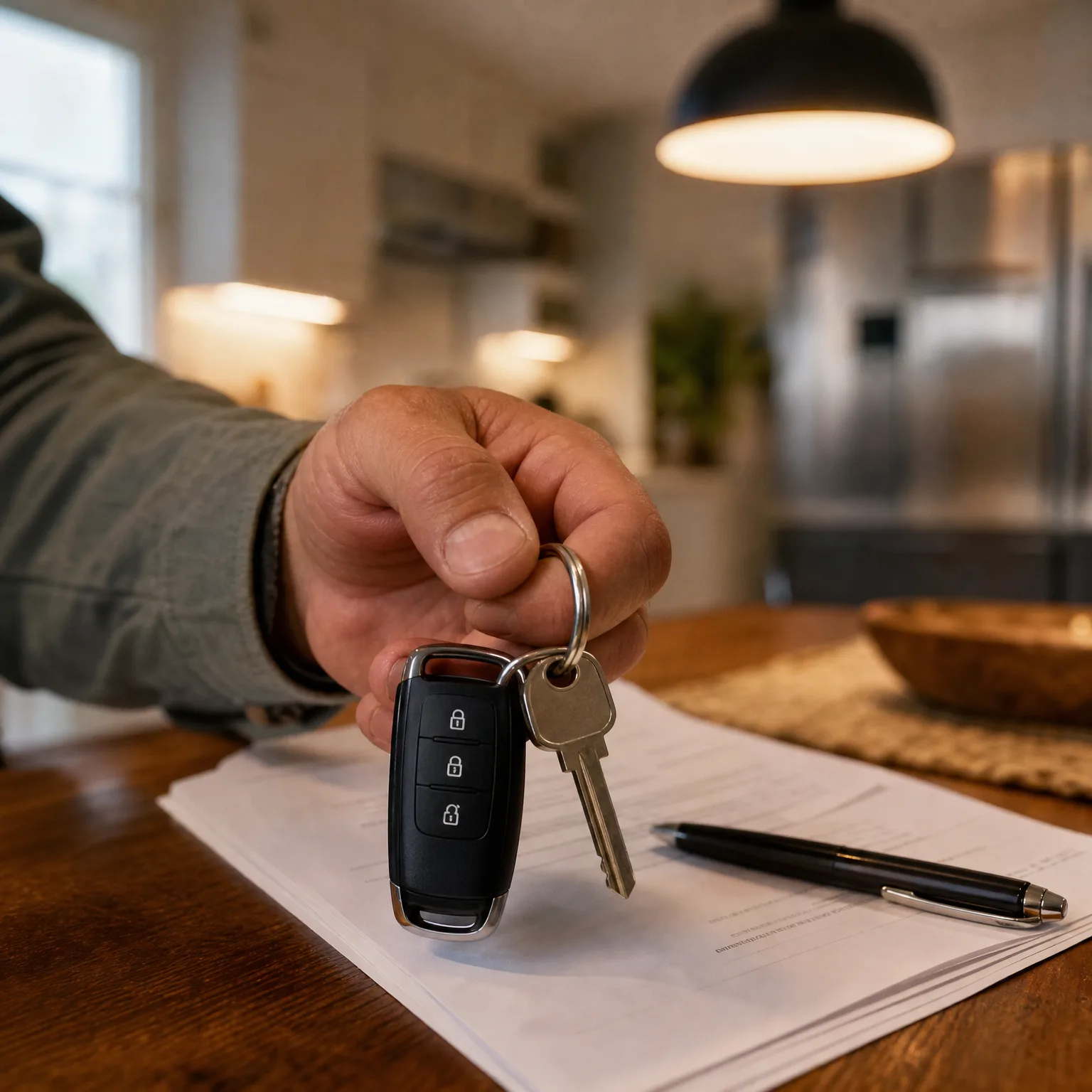
Federal Motor Carrier Safety Regulations treat driving a commercial vehicle during a state license suspension as a disqualifying offense. First offense: minimum one-year CDL disqualification. Second offense: lifetime disqualification. These federal penalties apply regardless of whether your employer knew about the suspension or whether the suspension was administrative rather than conviction-based.
The 15-20 business day DMV processing window after you submit court clearance is not a grace period. Your CDL remains suspended during that entire interval. If you operate commercially during that time and are stopped or involved in an incident, the suspension will appear on the officer's license query and trigger the disqualification process.
Some CDL holders attempt to return to work immediately after clearing the warrant at court, assuming the clerk's statement that "the case is closed" means full reinstatement. The case is closed in the court's system. Your driving privilege is suspended in DMV's system until DMV receives, reviews, and processes your clearance submission. No court clerk has the authority to lift a DMV suspension—only DMV can update your driving record to reflect eligibility for reinstatement.
Frequently Asked Questions
How long does New Hampshire DMV take to process warrant clearance for CDL holders?
DMV's Commercial Driver License Bureau typically processes warrant clearance submissions within 15-20 business days from the date they receive your certified court disposition. Processing can extend during high-volume periods or if your submission is incomplete. You cannot drive commercially during this processing window—your CDL remains suspended until DMV updates your record.
Can I get a restricted CDL in New Hampshire while my warrant suspension is being cleared?
No. Federal CDL regulations do not permit restricted commercial driving privileges. New Hampshire's Restricted Driving Privilege program applies only to personal Class D licenses and cannot be used to authorize commercial vehicle operation. Once you clear the warrant and satisfy all reinstatement conditions, full CDL privileges are restored—there is no partial or limited commercial driving option.
Does my employer's commercial vehicle insurance satisfy New Hampshire's SR-22 requirement?
No. If SR-22 filing is required as a reinstatement condition, you must obtain it in your own name through a personal auto or non-owner policy. Your employer's fleet coverage insures the vehicle and the employer's liability exposure, but does not satisfy DMV's personal financial responsibility filing requirement.
What happens if I clear my warrant but don't submit proof to New Hampshire DMV?
Your CDL remains suspended indefinitely. The court does not forward clearance documentation to DMV automatically. Until DMV receives your certified disposition and processes it, your driving record will continue to show an active suspension. You are responsible for submitting the clearance proof and paying the $100 reinstatement fee.
Do I need SR-22 insurance to reinstate my CDL after a failure-to-appear warrant in New Hampshire?
Not for the warrant itself. Failure-to-appear suspensions are administrative and do not trigger SR-22 requirements. If the underlying charge that led to the missed court date was a DUI, uninsured operation, or at-fault uninsured accident, then SR-22 filing is required—but the requirement stems from that conviction, not the warrant suspension.
Can I pay the New Hampshire reinstatement fee before DMV processes my warrant clearance?
No. The $100 reinstatement fee cannot be processed until DMV updates your record to show the warrant hold has been lifted and your suspension is eligible for clearance. Attempting to pay before that point delays processing because the payment cannot post to a file still flagged with an active warrant.
Related Articles

NH CDL FTA Warrant Reinstatement: SR-22 Filing Timing
5/3/2026

NH CDL Unpaid Ticket Suspension: Court to DMV Timing
5/3/2026

NH Warrant Suspension: Court vs DMV Clearance Timing
5/3/2026

NH FTA Warrant Cleared But License Still Suspended?
5/3/2026
NH Child Support Suspension: CDL Court & DMV Timeline
5/3/2026
Vermont CDL Warrant Suspension: Court & DMV Clearance
5/3/2026