
Nebraska Failure-to-Appear Warrant Reinstatement for Single Parents
Free to compare
Why Your Court Clearance Doesn't Immediately Lift Your Nebraska DMV Suspension
Nebraska operates two separate administrative tracks for failure-to-appear warrant suspensions. The court clears your warrant when you appear or resolve the underlying case. DMV suspends your license administratively when the court reports the initial failure to appear, and DMV lifts that suspension only when the court sends clearance verification back through Nebraska's electronic reporting system.
Most single parents assume paying the court fine or appearing before the judge automatically restores driving privileges. It does not. The court processes your case closure internally, enters the clearance into their case management system, and then—separately—transmits that clearance to the Nebraska Department of Motor Vehicles Driver Records division. That transmission step introduces the gap.
The court-to-DMV reporting lag in Nebraska typically runs 15 to 30 calendar days from the date your warrant is cleared in court records to the date DMV posts the clearance and removes the administrative hold on your license. During that window, your driving privileges remain suspended even though the underlying court matter is resolved. If you drive assuming clearance equals reinstatement, you are operating under suspension—a separate criminal charge that resets the entire timeline.

How to Verify Court Clearance Has Posted to Nebraska DMV Records
Request a copy of your Nebraska driving record abstract from the DMV Driver Records division before you attempt reinstatement. You can order this online through the Nebraska DMV website or in person at any DMV office. The abstract will show all active suspensions, revocations, and administrative holds tied to your license.
If the failure-to-appear warrant suspension still appears as active on your driving record, the court clearance has not yet posted to DMV's system. Do not pay the reinstatement fee or attempt to reinstate until that hold is removed. Paying the $125 reinstatement fee while the administrative hold remains active wastes the fee—DMV will not process reinstatement until all holds are cleared, and fees are non-refundable.
If the warrant suspension no longer appears on your driving record abstract, the clearance has posted and you can proceed to reinstatement. Expect this to take at minimum 15 business days from your court appearance date, longer if the court is backlogged or if your case involved multiple counties.


What Single Parents Need to Know About Employment Driving Permits During the Clearance Gap
Nebraska offers an Employment Driving Permit (EDP) for drivers under suspension who need to maintain employment, attend school, or obtain medical treatment. The EDP is governed by Neb. Rev. Stat. § 60-4,118 and is processed through the DMV, not the court.
You can apply for an EDP while waiting for court clearance to post to DMV records, but approval is not automatic. The application requires proof of employment or other qualifying need, payment of a $50 application fee, and proof of SR-22 financial responsibility insurance in most cases. For failure-to-appear suspensions specifically, DMV may require documentation that the underlying warrant has been cleared before approving the EDP, which means you are still waiting on the same court-to-DMV reporting lag.
EDP restrictions limit you to driving necessary to maintain employment, attend school, obtain medical treatment, or other DMV-approved purposes. You cannot use an EDP for general errands, childcare drop-offs unrelated to work, or social activities. Hours and routes are defined on the permit based on your submitted work schedule. Violating those restrictions results in automatic revocation of the EDP and extends your full suspension period.
If your failure-to-appear suspension stemmed from a DUI-related case, Nebraska's dual permit system applies differently. DUI-related suspensions typically require an Ignition Interlock Permit (IIP) under Neb. Rev. Stat. § 60-6,211.05 rather than the standard EDP. The IIP requires installation of a state-approved ignition interlock device and comes with a mandatory hard suspension period before you are eligible to apply. Confirm with DMV which permit type applies to your specific case before paying any application fees.
Does Nebraska Require SR-22 Filing for Failure-to-Appear Warrant Reinstatement
Failure-to-appear warrant suspensions in Nebraska do not automatically trigger an SR-22 filing requirement. SR-22 is required for alcohol-related suspensions, uninsured motorist violations, at-fault accidents without insurance, and certain serious moving violations. A failure to appear in court for a traffic citation does not fall into those categories unless the underlying citation itself was for DUI, reckless driving, or operating uninsured.
If your failure-to-appear warrant was issued for missing a court date on a speeding ticket, expired registration, or other non-serious violation, you will not need SR-22 to reinstate. You will need to pay the $125 reinstatement fee, confirm the court clearance has posted to DMV records, and provide proof of current liability insurance meeting Nebraska's minimum requirements ($25,000 bodily injury per person, $50,000 per accident, $25,000 property damage).
If the underlying citation was for DUI, driving under suspension, or uninsured operation, SR-22 will be required. Confirm this with DMV Driver Records before purchasing a policy. Carriers charge significantly higher premiums for SR-22 policies, and filing SR-22 when it is not required wastes money and flags you as high-risk to insurers unnecessarily.

Line Up Coverage Before Your License Comes Back
Get Back on the Road
Nebraska Reinstatement Fees and Processing Timeline After Court Clearance Posts
Once the court clearance appears on your Nebraska driving record abstract, reinstatement requires payment of the $125 base reinstatement fee. This fee applies to most administrative suspensions including failure-to-appear cases. DUI-related reinstatements and serious violation reinstatements may carry different or additional fees—verify the exact amount with DMV Driver Records before submitting payment.
Reinstatement fees are non-refundable. Do not pay until you have confirmed all administrative holds are cleared from your driving record and you have proof of current insurance. If other suspensions, unpaid tickets, child support arrears, or insurance lapse holds remain active, DMV will accept your fee but will not restore your license until all holds are resolved.
Nebraska DMV does not publish a guaranteed processing timeline for reinstatements, but in-person reinstatements at DMV offices typically process same-day once all documentation and fees are submitted. Mail-in reinstatements can take 7 to 14 business days. If you need to drive immediately for work, process reinstatement in person at a DMV office rather than mailing documents.
What Happens If You Drive Before DMV Processes the Court Clearance
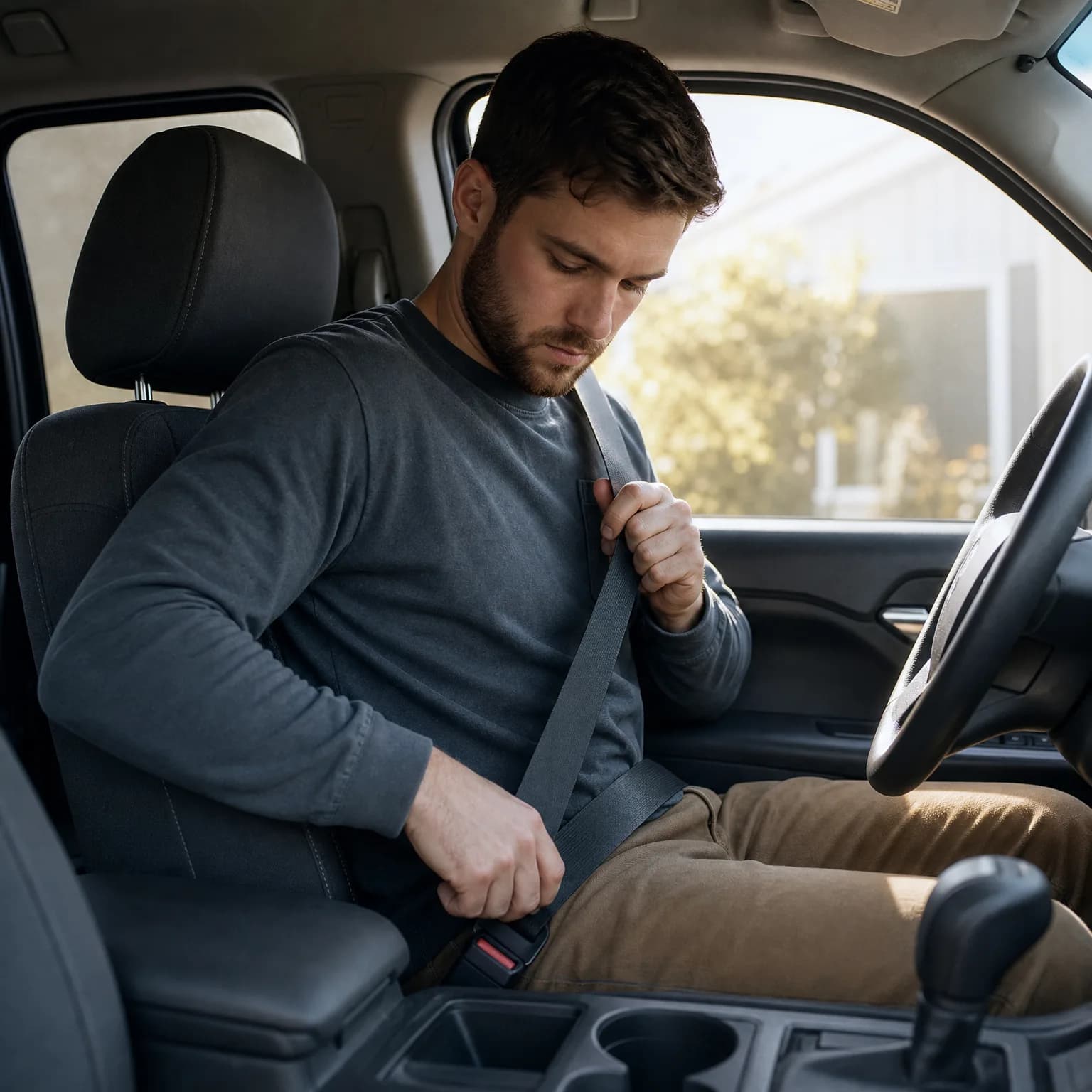
Operating a vehicle while your license remains administratively suspended—even if the underlying court warrant has been cleared—is a separate criminal offense in Nebraska. Law enforcement officers verify license status through DMV records in real time during traffic stops. If DMV's system still shows your license as suspended, you will be cited for driving under suspension regardless of whether you have court documentation showing the warrant was cleared.
Driving under suspension is a Class III misdemeanor in Nebraska, punishable by up to 3 months in jail and a $500 fine for a first offense. A conviction extends your suspension period, adds points to your driving record, and creates a criminal record that affects employment background checks—particularly problematic for single parents who depend on stable employment.
If you are pulled over during the clearance gap and cited for driving under suspension, bring documentation of your court clearance to your hearing. Judges have discretion to dismiss or reduce charges when the driver can prove the suspension was resolved but DMV had not yet updated records. This is not guaranteed, and it does not eliminate the citation or the court appearance requirement. Avoid driving entirely until you confirm your license status is clear in DMV's system.
How to Maintain Liability Insurance While Waiting for Reinstatement
Nebraska does not require you to maintain insurance while your license is suspended unless the suspension itself was for uninsured operation or you are pursuing an Employment Driving Permit. However, letting your insurance lapse during suspension creates a separate problem when you reinstate.
Nebraska uses a mandatory electronic insurance verification system under Neb. Rev. Stat. § 60-3,168. Insurers report policy cancellations to DMV electronically. If you cancel your policy during suspension and then reinstate your license, you must provide proof of current insurance before DMV will restore your driving privileges. Reinstating your policy after a lapse often results in higher premiums because carriers treat lapses as high-risk signals.
If you do not currently own a vehicle, consider a non-owner liability policy. Non-owner policies provide the liability coverage Nebraska requires without insuring a specific vehicle. Premiums are lower than standard policies because the carrier assumes you drive infrequently. Non-owner policies satisfy DMV's proof-of-insurance requirement at reinstatement and prevent the rate increase that comes from a coverage lapse.
If you cannot afford to maintain a standard policy during suspension, contact your current carrier and ask whether they offer a storage or suspension endorsement. Some carriers allow you to reduce coverage to comprehensive-only or suspend the policy temporarily without canceling it outright, which avoids the lapse flag in DMV's system.
Frequently Asked Questions
How long does it take for a Nebraska court to report warrant clearance to DMV?
Courts typically transmit clearance to DMV within 3 to 5 business days after your case is resolved, but DMV processing adds another 15 to 30 calendar days before the suspension is removed from your driving record. The total timeline from court appearance to license eligibility usually runs 20 to 35 days.
Can I get an Employment Driving Permit in Nebraska while waiting for court clearance to post?
Yes, but DMV may require proof that the underlying warrant has been cleared before approving the permit. You will need proof of employment, a $50 application fee, and SR-22 insurance if your case involved DUI or serious violations. Approval is not automatic and processing can take 7 to 14 business days.
Does a failure-to-appear suspension in Nebraska require SR-22 filing?
Not automatically. SR-22 is required only if the underlying citation was for DUI, uninsured operation, or certain serious moving violations. If you missed court for a speeding ticket or expired registration, standard liability insurance is sufficient for reinstatement.
What happens if I pay the Nebraska reinstatement fee before court clearance posts to DMV?
DMV will accept your $125 fee but will not restore your license until the court clearance appears in their system. Reinstatement fees are non-refundable, so you lose the money and still cannot drive. Wait until your driving record abstract shows the suspension has been removed before paying.
Can I drive in Nebraska with just a court document showing my warrant was cleared?
No. Law enforcement verifies license status through DMV's electronic system during traffic stops. If DMV records still show your license as suspended, you will be cited for driving under suspension even if you carry court documentation. Driving under suspension is a Class III misdemeanor and extends your suspension period.
Do I need to maintain car insurance in Nebraska while my license is suspended for failure to appear?
Nebraska does not require insurance during suspension unless the suspension was for uninsured operation or you are applying for an Employment Driving Permit. However, letting coverage lapse makes reinstatement harder and increases premiums when you restart your policy. Non-owner policies cost less and prevent coverage gaps.
How do I check if my Nebraska warrant clearance has posted to DMV records?
Order a driving record abstract from the Nebraska DMV Driver Records division online or in person. The abstract shows all active suspensions and holds. If the failure-to-appear suspension no longer appears, clearance has posted and you can proceed to reinstatement.
Related Articles

Nebraska Warrant Clearance: Court to DMV Timeline
5/3/2026
Nebraska FTA Warrant: Court Clearance and DMV Timing
5/3/2026

Nebraska CDL Failure-to-Appear Reinstatement Timeline
5/3/2026

Nebraska FTA Warrant Suspension: Real Reinstatement Costs
5/3/2026

Nebraska Warrant Suspension SR-22 Filing Timing Guide
5/3/2026
Nebraska Ticket Clearance: Court vs DMV Timeline
5/3/2026