
MA CDL Reinstatement After Warrant Suspension: SR-22 & Documentation
Free to compare
Why Your Court Clearance Doesn't Automatically Reinstate Your Massachusetts CDL
You cleared your failure-to-appear warrant, paid the court fees, and received written confirmation that your case is resolved. Your personal Class D license might reinstate with just that court clearance, but your CDL requires separate employment verification that the Registry of Motor Vehicles won't process until you submit it directly.
Massachusetts treats commercial license reinstatement as a two-track process. The court notifies the RMV that your warrant is cleared, which removes the suspension from your Class D driving privilege. Your CDL reinstatement, however, requires proving you remained eligible for commercial driving privileges throughout the suspension period—or documenting any employment gaps and explaining them. Most drivers discover this at the RMV counter after waiting weeks for an appointment.
The documentation gap exists because CDL holders are subject to both state Registry rules and federal FMCSA regulations simultaneously. Your warrant suspension is a state matter, but your commercial driving privilege requires continuous compliance with federal medical certification, employer safety records, and background check requirements. The RMV won't reinstate your CDL until you prove those federal requirements remained satisfied, even while your state license was suspended.
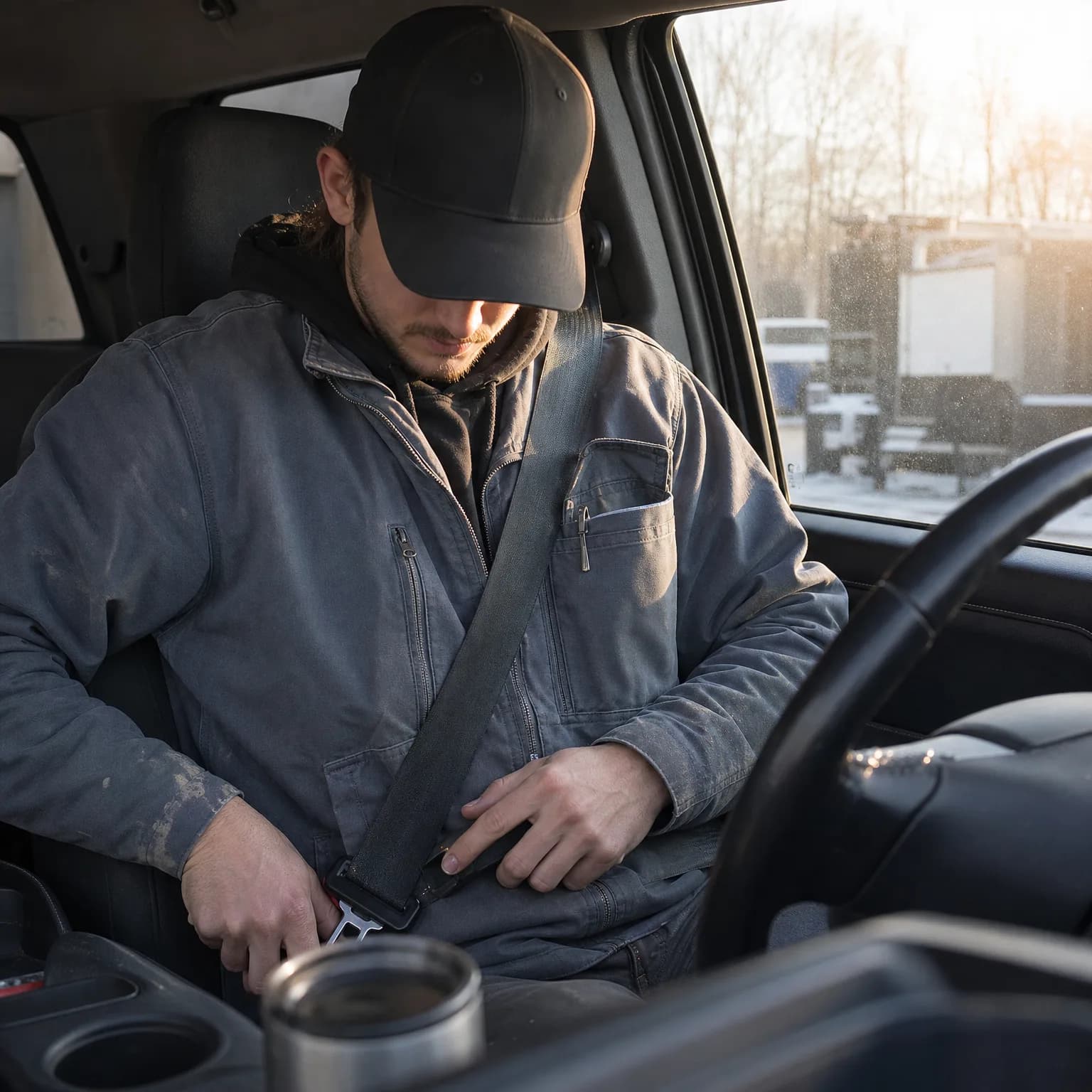
What Massachusetts Requires for CDL Reinstatement After a Warrant Suspension
Massachusetts requires three separate clearances before reinstating a suspended CDL: court clearance showing your warrant is resolved, Registry clearance confirming all reinstatement fees are paid, and employment verification proving CDL eligibility was maintained or properly documented during the suspension period.
The court clearance posts to the RMV within 5–10 business days after your case is resolved. The Registry issues a reinstatement notice, but that notice applies to your Class D license only. Your CDL reinstatement requires submitting a current employer letter on company letterhead, dated within 30 days of your reinstatement application, confirming you are employed in a CDL-eligible position and have been continuously employable in that capacity.
If you were unemployed during part or all of your suspension, you must document that gap explicitly. The RMV wants a written statement explaining the gap, proof of any non-CDL employment during that period, and confirmation that you remained medically certified and federally eligible throughout. Drivers who changed employers during suspension need letters from both the prior employer and current employer covering the full suspension timeline. Most CDL holders miss this requirement because the reinstatement fee notice doesn't mention it.


SR-22 Filing Requirements for Massachusetts Warrant Suspensions
Massachusetts does not require SR-22 filing for failure-to-appear warrant suspensions. SR-22 is mandated only for suspensions triggered by moving violations, at-fault accidents while uninsured, habitual traffic offender status, or OUI convictions. Administrative suspensions—including warrants, unpaid excise tax holds, and child support arrears—do not require SR-22.
If your warrant suspension occurred while you also had an unresolved moving violation or insurance lapse on your record, the RMV may require SR-22 for the underlying violation even though the warrant itself doesn't trigger the requirement. Check your reinstatement notice carefully. The notice will state "SR-22 required" if applicable, along with the filing duration.
CDL holders who do need SR-22 for a separate violation face a practical problem: most carriers won't issue SR-22 for drivers operating commercial vehicles under an employer's policy. You'll need a personal auto policy with SR-22 endorsement, even if you don't own a vehicle. Non-owner SR-22 policies cost approximately $40–$75 per month in Massachusetts. The filing must remain active for three years from your reinstatement date—any lapse triggers a new suspension and restarts the clock.
The Lapse-Gap Documentation Problem CDL Holders Face
Massachusetts RMV assumes continuous employment for Class D license holders. For CDL holders, the Registry requires documented proof of no employability gaps, which creates a burden most drivers don't anticipate until their reinstatement is denied.
Your employer letter must state your hire date, your current position, and confirm you have been continuously employable in a CDL-eligible role. If you were hired after your suspension began, the RMV flags the gap between suspension start date and hire date. You'll be asked to submit additional documentation: unemployment benefit statements, tax records showing non-CDL income, or a written statement explaining why you were not employed in a commercial driving role during that period.
Drivers who switched from one CDL employer to another during suspension must account for any gap between the termination date at the prior employer and the hire date at the new employer. Gaps longer than 14 days require written explanation. Gaps longer than 90 days require third-party documentation proving you remained medically certified and federally eligible throughout. The RMV does not publish this requirement on its website—it appears only on the CDL reinstatement checklist provided during your in-person appointment.

Line Up Coverage Before Your License Comes Back
Get Back on the Road
Medical Certification and FMCSA Compliance During Suspension
Your CDL medical certification must remain current throughout your suspension, even if you're not actively driving. Massachusetts requires CDL holders to maintain valid medical examiner certification on file with the RMV. If your medical card expired during your warrant suspension, the RMV will not reinstate your CDL until you submit a new medical examiner's certificate and proof of continuous medical eligibility.
Federal FMCSA rules require self-certification updates whenever your employment status or driving type changes. If you moved from interstate commerce to intrastate-only driving during your suspension, you must file a new self-certification form with the RMV before reinstatement. Drivers who stopped working entirely during suspension should have updated their self-certification to "excepted intrastate" status—failure to do so creates a compliance gap that delays reinstatement.
Most CDL holders don't know they were required to maintain medical certification while suspended. The RMV treats expired certification as a separate disqualification, which means your reinstatement requires resolving both the warrant clearance and the medical certification lapse. Allow 10–15 business days for the RMV to process a new medical certificate after submission.

Timing Your Reinstatement Application to Avoid Processing Delays
Massachusetts processes warrant clearances and CDL reinstatements on separate timelines. Your court clearance posts to the RMV within 5–10 business days, but your CDL reinstatement won't be processed until you submit all required employment and medical documentation in person or by mail.
Schedule your RMV appointment as soon as your court clearance is confirmed. Bring your employer letter, current medical examiner's certificate, proof of any prior employment during suspension, and written explanation of any employment gaps. The RMV will review your documentation during the appointment and issue a conditional reinstatement notice if everything is complete. Processing time from submission to CDL reinstatement is typically 7–14 business days.
If you submit incomplete documentation, the RMV will mail a deficiency notice listing what's missing. You'll need to schedule a second appointment and resubmit. Each deficiency cycle adds 3–4 weeks to your total reinstatement timeline. Most delays occur because drivers bring only their court clearance and assume that's sufficient for CDL reinstatement.
What to Do If You Need Insurance to Meet Reinstatement Requirements
If your reinstatement notice lists SR-22 as required—due to an underlying violation, not the warrant itself—you'll need to secure a policy before the RMV will process your application. Massachusetts accepts SR-22 filings from any licensed carrier authorized to write auto insurance in the state.
CDL holders who don't own a personal vehicle should request a non-owner SR-22 policy. These policies provide liability coverage when you drive a vehicle you don't own and include the SR-22 certificate filing the RMV requires. Premiums typically range from $40–$75 per month depending on your driving record and the violation that triggered the SR-22 requirement.
Your carrier files the SR-22 electronically with the Massachusetts RMV within 24–48 hours of policy binding. The RMV updates your record within 3–5 business days after receiving the filing. Do not schedule your reinstatement appointment until you confirm the SR-22 is on file—if the RMV doesn't see an active SR-22 filing when required, your application will be denied and you'll need to reschedule.
Frequently Asked Questions
Do I need SR-22 to reinstate my CDL after a failure-to-appear warrant in Massachusetts?
No, Massachusetts does not require SR-22 for warrant suspensions. SR-22 is required only for suspensions caused by moving violations, at-fault uninsured accidents, habitual offender status, or OUI convictions. If your warrant suspension occurred alongside an unresolved moving violation or insurance lapse, the RMV may require SR-22 for that underlying violation—check your reinstatement notice.
Why does the RMV need employment verification for CDL reinstatement after a warrant?
CDL holders are subject to federal FMCSA regulations in addition to state licensing rules. Massachusetts requires proof you remained eligible for commercial driving throughout your suspension—or documentation explaining any employment gaps—because federal CDL eligibility depends on continuous medical certification, employer safety records, and background compliance. The RMV won't reinstate your CDL until you prove those requirements were maintained.
What happens if my medical examiner's certificate expired during my suspension?
The RMV treats expired medical certification as a separate disqualification. You must submit a new medical examiner's certificate and proof of continuous eligibility before your CDL can be reinstated. The RMV processes new medical certificates within 10–15 business days after submission. Your warrant clearance alone won't trigger reinstatement if your medical certification lapsed.
How long does Massachusetts CDL reinstatement take after clearing a warrant?
Court clearance posts to the RMV within 5–10 business days. Once you submit complete employment verification and medical documentation, the RMV processes CDL reinstatement within 7–14 business days. Incomplete documentation adds 3–4 weeks per deficiency cycle. Total timeline from warrant clearance to CDL reinstatement is typically 3–5 weeks if all documentation is submitted correctly the first time.
Can I drive commercially while my CDL reinstatement is being processed?
No, you cannot operate a commercial motor vehicle while your CDL is suspended, even if your court case is resolved and you've submitted reinstatement documentation. Your CDL must show active, unrestricted status before you can legally drive commercially. Operating under suspension—even during processing—creates a new violation and extends your suspension period.
What if I changed CDL employers during my warrant suspension?
You need employer letters from both your prior employer and current employer covering the full suspension timeline. Any gap between termination at the prior employer and hire date at the new employer longer than 14 days requires written explanation. Gaps longer than 90 days require third-party documentation proving you remained medically certified and federally eligible throughout.
Related Articles
MA CDL Reinstatement After Failure-to-Appear Warrant
5/3/2026

MA CDL Reinstatement: Court Clearance & RMV Timing
5/3/2026

MA CDL DUI Reinstatement: Court vs RMV Timing Gap
5/3/2026

MA CDL Child Support Reinstatement: SR-22 Not Required
5/3/2026

MA CDL Reinstatement After Warrant: True Cost Stack
5/3/2026

MA CDL Reinstatement: SR-22 Timing for Insurance Lapse
5/3/2026