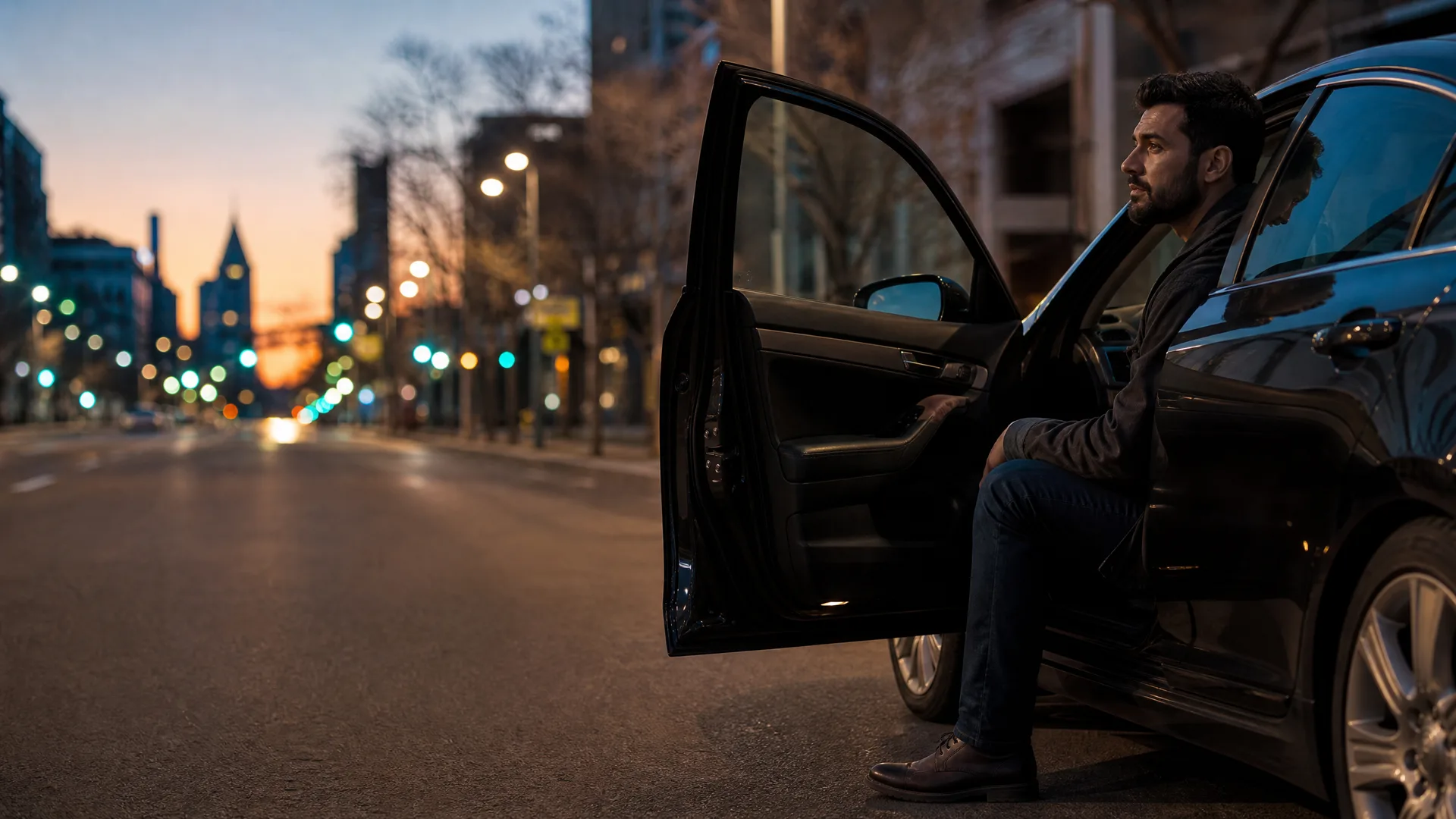
Georgia FTA Warrant Suspension: SR-22 Timing for Rideshare Drivers
Free to compare
Why Your Uber Background Check Failed After You Cleared the Court Warrant
You paid the court fine, the judge lifted your failure-to-appear warrant, and you walked out with a clearance receipt. Two days later, Uber's background monitoring system flagged your license as still suspended. You call Georgia DDS and they have no record of the clearance.
Georgia courts and DDS operate separate systems with no real-time connection. When a judge clears your FTA warrant, the court generates an automated clearance notice that gets batched and transmitted to DDS — typically within 5-10 business days, but sometimes stretching to 20 days during high-volume periods. Until that notice posts to DDS records, your license remains suspended in their system regardless of what the court told you.
Rideshare platforms run continuous background monitoring that pulls directly from DDS records, not court records. Filing SR-22 before DDS receives court clearance creates a processing conflict: DDS rejects the SR-22 because their system still shows an active suspension, your carrier reports the filing as rejected, and you start the timeline over once clearance finally posts. Most Atlanta rideshare drivers lose 15-30 days of driving income in this gap because no one explained the sequence.

The Three-Entity Coordination Sequence Georgia Requires
Georgia FTA warrant reinstatement after a license suspension requires coordinating three separate entities in a specific order: the issuing court, Georgia Department of Driver Services, and your insurance carrier. Each entity operates independently with different processing timelines and different documentation requirements.
The court processes your warrant clearance first. You pay the outstanding fine or appear before the judge, the warrant is lifted, and the court clerk generates a clearance notice. This step happens immediately — you walk out the same day with a receipt. The court then transmits that clearance electronically to DDS, but transmission happens in batches, not in real time. Fulton County Superior Court batches notices twice weekly; smaller municipal courts may batch only once per week.
DDS processes the clearance notice and updates your driver record. Only after your DDS record shows the warrant cleared can you file for reinstatement and submit SR-22. If you file SR-22 before DDS updates your record, the filing is rejected as premature. Your carrier will notify you of the rejection, but by that point you've already lost 7-14 days waiting for the initial filing to process. Restarting the SR-22 filing after rejection adds another 3-5 days for carrier processing and DDS acceptance, which means the total delay from filing too early is 15-30 days on average.


When SR-22 Is Required for Georgia FTA Warrant Suspensions
Georgia does not require SR-22 filing for all failure-to-appear warrant suspensions. The requirement depends on what charge triggered the original court appearance you missed. If the underlying charge was a moving violation, DUI, reckless driving, driving without insurance, or any offense that resulted in points on your license, Georgia DDS requires SR-22 as proof of financial responsibility before reinstatement.
If the FTA warrant stemmed from a non-driving citation — unpaid speeding ticket, county ordinance violation, missed court date for a civil matter — SR-22 is typically not required. Your court clearance receipt and the $210 reinstatement fee are sufficient. The problem is that most rideshare drivers don't know which category their suspension falls into until they call DDS after court clearance, and by then they've already lost days assuming they need SR-22.
Check your suspension notice or call DDS at 678-413-8400 before you file SR-22. Ask specifically whether your suspension type requires proof of financial responsibility. If DDS says no SR-22 is required, you can reinstate immediately once court clearance posts — no carrier involvement, no 30-day SR-22 processing wait. If SR-22 is required, confirm the clearance has posted to DDS before instructing your carrier to file. Filing SR-22 for a suspension that doesn't require it wastes money and adds unnecessary processing time; filing SR-22 before DDS shows clearance wastes weeks.
Lapse-Gap Documentation Rideshare Platforms Actually Accept
Uber and Lyft require continuous insurance coverage with no lapses longer than 30 days. If your FTA warrant suspension lasted more than 30 days, both platforms flag your account for coverage gap review even after reinstatement. The platforms want proof that any lapse was due to the suspension itself, not to dropping coverage independently.
Georgia DDS does not issue suspension-period insurance exemption letters. The state assumes you're not driving during suspension and therefore doesn't track whether you maintained coverage. This creates a documentation problem: rideshare platforms want proof you didn't lapse by choice, but the state doesn't produce that proof. Most drivers try to explain the suspension verbally through the platform's driver support system and get stuck in an endless ticket loop with offshore support agents who have no authority to override the lapse flag.
The documentation that works is a carrier-issued SR-22 filing confirmation showing the filing date, combined with your DDS reinstatement receipt showing the reinstatement date, plus a signed statement from your carrier confirming no lapse occurred outside the suspension period. Some carriers will provide this statement on request; others refuse as policy. If your carrier won't provide lapse-gap documentation, non-owner SR-22 policies issued specifically for reinstatement typically include lapse-period coverage statements as a standard feature because the carrier knows you don't own a vehicle and the policy exists solely to satisfy filing requirements.

Line Up Coverage Before Your License Comes Back
Get Back on the Road
Why Most Atlanta Rideshare Drivers File SR-22 Two Weeks Too Early
The court clerk hands you a clearance receipt the same day your warrant is lifted. The receipt says your case is closed and the warrant is cleared. You assume your license is immediately valid and call your insurance agent to file SR-22 so you can get back on the road.
Your agent files SR-22 within 24 hours. The filing goes to DDS electronically. DDS checks your driver record, sees the suspension is still active because the court's clearance notice hasn't posted yet, and rejects the SR-22 filing as invalid. Your carrier sends you a rejection notice 5-7 days later. By the time you receive the rejection notice, the court clearance has finally posted to DDS — but now you have to refile SR-22 from scratch, which takes another 3-5 days.
The preventable error is filing SR-22 based on your court receipt instead of waiting for DDS confirmation. Call DDS at 678-413-8400 and verify your suspension status before instructing your carrier to file. The call takes 10 minutes and a 15-minute hold. DDS will tell you whether the court clearance has posted. If it hasn't, ask when they expect it — court clearances from Fulton, DeKalb, and Gwinnett County Superior Courts typically post within 5-7 business days; municipal court clearances can take 10-15 business days.
Once DDS confirms clearance has posted, file SR-22 immediately. Georgia requires 30 days of continuous SR-22 coverage before reinstatement eligibility, so every day you delay filing adds a day to your reinstatement timeline. The goal is to file SR-22 the same day DDS shows clearance posted — not before, not a week after.

Reinstatement Fee Timing and the SR-22 Processing Window
Georgia charges a $210 reinstatement fee for FTA warrant suspensions when the underlying charge involved a moving violation or DUI-related offense. The fee is $200 for non-driving FTA suspensions. You cannot pay this fee until DDS processes both your court clearance and your SR-22 filing.
Most drivers assume they can pay the reinstatement fee at the same time they file SR-22. Georgia DDS won't accept reinstatement fee payment until your driver record shows both the suspension cleared and SR-22 on file. If you try to pay the fee before SR-22 posts, DDS will reject the payment and tell you to resubmit once SR-22 is active. SR-22 filings take 3-5 business days to post to DDS records after your carrier transmits the filing.
The cleanest sequence is: confirm court clearance posted to DDS, file SR-22 same day, wait 5 business days, call DDS to confirm SR-22 posted, pay reinstatement fee online or in person the same day SR-22 posts. This sequence eliminates rejected payments and repeated trips to the DDS office. Trying to compress the timeline by paying the fee early or filing SR-22 before clearance posts adds 10-20 days to the total process because every rejected transaction restarts the processing clock.
What Happens If You Drive for Uber Before Full Reinstatement
Rideshare background monitoring systems pull license status updates from state DMV databases every 24-72 hours depending on the platform and the state. If you clear your court warrant but your DDS record still shows suspended, Uber and Lyft will deactivate your account within 48-96 hours of the next automated background check.
Some drivers assume they can drive during the court-clearance-to-DDS-posting gap because they have a court receipt proving the warrant is lifted. Georgia law defines driving on a suspended license based on DDS records, not court records. If a law enforcement officer runs your license during a traffic stop and DDS shows suspended, you will be cited for driving on a suspended license even if you're holding a court clearance receipt. The charge is a misdemeanor with potential jail time, mandatory $500-$1,000 fine, and extension of your suspension period by 6 months minimum.
Wait until you receive written confirmation from DDS that your license is reinstated before activating your rideshare account. DDS sends reinstatement confirmation by mail 7-10 days after you pay the reinstatement fee, but you can request an email confirmation at the time of payment if you reinstate in person at a DDS Customer Service Center. Online reinstatement payments do not generate instant confirmation — you must wait for the mailed letter or visit a DDS office in person to get same-day email confirmation.
Frequently Asked Questions
How long does it take for a Georgia court to send warrant clearance to DDS?
Georgia courts batch failure-to-appear warrant clearances and transmit them to DDS electronically, typically within 5-10 business days for metro Atlanta counties and 10-20 business days for smaller municipal courts. The court clerk cannot expedite this process — it runs on an automated schedule. Call DDS at 678-413-8400 to confirm clearance has posted before filing SR-22 or paying reinstatement fees.
Can I get my Georgia license reinstated without SR-22 after an FTA warrant?
Yes, if the underlying charge that triggered the missed court date was a non-driving citation or ordinance violation. Georgia requires SR-22 only when the original charge involved a moving violation, DUI, reckless driving, or points on your license. Call DDS before filing SR-22 to confirm whether your suspension type requires proof of financial responsibility.
Will Uber reactivate my account immediately after I pay the Georgia reinstatement fee?
No. Uber and Lyft pull license status updates from DDS every 24-72 hours, and reactivation depends on when the next automated background check runs after your reinstatement posts. Most drivers wait 3-5 days after reinstatement before their account is automatically reactivated. You can contact driver support to request a manual background check refresh, but response times vary and most support agents cannot override the automated system.
What if my SR-22 filing is rejected by Georgia DDS?
Your carrier will notify you of the rejection within 5-7 business days. The most common cause is filing SR-22 before court clearance posted to DDS records. Call DDS at 678-413-8400 to confirm clearance has posted, then contact your carrier to refile. The second filing takes another 3-5 business days to process, which adds 10-15 days to your reinstatement timeline.
How does Georgia verify I maintained insurance during my FTA suspension?
Georgia DDS does not track insurance coverage during suspension periods and does not issue exemption letters. Rideshare platforms flag accounts for coverage gaps longer than 30 days and require proof the lapse was suspension-related, not voluntary. Most drivers satisfy this by submitting their DDS reinstatement receipt showing suspension dates alongside SR-22 filing confirmation showing continuous coverage resumption.
Can I drive for rideshare with a Georgia hardship license after an FTA warrant suspension?
No. Georgia does not issue limited driving permits for failure-to-appear warrant suspensions. Hardship licenses are only available for DUI suspensions and require proof of enrollment in a DUI Risk Reduction Program. You must complete full reinstatement — court clearance, SR-22 filing if required, and reinstatement fee payment — before rideshare driving is legally allowed.
What happens if I start driving for Uber before my SR-22 posts to Georgia DDS?
If DDS records still show your license suspended when the next automated background check runs, Uber or Lyft will deactivate your account. Driving before full reinstatement also exposes you to misdemeanor charges for driving on a suspended license if stopped by law enforcement — Georgia law bases suspension status on DDS records, not court receipts or pending filings.
Related Articles
GA Warrant Suspension Reinstatement Costs for Rideshare
5/3/2026
Georgia FTA Warrant Clearance for Rideshare
7/13/2026

Child Support Reinstatement for Georgia Rideshare Drivers
5/3/2026

GA Rideshare SR-22 Filing for Unpaid Ticket Suspensions
5/3/2026

GA Unpaid Tickets Suspension: Rideshare Reinstatement
5/3/2026

GA DUI Reinstatement for Rideshare: Court & DMV Timing
5/3/2026