Clearing a Failure-to-Appear Warrant in California for CDL Holders
Free to compare
Why Your CDL Suspension Persists After You Clear the Warrant
California's court system and DMV operate on separate databases with no automatic synchronization for commercial driver license suspensions. When you pay court fees or resolve a failure-to-appear warrant, the court clerk updates their internal case management system, but that clearance does not trigger an automated notification to DMV's commercial driver licensing unit. The court considers your case closed the moment you satisfy their requirements. DMV considers your suspension active until they receive explicit verification—which you must initiate.
This creates a procedural gap that costs most CDL holders 15-30 days of driving eligibility they technically already earned. The court assumes DMV will check their database. DMV assumes you will submit proof of clearance. Neither agency tells you that the court's standard disposition notice—the document most drivers receive when they resolve a warrant—is not sufficient documentation for commercial license reinstatement. You need a warrant clearance verification code, issued on court letterhead, naming your CDL specifically.
Most general-license drivers can wait for the systems to sync passively over 4-6 weeks. CDL holders cannot afford that delay. Your employer needs proof of reinstatement to schedule loads, and carriers verify license status in real-time through FMCSA databases that pull directly from state DMV records. If DMV still shows an active suspension, you are not driving commercially, regardless of what the court paperwork says.
The Three-Step Clearance Process California DMV Requires
Step one: obtain a warrant clearance verification letter from the court clerk where your failure-to-appear case was filed. This is not the same document as your case disposition notice or your proof-of-payment receipt. You must specifically request a letter stating that the warrant has been recalled, quashed, or satisfied, and that no further court obligations remain. The letter must include your full legal name as it appears on your CDL, your driver license number, the case number, and the court's official seal. Most courts issue this document within 2-3 business days if you request it in person at the clerk's office. Mail requests add 7-10 days.
Step two: submit the warrant clearance letter to DMV's commercial driver licensing unit, not the standard driver safety office that handles Class C reinstatements. Commercial license suspensions are processed separately. In most California counties, you must visit a DMV field office that processes commercial transactions—not all locations handle CDL reinstatements. Call ahead to confirm the office you plan to visit processes commercial suspensions, or you will waste a trip. Bring your warrant clearance letter, a government-issued photo ID, and payment for the $55 reissue fee if your CDL expired during the suspension period.
Step three: wait for DMV to process the clearance and update your driving record. This takes 10-15 business days from the date you submit the warrant clearance letter. DMV does not send confirmation when processing is complete. You must check your driving record online through the DMV website or call the commercial driver licensing unit directly to confirm your suspension status changed from active to cleared. Only after DMV's internal database reflects the clearance will FMCSA records update, which is what your employer and insurance carrier verify.


What Happens If You Skip the Manual Verification Step
If you assume court clearance automatically reinstates your CDL, you will discover the suspension remains active the first time your employer runs a license verification or you attempt to renew your medical certificate. California DMV has no automated process to pull warrant clearance data from court databases for commercial licenses. The systems do not talk to each other without manual intervention.
Most CDL holders lose 3-6 weeks of work during this discovery period. You clear the warrant, assume you are reinstated, and only find out the suspension persists when your carrier pulls you from the dispatch rotation or your insurer flags your license as non-compliant during a routine audit. By that point, you are starting the manual verification process from scratch, adding another 15-30 days to your timeline.
California Vehicle Code Section 15025 requires DMV to maintain separate commercial driver license records with enhanced verification requirements. This statute is why CDL suspensions do not clear through the same automated pathways as Class C suspensions. Courts are not required to notify DMV of warrant clearances—that burden falls on the license holder. Failure-to-appear suspensions fall under this manual-clearance protocol because they originate from court administrative holds, not DMV-initiated violations.
How Failure-to-Appear Suspensions Affect Your FMCSA Record
Your California CDL suspension posts to the FMCSA Driver License and Medical Certification System within 48 hours of DMV issuing the suspension notice. This is a federal database that interstate carriers, insurance underwriters, and enforcement agencies query in real-time. Once your suspension appears in FMCSA records, it remains visible until California DMV submits an updated status reflecting reinstatement.
Even after you clear the warrant with the court, FMCSA records will continue to show an active suspension until California DMV processes your manual clearance submission and uploads the status change to the federal system. This typically takes 3-5 business days after DMV updates your state driving record. During this gap, your CDL technically shows as suspended in the database most carriers use to verify driver eligibility, which means you cannot be dispatched for interstate loads even if your California DMV record is clear.
Carriers operating under FMCSA authority are prohibited from allowing drivers with active suspensions to operate commercial vehicles in interstate commerce. Your employer has no discretion here—if the federal database shows a suspension, you are grounded until it clears. Most carriers will not accept court documentation as proof of eligibility. They require confirmation that DMV has processed the reinstatement and FMCSA records reflect the change.
Line Up Coverage Before Your License Comes Back
Get Back on the Road
Whether This Suspension Requires SR-22 Filing
Failure-to-appear suspensions do not trigger California's SR-22 filing requirement. SR-22 is only required for specific violation types: DUI convictions, at-fault accidents without insurance, reckless driving under Vehicle Code 23103, and certain serious moving violations. Administrative suspensions like failure-to-appear, unpaid tickets, or child support non-compliance do not require proof-of-insurance filing.
You are not required to file SR-22 to reinstate your CDL after clearing a failure-to-appear warrant. Once DMV processes your warrant clearance letter and updates your record, your suspension lifts without additional insurance documentation. If DMV requests SR-22 during the reinstatement process, verify the request is not tied to a different suspension on your record—some CDL holders have multiple overlapping suspensions from unrelated causes, and DMV correspondence does not always specify which suspension triggered the SR-22 requirement.
If your failure-to-appear was related to an underlying DUI charge, reckless driving case, or uninsured-motorist violation, SR-22 insurance may be required for the underlying offense, not the failure-to-appear itself. Review your suspension notice carefully to identify whether multiple violations appear on your record. The warrant clearance removes the administrative hold from the failure-to-appear, but it does not satisfy filing requirements tied to separate moving violations.
How Long You Must Wait Between Court Clearance and Reinstatement
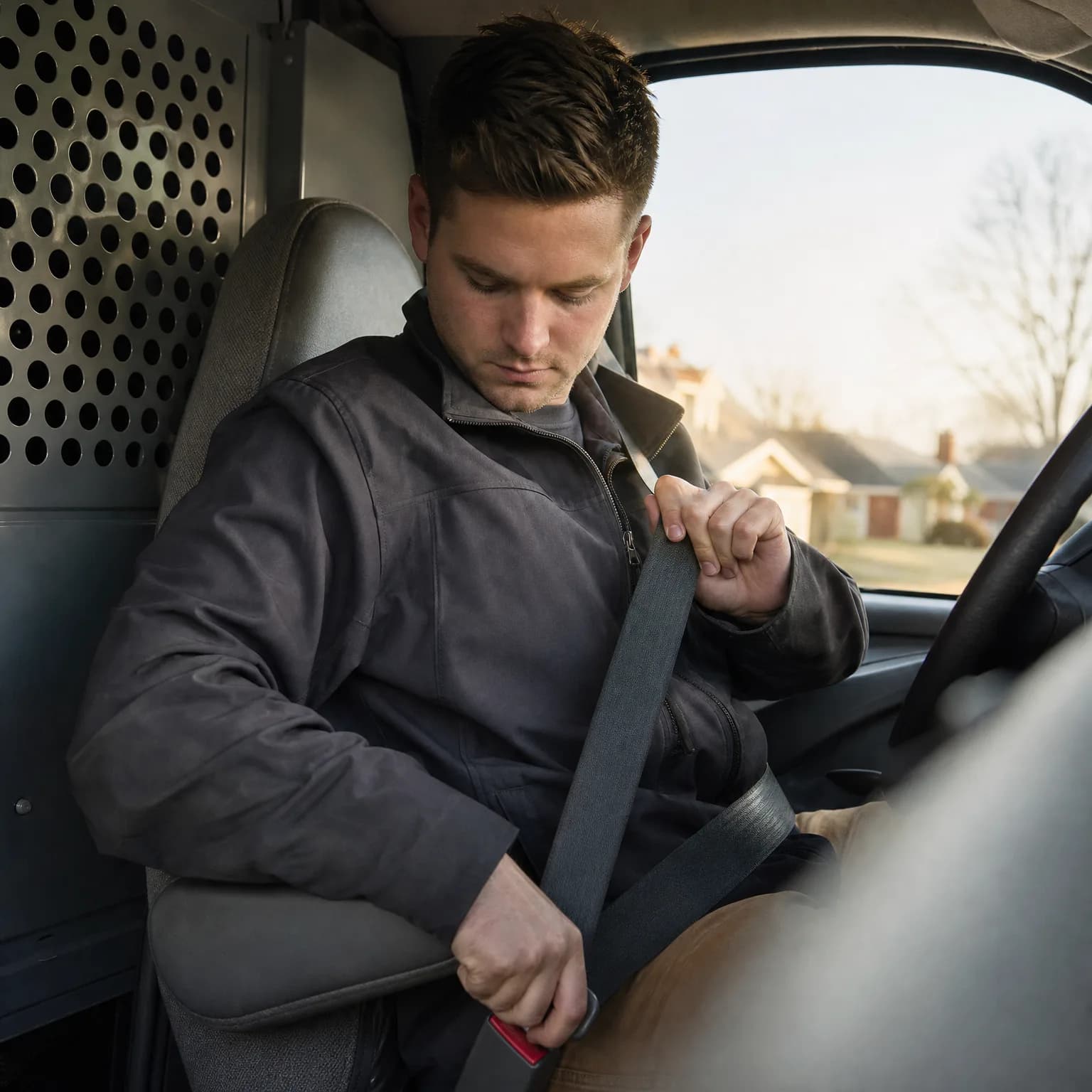
The minimum timeline from court clearance to full CDL reinstatement is 17-32 days, assuming no complications. Court processing of the warrant clearance letter takes 2-3 days if requested in person, 7-10 days if requested by mail. DMV processing after you submit the clearance letter takes 10-15 business days. FMCSA database synchronization adds another 3-5 business days after DMV updates your state record.
You cannot accelerate DMV's internal processing timeline. Calling the commercial driver licensing unit does not expedite your case. Visiting a field office a second time does not move your file to the front of the queue. DMV processes warrant clearances in the order received, and commercial license reinstatements follow a separate workflow from Class C reinstatements because they require federal database coordination.
If your CDL expired during the suspension period, add 5-10 additional days to your timeline. You must pass the knowledge test and vision screening again before DMV will reissue your commercial license, and those appointments are not always available on the same day you submit your warrant clearance documentation. Some field offices require scheduling commercial knowledge tests 7-14 days in advance during high-volume periods.
What to Tell Your Employer While Waiting for DMV Processing
Provide your employer with a copy of the court's warrant clearance letter and your DMV submission receipt as soon as you complete step two of the reinstatement process. This documentation proves you have taken all required action and are waiting on DMV administrative processing, not unresolved court obligations. Most carriers will accept this as sufficient proof that reinstatement is in progress, though they cannot legally dispatch you for commercial loads until FMCSA records update.
Some employers will reassign you to non-driving roles during the 15-30 day processing window. Others cannot accommodate gaps this long and may terminate employment if your suspension extends beyond their tolerance threshold. California is an at-will employment state, and carriers are not required to hold your position while you wait for DMV to process reinstatement paperwork. Ask your employer directly what their policy is for drivers awaiting administrative clearance.
If you are an owner-operator, notify your insurance carrier immediately after submitting your warrant clearance letter to DMV. Your policy likely includes a suspension exclusion clause that voids coverage while your license shows as suspended in state or federal databases. Most carriers will reinstate coverage once you provide proof that DMV processing is underway, but some require waiting until FMCSA records update before they will issue a new certificate of insurance.
Frequently Asked Questions
Can I drive my personal vehicle while my CDL is suspended for failure-to-appear in California?
Yes, if you hold a valid Class C license in addition to your CDL and the suspension notice specifies commercial driving privileges only. Most failure-to-appear suspensions in California apply to all driving privileges, not just commercial. Check your suspension notice—if it says "all driving privileges suspended," you cannot legally drive any vehicle until the warrant is cleared and DMV processes your reinstatement.
Will clearing a failure-to-appear warrant in one California county lift suspensions from warrants in other counties?
No. Each warrant generates a separate suspension hold in DMV records. If you have failure-to-appear warrants in multiple counties, you must obtain warrant clearance letters from each court and submit all of them to DMV before your commercial license will be reinstated. DMV does not lift the suspension until all outstanding court holds are cleared.
Does California allow restricted or hardship licenses for CDL holders suspended for failure-to-appear?
No. California does not issue restricted commercial licenses for any suspension type. You must fully reinstate your CDL by clearing all court holds and satisfying DMV requirements before you can legally operate a commercial vehicle again. Restricted licenses in California apply only to Class C personal-use driving privileges, not commercial driving.
What happens if I drive commercially before FMCSA records show my CDL reinstatement?
You are operating without a valid commercial license, which is a misdemeanor under California Vehicle Code 12500. Your carrier can be cited for allowing an unqualified driver to operate a commercial vehicle, and your employer's FMCSA safety rating will be negatively affected. Any accident or citation during this period will be treated as if you were driving without a license, which voids most insurance policies and exposes you to personal liability.
Can I request expedited processing from DMV if I am losing my job due to the suspension?
No. California DMV does not offer expedited commercial license reinstatement for financial hardship or employment-related reasons. Processing timelines are fixed regardless of individual circumstances. The only exception is for active-duty military personnel under deployment orders, who may qualify for priority processing under specific conditions outlined in Vehicle Code 12814.
How do I check whether my warrant clearance has been processed by DMV?
Request a copy of your official driving record through the DMV website or by visiting a field office. Your driving record will show suspension status as either active or cleared. You can also call the commercial driver licensing unit at 916-657-6525 and provide your CDL number to confirm clearance status over the phone.
Do I need a lawyer to clear a failure-to-appear warrant for CDL reinstatement purposes?
Not necessarily. If your warrant was issued for a minor traffic violation or missed court date, most drivers can resolve it by appearing in court, paying fines, and requesting the warrant clearance letter directly from the clerk. If your warrant involves more serious charges or you have multiple warrants, consult an attorney to ensure all court obligations are satisfied before submitting documentation to DMV.
Related Articles
CA CDL Reinstatement: Court Clearance vs DMV Timing
5/3/2026

DC CDL Reinstatement: Warrant Clearance Verification Gap
5/3/2026

Colorado CDL Warrant Suspension: Court vs DMV Timing
5/3/2026

VA CDL Warrant Suspension: Court vs DMV Clearance Gap
5/3/2026
WI CDL Warrant Suspension: Court vs. DMV Clearance Gap
5/3/2026

Nevada CDL Reinstatement After Warrant Suspension
5/3/2026