
Wisconsin CDL Reinstatement After DUI: SR-22 and IID Timing
Free to compare
Wisconsin Runs Two Separate SR-22 Filing Tracks for CDL Holders After DUI
Wisconsin Department of Transportation maintains distinct reinstatement processes for your Class D personal license and your CDL after a DUI conviction. Filing SR-22 to obtain an occupational license for personal driving does not satisfy the commercial driver reinstatement requirements, even though both stem from the same conviction.
The Class D occupational license process allows restricted personal driving during your revocation period, typically 6-9 months for a first DUI. You file SR-22 with a personal auto or non-owner policy, attend an assessment hearing, and receive permission to drive for work, education, or medical purposes. Most CDL holders complete this process first because they need transportation while their commercial license is suspended.
Your CDL reinstatement operates on a separate timeline with its own SR-22 filing requirement. Wisconsin DOT will not reinstate your commercial driving privilege until you complete the full revocation period for CDL holders—12 months minimum for a first DUI, even if your Class D occupational license was granted earlier. The SR-22 filing that supports your occupational license does not carry over to your CDL application because Wisconsin treats commercial and non-commercial driving as separate privileges with different insurance verification requirements.
When Your Occupational SR-22 Filing Starts and How Long It Runs
Your occupational license SR-22 filing begins the day Wisconsin DOT receives it from your carrier, not the day you purchase the policy. Most carriers transmit filings electronically within 24-48 hours of purchase, but paper filings can take 7-10 business days to reach DOT and post to your record.
Wisconsin requires SR-22 on file for the entire duration of your occupational license period plus an additional two years after full reinstatement. For a first DUI with a 6-month occupational period followed by full Class D reinstatement, you maintain SR-22 for approximately 30 months total: 6 months during occupational restrictions, then 24 months after full reinstatement.
The occupational SR-22 clock runs independently of your CDL reinstatement clock. Letting your occupational SR-22 lapse during the required period triggers an additional 2-year extension from the date of lapse under Wisconsin Statute 344.63, not from the original reinstatement date. A single missed payment that causes a 15-day lapse can add 24 months to your total SR-22 requirement.


CDL Reinstatement Requires a Second SR-22 Filing After Full Revocation Period
Wisconsin DOT will not process your CDL reinstatement application until you complete the full commercial revocation period—12 months for a first DUI, 36 months for a second DUI within 10 years, permanent for a third. This period runs from your conviction date or the date you surrender your CDL, whichever DOT determines applies to your case.
When you apply for CDL reinstatement, Wisconsin requires proof of financial responsibility in the form of SR-22 filing specifically linked to a commercial auto policy or a non-owner policy that meets federal Motor Carrier Safety Administration standards. Your existing occupational SR-22, which is filed on a personal auto or standard non-owner policy, does not meet this requirement.
Most Wisconsin CDL holders discover this gap when they submit their reinstatement application and DOT returns it marked incomplete due to missing commercial SR-22 documentation. You must obtain a new policy—either commercial coverage if you have access to a vehicle, or a non-owner policy explicitly endorsed for commercial driving exposure—and file a second SR-22 with DOT before your CDL reinstatement can proceed. The two SR-22 filings run concurrently during your post-reinstatement period, meaning you maintain both until each reaches its own expiration date.
Ignition Interlock Device Installation Timing for CDL Reinstatement
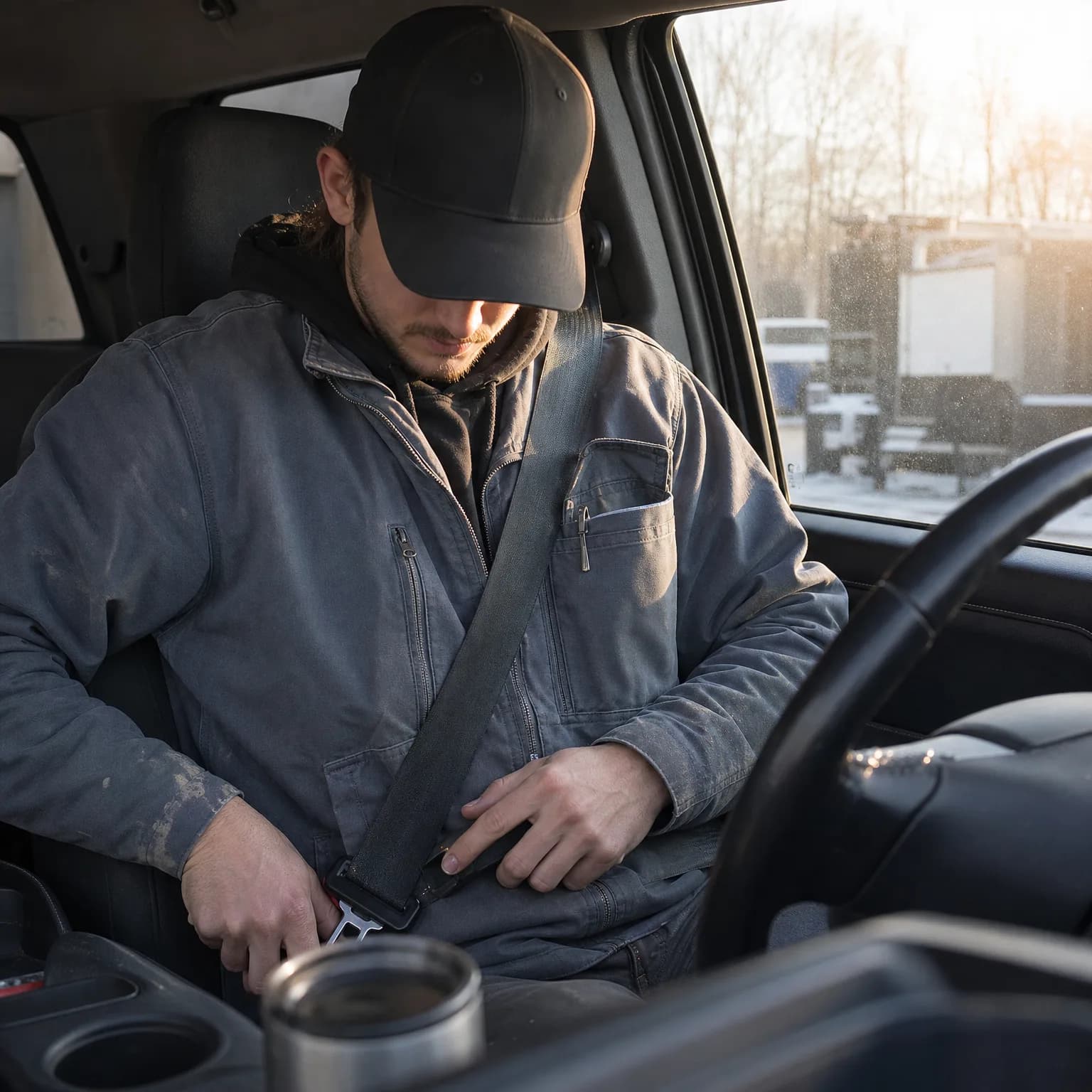
Wisconsin requires ignition interlock device installation for 12-24 months depending on your BAC at arrest and conviction count. For CDL holders, the IID requirement applies to any vehicle you operate for personal use during and after the revocation period—it does not apply to commercial vehicles you drive as part of employment.
You must install the IID before DOT will grant your occupational license. The installation provider submits verification directly to DOT, and your occupational license application cannot proceed until that verification posts to your driving record. Most installations take 1-3 business days to schedule, with verification posting to DOT within 24-48 hours after installation.
Your IID obligation continues through your CDL reinstatement and into your post-reinstatement period. Wisconsin DOT will not remove the IID restriction from your Class D license until you complete the full required period, which runs from installation date, not conviction date. CDL holders who install IID to obtain occupational privileges early in their revocation period often complete the IID requirement before their CDL revocation period ends, but any gap in compliance—missed calibration, failed retest, or removal without DOT authorization—extends the IID period and delays CDL reinstatement eligibility.

Line Up Coverage Before Your License Comes Back
Get Back on the Road
Documentation Wisconsin DOT Requires for CDL Reinstatement Application
Wisconsin DOT processes CDL reinstatement applications only after your full revocation period expires and all compliance requirements are satisfied. You submit the application in person at a DMV service center or by mail to the Wisconsin DOT Driver Improvement Unit in Madison.
Required documentation includes proof of completion of a DOT-approved alcohol assessment and any treatment the assessment required, certificate of completion from a state-approved Intoxicated Driver Program, SR-22 filing on a commercial or commercial-endorsed non-owner policy, ignition interlock compliance record if your IID period is complete, and payment of the $200 CDL reinstatement fee. Wisconsin will not accept applications missing any component—incomplete submissions are returned without processing, which adds 2-4 weeks to your timeline.
The SR-22 filing for CDL reinstatement must show active status on the date you submit your application. If you purchase a policy and file SR-22 the same day you submit your reinstatement paperwork, verify with your carrier that the electronic filing transmitted before you mail or deliver your application. A 24-hour gap between policy purchase and SR-22 posting to DOT is the most common cause of application rejection for CDL holders who otherwise completed all other requirements.

What Happens If Your Occupational SR-22 Lapses Before CDL Reinstatement
A lapse in your occupational SR-22 filing—caused by missed payment, policy cancellation, or switching carriers without maintaining continuous coverage—triggers immediate suspension of your occupational license and extends your SR-22 requirement by 2 years from the lapse date under Wisconsin Statute 344.63.
Wisconsin DOT does not provide advance notice before suspension. Your carrier notifies DOT of the lapse, typically within 10 days of cancellation, and DOT processes the suspension within 5-7 business days. Most CDL holders discover the suspension when pulled over for an unrelated traffic stop or when they attempt to use their occupational license for employment purposes.
The lapse also impacts your CDL reinstatement timeline. Wisconsin DOT will not process a CDL reinstatement application if your Class D license shows an active suspension or if your driving record reflects an unresolved SR-22 lapse. You must reinstate your Class D license, file new SR-22, serve the 2-year extension, and then reapply for CDL reinstatement. A 15-day lapse during your occupational period can add 24-30 months to your total time before you are eligible to drive commercially again.
How to Coordinate Coverage and Filing for Both License Classes
Most Wisconsin CDL holders maintain two separate insurance policies during their post-DUI reinstatement period: a personal auto or non-owner policy with SR-22 to satisfy Class D occupational and full reinstatement requirements, and a commercial policy or commercial-endorsed non-owner policy with SR-22 to satisfy CDL reinstatement requirements.
You cannot combine these into a single policy unless your carrier offers a commercial policy that also covers personal use and is willing to file SR-22 for both purposes. Few carriers in Wisconsin offer this structure, and premiums are typically higher than maintaining two separate policies because the commercial classification applies to all coverage.
The most common approach: obtain a non-owner SR-22 policy for your Class D occupational license as soon as your assessment hearing is scheduled, typically $45-$75 per month depending on your county and conviction details. Maintain that policy continuously through your occupational period and two years post-reinstatement. When your CDL revocation period nears completion—30-45 days before your eligibility date—contact a commercial insurance broker to obtain a non-owner policy with commercial endorsement and request SR-22 filing. Commercial-endorsed non-owner policies for post-DUI CDL holders typically cost $140-$220 per month in Wisconsin, with Madison, Milwaukee, and Green Bay zip codes at the higher end of that range.
Frequently Asked Questions
Can I use the same SR-22 filing for both my occupational license and my CDL reinstatement in Wisconsin?
No. Wisconsin DOT requires separate SR-22 filings for Class D and CDL reinstatement because commercial and non-commercial driving are treated as distinct privileges with different insurance verification standards. Your occupational SR-22 on a personal or standard non-owner policy does not satisfy the commercial reinstatement requirement.
How long does Wisconsin require SR-22 after a DUI for CDL holders?
Wisconsin requires SR-22 for two years after full license reinstatement for both your Class D and CDL. If you obtain an occupational license 6 months into your revocation and then reinstate your CDL 12 months after conviction, you maintain Class D SR-22 for approximately 30 months total and CDL SR-22 for 24 months from your commercial reinstatement date.
What happens to my CDL reinstatement if my occupational SR-22 lapses?
A lapse suspends your occupational license immediately and extends your SR-22 requirement by 2 years from the lapse date under Wisconsin Statute 344.63. Wisconsin DOT will not process your CDL reinstatement application while your Class D record shows an active suspension or unresolved SR-22 lapse, delaying your commercial eligibility by 24-30 months.
Do I need ignition interlock on commercial vehicles I drive for work in Wisconsin?
No. Wisconsin's IID requirement applies only to vehicles you operate for personal use. Federal Motor Carrier Safety Administration regulations prohibit operating a commercial motor vehicle with an ignition interlock device installed, so the restriction appears on your Class D license but does not transfer to commercial equipment.
When should I start the SR-22 filing process for CDL reinstatement in Wisconsin?
Contact a commercial insurance broker 30-45 days before your CDL revocation period ends. You need the commercial SR-22 filing active and posted to DOT on the date you submit your reinstatement application—starting earlier ensures the filing clears DOT processing before your eligibility date.
Can I get a non-owner policy with commercial endorsement if I don't own a truck?
Yes. Wisconsin allows non-owner policies with commercial endorsement for CDL reinstatement when you do not have access to a commercial vehicle. These policies satisfy DOT's SR-22 requirement and typically cost $140-$220 per month depending on your conviction history and county.
How long does Wisconsin DOT take to process a CDL reinstatement application after DUI?
Wisconsin DOT processes complete applications within 10-15 business days after your revocation period expires. Incomplete applications—missing SR-22, IID compliance records, or assessment completion proof—are returned without processing, which adds 2-4 weeks to your timeline.
Related Articles

Wisconsin CDL DUI Costs: Reinstatement + SR-22 Breakdown
5/3/2026

WI CDL Reinstatement: Child Support & SR-22 Rules
5/3/2026
Milwaukee DUI License Reinstatement: SR-22 & Interlock Steps
4/29/2026
WI CDL Reinstatement: Court & DMV Timing Guide
5/3/2026

Wisconsin CDL Lapse Reinstatement: SR-22 Timing Guide
5/3/2026

WI CDL DUI Reinstatement: Court & DMV Timing Gaps
5/3/2026