WV DUI Reinstatement for Single Parents: SR-22 & Lapse Risks
Free to compare
Why West Virginia's ATLP Program Creates SR-22 Lapse Risk for Single Parents
West Virginia's Alcohol Test and Lock Program (ATLP) is the primary mechanism by which DUI-suspended drivers obtain restricted driving privileges with mandatory ignition interlock. The program requires consistent class attendance alongside device installation. Missing two consecutive ATLP classes triggers an automatic notification to the West Virginia Division of Motor Vehicles, which in turn notifies your SR-22 insurance carrier of noncompliance.
For single parents, this creates a specific vulnerability. Childcare conflicts, unexpected work schedule changes, or transportation barriers make perfect attendance difficult. The ATLP administrator does not issue a warning before notifying DMV. Your carrier receives the noncompliance notice and must cancel your SR-22 filing within a narrow window.
Once your carrier cancels SR-22 filing, your restricted license is immediately suspended. You cannot reinstate until you re-enroll in ATLP, complete makeup classes, submit proof of re-enrollment to DMV, and file a new SR-22 certificate. The three-year SR-22 filing clock does not pause during this gap—it restarts from the date DMV accepts your new filing. Most single parents navigating this process lose 60 to 90 days of restricted driving privilege and add six to twelve months to their total SR-22 filing period because they didn't know the ATLP-SR-22 notification chain existed.
How West Virginia's Three-Year SR-22 Filing Period Actually Works
West Virginia requires three years of continuous SR-22 filing after DUI reinstatement, measured from the date DMV processes your initial filing—not from your conviction date or restricted license approval date. The filing period runs independently of your ATLP participation, ignition interlock installation period, and restricted license duration.
SR-22 is proof of financial responsibility, not insurance coverage itself. Your carrier submits the filing electronically to WV DMV on your behalf, confirming you maintain at least the state's minimum liability coverage. West Virginia's minimum liability requirement is 25/50/25: $25,000 bodily injury per person, $50,000 bodily injury per accident, $25,000 property damage. Your policy must meet or exceed these limits for the entire three-year period.
If your SR-22 filing lapses at any point during the three years—because you cancel your policy, switch carriers without coordinating SR-22 transfer, or miss a payment that triggers cancellation—your carrier notifies DMV within 10 days. DMV suspends your driving privilege immediately. Reinstatement requires filing a new SR-22 certificate, paying a $50 reinstatement fee, and restarting the three-year clock from the new filing date. A single 15-day lapse can extend your total SR-22 requirement by an additional three years if not addressed immediately.


ATLP Restricted License Requirements and Single-Parent Scheduling Realities
West Virginia's ATLP restricted license allows driving on defined routes between home, work, medical appointments, school, and court-required destinations. You must serve a hard suspension period—approximately 15 days for first-offense DUI—before you become eligible to apply for the restricted license. Once approved, you must install an ignition interlock device, attend scheduled ATLP classes, and maintain SR-22 filing simultaneously.
ATLP classes typically meet weekly or biweekly depending on your assigned program location. Missing two consecutive classes without prior approval triggers the automatic DMV notification described above. ATLP administrators do not reschedule classes for childcare conflicts, sick children, or transportation breakdowns. If you miss a class, you must contact the program coordinator within 24 hours to document the reason and request makeup attendance. Failure to do so counts as an unexcused absence.
For single parents, this creates a procedural collision. School closures, pediatric appointments, and unexpected childcare gaps don't align with ATLP schedules. Most counties in West Virginia do not offer evening or weekend ATLP sessions. If your employer schedule or childcare availability conflicts with the assigned class time, you must petition the court that ordered your ATLP participation for a schedule modification—ATLP administrators cannot approve schedule changes independently. This petition process adds 30 to 45 days, during which you remain at risk of noncompliance if another absence occurs.
What Happens When SR-22 Filing Lapses During ATLP Participation
When your SR-22 filing lapses—whether from missed ATLP classes, policy cancellation, or carrier notification error—WV DMV suspends your restricted license immediately. You lose your legal driving privilege the day DMV processes the lapse notice, not the day you receive a suspension letter. Most single parents discover the suspension when pulled over for an unrelated traffic issue or when attempting to renew vehicle registration.
Reinstating after an SR-22 lapse requires five steps: submit proof of ATLP re-enrollment to DMV, file a new SR-22 certificate with a licensed carrier, pay the $50 base reinstatement fee, verify ignition interlock device remains active and compliant, and wait for DMV to process all documentation. Processing takes 10 to 15 business days in most West Virginia counties. You cannot legally drive during this waiting period, even on the routes previously approved under your restricted license.
The three-year SR-22 filing clock resets to the date DMV accepts your new filing. If you were 18 months into your original three-year period when the lapse occurred, you now face a new three-year requirement—total SR-22 duration extends to four and a half years. This reset is not negotiable and does not account for the reason the lapse occurred. Carriers charge $15 to $35 to file the new SR-22 certificate, in addition to any policy reinstatement fees or lapsed-payment penalties.

Line Up Coverage Before Your License Comes Back
Get Back on the Road
Non-Owner SR-22 Policies for Single Parents Without a Vehicle
If you do not own a vehicle but need SR-22 filing to satisfy WV reinstatement requirements, a non-owner SR-22 policy is the correct solution. Non-owner policies provide liability coverage when you drive a vehicle you do not own—for example, a borrowed car, a rental, or a vehicle owned by a family member. The policy includes the SR-22 certificate filing DMV requires.
Non-owner SR-22 policies in West Virginia typically cost $40 to $70 per month, significantly less than standard owner policies after a DUI conviction. The policy does not cover a vehicle you own or regularly use. If you later purchase a vehicle during the three-year SR-22 period, you must switch to a standard auto policy with SR-22 filing and notify DMV of the change. Your carrier will cancel the non-owner policy and transfer the SR-22 filing to the new policy without interruption if coordinated properly.
Single parents relying on shared vehicles or family members for transportation should confirm the non-owner policy covers the frequency and type of driving required under the ATLP restricted license. If you drive daily to fulfill work or childcare obligations, the non-owner policy must reflect that usage. Misrepresenting usage to obtain a lower premium can result in claim denial and SR-22 cancellation if the carrier audits your policy.

Documentation Requirements to Avoid ATLP and SR-22 Coordination Gaps
West Virginia requires proof of employment or medical necessity, SR-22 insurance certificate, completed restricted license application, and payment of applicable fees when you petition for an ATLP restricted license. Single parents must also document approved driving routes and destinations before the court or DMV approves the petition. Generic work addresses are not sufficient—you must provide employer verification on company letterhead, including your work schedule and specific job site address.
Once your restricted license is approved, you must submit proof of ignition interlock installation to DMV before the restricted license becomes active. Your IID provider—typically a third-party vendor approved by WV DMV—sends installation verification electronically, but processing delays of 7 to 10 days are common. During this gap, you cannot legally drive even though your restricted license application has been approved.
Your SR-22 filing must show active status in DMV records before restricted license activation. If you file SR-22 before your court clearance posts to DMV, the filing will not attach to your reinstatement case correctly, creating a 30 to 45-day processing delay. The correct sequence is: obtain court approval for ATLP participation, wait for court clearance to post to DMV (5 to 10 business days), file SR-22 with your carrier, install ignition interlock device, then submit the restricted license application with all supporting documents together. Filing steps out of order forces you to resubmit and delays your restricted license start date.
Finding SR-22 Coverage That Fits Single-Parent Budget Constraints
SR-22 filing after a DUI conviction raises your insurance premium significantly. West Virginia drivers with a DUI conviction and SR-22 requirement typically pay $140 to $220 per month for minimum liability coverage, compared to $60 to $90 per month for clean-record drivers. Non-owner policies with SR-22 cost less but still represent a substantial monthly expense for single parents managing childcare, housing, and transportation costs simultaneously.
Not all carriers in West Virginia accept SR-22 filings, and those that do price policies differently based on violation age, prior insurance history, and payment plan structure. Paying a six-month policy in full typically reduces total cost by 8% to 12% compared to monthly installment plans, but upfront lump-sum payment is not feasible for most single parents. Carriers offering monthly payment plans with SR-22 filing charge installment fees of $5 to $10 per month in addition to the base premium.
Comparing quotes from multiple carriers is essential. A carrier quoting $180 per month for one driver may quote $135 per month for another driver with an identical violation history, based solely on underwriting model differences. Request quotes from at least three carriers that explicitly confirm they file SR-22 in West Virginia and accept monthly payment plans. Verify the quote includes the SR-22 filing fee—some carriers bundle it into the premium, others charge it separately at policy inception.
Frequently Asked Questions
Can I get a restricted license in West Virginia if I have unpaid child support?
West Virginia does suspend driving privileges for unpaid child support, but this is a separate administrative suspension that does not interact with DUI-related ATLP restricted licenses. You must resolve the child support arrears and obtain clearance from the West Virginia Bureau for Child Support Enforcement before DMV will process any license reinstatement or restricted license application. SR-22 filing is not required for child support suspensions unless you also have a DUI or uninsured driving violation on your record.
Does West Virginia require ignition interlock for all DUI convictions?
Yes, West Virginia requires ignition interlock device installation for all DUI convictions as a condition of obtaining a restricted license through the ATLP program. First-offense DUI drivers must install the device and maintain it for the duration of their ATLP participation, which is typically 165 days to one year depending on BAC level and court-ordered program length. The interlock requirement is separate from the three-year SR-22 filing period and does not end when ATLP participation concludes if your court order specifies a longer installation period.
What happens if my employer fires me while I have a West Virginia restricted license?
If you lose your job while holding a WV ATLP restricted license, your approved driving routes tied to that employer become invalid. You must petition the court that issued your restricted license for route modification within 10 days of employment termination and provide documentation of new employment or active job search efforts. Driving on previously approved work routes after termination is treated as driving without a valid license and can result in immediate ATLP revocation and additional criminal charges.
Can I switch SR-22 carriers in the middle of my three-year filing period?
Yes, you can switch SR-22 carriers during your three-year filing period, but you must coordinate the transition carefully to avoid a lapse. Your new carrier must file the SR-22 certificate with WV DMV before your old carrier cancels your existing filing. Most carriers allow a 1 to 3 day overlap to ensure continuous coverage, but you are responsible for confirming both filings are active simultaneously. A gap of even one day between filings triggers an automatic suspension and restarts your three-year clock.
Does West Virginia offer hardship waivers for ATLP class attendance?
West Virginia ATLP administrators do not grant blanket hardship waivers for class attendance, but you can petition the court that ordered your ATLP participation for schedule modification or makeup class approval if you have documented medical, childcare, or employment conflicts. You must submit the petition before missing the class whenever possible. Retroactive hardship petitions after unexcused absences are rarely approved unless you can prove a sudden emergency that made prior notice impossible.
How much does ignition interlock installation cost in West Virginia?
Ignition interlock device installation in West Virginia typically costs $75 to $150 upfront, plus $60 to $90 per month for device lease, monitoring, and calibration. Total cost over a one-year ATLP participation period ranges from $800 to $1,250. Some providers offer payment plans or hardship discounts for income-qualified participants, but you must apply for these programs at the time of installation. The device cost is in addition to your SR-22 insurance premium and ATLP class fees.
Can I drive my children to daycare on a West Virginia restricted license?
Yes, but only if you include the daycare location and route in your restricted license petition and the court approves it as part of your allowable destinations. West Virginia ATLP restricted licenses allow driving to employment, medical appointments, school, court-required locations, and other destinations the court deems necessary. Childcare qualifies as necessary for single parents, but you must document the daycare provider's address and your children's enrollment when you submit your restricted license application.
Related Articles
WV CDL DUI Reinstatement: SR-22 Filing & Lapse Rules
5/3/2026
WV Rideshare DUI Reinstatement: SR-22 & Lapse Gaps
5/3/2026
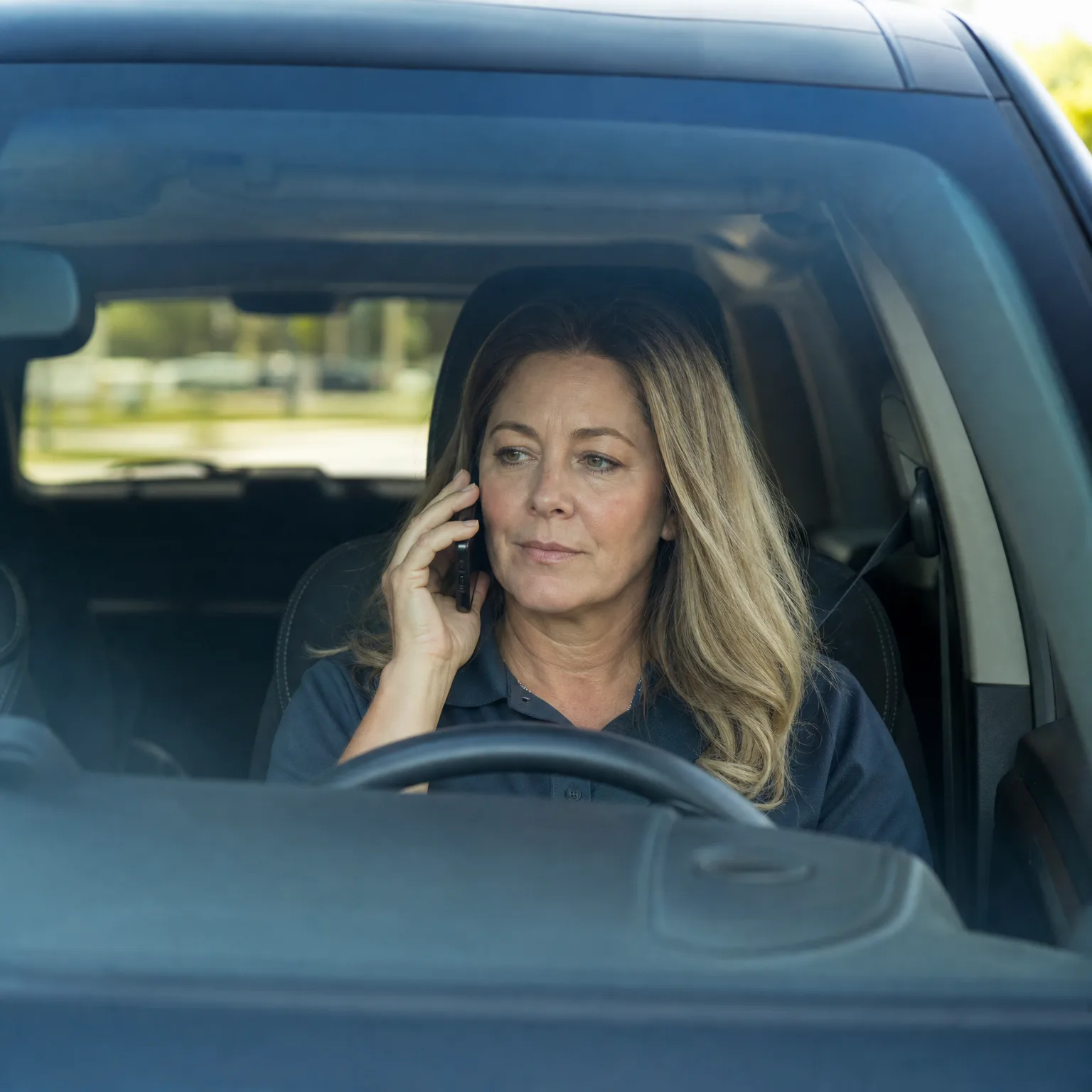
WV Lapse Suspension SR-22: Single Parent Timeline
5/3/2026

WV DUI Reinstatement for Rideshare: Court & DMV Timing
5/3/2026

WV Insurance Lapse Suspension: SR-22 Filing for Students
5/3/2026

WV DUI Reinstatement for Students: SR-22 Filing Timing
5/3/2026