WV DUI Reinstatement for Students: Court & DMV Timing
Free to compare
Why Your Court Clearance Doesn't Automatically Clear Your DMV Suspension
West Virginia operates parallel DUI suspension tracks: one criminal (handled by circuit court) and one administrative (handled by the Division of Motor Vehicles). Completing your court-ordered DUI education program, paying fines, and receiving judicial clearance does not automatically reinstate your driving privileges.
The circuit court must transmit your completion records to the DMV electronically. This transmission typically takes 15–30 business days in most counties, but can stretch to 45 days during high-volume periods or when court clerks are understaffed. Until the DMV's system reflects your court compliance, they will not accept your SR-22 filing or process your Restricted License application under the Alcohol Test and Lock Program.
Most college students facing January reinstatement deadlines complete court requirements in December, file SR-22 immediately, and assume they're done. The DMV rejects the filing because court records haven't posted yet. By the time students realize the rejection, they've lost three weeks of processing time and missed their return-to-campus window.
What Court Clearance Actually Requires in West Virginia
West Virginia Code §17C-5A-3 governs DUI reinstatement requirements. For first-offense DUI, you must complete a state-approved Safety and Treatment Program before the court will issue clearance. The program typically runs 16 weeks with mandatory attendance—missing two consecutive sessions triggers automatic dismissal and restart.
You'll also pay court fines, restitution if applicable, and any outstanding court costs. The total varies by county but typically ranges $700–$1,200 for first-offense cases in Monongalia and Kanawha counties. The court will not transmit clearance to the DMV until every dollar is paid—payment plans do not satisfy the clearance requirement.
Once the judge signs your completion order, ask the clerk's office for a certified copy and confirmation that the order has been submitted to the DMV. Most clerks submit electronically through the state's case management system, but some counties still mail paper records to Charleston. If your county mails records, add an extra two weeks to your timeline.

How DMV Verification Actually Works (And Why It Takes Longer Than You Expect)
The WV DMV maintains a separate suspension database that updates only when court records are received and manually reviewed by compliance staff. Electronic submissions appear in the DMV queue within 3–5 business days, but a staff member must verify the record, match it to your driver file, and update your eligibility status before you can proceed with reinstatement.
This manual review step creates the delay students don't anticipate. Even after court records arrive at the DMV, expect 7–10 business days for internal processing before your suspension status changes from "court compliance pending" to "eligible for restricted license application."
You can check your suspension status online through the WV DMV driver record portal, but the system updates only once daily overnight. Calling the DMV compliance desk at 304-926-3811 gives you real-time status if you provide your driver license number and case number. Most students skip this step and discover the delay only when their SR-22 filing is rejected or their Alcohol Test and Lock Program application is denied for lack of court clearance.
SR-22 Filing Timing: Why Filing Before Court Records Post Costs You Weeks
West Virginia requires 3 years of SR-22 filing for DUI reinstatement, measured from the date the DMV accepts your filing—not the date you purchase the policy. If you file SR-22 before court clearance posts to the DMV system, the filing is rejected. Your carrier submits the certificate electronically, the DMV system auto-rejects it because your status still shows "suspended—court compliance pending," and you receive no notification of the rejection.
Most carriers charge $15–$35 per SR-22 filing attempt. Some will resubmit automatically once your status clears; others require you to request manual resubmission and pay a second filing fee. Three weeks later, when you follow up, you discover the rejection and lose the entire reinstatement timeline you'd planned around.
The correct sequence: confirm with the DMV compliance desk that court records have posted and your status shows "eligible for restricted license application," then contact your carrier to file SR-22. The filing processes within 1–2 business days once your DMV status is clear. Students who follow this sequence avoid delays. Students who file prematurely add 20–30 days to their reinstatement.

Line Up Coverage Before Your License Comes Back
Get Back on the Road
Restricted License Application Under the Alcohol Test and Lock Program
West Virginia's Alcohol Test and Lock Program allows first-offense DUI drivers to obtain a Restricted License after serving the mandatory 15-day hard suspension. The restricted license requires ignition interlock device installation on any vehicle you operate, limits driving to approved destinations (work, school, medical appointments, DUI program sessions), and mandates SR-22 coverage for the entire restriction period.
You apply through the DMV regional office nearest your address—West Virginia requires in-person applications for ATLP restricted licenses. Bring your court completion order (the certified copy you requested from the clerk), proof of ignition interlock installation from an approved vendor, your SR-22 certificate showing active coverage, and the $50 reinstatement fee. The DMV will not accept your application if court clearance has not posted to their system, even if you have the paper court order in hand.
Processing takes 5–7 business days once the application is accepted. The restricted license is valid for the remainder of your suspension period. Most students apply during winter break to ensure the license is active before spring semester. Students who wait until the week before classes start discover the court-to-DMV delay too late to complete the process before campus housing opens.
What College Students Miss About Route Restrictions and Campus Parking
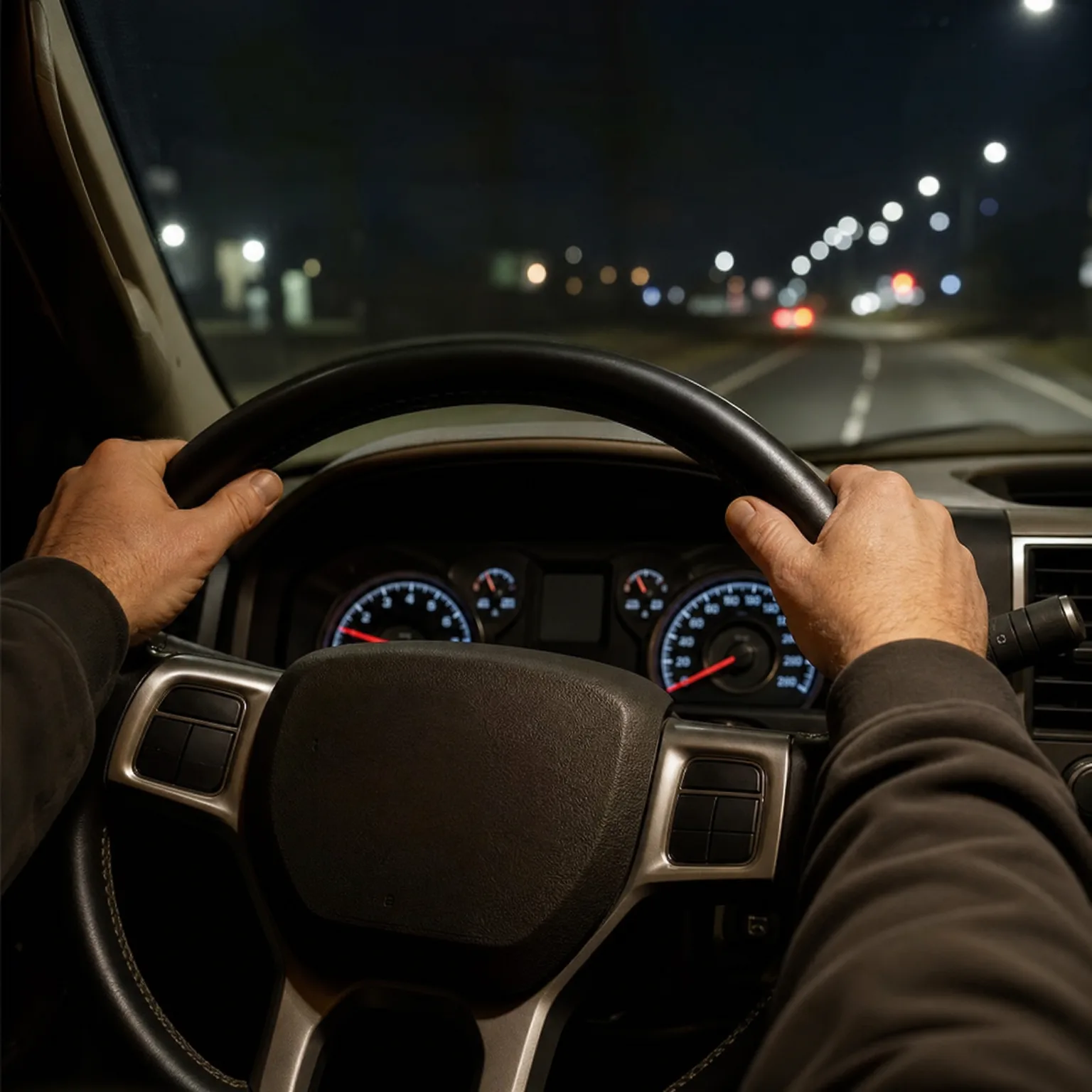
West Virginia's restricted license specifies approved destinations on the license document itself. The DMV requires written documentation for each approved location: an employer letter on company letterhead for work routes, a registrar letter for school routes, appointment confirmations for medical routes.
Most students submit a generic class schedule without realizing the DMV requires a letter from the registrar's office explicitly authorizing driving to campus for educational purposes. Without that letter, the DMV will not approve the school route, and driving to campus on a restricted license becomes a violation that triggers immediate revocation.
Campus parking enforcement adds another layer. Some university police departments flag vehicles registered to drivers with restricted licenses and require students to provide parking services with a copy of the restricted license and approved route documentation. WVU and Marshall both maintain internal notification systems. If you park on campus without notifying parking services, and campus police run your plate during a routine sweep, you may receive a citation for unauthorized campus access even though your restricted license technically authorizes the trip.
What Happens When You Violate Restricted License Terms
Operating outside your approved routes, driving without the interlock device functional, or letting SR-22 coverage lapse triggers automatic restricted license revocation. West Virginia does not issue warnings. The DMV receives notification from law enforcement (for route violations) or your carrier (for coverage lapses), revokes the restricted license, and extends your suspension period by the amount of time remaining on your original suspension.
Most students violate route restrictions without realizing it. Stopping for groceries on the way home from campus is a violation if the grocery store is not on your approved route. Driving a friend to the airport is a violation. Using a vehicle without an installed interlock device—even if you're not the owner—is a violation that revokes your restricted license and subjects you to criminal charges under WV Code §17C-5A-3a.
If your restricted license is revoked, you must wait until the original suspension period expires, then apply for full reinstatement. You cannot reapply for another restricted license. Students who lose restricted privileges in their sophomore year often cannot reinstate until after graduation.
Frequently Asked Questions
Can I file SR-22 before my court clearance is complete in West Virginia?
You can purchase the policy and request filing, but the WV DMV will reject the SR-22 certificate if court records have not posted to their system. Most carriers charge a filing fee for each submission attempt. Wait until the DMV compliance desk confirms your status shows "eligible for restricted license application" before requesting SR-22 filing to avoid rejection and duplicate fees.
How long does it take for West Virginia court records to reach the DMV after DUI program completion?
Electronic submissions typically post to the DMV queue within 3–5 business days, then require 7–10 business days for manual compliance review. Counties that mail paper records add another 10–14 days. Total timeline ranges 15–45 days depending on county and DMV staffing levels.
What happens if I drive to campus without the registrar letter on my West Virginia restricted license?
Driving to an unapproved destination violates your restricted license terms and triggers automatic revocation. The DMV extends your suspension by the time remaining on your original period. You cannot reapply for another restricted license—you must wait until the full suspension expires.
Does the 3-year SR-22 requirement start when I buy the policy or when the DMV accepts the filing?
The 3-year period starts when the WV DMV accepts your SR-22 filing, not when you purchase the policy. If your filing is rejected because court clearance has not posted, the clock does not start until you successfully refile and the DMV processes the certificate.
Can I check whether my West Virginia court clearance has posted to the DMV before applying for a restricted license?
Call the WV DMV compliance desk at 304-926-3811 with your driver license number and court case number. They provide real-time suspension status. The online driver record portal updates only once daily overnight and often lags behind the internal compliance system by 24–48 hours.
What documentation does WVU or Marshall require for parking with a restricted license?
Most West Virginia universities require a copy of your restricted license showing approved school routes and a registrar letter confirming enrollment. Submit both to parking services before parking on campus. Some campus police departments flag restricted license plates and issue citations for unauthorized access if you skip this notification step.
Related Articles
WV DUI Reinstatement for Students: SR-22 Filing Timing
5/3/2026

WV DUI CDL Reinstatement: Court Clearance Timing
5/3/2026
WV DUI Reinstatement for Single Parents: Court & DMV Steps
5/3/2026
DC DUI Reinstatement Timing: Court vs DMV Clearance
5/3/2026
WV Insurance Lapse: Court vs DMV Clearance Timing
5/3/2026
VA DUI Reinstatement for Students: Court & DMV Timing
5/3/2026