
Texas ODL Filing Timing for Single Parents: Lapse-Gap Documentation
Free to compare
Why Texas Courts Demand SR-22 Filing Documentation for ODL Petitions
Texas judges require proof of continuous SR-22 financial responsibility filing for the entire period between your DWI arrest and your Occupational Driver License petition hearing. Most single parents assume SR-22 filing starts when they need to drive again, not realizing the court measures compliance from the arrest date, not the suspension effective date or the ODL petition date.
This creates a documentation gap problem. If you were arrested March 15 but didn't file SR-22 until May 20 because you assumed you didn't need insurance while suspended, the court sees a 66-day lapse. That lapse signals non-compliance to the judge reviewing your petition, even if you surrendered your vehicle, relied on public transit, and never drove illegally during suspension.
Texas Transportation Code Chapter 724 governs Administrative License Revocation proceedings and requires proof of financial responsibility as a condition of any restricted driving privilege. The court interprets "proof of financial responsibility" to mean uninterrupted SR-22 filing from the moment your regular license became invalid. Filing late doesn't cure the gap—it simply documents when compliance began.

What Counts as Acceptable Lapse-Gap Documentation in Texas ODL Court Petitions
Texas courts accept three forms of lapse-gap documentation when your SR-22 filing wasn't continuous from arrest to petition: carrier-issued SR-22 filing confirmations showing exact filing dates, Texas DPS driver record abstracts showing suspension and filing history, and notarized affidavits from your insurance carrier confirming no policy cancellations or lapses during the coverage period.
The carrier confirmation is your primary evidence. Request a letter from your SR-22 carrier on company letterhead stating your policy effective date, SR-22 filing date with Texas DPS, and confirmation that no lapses occurred since filing. Most carriers provide this within 3-5 business days at no charge when you explain it's required for a court petition.
Your DPS driver record abstract costs $20 and can be ordered online at txdps.state.tx.us. This record shows the court when DPS received your SR-22 filing and whether any subsequent lapses were reported by your carrier. Judges verify petition documentation against DPS records, so your carrier letter and your DPS abstract must show identical filing dates. Any discrepancy between the two documents raises immediate credibility questions during your hearing.
If you had a coverage gap before filing SR-22, document why the gap existed. Acceptable explanations include: you were incarcerated and had no vehicle, you were hospitalized, you sold your vehicle and relied exclusively on public transit, or you moved out of state temporarily. Attach supporting evidence—jail release paperwork, hospital discharge summaries, vehicle sale bills of sale, or lease agreements showing out-of-state residency. Courts distinguish between intentional non-compliance and documented life circumstances that made driving impossible.


How Single Parents Should Time SR-22 Filing Around Texas ODL Petition Deadlines
File SR-22 immediately after your DWI arrest, before your Administrative License Revocation hearing and before your criminal court date. Waiting until you "need" the ODL creates the documentation gap that derails petitions months later.
Texas ALR suspensions for first-offense DWI begin 40 days after arrest if you don't request a hearing, or 40 days after an unsuccessful hearing. Your SR-22 filing should be active before that 40-day window closes. If you're a single parent who sold your vehicle after arrest and won't drive during suspension, file non-owner SR-22 coverage immediately anyway. Non-owner policies cost $25-$45 per month in Texas and satisfy the financial responsibility requirement without insuring a vehicle you don't own.
The timing advantage is procedural: when you petition for an ODL 90-120 days post-arrest, you present the court with uninterrupted SR-22 filing from day one. That continuous compliance record answers the judge's primary concern—whether you're a reliable candidate for restricted driving privileges—before the question is asked. Judges grant ODL petitions faster when the SR-22 documentation shows zero gaps.
If you already missed the window and filed SR-22 late, file now and wait 90 days before petitioning for an ODL. A 90-day continuous filing period demonstrates current compliance even if the initial gap exists. Attach an affidavit explaining the gap and what changed. Courts prefer late compliance with explanation over no compliance at all.
What Happens When Your SR-22 Lapses After the Court Grants Your Texas ODL
Your Occupational Driver License is automatically revoked the moment your SR-22 filing lapses. Texas DPS receives electronic notification from your carrier within 24 hours of policy cancellation or non-payment, and DPS immediately suspends your ODL without prior notice to you. You won't receive a warning letter—the next notification you get is a suspension confirmation and a reinstatement packet.
Single parents operating under ODL authority face an additional consequence: if you're pulled over driving on a revoked ODL, law enforcement treats it as driving while license invalid, a Class C misdemeanor carrying a $500 fine. That conviction extends your underlying DWI suspension period and disqualifies you from reapplying for another ODL for 12 months in most Texas counties.
To prevent lapse-triggered revocation, most carriers allow you to set up automatic payment from a checking account or prepaid debit card. Confirm your carrier reports payment processing failures to you by text and email before suspending coverage. Some carriers offer a 10-day grace period for late payments before filing an SR-22 cancellation notice with DPS, but grace periods are not required by Texas law and vary by carrier.
If your SR-22 does lapse, reinstate immediately and notify the court that granted your ODL within 5 business days. Some judges allow you to cure the lapse by showing proof of reinstated SR-22 and paying a reinstatement fee to DPS without revoking the ODL, but this is discretionary. Never assume the lapse went unnoticed—DPS and the court receive the same electronic notification your carrier sends.

Line Up Coverage Before Your License Comes Back
Get Back on the Road
How to Document Non-Owner SR-22 Filing When You Don't Own a Vehicle During Suspension
Non-owner SR-22 policies satisfy Texas ODL financial responsibility requirements even when you don't own, lease, or regularly drive a vehicle. The court cares that you hold liability coverage meeting Texas minimums—$30,000 bodily injury per person, $60,000 per accident, $25,000 property damage—not that you own the car you hypothetically might drive.
When you petition for an ODL as a single parent relying on non-owner coverage, attach your SR-22 certificate and your policy declarations page to your petition. The declarations page shows the court your coverage limits, your policy effective date, and the named insured. Judges routinely approve ODL petitions backed by non-owner policies because the financial responsibility statute doesn't require vehicle ownership.
Non-owner SR-22 coverage becomes owner SR-22 coverage the moment you purchase or lease a vehicle. Notify your carrier within 30 days of acquiring a vehicle and provide the VIN, make, model, and year. Your carrier will endorse the policy to add the vehicle and refile SR-22 with DPS showing the updated coverage. This transition doesn't create a gap as long as you notify the carrier before the next policy period begins.
If you're borrowing a vehicle regularly from a family member during your ODL period, confirm that the vehicle owner's policy lists you as a covered driver. Non-owner SR-22 provides secondary coverage when you drive someone else's vehicle, but primary coverage comes from the vehicle owner's policy. Judges sometimes ask about this during ODL hearings when your petition lists specific work routes that require vehicle access but you don't own a vehicle.
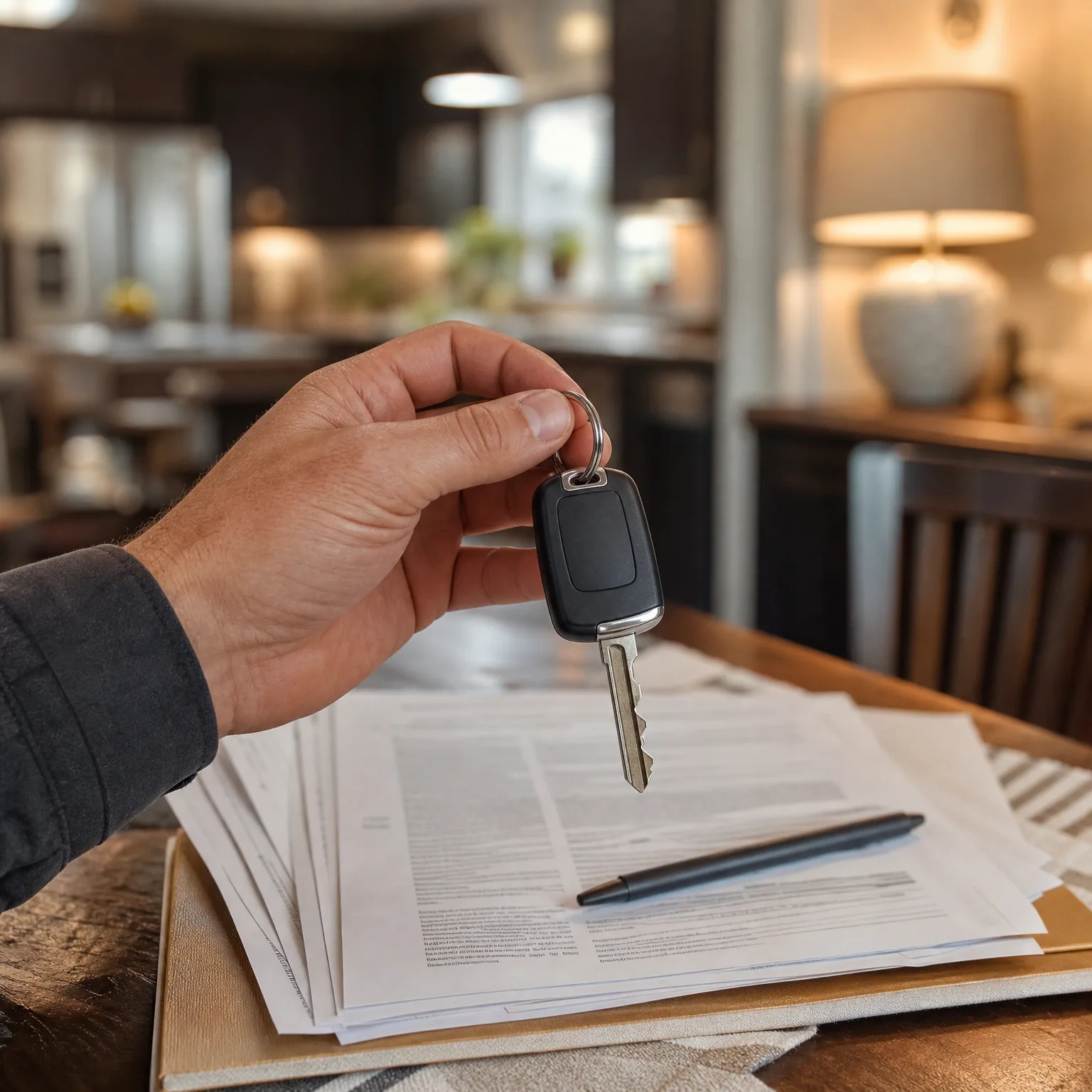
Texas ODL Petition Process: Filing Sequence and Court Coordination for Single Parents
You petition the district or county court in the county where you were arrested, not Texas DPS. DPS does not grant ODLs—courts do. The court issues an order authorizing restricted driving, and you then present that court order to DPS along with your SR-22 certificate, ignition interlock installation verification if required, and the ODL application fee to receive the physical license.
File your petition after completing the mandatory hard suspension period. For first-offense DWI with BAC under 0.15, Texas requires a 90-day hard suspension before you're eligible to petition for an ODL. For BAC 0.15 or higher, or for second and subsequent offenses, the hard suspension period extends to 180 days or longer. Filing before the hard period ends results in automatic petition denial.
Your petition must include: a completed petition form (format varies by county), proof of SR-22 filing, proof of ignition interlock installation if required by statute or prior court order, documented essential need (employer letter confirming work schedule and address, school enrollment verification, or medical appointment records), proposed driving routes with specific street addresses and times, and the court filing fee. Filing fees range from $125 to $300 depending on county. Call the district clerk's office before filing to confirm the exact fee and required documentation.
The court schedules a hearing 2-4 weeks after you file. Bring original copies of all documentation, a notarized employer affidavit if you're petitioning for work-related driving, and proof of current SR-22 filing dated within 10 days of the hearing. Judges deny petitions when documentation is outdated or when proposed routes are vague. "Driving to work" is not specific enough—the order must enumerate exact addresses and permitted hours.
Why Single Parents Should Maintain SR-22 for the Full Post-Reinstatement Period
Texas requires SR-22 filing for 2 years from your full license reinstatement date, not from your DWI conviction date or ODL grant date. Most single parents misunderstand this timeline and cancel SR-22 coverage too early, triggering a new suspension and forcing them to restart the 2-year clock.
The 2-year period begins when DPS reinstates your unrestricted driver license after you've completed all court-ordered requirements, paid all reinstatement fees, and cleared any additional suspension periods. If you hold an ODL for 18 months before qualifying for full reinstatement, your SR-22 filing requirement runs for 18 months on the ODL plus 2 additional years post-reinstatement—42 months total. The ODL period does not count toward the 2-year post-reinstatement requirement.
Your carrier does not automatically cancel SR-22 filing when the 2-year period ends. You must contact your carrier and request SR-22 removal from your policy. If you don't, most carriers continue filing SR-22 indefinitely and charge you the SR-22 filing fee every policy term. Confirm the exact date your SR-22 requirement ends by ordering a DPS driver record abstract 60 days before you believe the period expires. The abstract shows the SR-22 end date DPS has on file. Use that date to schedule SR-22 removal with your carrier.
Canceling SR-22 coverage before the 2-year post-reinstatement period ends results in immediate license suspension. DPS treats early SR-22 cancellation the same as a lapse—your license is suspended within 24-48 hours of receiving the carrier's electronic cancellation notice. Reinstatement after early cancellation requires refiling SR-22, paying a new $125 reinstatement fee to DPS, and restarting the 2-year SR-22 filing clock from the new reinstatement date.
Frequently Asked Questions
Can I get an Occupational Driver License in Texas if I filed SR-22 late after my DWI arrest?
Yes, but you must document why the gap exists and show current continuous SR-22 filing for at least 90 days before petitioning. Courts distinguish between late compliance with explanation and ongoing non-compliance. Attach an affidavit explaining the gap and supporting evidence like proof you had no vehicle or were out of state during the lapse period.
Does non-owner SR-22 insurance satisfy Texas ODL financial responsibility requirements?
Yes. Texas courts approve ODL petitions backed by non-owner SR-22 policies as long as coverage meets state minimums of $30,000/$60,000/$25,000. You don't need to own a vehicle to hold SR-22 coverage or qualify for an ODL. Attach your SR-22 certificate and policy declarations page to your petition.
What happens to my Texas ODL if my SR-22 insurance lapses?
Your ODL is automatically revoked within 24 hours of your carrier reporting the lapse to DPS. You receive no warning—DPS suspends your ODL immediately and mails a suspension notice. Driving on a revoked ODL is a Class C misdemeanor and disqualifies you from reapplying for an ODL for 12 months in most counties.
How long do I need to maintain SR-22 filing after getting an ODL in Texas?
You must maintain SR-22 for the entire ODL period plus 2 years after your unrestricted license is fully reinstated. The 2-year clock starts from full reinstatement, not from your ODL grant date or DWI conviction. Canceling SR-22 early triggers immediate suspension and restarts the 2-year requirement.
When is the earliest I can petition for an ODL after a Texas DWI arrest?
You can petition after completing the mandatory hard suspension period: 90 days for first-offense DWI with BAC under 0.15, or 180 days for BAC 0.15 or higher. Filing before the hard period ends results in automatic denial. Confirm your specific hard suspension end date by requesting a DPS driver record abstract.
What documentation does a Texas court require to approve an ODL petition?
Courts require proof of SR-22 filing dated within 10 days of your hearing, ignition interlock installation verification if required, documented essential need with employer letters or school enrollment proof, specific proposed routes with street addresses and permitted hours, and payment of the county filing fee. Vague routes or outdated SR-22 certificates result in denial.
Can I switch SR-22 carriers while holding a Texas Occupational Driver License?
Yes, but you must coordinate the switch so no gap occurs between your old carrier canceling and your new carrier filing. Request that your new carrier file SR-22 with DPS before you cancel your old policy. Any gap—even one day—triggers automatic ODL revocation. Confirm DPS received the new SR-22 filing before canceling your old coverage.
Related Articles

Texas ODL for Students: SR-22 Filing & Lapse-Gap Proof
5/3/2026

Texas Child Support Suspension: ODL & SR-22 Rules
5/3/2026

Texas Lapse Suspension SR-22 for Single Parents
5/3/2026

Texas FTA SR-22 Filing Timing for Parents
7/13/2026

Texas DUI Reinstatement for Students: SR-22 Lapse Gaps
5/3/2026

Texas Unpaid Ticket ODL: SR-22 Timing for Students
5/3/2026