
Ohio DUI Reinstatement: Court Clearance vs. BMV Timeline
Free to compare
Why Your Court Clearance Doesn't Automatically Reinstate Your License
The court that sentenced you and the Ohio Bureau of Motor Vehicles operate independent suspension timelines. When you finish your Driver Intervention Program, pay court fines, and satisfy probation, the sentencing court closes your case. That court closure does not trigger automatic license reinstatement at the BMV.
The BMV maintains a separate administrative suspension record tied to your OVI conviction. Until you submit a formal reinstatement petition to the BMV — with proof of court compliance, SR-22 insurance filing, and payment of the $40 base reinstatement fee — your driving privileges remain suspended in the state's system. Most college students assume court clearance means immediate reinstatement and discover the gap only when pulled over or when trying to register for classes requiring reliable transportation.
Ohio Revised Code 4507.1612 governs reinstatement fees, and the BMV's online reinstatement portal excludes OVI cases from automated processing. You must submit reinstatement documentation in person or by mail to a deputy registrar location after your court-imposed suspension period expires.
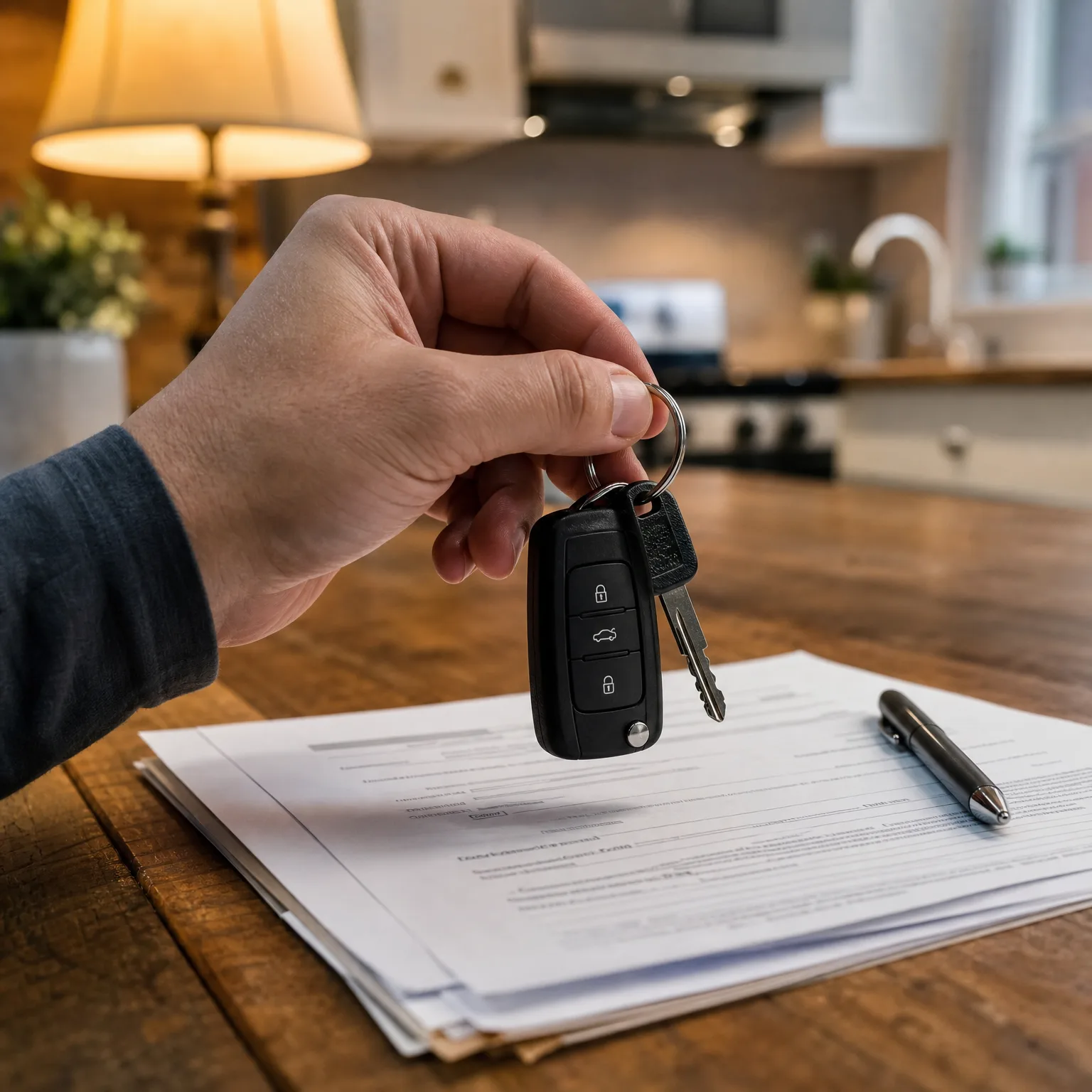
What College Students Miss About the Court-to-BMV Handoff
Your sentencing court sends conviction records to the BMV electronically, which triggers the administrative suspension. But court completion records — DIP certificates, final payment receipts, probation discharge letters — do not transmit automatically. The court assumes you will handle BMV reinstatement independently.
College students often complete court requirements during summer break, then return to campus in the fall expecting to drive legally. The BMV has no record of your compliance unless you submit it. If your court-imposed suspension was 6 months and you finished everything on time, the BMV still sees an active suspension until you file for reinstatement with supporting documentation.
This creates a dangerous window. Driving on a court-cleared but BMV-suspended license is still driving under suspension in Ohio, a first-degree misdemeanor carrying up to 6 months in jail and a $1,000 fine. Campus police, local law enforcement, and highway patrol all check BMV records, not court case files.

The SR-22 Timing Problem Most Students Don't Anticipate
Ohio requires SR-22 filing for 3 years from the conviction date, not the reinstatement date. If your conviction occurred in January 2023 and you don't reinstate until August 2023, your SR-22 obligation still expires January 2026. The BMV will not process your reinstatement petition without proof of active SR-22 coverage on file.
Most college students shopping for SR-22 coverage discover monthly premiums between $85 and $140 for minimum liability limits, significantly higher than standard rates. Carriers file SR-22 electronically with the BMV, but the filing takes 3-5 business days to appear in the state's system. If you purchase SR-22 coverage on Monday and attempt to reinstate on Tuesday, the BMV will reject your petition because the filing hasn't posted yet.
SR-22 lapses during the 3-year filing period restart the suspension clock. If you cancel your policy after 18 months because you moved off-campus and sold your car, the BMV receives an SR-22 cancellation notice from your carrier and re-suspends your license within 10 days. You then owe a new reinstatement fee and must refile SR-22 to restore privileges. Students who don't own vehicles should maintain non-owner SR-22 policies for the full filing period to avoid this trap.
How Limited Driving Privileges Work During College Suspensions
Ohio courts may grant Limited Driving Privileges after you serve the mandatory hard suspension period — 15 days for a first OVI with BAC test failure, 30 days for a first-offense test refusal. LDP petitions go to the sentencing court, not the BMV. The court defines permitted purposes, routes, and time windows in the order granting privileges.
College students typically petition for LDP to cover classes, campus employment, required internships, medical appointments, and court-ordered treatment. The petition must include proof of SR-22 insurance and proof of ignition interlock device installation from an Ohio Department of Public Safety-approved vendor. Ohio Revised Code 4510.022 mandates ignition interlock for all OVI-related LDP, even first offenses.
LDP is court-granted, not BMV-granted. If your petition is approved, the court transmits the order to the BMV, which updates your record to reflect restricted privileges. The BMV does not issue a separate hardship license document — your existing Ohio license remains physically valid, but the BMV record shows court-defined restrictions. Law enforcement can see these restrictions during traffic stops. Violating LDP terms — driving outside permitted hours, driving without the interlock device functioning, or driving for purposes not listed in the court order — triggers automatic revocation and extends your full suspension period.

Line Up Coverage Before Your License Comes Back
Get Back on the Road
The Reinstatement Fee Structure and Hidden Costs
The BMV's base reinstatement fee is $40 for a single OVI suspension. If you have multiple active suspensions on your record — for example, an OVI conviction plus a separate administrative license suspension from the arrest, or an OVI plus a prior points-based suspension — each suspension requires a separate reinstatement fee. Fees stack.
College students often underestimate total reinstatement costs. Beyond the BMV fee, expect to pay $475-$550 for the mandatory 3-day Driver Intervention Program, $70-$150 per month for ignition interlock device rental and monitoring, and $15-$35 for the initial SR-22 filing fee to your insurance carrier. Court fines and probation fees vary by jurisdiction but typically add $500-$1,500 to the total.
The BMV accepts payment by cash, check, money order, or credit card at deputy registrar locations. Online reinstatement is not available for OVI cases. Processing time after you submit all required documentation is typically 3-7 business days, during which your license remains suspended. Plan accordingly if you need driving privileges to meet academic or employment deadlines.
What Happens If You Move Out of State Before Reinstatement
Ohio suspensions follow you to other states through the National Driver Register and the Driver License Compact. If you transfer to a college in another state and apply for a new license, that state's DMV will see your Ohio suspension on record and deny the application until Ohio clears the suspension.
You cannot escape Ohio reinstatement requirements by moving. You must satisfy Ohio's court-imposed suspension period, complete the DIP, maintain SR-22 for the full 3-year period, and pay Ohio's reinstatement fee before any other state will issue you a license. Some students attempt to apply for a license in their new state immediately after their court case closes, assuming geographic distance solves the problem. It does not.
If you need to drive while attending school out of state, you must either complete full Ohio reinstatement first or petition the Ohio court for LDP that permits out-of-state travel for educational purposes. Most courts grant this if your school is in a neighboring state and you provide a class schedule and proof of enrollment. Your ignition interlock device must remain installed and functional in any vehicle you operate, regardless of state.
Insurance After Reinstatement: What Changes and What Doesn't
Your SR-22 filing obligation continues for 3 years from the conviction date, even after the BMV reinstates your full driving privileges. You cannot drop SR-22 coverage once your suspension ends. If you do, the BMV re-suspends your license and you start the reinstatement process over.
Most carriers raise premiums significantly after an OVI conviction. College students can expect rates 60-150% higher than pre-conviction levels, with the steepest increases in the first year. Shopping multiple carriers is essential — rate variation for high-risk drivers in Ohio often exceeds $100/month between the highest and lowest quotes for identical coverage.
Some students maintain coverage under a parent's policy during the suspension period. This works only if the parent's policy explicitly lists you as a driver and the carrier agrees to file SR-22 on your behalf. Many carriers exclude college-age drivers with OVI convictions from family policies entirely, forcing you to purchase a separate policy. If you don't own a vehicle, non-owner SR-22 coverage provides state-minimum liability without requiring vehicle ownership, typically costing $60-$110/month in Ohio.
Frequently Asked Questions
Can I drive to college classes while my Ohio OVI suspension is active?
Not without court-granted Limited Driving Privileges. You must petition the sentencing court after serving the mandatory hard suspension period, typically 15-30 days for a first offense. The court defines permitted purposes, and you must install an ignition interlock device before LDP takes effect.
Does completing my Driver Intervention Program automatically reinstate my license?
No. DIP completion satisfies one court requirement, but the BMV requires a separate reinstatement petition with proof of DIP completion, active SR-22 filing, and payment of the $40 reinstatement fee. Court clearance and BMV reinstatement are independent processes.
How long does Ohio BMV reinstatement take after I submit all documents?
Typically 3-7 business days after the BMV receives your reinstatement petition, SR-22 proof, and fee payment. OVI reinstatements cannot be processed online and must be submitted in person or by mail to a deputy registrar location.
What happens if my SR-22 insurance lapses during the 3-year filing period?
The BMV receives a cancellation notice from your carrier and re-suspends your license within 10 days. You must refile SR-22, pay a new reinstatement fee, and restart the process. Maintaining continuous coverage for the full 3 years is mandatory.
Can I get an Ohio license if I move to another state before reinstatement?
No. Ohio suspensions appear in the National Driver Register, which all state DMVs check before issuing licenses. You must complete Ohio reinstatement requirements — including the full suspension period, DIP, SR-22 filing, and fees — before any other state will issue you a license.
Do I need a car to maintain SR-22 after an Ohio OVI conviction?
No. Non-owner SR-22 policies provide state-minimum liability coverage without requiring vehicle ownership. These policies typically cost $60-$110/month in Ohio and satisfy the BMV's SR-22 filing requirement for the full 3-year period.
How much does ignition interlock cost for Ohio college students with OVI convictions?
Installation fees range from $70-$150, with monthly monitoring and calibration fees of $70-$100. Ohio requires interlock for all OVI-related Limited Driving Privileges, even first offenses. The device must remain installed for the court-ordered period, typically 6-12 months for first convictions.
Related Articles
Ohio Lapse Suspension: Court & BMV Timing for Students
5/3/2026
Ohio DUI Reinstatement: Court & BMV Timing Gap
5/3/2026

Reinstating Ohio License After Unpaid Tickets
5/3/2026

Ohio Warrant Suspension: Court vs BMV Clearance Timeline
5/3/2026
Ohio DUI Reinstatement for Students: SR-22 Timing
5/3/2026
Ohio DUI Reinstatement Costs for College Students
5/3/2026