
Ohio CDL DUI Reinstatement: SR-22 Filing and Documentation Timing
Free to compare
Why Ohio CDL Reinstatement Follows a Different Timeline Than Passenger License Reinstatement
Ohio CDL holders face two separate reinstatement processes after a DUI conviction: the state-level passenger license suspension administered by Ohio BMV, and the federal commercial driving disqualification administered through FMCSA regulations. Most commercial drivers assume these run on the same timeline. They don't.
Your passenger license suspension period (typically 1-3 years for a first DUI under Ohio Revised Code 4510.02) starts when the court issues your conviction. Your CDL disqualification period (minimum 1 year for a first offense, lifetime for certain violations) starts separately and may run longer than your passenger license suspension. Ohio BMV will not process your CDL reinstatement application until both periods have ended and all court-ordered requirements show completion in their system.
The critical sequencing failure happens when commercial drivers file SR-22 for their passenger license reinstatement during the CDL disqualification period. Ohio BMV processes these as two distinct license classes. Filing SR-22 early satisfies your passenger license requirement but creates a documentation gap for your CDL application because BMV expects continuous SR-22 coverage from the end of your disqualification period forward, not from an earlier passenger-license filing date. This forces you to request a new SR-22 certificate with adjusted effective dates when you apply for CDL reinstatement, adding 45-60 days to your timeline while your carrier processes the reissue and BMV verifies coverage.

What the Federal CDL Disqualification Period Actually Measures
Federal regulations under 49 CFR 383.51 impose mandatory disqualification periods for CDL holders convicted of alcohol-related offenses, even when the violation occurred in your personal vehicle. A first-offense DUI triggers a one-year CDL disqualification. A second offense results in lifetime disqualification (with potential reinstatement after 10 years in some cases). If the DUI occurred while operating a commercial vehicle, the disqualification period doubles.
Ohio BMV administers this federal disqualification alongside your state passenger license suspension, but the clock starts from your conviction date, not your arrest date or suspension start date. Your disqualification period does not reduce for good behavior, participation in treatment programs, or completion of ignition interlock requirements. It runs the full term.
Most CDL holders assume their occupational driving privileges or hardship license options apply to commercial driving. They do not. Ohio Revised Code 4506.17 explicitly prohibits operating a commercial vehicle under any restricted license during a federal disqualification period. You cannot drive commercially under a hardship license, an occupational license, or any other restricted privilege. The disqualification is absolute until the full period ends and you complete reinstatement.

When to File SR-22 for CDL Reinstatement Without Creating a Documentation Gap
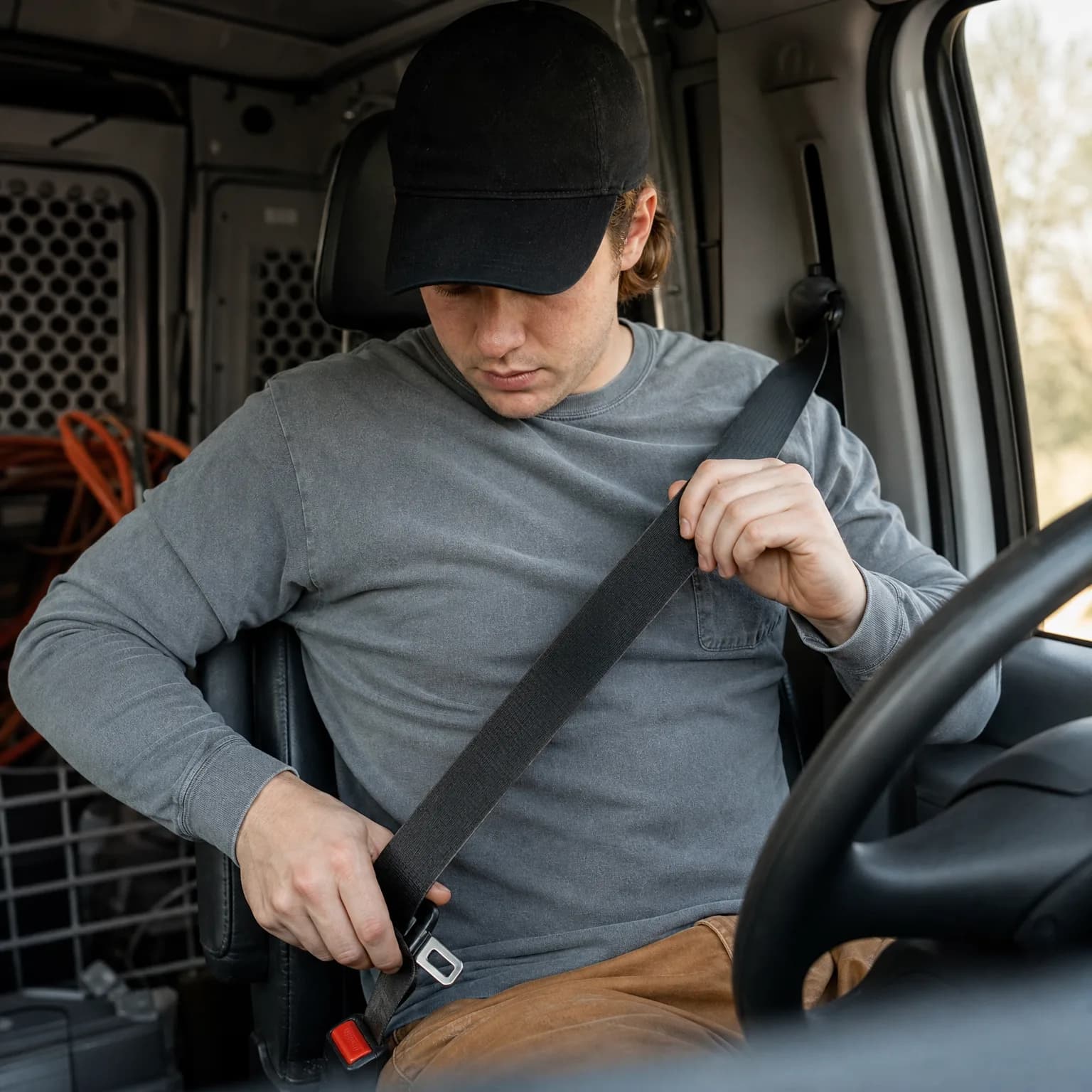
File your SR-22 no earlier than 30 days before your CDL disqualification period ends. Ohio BMV requires continuous SR-22 coverage from your reinstatement date forward for a minimum of three years (five years for certain aggravated offenses), measured from the date BMV processes your CDL reinstatement application, not from the date you originally filed SR-22 for your passenger license.
If you already filed SR-22 to reinstate your passenger license during your CDL disqualification period, contact your carrier 45-60 days before your disqualification ends and request a new SR-22 certificate with an effective date matching your anticipated CDL reinstatement application date. Your carrier will issue this as a separate filing. Do not cancel your existing SR-22 if you are still required to maintain it for your passenger license—you will hold two overlapping SR-22 certificates during the transition period.
Ohio BMV's system flags SR-22 filings by license class. When you submit your CDL reinstatement application, BMV verifies that an active SR-22 certificate covers your commercial driving privilege specifically. A passenger-license SR-22 filed months earlier does not automatically transfer to your CDL reinstatement file. This is the documentation gap that delays most commercial drivers—BMV rejects the application as incomplete, you scramble to get a new certificate issued, and your reinstatement processing starts over.
What Documentation Ohio BMV Requires for CDL Reinstatement After DUI
Ohio BMV requires the following documents at the time you apply for CDL reinstatement: proof of completion of all court-ordered DUI intervention programs (BMV Form 2255 signed by your program administrator), court clearance showing all fines and restitution paid in full, verification of ignition interlock device compliance if required by your sentencing order, proof of current medical certification (Federal Motor Carrier Medical Examiner's Certificate), and an active SR-22 certificate filed within the past 30 days.
The ignition interlock requirement creates the most confusion. Ohio law requires ignition interlock installation for most DUI convictions under ORC 4510.13, but the device only restricts your passenger vehicle. You cannot operate a commercial vehicle with an ignition interlock device installed. Your disqualification period runs separately. Most commercial drivers complete their ignition interlock requirement on their personal vehicle during their CDL disqualification period, then remove the device before applying for CDL reinstatement. BMV requires proof that you completed the full ignition interlock term—typically 6 months to 5 years depending on your BAC level and prior offenses—before processing your CDL application.
Your medical certification must be current and unexpired at the time of application. If your Federal Motor Carrier Medical Examiner's Certificate lapsed during your disqualification period, schedule a new DOT physical before you apply. BMV will not process your reinstatement without valid medical certification on file.

Line Up Coverage Before Your License Comes Back
Get Back on the Road
How SR-22 Lapse During the Three-Year Filing Period Affects Your CDL
Ohio requires continuous SR-22 coverage for three years following CDL reinstatement after a DUI conviction. If your SR-22 lapses at any point during this three-year period—because you missed a premium payment, switched carriers without maintaining continuous coverage, or your policy was cancelled—Ohio BMV receives an SR-26 notice from your insurance company and immediately suspends your CDL again.
This suspension is automatic and takes effect the day BMV receives the SR-26 filing. You will not receive advance warning. Your CDL becomes invalid immediately, and operating a commercial vehicle after suspension is a first-degree misdemeanor under ORC 4506.15, carrying mandatory jail time and a separate federal disqualification period.
Reinstating after an SR-22 lapse requires filing a new SR-22 certificate, paying a $475 reinstatement fee, and restarting the three-year SR-22 filing clock from the new reinstatement date. A lapse that occurs two years into your original three-year requirement does not carry forward your prior compliance—you start over with a new three-year term. Most commercial drivers who lapse once end up maintaining SR-22 for five to six years total because gaps reset the entire requirement.

Why Most Carriers Quote Higher Premiums for CDL Holders Filing SR-22
Commercial drivers filing SR-22 after a DUI pay significantly higher premiums than passenger-vehicle-only drivers filing for the same violation. Insurance companies assess CDL holders in the high-risk pool differently because a DUI conviction disqualifies you from operating commercially for a minimum of one year, which signals to underwriters that you carry both elevated personal risk and occupational risk.
Typical SR-22 premiums for Ohio CDL holders range from $180–$320 per month for minimum liability coverage, compared to $95–$175 per month for non-commercial drivers with similar violation histories. These estimates reflect current high-risk market conditions and vary by your age, county, vehicle type, and whether you require a commercial or non-commercial policy. If you no longer operate commercially and do not need to maintain your CDL, downgrading to a passenger license before filing SR-22 can reduce your premiums by 30-50%.
Non-owner SR-22 policies—designed for drivers who do not own a vehicle but need to satisfy Ohio's financial responsibility requirement—are not available to CDL holders who intend to return to commercial driving. Non-owner policies explicitly exclude commercial use. If you plan to reinstate your CDL and return to commercial driving, you must carry a commercial auto policy or a personal auto policy that your employer's commercial coverage can layer over.
What to Do If Your CDL Reinstatement Application Was Rejected
Ohio BMV rejects most CDL reinstatement applications on first submission due to incomplete documentation, incorrect SR-22 filing dates, or missing court clearance. If your application was rejected, BMV's rejection notice will state the specific deficiency. Address only what the notice identifies—do not submit additional documentation BMV did not request, as this creates processing delays.
The most common rejection reasons: SR-22 certificate effective date precedes your disqualification end date by more than 30 days, court clearance does not show all fines paid in full, ignition interlock compliance certificate is missing or shows an incomplete term, or medical certification has expired. Each deficiency adds 30-45 days to your timeline because BMV does not process partial corrections—you must resubmit a complete application packet after correcting the identified issue.
If your rejection notice states "financial responsibility not verified," contact your insurance carrier immediately and confirm they transmitted your SR-22 filing to Ohio BMV electronically. Carriers are required to file SR-22 certificates electronically within 24 hours of issuance, but transmission errors occur. Request a confirmation number from your carrier showing the date BMV received the filing. If BMV has no record of the filing 7-10 days after your carrier claims transmission, request a manual SR-22 certificate on paper and submit it directly to BMV with your reinstatement application. This adds 15-20 days to processing but resolves electronic filing failures definitively.
Frequently Asked Questions
Can I drive commercially while my passenger license is suspended but my CDL disqualification period has ended?
No. Ohio requires you to hold a valid passenger license before BMV will reinstate your CDL. Your CDL disqualification period and your passenger license suspension run separately, but you cannot operate any vehicle—commercial or personal—without a valid passenger license reinstated first. Complete your passenger license reinstatement, then apply for CDL reinstatement.
Does my employer's commercial insurance satisfy Ohio's SR-22 requirement for CDL reinstatement?
No. Ohio requires you to file SR-22 in your own name, not through your employer's commercial fleet policy. Your employer's coverage protects the company's vehicles and liability exposure but does not satisfy your individual financial responsibility requirement. You must carry a personal auto policy or a commercial policy issued in your name with SR-22 endorsement.
How long does Ohio BMV take to process a CDL reinstatement application after I submit all required documents?
Ohio BMV typically processes complete CDL reinstatement applications within 10-15 business days if all documentation is correct and your SR-22 filing shows active in their system. Incomplete applications or missing court clearances extend processing to 30-45 days. You can check your application status online through BMV's website using your driver license number and the confirmation number from your reinstatement fee payment.
What happens if I get another DUI during my three-year SR-22 filing period after CDL reinstatement?
A second DUI during your SR-22 filing period triggers a lifetime federal CDL disqualification under 49 CFR 383.51. Ohio BMV will suspend your passenger license and revoke your CDL permanently. You may petition for reinstatement after 10 years, but approval is not guaranteed and requires completing an extended treatment program and demonstrating proof of rehabilitation.
Can I reinstate my CDL in Ohio if I was convicted of DUI in another state?
Yes, but Ohio BMV requires documentation from the state where your conviction occurred showing you completed all court-ordered requirements and paid all fines. Your federal CDL disqualification period applies regardless of which state issued the conviction. You must file SR-22 with Ohio BMV and satisfy Ohio's reinstatement requirements even though your conviction occurred elsewhere.
Do I need to retake the CDL written and skills tests after a DUI disqualification in Ohio?
Ohio does not require CDL holders to retest after a first-offense DUI disqualification if your CDL has not been expired for more than two years. If your CDL expired during your disqualification period and remains expired for more than two years past its original expiration date, you must retake both the written knowledge tests and the skills test to reinstate. Maintain your CDL in inactive status during disqualification to avoid retesting requirements.
Related Articles

Ohio CDL DUI: Court Clearance & BMV Timing Issues
5/3/2026
Ohio CDL SR-22 Timing After Lapse Suspension
5/3/2026

Ohio CDL Unpaid Ticket Suspension: SR-22 & Lapse Gaps
5/3/2026
Reinstate License After DUI in Columbus: SR-22 & Timeline
4/29/2026

Ohio DUI Reinstatement: SR-22 Timing for Single Parents
5/3/2026

Ohio CDL Warrant Suspension: SR-22 Timing for Drivers
5/3/2026